




Exploring Obesity: The Hidden Sleep Link
Table Of Content

Exploring Obesity: The Hidden Sleep Link

iThrive Team
Sep 4, 2023

You sleep weird.

We’re willing to bet (no real stakes, duh) that the reason you’ve been unsuccessful in losing enough weight is because there’s something wrong with your sleep/wake cycle – that is, with your Circadian Rhythm.

First, if you’ve been struggling to get started on your weight loss journey, know that the writer empathises with you. But do keep in mind that the hardest step is the first one; things do get easier once you’ve overcome the very first hurdle of just getting started. You are capable. You got this!

Second, it’s also not entirely your fault. At least, not intentionally. To understand what we mean, let’s take a look at something called appetite-regulating hormones.

You’re A Puppet, Harry

Your hunger levels, body weight, and energy metabolism are largely controlled by hormones like Ghrelin and Leptin. The former is a hormone that induces hunger and tells the body to conserve energy, i.e., to slow down fat burning. It is also called “the hunger hormone”.

The latter tells the body that it’s eaten enough and now is the time to start using energy, i.e., to initiate fat burning. Leptin is also called “the satiety hormone”.

Another important hormone for weight and energy regulation is Insulin.  You’re probably more familiar with this one than the first two. Insulin essentially signals the body to store glucose in cells for later use, either for energy or anything else the body may need it for.

These hormones are the puppeteers holding the strings to your body weight and energy metabolism, among other functions.

  • Ghrelin is produced in the stomach when it is empty, to tell the body it is time to start feeding and store energy.

  • Leptin is produced by fat cells and signals the body to stop feeding and to start using energy.

  • Insulin is produced by the pancreas to process glucose and transfer it out of the blood and into cells.

Ideally, this is what the hormone cycle would look like:

Leptin - Ghrelin Cycle

Empty stomach stimulates ghrelin → You eat and fat+glucose increases → Fat releases leptin + Pancreas release Insulin → You stop eating + fat is burned + Glucose is transported → food is digested and stomach empties again → ghrelin is released (repeat)

Problems occur when poor lifestyle habits or illnesses lead to the dysfunction of these hormones, or your body becomes resistant to leptin or insulin.

Understanding Appetite-Hormone Resistance

Essentially, hormone resistance is what happens when the body makes the hormones – but the receptors don’t respond to those hormonal signals.

If your body’s appetite-hormone signalling is out of whack, the extent to which your body feels hungry and stores fat is affected. It can make you feel hungrier than you normally would, causing you to overeat and not feel full even after meals. This leads to habits like grazing, where you repeatedly eat food throughout the day and not necessarily because you feel hungry. It can be highly detrimental to your overall health.

Your body can become resistant to leptin and insulin, leading to metabolic dysfunction and the development of diseases like Type-2 diabetes and heart diseases.

What is leptin and insulin resistance?

Leptin resistance means there are excess fat cells in your body that are producing a lot of leptin and telling your brain to stop eating – but your brain doesn’t respond to these signals, leading to continued feelings of hunger and fat storage.

Similarly, Insulin resistance is when the pancreas creates insulin to tell your body to remove sugar (glucose) from the blood and to transfer it into cells, but the body does not respond. This leads to imbalanced blood glucose levels, and can lead to chronic diseases. Insulin resistance is one of the more common root causes of obesity and chronic illness.

Are leptin and insulin related?

Leptin and Insulin regulate each other. Which means a dysfunction in the regulation of one of these can impact the other. It should be noted that leptin resistance can be a precursor to insulin resistance.

[Note: whether insulin affects leptin in the short term is still debated, as studies have found claims for either case being true; however it is agreed that insulin does affect leptin secretion in the long term.]

Another major factor (besides glucose presence) that stimulates Insulin release is Melatonin – the sleep hormone. Bringing us to your circadian rhythm.

On The Clock – Sleep and Weight Gain

Ever wondered how your body knows when to feel hungry, sleepy, or energised and tired? 

Our bodies’ systems are regulated by a rhythmic pattern on a day-to-day basis. This biological rhythm is famously called the body’s “biological clock” or your “sleep/wake cycle”. Another term is the body’s circadian rhythm.

Your circadian rhythm responds to light and darkness, and dictates the release of melatonin (the sleep hormone) and the aforementioned appetite-regulating hormones.

This is how your body knows to eat during the daytime when it is bright and we are engaged in activities, and to suppress hunger when it gets dark – because we are sleeping and have no need to consume at this moment. Melatonin is also suppressed when it is bright, and it is released in darkness or dimness.

An altered circadian rhythm can lead to improper sleeping and eating habits, and sleep deprivation (which leads to an altered circadian cycle in turn).

Multiple studies over the years have shown that sleep deprivation leads to weight gain, among a host of other health issues. This is because sleep deprivation increases levels of the hunger-arousing hormone (ghrelin).  Indeed, sufficient and good-quality sleep is essential to physical and mental health.

Sleep is controlled by melatonin levels, which is involved in insulin regulation, which is involved in leptin-ghrelin regulation.

A faulty sleeping pattern can disrupt the body’s natural metabolic cycle. Being awake when it is dark and asleep when it is bright can throw off the leptin-ghrelin signalling of your body.

This altered hormone signalling further affects the circadian rhythm, too. Reduced sleep duration leads to reduced leptin signalling and increased ghrelin signals; meaning that insufficient sleep = more eating + fat storage. 

This pattern further leads to sleep alteration, ultimately forming a vicious and self sustaining cycle.

This could be due to the body’s increased need for energy to combat fatigue and stress, which increases with sleep deprivation. Let’s face it, all-nighters leave everyone so much more exhausted than even just a few hours of sleep would have.

Over time, the issue of weight gain continues to get worse as sleep disturbance continues.

Better sleep quality and duration are associated with higher chances of weight loss, and especially of fat loss. Studies experimented with various types of diets with different fat-carb ratios and sleep durations. It was found that those who got sufficient sleep (8-9 hours per day in bed) had an easier time losing weight than those who slept for less time.(1)

While it had been accepted that poor sleep was linked with obesity, the underlying mechanism for this lacked sufficient research. The theory of the circadian regulation of appetite hormones being responsible for changes in body weight could explain the link between insufficient sleep and obesity.

What We’ve Seen

In the experience iThrive has amassed over the years in dealing with thousands of clients, we have personally observed an improvement in people’s weight regulation by improving their circadian sleep cycles. Fixing leptin resistance can open the doors to a world of better health, and make it easier to lose weight.

And how can you fix leptin resistance? Fix your body’s internal clock that signals the release of these hormones.

Fixing Your Circadian Rhythm

This diurnal rhythm intrinsic to all of us is regulated by signals of light and darkness. Regulating the duration of light exposure, along with the kind of light you are exposed to can help with this.

Some useful methods to optimise your circadian rhythm are:

Steps to Optimise Circadian Rhythm

  1. Morning sunlight: 

Look at sunlight for at least 1 minute after waking up. Ideally, you look at the rising sun, but if you wake up post-sunrise, at least ensure to look at sunlight before you look at any kind of artificial light.

  1. No artificial lights:

Avoid looking at your phone or other screens and artificial lights for 30 minutes after waking and for 30-60 minutes before sleeping.

  1. Use Appropriate Lighting:
  • If you wake up before sunrise, use only red or yellow light bulbs until sunrise.
  • Install blue-light blocking apps on your laptop and phone, especially for evenings.
  • Use red-coloured blue light blockers once the sun goes down, especially if you are going to be on devices in the evening.
  • Only use yellow/red lights at home in the evenings.
  1. Eat Timely:
  • Eat within 1 hour of waking up. If you wake up before sunrise, then you can delay eating until 7 a.m.
  • Finish dinner before sunset. If you get hungry in the evening, you can have a teaspoon of butter or ghee (these do not evoke an insulin response)
  • Eat all meals at the same time everyday.
  1. Connect with Nature:

Be barefoot in nature for 15 minutes to ground yourself.

  1. Regulate Caffeine Consumption:

Consume caffeine only after 90 minutes of waking. Do not drink any caffeinated beverages after 12 pm.

  1. Eat Smart:

Incorporate Protein and Fat in each meal. These nutrients promote leptin regulation and use.

  1. Incorporate Sunlight with Me als:

Eat in the Sun whenever possible. If it’s too warm to eat outdoors, consider sitting by a window with the glass open.

  1. Evening Sunlight:

Try to look at the setting sun for at least 1 minute. Ideally, watch the whole sunset.

  1. Practice Sleep Hygiene:
  • Go to bed by 9.30 p.m.
  • Switch off the WiFi before sleeping
  • Ensure there are no electronic appliances or lights in the bedroom.

The Missing Link

If you’ve tried all sorts of weight loss strategies but had little to no success, go a little easy on yourself. The problem may be in your body’s internal clock that tells your body when to burn fat and when to store it.

Poor lifestyle habits can lead to Leptin Resistance – where your body ignores the signals from a hormone that says it’s time to stop eating and to start using energy. One way to fix this issue is by improving your circadian rhythm.

Since your sleep/wake cycle is essentially determined by your time spent being active in light and darkness, optimising that pattern is the best way to go. Try the tips mentioned in this article to fix your circadian rhythm along with your weight loss efforts and observe for changes in your weight loss pattern. In our experience, it has been the key to unlocking easier weight loss.

With that, we hope you will give your health journey another shot and that you have a fun-filled, productive experience!

References:

  1. Sleep Deprivation: Effects on Weight Loss and Weight Loss Maintenance - PMC
  2. Diminished leptin signaling can alter circadian rhythm of metabolic activity and feeding | Journal of Applied Physiology
  3. Ghrelin and Sleep.
  4. Circadian Dysfunction Induces Leptin Resistance in Mice: Cell Metabolism
  5. Sleep Deprivation: Effects on Weight Loss and Weight Loss Maintenance - PMC
  6. The role of leptin and ghrelin in the regulation of food intake and body weight in humans: a review
  7. 9 Hormones That Affect Your Weight — and How to Improve Them
  8. Stimulation of leptin secretion by insulin - PMC.
  9. Leptin and the regulation of body weigh.
  10. Ghrelin Hormone: Function and Definition.
  11. Regulation of Insulin Synthesis and Secretion and Pancreatic Beta-Cell Dysfunction in Diabetes - PMC.
  12. Melatonin: What You Need To Know | NCCIH.
  13. Leptin therapy, insulin sensitivity, and glucose homeostasis - PMC.
  14. Light, melatonin and the sleep-wake cycle. - PMC.
  15. Circadian dysfunction and obesity: is Leptin the missing link? - PMC

A
Ask your doubts
Thank you! Your submission has been received!
Oops! Something went wrong while submitting the form.

Related Blogs

Why Your Autoimmune Gastritis Is Not Healing: The Foods Making It Worse and the Supplements That Actually Help
read count
read time
Apr 7, 2026

Why Your Autoimmune Gastritis Is Not Healing: The Foods Making It Worse and the Supplements That Actually Help

Discover the best autoimmune gastritis diet, foods to avoid, what to eat, and supplements that support stomach healing naturally.

Introduction 

If you’ve been told that you have autoimmune gastritis, there is a chance you have already tried eating bland, avoid spicy foods, or even survive on tea and toast for weeks. Yet the heaviness, bloating, constant fatigue, strange hunger pains, and burning keeps coming back. Some of you also notice that your gastritis gets worse when hungry. Others feel terrible after consuming alcohol, foods they thought were healthy, or dairy. That is because autoimmune gastritis is not just “an irritated stomach”. It is rather an autoimmune condition in which the body itself attacks the parietal cells of the stomach. These are known to be the very cells that are responsible for making stomach acid and intrinsic factor, the protein that is required for the absorption of vitamin B12. Over time, this develops a vicious cycle. You can’t digest food appropriately, you become deficient in key nutrients, the stomach lining also gets weaker, and the immune system becomes much more reactive. 

Here at iThrive, we often see clients who have spent years and years treating symptoms while missing the real trigger. They have been prescribed antacids, told to avoid chilli, and lastly sent home. But nobody explained exactly and due to what reasons gluten, conventional dairy, refined oils, processed foods, and hidden gut inflammation keeps the immune systems switched on.

One thing for sure is that gastritis can heal. But healing autoimmune gastritis needs much more than just removing a few foods. It also needs adequate understanding of which food continues to trigger the immune attack, what the stomach actually needs to repair itself, and which supplements can bypass the problems of absorption developed by the condition itself. 

Why Food Matters So Much in Autoimmune Gastritis

Unlike temporary gastritis or simple acidity after an infection, autoimmune gastritis has a much deeper root cause. The immune system has become confused. It begins attacking the stomach lining as if it were a threat. Many of the foods commonly eaten every day can make this worse as they increase intestinal permeability, also called leaky gut. 

When the gut lining becomes more permeable, food proteins can cross into the bloodstream before they are completely broken down. The immune system reacts to these proteins, and in few people, those proteins look surprisingly similar to the stomach tissue itself. This entire process is known as molecular mimicry. 

That is why a true autoimmune gastritis diet plan isn’t only about avoiding irritation. It is rather about reducing immune confusion. 

Foods to Avoid with Autoimmune Gastritis

The 5 Foods That Keep Autoimmune Gastritis Active

Gluten is Often the Biggest Trigger

If there is one food group that deserves entire removal in auto mind gastritis, it has to be GLUTEN. Barley, rye, and wheat contain a protein called gliadin. Gliadin has been observed to damage the intestinal barrier and then stimulate inflammatory immune responses. 

Many of you with autoimmune gastritis notice that your heaviness, upper stomach discomfort, brain fog, and bloating improves drastically within a couple of weeks of eliminating gluten entirely. Even small amounts can continue to trigger the immune response. This involves breads, pasta, sauces, bakery products, biscuits, and hidden gluten in packaged foods. 

This is why one of the very first recommendations here at iThrive is a strict trial without gluten for at least 8 to 12 weeks. For many of you, it is the first time they realise how much a “normal” food was quietly making them feel unwell. 

Conventional Dairy May Be Keeping Inflammation Alive

Many of our clients ask us, “If I have gastritis, what can I eat?” and presume curd, paneer, and milk are safe as they seem to be soft and soothing. But conventional dairy mostly contains A1 casein, a protein that can behave very similarly to gluten in sensitive people. 

A1 casein might stimulate inflammatory chemicals and worsen digestive distress. For someone whose stomach lining is already under attack, this can further make the symptoms more persistent. Few of you also witness that you’ll feel more nauseous, heavy, or bloated after milk based foods even if you are not lactose intolerant. 

For this very reason, most of you with autoimmune gastritis do better avoiding conventional milk, processed cheese, flavoured yoghurt, and commercial dairy for a period of time. Some of you might also tolerate small amounts of ghee because it contains almost no casein. Others may do better with goat milk or A2 dairy later in the healing process, but only after the gut has calmed down.

Refined Sugar and Ultra Processed Foods Feed the Wrong Bacteria

There is a major reason why many of you with gastritis feel worse after packaged snacks, sugary drinks, sweets, or bakery foods. Refined sugar feeds inflammatory bacteria and yeast inside the gut. It also causes sudden blood sugar spikes, which in return increases stress hormones and inflammation. 

Ultra processed foods contain a lot of additives, preservatives, artificial flavours, gums, and refined flours that put even more pressure on a digestive system that is already damaged. These foods don’t provide the nutrients that are needed for repair, rather they simply increase irritation.

If your stomach burns more when hungry, it can be tempting to grab biscuits or something quick. Unfortunately, these foods often make the cycle even worse. They may give you temporary relief, but they keep inflammation going beneath the surface, so beware. 

Industrial Seed Oils Quietly Damage the Gut Lining

One of the major overlooked foods to avoid with autoimmune gastritis is refined seed oils. Soybean oil, sunflower oil, canola oil, and corn oil are found in the majority of packaged foods, restaurant meals, as well as fried snacks.

These oils are rich in unstable omega 6 fats that are easily damaged inside the body. When this happens, they develop compounds that increase inflammation and weaken the cell membranes.

Most of our clients in the start are often surprised to learn that even “healthy” foods can become problematic if they are cooked in these oils. Replacing them with ghee, coconut oil, or good quality A2 butter can make a noticeable difference over time.

Alcohol and Autoimmune Gastritis Are a Difficult Combination

If you have noticed worsening gastritis when drinking alcohol, you aren’t just imagining it. Alcohol directly irritates the stomach lining and then increases intestinal permeability. It also interferes with the ability of the liver to store and activate eminent nutrients like B vitamins. 

For someone with autoimmune gastritis, even smaller amounts of alcohol can slow healing. This is specifically true if you already struggle with low B12, iron deficiency, fatigue, or nausea. One of the hardest parts of healing is accepting that some foods are not “just occasional treats” for your body anymore. If you are trying to truly heal gastritis, alcohol often needs to be removed completely for a period of time.

So What Can You Eat with Autoimmune Gastritis?

What to Eat Instead: A Healing Autoimmune Gastritis Plate

Once you hear what you actually need to avoid, you often feel very overwhelmed. You might also reconsider thinking “what is left?” But the goal isn’t a restriction forever. The goal is to give your stomach the environment it needs to repair itself. 

An autoimmune gastritis diet plan should always focus on simple, nutrient dense foods that are quite easy to digest and very rich in the building blocks needed for healing. 

The Foods That Support Gastritis Healing

Build Meals Around Protein and Healthy Fats

Your stomach lining repairs itself utilizing amino acids, healthy fats, and minerals. This is why most of you do better when each meal includes quality protein like chicken, slow cooked meat, wild fishes, free-range eggs and lamb. 

Organ meats, specifically liver, can prove to be extremely powerful if you can tolerate it because they naturally contain vitamin A, B vitamins, iron, and folate. Healthy fats like ghee, coconut oil, avocado, and olive oil are beneficial as it helps calm inflammation and offer stable energy. 

Many of you with autoimmune gastritis feel extremely exhausted because you are literally surviving on tea, plain rice, and crackers. The body can’t ever heal without nourishment. 

Choose Gentle Carbohydrates Instead of Refined Ones

The best carbohydrates for gastritis to heal are the ones that are easy on the stomach and less likely to spike blood sugar. Cooked veggies, pumpkin, ripe banana, a very small amount of raw honey, sweet potato, rice, and berries are usually easier to digest. 

If you want grains, choose naturally gluten free options like ragi, jowar, bajra, and white rice. Ideally these should be well soaked or fermented because then it reduces the compounds that makes digestion harder. 

Do Not Ignore Mineral Rich Foods

People with autoimmune gastritis are often very low in magnesium, B12, zinc, and selenium. Foods like seafood, leafy greens, one Brazil nut a day, and cooked cruciferous vegetables can help replenish these nutrients. 

Broccoli, onions, garlic, and cabbage might also support the natural detoxification process of the body, specifically when cooked well. They are often gentler on the stomach when eaten in stews, soups, or broths rather than raw. 

The Supplements That Actually Help Autoimmune Gastritis

Why Supplements Matter in Autoimmune Gastritis

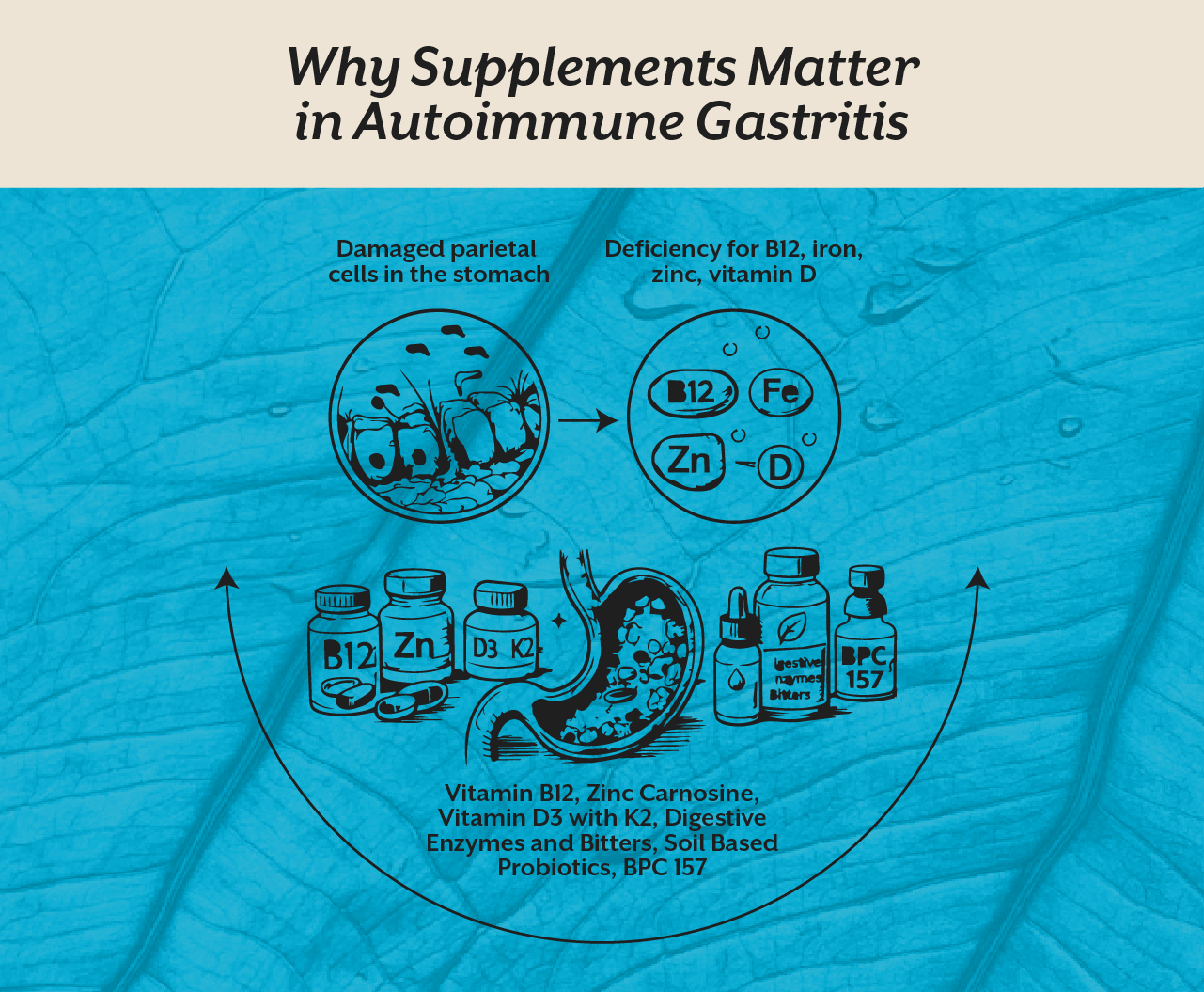
As autoimmune gastritis damages the very cells that are responsible for nutrient absorption, food alone isn’t enough. This is exactly where the right supplements can make a significant difference. 

The Most Important Autoimmune Gastritis Supplements

Vitamin B12 Is Non Negotiable

One of the major dangers of autoimmune gastritis is vitamin B12 deficiency. Without intrinsic factors, the body cannot absorb B12 appropriately from food. Over time, this can also result in tingling, memory issues, nerve damage, fatigue, anxiety, and even hair fall. 

This is exactly why you need sublingual B12 or, in more serious cases, B12 injections or IV support. Here at iThrive, this is mostly one of the very first deficiencies we look for because correcting it completely changes how someone feels. 

Zinc Can Help Repair the Stomach Lining

Zinc is quite essential for the health of the gut lining. Forms like zinc glycinate or zinc carnosine are specifically useful because they support tissue repair and reduce irritation. 

Many people with gastritis have been deficient for years without even realising it. You might have poor immunity, white marks on your nails, slow healing of wounds, and a very low appetite. Restoring zinc can be beneficial for the stomach as it will begin to repair itself. 

Vitamin D3 and K2 Help Calm an Overactive Immune System

Vitamin D isn’t just important for bones. It is one of the most powerful immune regulators for the body. When levels are low, the immune system is more likely to stay stuck in an overactive state. 

Vitamin D3, specifically when paired with K2, can be beneficial as it guides the immune system away from attacking healthy tissue. This doesn’t work overnight, but over time it can surely become an eminent part of how gastritis can be cured at the root. 

BPC 157 and Gut Repair Support

BPC 157 is a peptide that is originally derived from a protective protein found in the stomach. It has gained a lot of attention because of its ability to support the repair of the gut lining and also reduce inflammation. 

Some of our clients have had years of burning, food sensitivity, and pain and they noticed a lot of improvement when it was utilized correctly as part of their complete healing plan. 

Digestive Enzymes and Bitters Help When You Cannot Make Enough Stomach Acid

One of the strangest things about autoimmune gastritis is that you might feel both burning as well as poor digestion at the very same time. That is because many of you actually have too little stomach acid, and not too much. 

Digestive enzymes and herbal bitters can be beneficial for breaking down food more effectively. This often reduces the burping, heaviness, and uncomfortable fullness after meals. 

Soil Based Probiotics and Black Seed Support the Gut Environment

Certain soil based probiotics might help in improving the balance of bacteria inside the gut. Black cumin seed oil well combined with raw honey also supports people who have underlying H. pylori related irritation. 

However, this is truly where personalisation matters a lot. Not every probiotic suits every person, and not every supplement should be taken blindly. What works beautifully for one person might irritate another.

Why a Personalised Plan Matters More Than a Perfect Diet

Perhaps the most frustrating thing about autoimmune gastritis is how different it actually looks from one to the other. One might tolerate eggs, another might feel terrible when hungry, another struggles during pregnancy and wonders about gastritis when pregnant, and someone just notices symptoms after alcohol. 

That is why healing cannot come from a generic food list that is copied from the internet.

Here at iThrive, we focus on identifying the deeper pattern. Is there hidden gluten sensitivity? H. pylori? Severe B12 deficiency? A gut microbiome issue? Are you under-eating protein? Are you so afraid of food that your body is now running on stress alone?

Sometimes the most healing thing is finally understanding that your symptoms make sense.

If you feel like you have been trying everything and still don't know what to eat, this is the right time to Book a Root Cause Analysis or Book a Free Consult. The goal is not simply to manage symptoms, it is to understand why your stomach stopped feeling safe in the first place.

For the ones that need deeper support, the iThrive Alive 3 Months Program is specifically designed to help you rebuild digestion, calm the immune system, restore nutrient levels, and finally develop a food plan that works for your body. 

Key Takeaway

Autoimmune gastritis does not heal because you avoided spicy food for a week. It heals when you remove the foods that keep triggering the immune system, repair the gut lining, and restore the nutrients your body can no longer absorb properly. Gluten, conventional dairy, alcohol, refined sugar, processed foods, and seed oils are often the biggest obstacles. At the same time, targeted support through protein rich meals, healthy fats, mineral rich foods, vitamin B12, zinc, vitamin D, digestive support, and a personalized plan can change the entire direction of your health. If you have been feeling unheard, dismissed, or confused by conflicting advice, please know that your body is not broken. It is asking for a different kind of support.

The Hidden Stomach Condition That Can Drain Your B12 For Years Without You Knowing
read count
read time
Apr 6, 2026

The Hidden Stomach Condition That Can Drain Your B12 For Years Without You Knowing

Autoimmune gastritis can silently destroy B12 levels for years. Learn the symptoms, causes, diet, and treatment approach.

Introduction 

There are some of you who’ve spent years feeling dizzy, exhausted, forgetful, and even strangely unlike yourselves, yet you’ll never receive a real explanation for that. You are told that you are just stressed, maybe you need more sleep, or that the numbness in their hands and the very strange brain fog are simply a part of you getting older. Some of you are even told that it’s “just anxiety”. And yet, underneath all of this, something deeper might be taking place. 

I have seen our clients go from doctor to doctor for years and years before they finally turn to us for looking beyond the surface. One of our clients was repeatedly treated for low iron, fatigue and then depression. Another had been told she was simply burnt out because she could no longer focus on her work. Both eventually discovered the very same hidden problem that was autoimmune gastritis. 

Let me start off by stating that autoimmune gastritis is not a condition that gets talked about commonly. In fact, it can also quietly progress for around 7 to 14 years before it becomes quite obvious. During that period, the stomach eventually loses its ability to absorb vitamin B12 and other nutrients. By the time you are finally diagnosed, you might already be dealing with issues such as memory changes, fatigue, tingling in their feet and hands, and a very strong sense that your body has been changing without any explanation. 

This is why autoimmune gastritis B12 deficiency deserves more attention. Here, at iThrive, we don’t see autoimmune gastritis as just a stomach issue. We see it as a deeper breakdown in communication between the immune system, nutrient absorption, and gut. The goal is not simply to suppress the symptoms. It is in fact to This is why autoimmune gastritis B12 deficiency deserves more attention. Here, at iThrive, we don’t see autoimmune gastritis as just a stomach issue. We see it as a deeper breakdown in communication between the immune system, nutrient absorption, and gut. The goal is not simply to suppress the symptoms. It is in fact to understand why your immune system began attacking the stomach in the very first place.  in the very first place. 

This is why autoimmune gastritis B12 deficiency deserves more attention. Here, at iThrive, we don’t see autoimmune gastritis as just a stomach issue. We see it as a deeper breakdown in communication between the immune system, nutrient absorption, and gut. The goal is not simply to suppress the symptoms. It is in fact to understand why your immune system began attacking the stomach in the very first place. 

What Is Autoimmune Gastritis And Why Does It Stay Hidden For So Long?

Autoimmune gastritis is a condition in which the immune system attacks the stomach lining by mistake. Specifically, it attacks the parietal cells. These are the cells that are responsible for making stomach acid and a very eminent protein called intrinsic factor. In absence of an intrinsic factor, the body can’t really absorb vitamin B12 appropriately. 

Why The Immune System Attacks The Stomach

So basically, in autoimmune gastritis, the immune system becomes very confused. Instead of protecting the body, it begins to see the parietal cells of the stomach as a threat. These are the very cells that are responsible for making stomach acid and an intrinsic factor, the protein that is needed for absorption of vitamin B12. 

There are certain research works that have stated that this mostly begins because of something called molecular mimicry. Certain infections, specifically H. pylori, long standing gut imbalances, and viruses, might resemble parts of the stomach lining. The immune system reacts to the infection, but over time it can accidentally begin attacking the stomach as well. 

This helps in overall explaining why autoimmune gastritis symptoms develop so slowly and steadily. For years, the body keeps losing parietal cells. The stomach gradually produces less acid and intrinsic factor, and then the nutrients stop being absorbed appropriately. But, since the changes happen slowly at a low pace, many of you actually start adapting to feeling worse without even realising that their stomach may be at the centre of it. 

The Silent Role of Stomach Acid

Most of you think stomach acid just matters for digestion. But in reality, it is one of the most crucial foundations of health. 

Healthy stomach acid is also beneficial for: 

• Breaking down the protein

• Releasing B12 from food

• Absorbing nutrients like iron, zinc, and magnesium

• Protecting against harmful bacteria

• Signalling the rest of the digestive tract to work appropriately 

When stomach acid becomes quite low, food might sit heavily in the stomach. You then might feel bloated, full quickly, or even uncomfortable after meals. But because these symptoms can look so ordinary, they are always ignored.

Why Proton Pump Inhibitors Can Make The Problem Worse

Many of you with digestive discomfort are prescribed with acid reducing medications like proton pump inhibitors. While these drugs might temporarily reduce reflux or burning to a very great extent, they can also make autoimmune gastritis worse over time. And that is because the problem in autoimmune gastritis is usually not too much acid, it is rather too little. Therefore, reducing acid even further can make it harder to absorb B12, magnesium, calcium, and even iron. This is one of the reasons why so many of you still continue to feel unwell despite being on medications. 

Why Autoimmune Gastritis Causes Severe B12 Deficiency

When you search for autoimmune gastritis B12 deficiency, you are most probably already feeling the consequences. The reason B12 levels fall so dramatically in this condition has somewhat less to do with what you are consuming and more to do with what your stomach can no longer do. 

The Crucial Job Of Intrinsic Factor

Vitamin B12 can’t be absorbed on its own. After B12 is released from food in the stomach, it must necessarily attach to an intrinsic factor. This protein is made by the similar parietal cells that are damaged in autoimmune gastritis. Without intrinsic factor, B12 just passes through the digestive system but never really reaches the cells. You might consume meat, eggs, chicken everyday and yet develop severe deficiency. 

From B12 Deficiency To Pernicious Anemia

Over time, low B12 begins to start affecting your entire body, one of the very common outcomes is pernicious anemia. Pernicious anemia develops when your body no longer makes healthy red blood cells because there is not sufficient vitamin B12 available. 

The red blood cells become unusually large and less effective, which means now less oxygen reaches the tissues. This is exactly when you start noticing profound weakness while climbing stairs, pale or slightly yellow skin, fatigue, dizziness, or shortness of breath. We have had clients describe it as a feeling as though their body suddenly aged by around 10 years, almost overnight. 

What makes this so much frustrating is that many of you are prescribed iron tablets or just told to “rest more” without anyone asking why the deficiency keeps returning. By the time the real cause is discovered, the B12 deficiency might have been present in your body for years. 

The Neurological Symptoms Most People Miss

What worries me personally is that B12 deficiency doesn’t just affect the energy level, it can also affect the entire nervous system. 

Many people with autoimmune gastritis symptoms witness the following:

• Tingling or numbness in the feet and hands 

• Burning feet at night

• Brain fog

• Memory lapses

• Mood swings or even depression

• Difficulty in concentrating

Sometimes these symptoms appear even before anemia does. This is why so many of you are told you have anxiety, stress, or even early neurological disease before anyone checks your B12 properly.

The Hidden Infections That Make B12 Deficiency Worse

This is another layer that mostly gets missed. Conditions such as small intestinal bacterial overgrowth and H. pylori can make autoimmune gastritis deficiency a lot worse. Certain bacteria actually compete with you for B12. Others damage the gut lining and make it even harder to absorb nutrients. 

At iThrive, we always recommend deeper testing first through Book a Root Cause Analysis when any of you stated unexplained B12 deficiency, ongoing fatigue, and digestive issues despite taking supplements. 

How Autoimmune Gastritis Silently Causes B12 Deficiency

The Symptoms Of Autoimmune Gastritis Most People Ignore

One of the very first reasons autoimmune gastritis stays hidden is because the symptoms can seem unrelated to many. You might have stomach issues, poor memory, low energy, and numbness at the very same time without even realising they all connect back to the stomach. 

The Early Autoimmune Gastritis Symptoms

In the beginning, the signs are often subtle.

You might notice: 

• Feeling unusually full after meals

• Mild bloating

• Reduced appetite

• Occasional nausea

• Fatigue that feels out of proportion

Because trust me when I say these symptoms are not dramatic, they are often brushed aside.

The Signs That The Deficiency Is Becoming More Serious

As B12 levels continue to fall further, the symptoms of the same become harder to ignore.

The more advanced autoimmune gastritis symptoms might involve:

• Tingling in hands and feet

• Sore or like smooth tongue

• Slight cracks at the corners of the mouth

• Hair thinning as well as brittle nails

• Low mood or even irritability

• Difficulty remembering certain words or conversations

This is often the point wherein you might feel frightened because you know something is wrong, but no one has explained why.

Why Women Are Often Diagnosed Late

Women are especially likely to have their symptoms dismissed. Fatigue is mostly blamed on factors like motherhood, hormones, stress, or even busy schedules. Brain fog might be called burnout. Low iron might be treated without even asking why it keeps returning. 

I have seen women spend years and years trying to push through symptoms because they felt guilty for not being capable of “coping up”. If this sounds anywhere familiar to you, please know that your symptoms deserve to be taken seriously. 

 The 8 Warning Signs Of Autoimmune Gastritis

Autoimmune Gastritis Treatment Must Go Beyond Supplements

Many of you assume the answer is simply to take more B12. But if the stomach can’t absorb B12 appropriately, swallowing more capsules is often not enough. A real autoimmune gastritis treatment plan needs to surely address not the deficiency as well as the reason because of which it developed. 

Why B12 Injections Or IV Therapy Can Be Life Changing

As absorption is impaired, many of you feel drastically better with B12 injections or IV nutrient therapy. These methods bypass the stomach entirely and deliver the nutrients directly into the bloodstream. I’ve seen clients coming to it as describing feeling clearer, and more energetic, and rather more like themselves within a span of a couple of weeks. At iThrive, we always use accurate nutrient support as part of a larger plan rather than just a temporary quick fix.

As absorption is impaired, many of you feel drastically better with B12 injections or IV nutrient therapy. These methods bypass the stomach entirely and deliver the nutrients directly into the bloodstream. I’ve seen clients coming to it as describing feeling clearer, and more energetic, and rather more like themselves within a span of a couple of weeks. At iThrive, we always use accurate nutrient support as part of a larger plan rather than just a temporary quick fix.

The Autoimmune Gastritis Diet That Helps The Stomach Heal

The right autoimmune gastritis diet isn’t about eating less or following another restrictive plan. It is about removing what might be irritating the immune system and developing an environment wherein the stomach lining has a chance to repair. 

Many of you might notice a major improvement when they start eliminating dairy, excess sugar, gluten, alcohol, and processed and packaged foods for a given period. These foods can increase inflammation, make it tough for the immune system to settle, and irritate the gut lining. 

At the very same time, the body mostly responds well to foods that are nourishing, gentle, and easy to digest. Well cooked vegetables, slow cooked proteins, bone broth, vitamin D rich foods, and zinc rich foods can altogether support the entire healing. Anti-inflammatory herbs like turmeric and ginger also calms the irritation in the digestive tract. 

The goal here is not perfection in any sense, it is to make the stomach feel safe enough to begin functioning properly again. 

How To Improve Autoimmune Gastritis Long Term

If you just like me are wondering how to improve autoimmune gastritis, the answer usually involves several layers. 

The stomach lining needs support, the immune system needs to calm down, the gut microbiome needs to be repaired, and most importantly stress needs to be addressed. 

This may involve: 

• Testing for H. pylori or SIBO

• Supporting the gut with probiotics

• Improving sleep as well as reducing stress

• Correcting zinc and vitamin D deficiency

• Following a personalised anti-inflammatory nutrition plan

For people who have been struggling for years without any answers, we at iThrive offer you with Book a Consult so that we can help you uncover what has been missed.

The Functional Nutrition Approach To Autoimmune Gastritis

Key Takeaway

Autoimmune gastric is one of the most overlooked causes of severe B12 deficiency. It can quietly progress for years while a person feels increasingly numb, tired, forgetful, and unlike themselves. One best thing is that these symptoms aren’t “all in your head,” and they are not always permanent. When the real cause is recognised early, many of you start feeling drastically better. 

One thing is very clear: the body is not failing you, it is just trying to communicate something to you. If you have unexplained fatigue, brain fog, low B12, or digestive symptoms that no one has been able to explain, it is genuinely the time to look deeper.

The Missing Nutrients Making Psoriatic Arthritis Worse And Why No One Talks About Them
read count
read time
Apr 2, 2026

The Missing Nutrients Making Psoriatic Arthritis Worse And Why No One Talks About Them

Low vitamin D and omega 3 can worsen psoriatic arthritis. Learn the nutrient gaps, symptoms, and nutrition plan that may help.

Introduction 

If you have lived or still live with psoriatic arthritis, you surely know how exhausting it gets to explain your symptoms to other people. 

There are some mornings when your joints feel locked before you even step out of your bed. Then there are also days when the fatigue is so deep that even the simplest of the tasks feel overwhelming. You might notice your fingers swelled enough, your nails changing, and a very strange stiffness that seems worse after rest. And then obviously there is frustration of being told that your blood tests look “quite normal” while your body signals something else. 

Psoriatic arthritis isn’t a joint problem. It’s not about the skin either. It is in fact an autoimmune condition where the immune system starts attacking healthy tissues by mistake, specifically the skin and the joints. This is the very reason people often ask, “Is psoriatic arthritis autoimmune?” The answer is YES. But what most people aren’t told is that this autoimmune attack is mostly made worse by the hidden nutrient deficiencies.

At iThrive Alive, we have seen our clients come to us after trying multiple medications. In many of them, we found silent nutritional gaps underneath the surface. These deficiencies don’t cause psoriatic arthritis on their own for sure, but they make the inflammation causing it louder, the pain even more stronger, and recovery slower. 

This is where a true psoriatic arthritis root cause approach becomes crucial. Instead of answering what medicine suppresses symptoms, we rather pay attention to what is missing in the body that’s preventing it from calming down? 

Why Psoriatic Arthritis Is More Than A Joint Disease

Most people think psoriatic arthritis begins in the joints. In reality, it’s different. The process mostly starts much earlier, inside the immune system and the gut. 

The Hidden Connection Between Autoimmunity, Gut Health, And Inflammation

There is a reason the keyword “psoriatic arthritis gut health” has such a high volume. 

Your gut is home to trillions of microbes that help in training the immune system. When the gut lining is damaged, unwanted particles from the bacteria and the food can enter the bloodstream. This particular process is called intestinal permeability or leaky gut. 

Once that happens, the immune system becomes highly reactive. In someone already genetically prone to psoriasis or psoriatic arthritis, this extra immune stimulation can surely become the spark that drives inflammation in joints and the skin. 

At the same time, poor gut health can reduce how well your body absorbs important nutrients. So even if you’re eating well, your body might still be running low on zinc, selenium, vitamin D, or omega 3. 

The Symptoms That Nutrient Deficiencies Can Worsen

When the body is low in key nutrients the frustrating symptoms of psoriatic arthritis can even become worse. 

These might include: 
  • Very slow recovery after flare up 
  • Very visible skin redness and flakes 
  • Very deep and persistent psoriatic arthritis fatigue 
  • Psoriatic arthritis morning stiffness that often lasts more than 30 minutes 
  • Joint pain that seems worse in winter 
  • Psoriatic arthritis nail changes like ridges, pitting, or even separation from the nail bed. 

What surprises many people is that these symptoms aren’t always about the disease on its own. Sometimes they are also the clues that the body is missing what it really needs to control inflammation. 

Vitamin D3 And K2 The Missing Immune Brake

Of all the deficiencies we see in the people with autoimmune issues, low vitamin D is the most common. That is why people are largely searching for vitamin D3 psoriatic arthritis and vitamin D supplements autoimmune have become so common. 

Why Vitamin D Matters In Psoriatic Arthritis

Vitamin D is not just a random vitamin. It rather behaves like a hormone. 

Your immune cells has special receptors called VDRs. When sufficient vitamin D is present, these receptors convey the immune system to slow down after a threat has passed. In psoriatic arthritis, that “OFF switch” mostly stops working properly. 

Low vitamin D has been closely linked to higher levels of inflammatory chemicals, specifically those involved in joint pain and psoriasis. It might also efficiently contribute to more severe psoriatic arthritis morning stiffness and stronger flare ups during winter.

I have myself seen clients with psoriatic arthritis who’ve spent years and years thinking their worsening symptoms are simply “part of the condition,” only to discover at iThrive via root cause analysis that their vitamin D levels were severely low. 

Why Deficiency Is So Common In India

The truth is that many Indians are deficient even if they spend most of their time outside. 

Darker skin naturally needs more sunlight to make vitamin D. Add factors like indoor jobs, immense pollution, sunscreen, construction sites, very limited midday sun exposure, and the gap becomes even bigger. 

This is why simply saying “sit enough in the sunlight” is surely not something that makes sense. 

The Forgotten Role Of Vitamin K2

One of the most common things people make is taking larger amounts of vitamin D without K2. 

Vitamin D helps the body absorb calcium effectively. But vitamin K2 helps direct that calcium into the bones instead of permitting it to build up in soft tissues. 

K2 works like a traffic controller. It activates proteins that tell the calcium where to go. Without adequate K2, taking high dose vitamin D might not support the body in the way you have expected it to. 

How Much Vitamin D For Psoriatic Arthritis?

I’ve heard many of you always asking, “How much vitamin D for psoriatic arthritis?” 

There is no single answer to it because the right amount is entirely dependent on your blood levels. However, many practitioners working with autoimmune conditions always aim for a vitamin D level between 50 and 80 ng/ml.

Testing is important, so stop guessing and take the right step which is to book a consult with our nutritionist. 

If you have frequent flares, persistent fatigue, worsening pain in winter, or low mood, it is surely worth exploring this deeply via our Root Cause Analysis which will just cost you 

Why Low Vitamin D Can Worsen Psoriatic Arthritis

Omega 3 The Nutrient That Helps Put Out The Fire

When most of you hear the word inflammation, you often imagine redness or swelling right? But in psoriatic arthritis, inflammation is constantly happening at a cellular level all the time. 

That is where omega 3 becomes eminent. 

EPA And DHA Psoriasis What The Research Actually Shows

The forms of omega 3 that matters the most for psoriatic arthritis are EPA and DHA. These are found majorly in fatty fish and high quality fish oil. 

EPA DHA psoriasis research recommends that these facts are helpful in reducing the inflammatory pathways that drive both the symptoms of joint pain as well as skin. 

One of the eminent ways they work is reducing the activity of Th17 cells. These are the immune cells that are strongly involved in psoriatic arthritis. 

Why Modern Diets Make The Problem Worse

Most of you are consuming far more omega 6 as compared to omega 3. 

Refined seed oils like sunflower oil, corn oil, and soyabean oil are now everywhere. They increase arachidonic acid inside the cell membranes. Arachidonic acid is one of the raw materials that the body utilises to develop inflammatory chemicals. 

When there is too much of arachidonic acid and not sufficient EPA, the body stays stuck in an inflammatory state. 

This is why omega 3 and inflammation are so close to each other. 

Why Flax Seeds Are Usually Not Enough

Many people try increasing omega 3 through flax seeds and chia seeds. These foods contain ALA, which the body has to actively convert into DHA and EPA. 

The problem is that the conversation rate is poor. And for someone with active autoimmune inflammation, depending entirely on plant omega 3 is rarely enough. In such cases fatty fish like salmon and sardine, fish oil, or krill oil are mostly far more effective. 

The Signs You May Need More Omega 3

You might want to look more closely at omega 3 if you certainly have: 

  • Dry skin and worsening psoriasis 
  • Very high intake of processed foods and seed oils 
  • Persistent joint swelling 
  • Psoriatic arthritis fatigue that never completely improves 
  • Low mood and brain fog 

At iThrive Alive, improving omega 3 intake is mostly one of the very first changes in a psoriatic arthritis nutrition plan as people frequently notice quite reduced stiffness and better energy within a couple of weeks. 

Omega 3 Versus Omega 6 Inside The Cell

Zinc And Selenium The Nutrients No One Checks

Omega 3 and Vitamin D get most of the attention. But there are two other nutrients that are mostly overlooked in people with psoriatic arthritis: zinc and selenium. 

Zinc And Psoriatic Arthritis Nail Changes

If you have psoriatic arthritis nail changes, your body might need more of zinc. 

Zinc is far more important for healthy skin, stronger nails, and proper immune function. It also helps repair tissues and maintain the skin barrier. 

When zinc levels are quite low, people might notice: 

  • More nail pitting 
  • Greater sensitivity to infections 
  • More severe and very weak immunity 
  • Slower healing of psoriasis plaques 

The most frustrating part is that standard blood tests don’t always catch mild zinc deficiency. 

Why Selenium Matters For Fatigue And Mitochondria

Selenium is needed to develop glutathione peroxidase, one of the body’s most important antioxidant enzymes. 

This enzyme protects mitochondria, those tiny energy factories that are present inside your cells. 

If mitochondria are constantly under inflammatory stress, it becomes tough for the body to make energy. This is one of the reasons why psoriatic arthritis fatigue can feel so crushing. 

Sometimes people think their fatigue isn’t just emotional burnout or like poor sleep. But underneath it, their cells might simply not just have the nutrients that are needed to produce energy in an efficient manner. 

Why These Deficiencies Are Increasing

There are a few reasons you now see more selenium and zinc deficiencies than ever before. 

Modern soil contains very few minerals. Highly processed diets contain very few nutrient dense foods. And certain healthy foods, such as excessive spinach or say almonds, can at times make things even worse because they contain compounds that reduce absorption of minerals. 

The best food sources involve seafood, red meat, brazil nuts, eggs, and organ meats. 

The Four Nutrients Most Commonly Missing In Psoriatic Arthritis

The Psoriatic Arthritis Nutrition Plan That Actually Supports Healing

A very good psoriatic arthritis nutrition plan is not at all about following another restrictive trend diet. It is clearly about developing an environment inside the body wherein the inflammation has less room to thrive. 

Foods That Support Recovery

The most helpful foods are often the least processed and the most nutrient dense. 

Try consuming:
  • Fatty fishes such as sardines, mackerel, and salmon. 
  • Organ meats if you can tolerate them 
  • Cooked veggies and herbs like ginger, turmeric, and garlic 
  • Olive oil, avocado, coconut oil, and ghee 
  • Fermented foods and prebiotic rich foods for supporting the gut 
  • High quality animal protein and eggs

Foods That Often Trigger Flare Ups

Many people with psoriatic arthritis witness that they feel worse after consuming certain foods. 

The most common triggers involve:
  • Dairy 
  • Refined sugar 
  • Ultra processed foods 
  • Gluten 
  • Seed oils 

This doesn’t mean that every person needs to prevent and avoid these forever. But it surely means they may be worth testing, specifically if your symptoms are not improving. 

For people who feel extremely stuck trying many things, this is often where a more structured approach such as the iThrive Alive Program or a Book a Consult can prove to be beneficial for you to identify what your body is reacting to. 

Why One Size Never Fits All

No two people with psoriatic arthritis are exactly the same. 

One person might struggle majorly with psoriatic arthritis morning stiffness. Another might have fatigue, nail changes, and gut symptoms. This is exactly why we at iThrive believe that a real psoriatic arthritis root cause plan should always be extremely personalized. 

Here at iThrive, we don’t look just at the symptoms, no it has never been like that. We look at vitamin D levels, inflammation markers, stress, gut health, sleep, and in fact how your symptoms change throughout the year. 

Key Takeaway

If you have psoriatic arthritis and feel like your body is constantly fighting against you, please know that you are not imagining it. The pain, fatigue, stiffness, and frustration are real. But so is the possibility that your body may be missing some of the very nutrients it needs to calm the inflammation.

One thing we have to mention is that vitamin D, selenium, omega 3 and zinc are not at all the magic cures. But when they are low, they can quietly make psoriatic arthritis worse. Addressing these deficiencies doesn’t replace medical care. It strengthens the core foundation beneath it. 

Sometimes the most crucial question is not just what medicine should you take, but what your body needs that it’s not getting is far more important. 

Talk to our team

Thank you! Your submission has been received!
Oops! Something went wrong while submitting the form.

Talk to our team

Thank you! Your submission has been received!
Oops! Something went wrong while submitting the form.

Download Now

Thank you! Your submission has been received!
Oops! Something went wrong while submitting the form.
Select your Location
Agra
Ahilyanagar
Ahmadnagar
Ahmedabad
Ahmednagar
Akola
Aligarh
Allahabad
Almora
Alwar
Ambala
Ambedkar Nagar
Amravati
Amritsar
Amroha
Anand
Aurangabad
Ayodhya
Azamgarh
Baghpat
Bahadurgarh
Bahraich
Banda
Barabanki
Baraut
Bardhaman
Bareilly
Begusarai
Belgaum
Bengaluru
Bharatpur
Bhatinda
Bhilai Durg
Bhilwara
Bhiwani
Bhopal
Bhubaneswar
Bijnor
Bikaner
Bilaspur
Bokaro
Budhana
Bulandshahar
Chandigarh
Chennai
Chhatrapati Sambhajinagar
Chhindwara
Chomu
Darbhanga
Dehradun
Delhi
Deoband
Deulpur
Dhampur
Dhanbad
Durgapur
Eah
Etah
Etawah
Faizabad
Faridabad
Firozabad
Gadarpur
Gandhinagar
Ganganagar
Gaya
Ghaziabad
Ghazipur
Gonda
Gorakhpur
Greater Noida
Greater Noida Pc
Guntur
Gurgaon
Guwahati
Gwalior
Hajipur
Haldwani
Hapur
Hardoi
Haridwar
Hathras
Hazaribagh
Hisar
Hoshiarpur
Howrah
Hyderabad
Indore
Jabalpur
Jaipur
Jalandhar
Jalgaon
Jalna
Jamnagar
Jamshedpur
Jaunpur
Jhansi
Jhunjhunu
Jind
Jodhpur
Sorry, currently we are not serving this city.
Please try searching for another city or put your city here.
My Location not in the list
Your Location is 'Location'
Book a Test

City

Thank you! Your submission has been received!
Oops! Something went wrong while submitting the form.