




10 Reasons Why Conventional Medicine Cannot Solve Chronic Diseases
Table Of Content
Treating Symptoms, Not Solving the Problem.

10 Reasons Why Conventional Medicine Cannot Solve Chronic Diseases

iThrive Team
Sep 21, 2020

Introduction 

I've spent years watching people I care about go from one doctor to another, collecting prescriptions like stamps, never actually getting better. The appointments are rushed, the answers are vague, and somehow the treatment always ends with a pill. If you've ever left a clinic feeling more confused than when you walked in, this one's for you. Let's talk about why the system that's supposed to heal us is fundamentally not built for the kind of diseases most of us are actually dealing with today.

What is conventional medicine and why is it not the answer for solving chronic diseases?
Acute Care vs Chronic Disease Care: Where The Gap Begins

Conventional medicine is a system in which doctors and other healthcare professionals (such as nurses, pharmacists, and therapists) treat symptoms and diseases using drugs, radiation, or surgery. One might also hear it called Allopathic medicine/ Western medicine/ Orthodox medicine/ Mainstream medicine/ Biomedicine or something also as standard medical care.

But after all these years this so-called 'standard care' has proven unsuitable for the treatment of chronic diseases. But why? You will find out soon.

First off, as CDC defines them, Chronic Diseases are conditions that last 1 year or more and require ongoing medical attention or limit activities of daily living or both. These are consequences of risk behaviours like poor dietary choices, lack of exercise, lack of sleep, stress, excessive alcoholism and smoking, too much use of electronics and more. The major chronic diseases are known to be-

  • Cardiovascular diseases (CVDs) or heart diseases
  • Diabetes Mellitus
  • Obesity
  • Cancer
  • Respiratory diseases

Also known as non-communicable diseases (NCDs), these are responsible for more than half of total deaths each year worldwide, and the incidence has grown tremendously over the last fifty years. (Chronic diseases aka NCDs are non-infectious health conditions that cannot be spread from person to person usually resulting from genetic, physiological, lifestyle, and environmental factors).

Indians need to think deeply about chronic diseases given India's rising distinction of becoming the diabetes capital of the world. At the present stage, chronic diseases account for 53% of total deaths each year in India, which is expected to grow up to 67% by 2030.

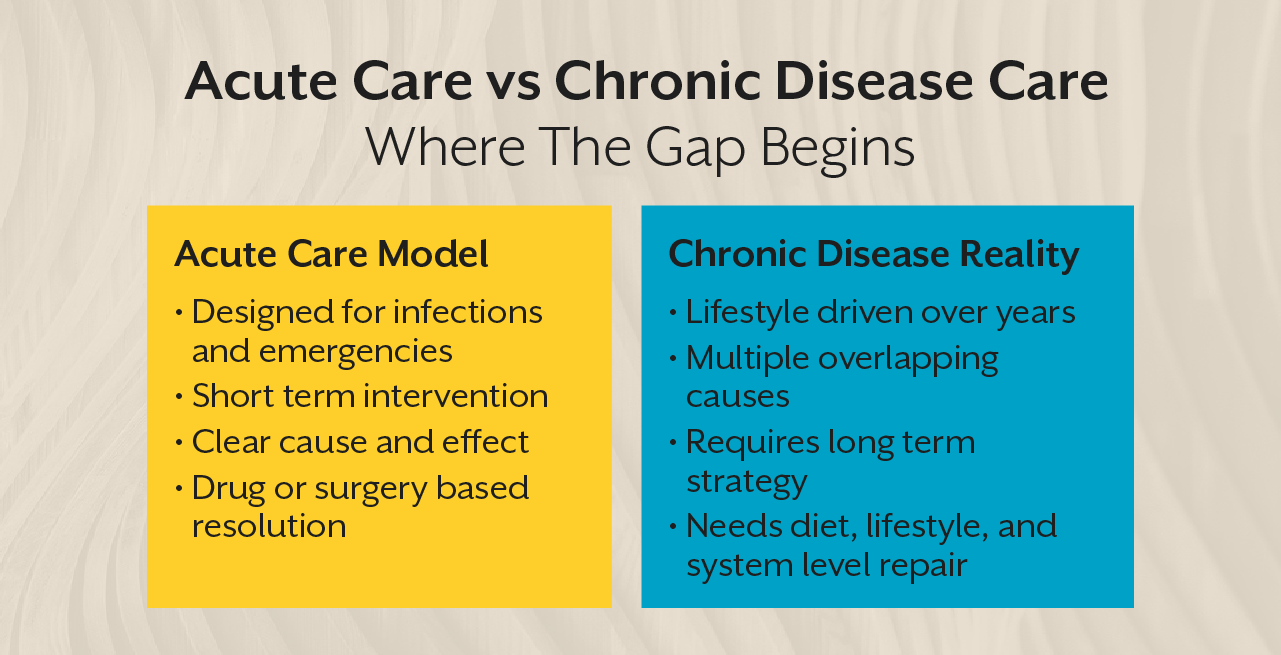
Now, conventional medicine evolved during a time when the leading causes of death were acute, infectious diseases. Today things aren't quite so simple. People, now-a-days visit a doctor not only for acute problems but also for chronic ones. This complicates matters because chronic diseases are difficult to manage, expensive to treat, require more than just a doctor and typically last for a lifetime.

Here are 10 pitfalls of conventional medicine and why it is not the ideal option when it comes to treating chronic diseases:

10 Reasons Conventional Medicine Falls Short in Chronic Disease

1. Failing to address the root cause of problems

Conventional medicine focuses on treating a particular disease by suppressing the symptoms rather than addressing or finding the root cause of the disease. For e.g., there is rarely any serious investigation into why your blood sugar or blood pressure is high in the first place.

2. Failing to apply the right way of treatment

New technological inventions have been adopted as a part of conventional medicine treatment and are doing some stunning things with the potential to fight cancer, reattaching limbs, to name a few. These technical approaches, however, might not be the best ones to cure or treat a chronic disease because more than 85% of these are caused by poor lifestyle and dietary behaviours.

3. Misconception about being a 'cure all' models

As we can see during the time when conventional medicine evolved, the treatment was relatively simple. For e.g., back when someone developed pneumonia or other acute problems, he went to see a doctor, got an antibiotic and either got well or died. This kept on evolving the same way, catching people's attention as if it were to reverse all the health problems there are, in short, being a cure-all model. However, it fails miserably when it comes to curing lifestyle driven diseases such as diabetes or obesity.

4. Low quality primary care

Chronic diseases are difficult to manage and require special attention. In a hospital set up, a doctor typically has to deal over hundreds of patients on a daily basis. If a patient has multiple chronic conditions, is taking several medications, and presents with new symptoms, it is nearly impossible to provide quality care during that 5-minute visit.

5. Unsustainable treatment quality

Statins are widely prescribed to lower "risk" and "risk factors" that are involved in heart disease. But do these liver-toxic drugs hold demonstrable therapeutic potential? Not so much. Same with other medications, most of them only suppress the symptoms simultaneously causing liver and kidney damage.

6. Very less emphasis on diet and lifestyle changes

The risk factors of chronic diseases boil down to people making wrong choices about diet, physical activity, sleep, and stress management, over and over again, throughout a lifetime. As it works, once a disease is identified, medications are prescribed as a treatment strategy. There is hardly any time or attention that is given to discussing diet and lifestyle that might be contributing to the existing problem. Besides, nutritional deficiencies, toxins, heavy metals, antinutrients, food contamination, lack of sleep and other major drivers of poor health and disease are also not addressed in the conventional medicine treatment strategy.

7. A mechanistic approach

Conventional medicine does not see an individual human as a whole and thus does not consider his/her physical, psychological, social and spiritual make-up. The patient presents his body to the doctor as he would his watch to a watchmaker or his car to a mechanic so the expert can fix, add, remove, replace, tighten, loosen, adjust or recharge whatever piece needs work so that the machine functions as it should.

8. Too much reliance on scientific methods/knowledge

Conventional medicine firmly believes that, apart from scientific knowledge, no other form of knowledge is valid because only scientific knowledge is true and real. In contrast, traditional medicine is the fruit of hundreds of years of observation by hundreds of practitioners helping thousands of patients in actual life situations.

9. High dependency and prescription of medications (drugs, pills)

The conventional medical system is designed to keep you on pills, very expensive pills, as if the economy needs you to be sick, to stay on these pills so that Big Pharma executives can get filthy rich.

10. Lack of transparency

Ever tried finding prices for the various healthcare services provided by the hospitals or their performance reviews? Such information is only available for automobiles, hotels and so on. This lack of transparency is one of the important things for conventional medicine to be questioned for. Doctors are often indemnified from health issues arising due to malpractices in patient care. Besides which iatrogenic deaths (aka deaths caused by medical errors are the 3rd leading cause of deaths in hospitalized patients). It's not surprising that even with the Covid-19 pandemic, patients that self-isolated and home quarantined themselves had much better outcomes than the ones that got hospitalized and were put on ventilators and experimental drugs.

Key Takeaway 

This is a gap that Functional medicine and Functional nutrition fills in beautifully. We aim at addressing the imbalances in the body by restoring function through food, lifestyle and supplement interventions. We transform dysfunctioning bodily systems into optimal, functional healthy systems which is the only permanent and sustainable solution.

None of this means every doctor is wrong or that modern medicine hasn't saved lives, it absolutely has. But there's a real difference between emergency medicine and chronic disease management, and it's okay to acknowledge that the current system wasn't designed for the latter. If you've been dealing with a condition that just won't go away despite years of treatment, maybe it's time to ask a different kind of question, not "what drug will manage this?" but "why is this happening in the first place?" That shift in thinking is where real healing tends to begin.

A
Ask your doubts
Thank you! Your submission has been received!
Oops! Something went wrong while submitting the form.

FAQs

Why does conventional medicine struggle with chronic diseases?
faq arrow

Because it is designed for acute conditions where there is a clear cause and quick intervention. Chronic diseases develop over years and need deeper lifestyle and root cause exploration, which often gets missed.

Is conventional medicine completely ineffective for long term conditions?
faq arrow

Not at all. It plays a critical role in emergency and symptom management. The limitation shows up when it is used as the only approach for conditions that require long term lifestyle and metabolic correction.

What does addressing the root cause actually mean?
faq arrow

It means identifying why the body developed the condition in the first place, whether it is diet, stress, gut health, nutrient deficiencies, or lifestyle patterns. If you want clarity on your own case, you can book a root cause analysis to understand what is driving your symptoms.

How is functional nutrition different from conventional treatment?
faq arrow

Functional nutrition looks at the body as a connected system. Instead of isolating symptoms, it works on restoring balance through food, lifestyle, and targeted support, making the outcomes more sustainable over time.

When should someone consider a different approach to healing?
faq arrow

If you have been managing a condition for years without real improvement, or if new symptoms keep appearing, it is worth exploring a deeper approach. You can book a consult to understand what your body might actually be trying to tell you.

Related Blogs

Case Breakdown: How Correcting Metabolic Dysfunction Improved Thyroid Function Without Escalating Medication
read count
read time
Feb 20, 2026

Case Breakdown: How Correcting Metabolic Dysfunction Improved Thyroid Function Without Escalating Medication

A clinical case breakdown explaining how metabolic dysfunction correction improved thyroid function without medication escalation. Learn the systems-biology approach used at iThrive Alive.

Introduction

In clinical practice, thyroid dysfunction is rarely an isolated glandular disorder. It is more often a downstream reflection of systemic dysregulation in the form of metabolic, inflammatory, neurological, and cellular.

Yet conventional treatment models frequently operate within a hormone-replacement paradigm. When symptoms persist or worsen, medication dosage is adjusted. When lab markers fluctuate, dosing is recalibrated. The underlying assumption is simple: thyroid dysfunction equals thyroid hormone deficiency.

However, emerging metabolic and systems biology research suggests a more complex reality. Thyroid physiology is tightly integrated with glucose metabolism, mitochondrial activity, immune signaling, gut integrity, and neuroendocrine stress responses. Disruption in any of these systems can impair hormone signaling even when circulating hormone levels appear adequate.

This case breakdown examines a clinical scenario where thyroid function improved significantly without escalating medication, simply by correcting metabolic dysfunction.

The objective is not to argue against medication when needed but to demonstrate how addressing systemic drivers can restore regulatory efficiency, often reducing physiological strain on the thyroid axis itself.

This system's perspective aligns closely with the clinical model discussed in Healing Hypothyroidism: The Functional Role of Nutrition in Thyroid Health, where thyroid regulation is viewed through nutritional and systemic modulation rather than gland-centric intervention.

Section 1: Understanding the Thyroid-Metabolic Axis

Thyroid Hormones Are Metabolic Regulators

Thyroid hormones function less like isolated endocrine outputs and more like metabolic coordinators. They regulate:

  • Cellular oxygen consumption
  • Mitochondrial energy generation
  • Glucose utilization
  • Lipid turnover
  • Thermogenesis
  • Neurotransmitter balance

When metabolic signaling becomes inefficient, thyroid hormone action becomes compromised, not always because hormone production is low, but because hormone utilization is impaired.

Insulin Resistance as a Thyroid Modifier

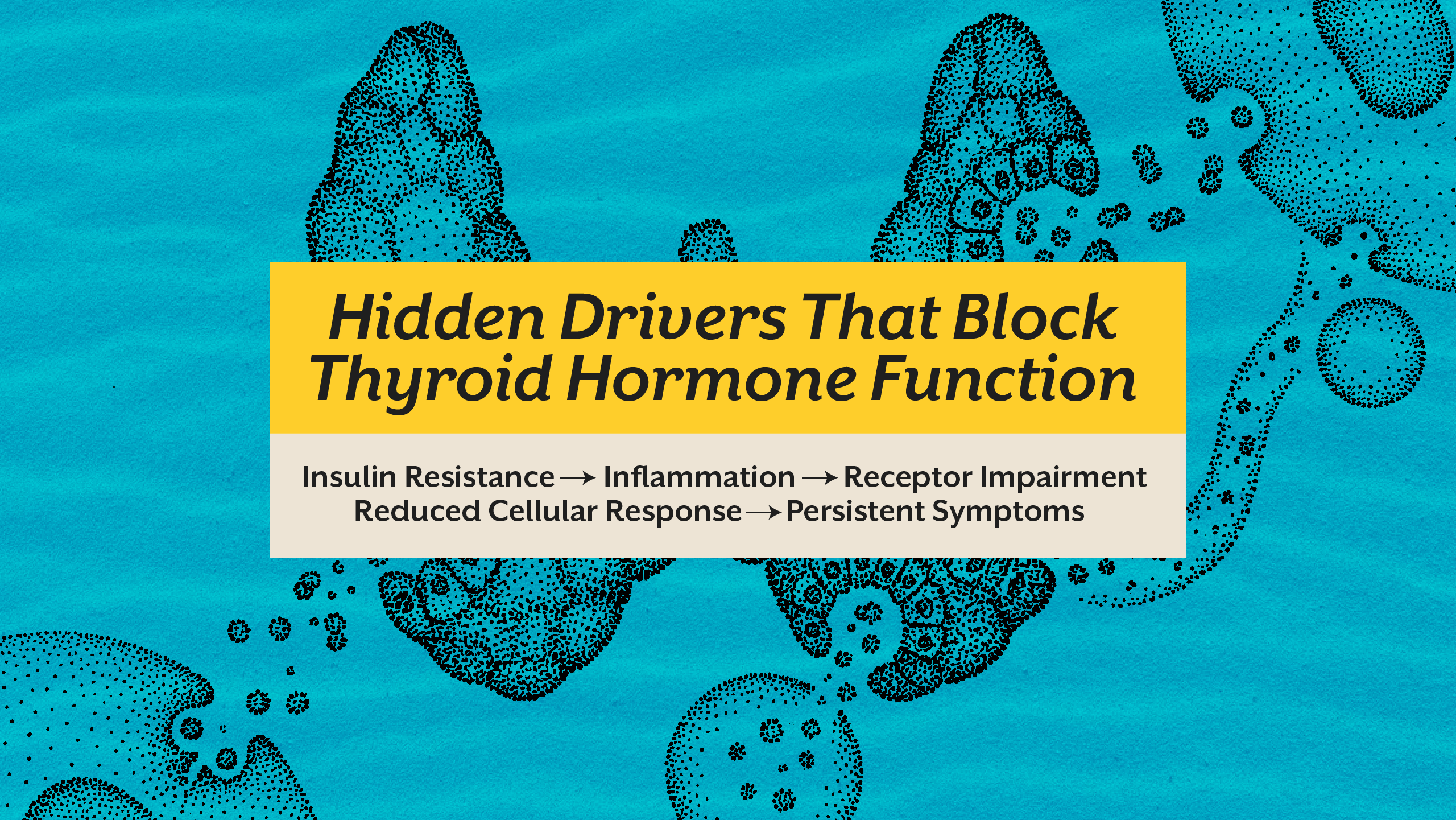
One of the most powerful modulators of thyroid signaling is insulin sensitivity. Insulin resistance alters hepatic enzyme activity responsible for T4-to-T3 conversion, modifies inflammatory cytokine profiles, and influences receptor responsiveness at tissue level.

This interrelationship is also explored in Causes of Insulin Resistance, which describes how inflammatory signaling and metabolic stress interfere with endocrine communication across multiple systems.

When insulin signaling is impaired, tissues become metabolically inflexible. In this environment, thyroid hormone cannot effectively stimulate energy production, even if circulating levels appear normal.

The result is functional hypothyroid physiology without overt hormone deficiency.

Section 2: Case Presentation: Persistent Symptoms Despite Medication

The individual in this case had been diagnosed with hypothyroidism and maintained on stable medication for several years. Laboratory values remained within reference range, yet symptoms persisted:

  • Fatigue and low stamina
  • Weight gain resistant to caloric control
  • Brain fog
  • Poor recovery after exercise
  • Cold intolerance
  • Increased visceral fat

Despite medication adherence, metabolic function continued to decline.

A deeper evaluation revealed:

  • Elevated fasting insulin
  • Increased inflammatory markers
  • Central adiposity
  • Reduced muscle metabolic efficiency
  • High perceived stress load

Importantly, thyroid hormone levels were not severely abnormal. The issue was not production failure, it was signaling inefficiency.

This distinction is critical.

The thyroid axis was functioning, but the metabolic environment was hostile to hormone activity.

Section 3: Root Drivers Identified

Detailed assessment identified three major regulatory disruptions.

1. Chronic Hyperinsulinemia

Elevated insulin levels suppress lipolysis, increase inflammatory signaling, and impair hepatic hormone conversion. The metabolic environment becomes energy-inefficient despite caloric sufficiency.

2. Inflammatory Signaling

Pro-inflammatory cytokines interfere with receptor binding and intracellular signaling cascades. Hormones reach tissues but fail to trigger metabolic response.

This inflammatory-metabolic relationship is also discussed in What Causes Obesity?, where endocrine disruption is linked to inflammatory and environmental stressors.

3. Stress-Driven Neuroendocrine Dysregulation

Chronic stress alters hypothalamic signaling, modifies cortisol rhythms, and shifts energy allocation toward survival rather than regeneration.

When these drivers coexist, thyroid hormone becomes biologically underutilized.

Section 4: Intervention Strategy: Metabolic Restoration

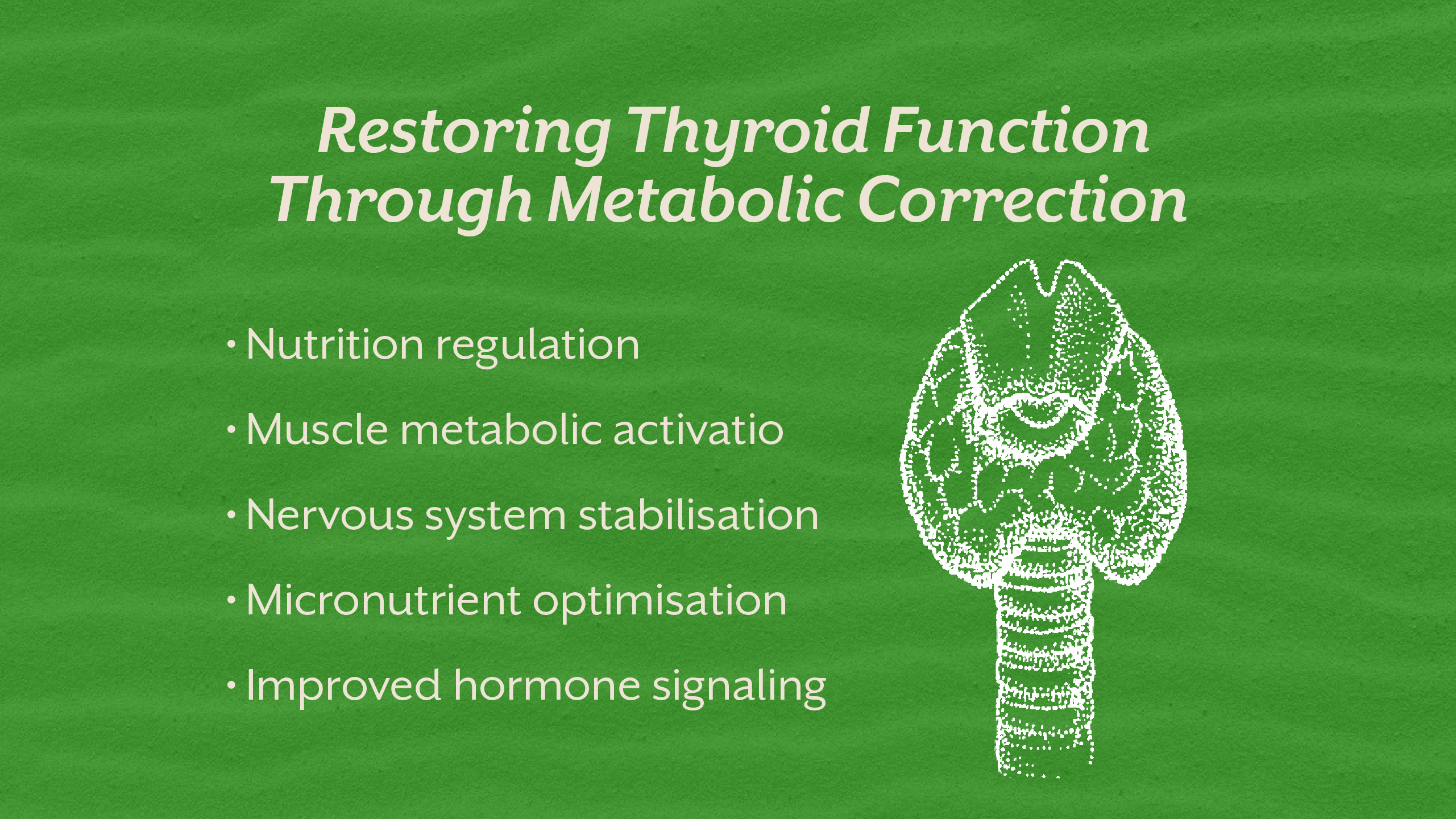
Rather than escalating medication, intervention targeted systemic regulation.

Nutritional Strategy

Structured macronutrient timing to stabilise insulin dynamics and support mitochondrial energy generation. Anti-inflammatory nutrient density prioritised micronutrient sufficiency required for enzymatic conversion.

Resistance Training

Muscle tissue is the largest glucose disposal organ. Increasing lean mass improves insulin sensitivity and enhances metabolic responsiveness to thyroid hormone.

Nervous System Regulation

Stress reduction protocols aimed to restore hypothalamic signaling integrity and reduce cortisol-driven metabolic disruption.

Micronutrient Repletion

Specific nutrients involved in thyroid conversion, receptor function, and mitochondrial activity were optimised.

The intervention did not target the thyroid gland directly, it restored the environment in which thyroid hormones operate.

Section 5: Clinical Outcomes

Over several months, measurable changes occurred:

  • Improved insulin sensitivity
  • Reduced visceral fat
  • Increased lean mass
  • Improved thermoregulation
  • Enhanced energy stability
  • Reduced symptom burden

Most notably, thyroid medication dose remained unchanged yet functional markers improved.

This demonstrates a key physiological principle:

Hormone function depends as much on cellular responsiveness as on hormone quantity.

Section 6: What This Case Teaches About Thyroid Care

This case illustrates that thyroid dysfunction is often a systems disorder expressed through endocrine signaling.

Treating the gland without addressing metabolic context may stabilise lab values but fail to restore physiological function.

A systems-based evaluation including metabolic, inflammatory, gut, and stress parameters enables identification of regulatory bottlenecks that conventional testing may overlook.

This integrative clinical perspective forms the foundation of evaluation models that prioritise functional restoration rather than isolated hormone correction.

Individuals seeking deeper investigation into persistent symptoms despite treatment may benefit from structured metabolic assessment, such as a Book a Root Cause Analysis evaluation or Book a Consult to explore regulatory drivers.

Key Takeaway

This case demonstrates that improving thyroid function does not always require increasing medication. When metabolic dysfunction, inflammatory signaling, and neuroendocrine stress are corrected, hormone efficiency can improve naturally. Thyroid physiology is not governed solely by glandular output but by the biological environment in which hormones operate. A clinically effective strategy therefore focuses on restoring systemic balance, further improving insulin sensitivity, reducing inflammation, enhancing mitochondrial function, and stabilising nervous system signaling. When the regulatory network becomes efficient, thyroid hormone can perform its role effectively, often reducing the need for pharmacological escalation. True endocrine recovery is therefore not about forcing hormone levels upward, but about rebuilding the physiological systems that allow hormones to function properly.

Are Your Thyroid Issues Actually Hashimoto's?
read count
read time
Sep 26, 2025

Are Your Thyroid Issues Actually Hashimoto's?

Still tired on thyroid meds? It could be Hashimoto’s, the autoimmune root cause of hypothyroidism. Learn symptoms, testing, and root-cause healing strategies with iThrive.

Do you feel constantly tired even after a full night’s sleep? Have you noticed weight gain that just won’t budge, no matter how much you diet or exercise? Or maybe you’re dealing with brain fog, mood swings, and restless nights without a clear reason.

If you’ve been diagnosed with hypothyroidism and are on medication but still don’t feel like yourself, you’re not alone. For many, the underlying issue isn’t just a sluggish thyroid - it’s Hashimoto’s disease, an autoimmune condition and the most common cause of hypothyroidism in India (and worldwide).

Understanding this distinction is the first step toward real relief.

What Is Hashimoto's Disease?

Hashimoto’s occurs when the immune system mistakenly attacks the thyroid gland. Instead of protecting you, your immune system produces antibodies that target thyroid proteins and enzymes, causing:

  • Chronic inflammation of the thyroid gland

  • Tissue destruction over time

  • Reduced hormone production, leading to fatigue, weight changes, and mood disturbances

In short, the thyroid isn’t the problem - it’s the victim of an immune system gone rogue.

Recognizing Hashimoto’s Symptoms

Unlike standard hypothyroidism, Hashimoto’s symptoms are broader and often linked to systemic inflammation.

Key signs include:

  • Profound fatigue – exhaustion that persists despite rest

  • Unexplained weight gain – resistant to diet and exercise

  • Brain fog and poor memory – due to low active T3 and neuroinflammation

  • Joint and muscle pain – widespread aches from inflammation

  • Mood fluctuations – anxiety, palpitations, irritability during immune “flares”

  • Gut issues – constipation, bloating, food sensitivities

  • Physical changes – hair loss, dry skin, brittle nails, puffy face

The Importance of a Complete Diagnosis

Most doctors check only TSH (Thyroid-Stimulating Hormone) to confirm hypothyroidism. But this test alone doesn’t reveal the underlying cause.

For suspected Hashimoto’s, a complete thyroid panel is crucial:

  • TSH, Free T4, Free T3 – to assess hormone production and conversion

  • Thyroid Peroxidase Antibodies (TPOAb) – hallmark of Hashimoto’s

  • Thyroglobulin Antibodies (TgAb) – further confirmation of autoimmune activity

Elevated antibodies are the only clear way to confirm Hashimoto’s. This changes treatment from merely replacing hormones to addressing immune dysfunction.

Recognizing Hashimoto’s Symptoms

Unlike standard hypothyroidism, Hashimoto’s symptoms are broader and often linked to systemic inflammation.

Key signs include:

  • Profound fatigue – exhaustion that persists despite rest

  • Unexplained weight gain – resistant to diet and exercise

  • Brain fog and poor memory – due to low active T3 and neuroinflammation

  • Joint and muscle pain – widespread aches from inflammation

  • Mood fluctuations – anxiety, palpitations, irritability during immune “flares”

  • Gut issues – constipation, bloating, food sensitivities

  • Physical changes – hair loss, dry skin, brittle nails, puffy face

The Importance of a Complete Diagnosis

Most doctors check only TSH (Thyroid-Stimulating Hormone) to confirm hypothyroidism. But this test alone doesn’t reveal the underlying cause.

For suspected Hashimoto’s, a complete thyroid panel is crucial:

  • TSH, Free T4, Free T3 – to assess hormone production and conversion

  • Thyroid Peroxidase Antibodies (TPOAb) – hallmark of Hashimoto’s

  • Thyroglobulin Antibodies (TgAb) – further confirmation of autoimmune activity

👉 Elevated antibodies are the only clear way to confirm Hashimoto’s. This changes treatment from merely replacing hormones to addressing immune dysfunction.

Conclusion

If you’re experiencing thyroid symptoms despite treatment, it’s worth asking: Could this be Hashimoto’s?

A complete diagnosis, including antibody testing, is the first step. With the right root-cause approach - focusing on gut health, nutrition, lifestyle, and stress - it’s possible to not only manage symptoms but also restore energy and vitality.

👉Take charge of your thyroid health. Book a Free Functional Nutrition Consult with iThrive and start your journey toward healing from the root.

Could Your Pelvic Pain Be Endometriosis?
read count
read time
Sep 26, 2025

Could Your Pelvic Pain Be Endometriosis?

Pelvic pain isn’t always “normal.” Learn the symptoms, causes, and treatment options for endometriosis. Discover how nutrition and lifestyle changes can ease pain and improve fertility.

Pelvic pain is one of the most common complaints among women, yet it is often brushed aside as “just part of being a woman.” But what if that persistent pain is not just cramps, stress, or something you ate? Could it be a deeper condition - one that silently affects millions of women worldwide? That condition is endometriosis

Understanding Endometriosis

Endometriosis is a condition that often remains undiagnosed in the majority of cases. It is a chronic condition in which endometrial cells move out of the uterus, to other organs which can lead to estrogen-driven inflammation. The extent of the disease can vary ranging from peritoneal deposits to endometrial cells invading other organs such as the bladder, bowel, ureter etc.

This “migration” of endometrial tissue is what makes endometriosis so complex and difficult to treat. Instead of shedding away like normal menstrual lining, these misplaced cells bleed internally, cause inflammation, and eventually lead to scarring and adhesions. Over time, this cycle can cause debilitating pain and, in many cases, fertility issues.

Recognizing the Symptoms

The symptoms include pelvic pain without menstruation, irregular periods, painful intercourse, bowel and bladder symptoms and fatigue. Symptom severity does not depend on the extent of the disease, as some individuals can be asymptomatic, which makes the diagnosis of the condition difficult.

Common Signs of Endometriosis

  • Chronic pelvic pain that doesn’t go away after periods.

  • Irregular cycles or abnormally heavy bleeding.

  • Pain during or after intercourse.

  • Digestive issues such as constipation, bloating, or diarrhea during menstruation.

  • Fatigue that isn’t relieved by rest.

Because symptoms can overlap with other conditions like irritable bowel syndrome (IBS) or pelvic inflammatory disease (PID), women may spend years seeking answers before receiving a proper diagnosis.

What Causes Endometriosis?

The cause of the endometriosis is not definitive. The most common theory is of retrograde menstruation (the endothelial cells, rather than going down the uterus, go into the fallopian tubes, get implanted, and multiply there).

There are various factors for abnormal cellular proliferation, including genetic, hormonal, and immune dysregulation. The endometrial cells respond to estrogen stimulation, leading to inflammation, scarring, further adhesions, and cluster formation.

Possible Contributing Factors

  • Genetics – Women with a family history are more likely to develop the condition.

  • Hormonal imbalance – High estrogen levels can fuel the disease.

  • Immune dysfunction – Some women’s immune systems may fail to clear misplaced cells effectively.

  • Environmental triggers – Exposure to toxins and endocrine disruptors could play a role.

Risk Factors You Should Know

The risk factors include low birth weight, Mullerian anomalies, early menarche, short menstrual cycles, increased menstrual flow, low body mass index, and nulliparity.

While these factors do not guarantee the condition, being aware of them can help women take charge of their health earlier and advocate for proper medical attention.

Why Endometriosis Often Goes Undiagnosed

Endometriosis has a high rate of being undiagnosed, as the pelvic pain is regarded as ‘normal menstrual pain.’

The Silent Struggle

There are other symptoms that will help distinguish it from cramps. These symptoms include:

  • Severity and persistence of pain: While typical period cramps are often mild to moderate and manageable with over-the-counter pain relievers, endometriosis pain is frequently described as severe, excruciating, or debilitating. This pain can last for more than the duration of periods.

  • Pain beyond menstruation: The pain related to endometriosis can last six months or more. The pain can be felt during intercourse, painful bowel movements or urination, especially during periods, or lower back or abdominal pain that is not directly related to menstrual flow.

  • Associated symptoms: Other symptoms include difficulty getting pregnant, fatigue, heavy or irregular periods, and GI symptoms such as diarrhea, bloating, constipation especially during periods.

The misconception that “painful periods are normal” is one of the reasons why endometriosis goes undetected.

The Role of Awareness

Women should keep track and observe their flow, menstrual and/or pre-menstrual symptoms, duration of periods and cycle. This habit will help them to identify changes in their cycle or observe presence of new or worsened symptoms.

There exists a lack of awareness among patients and sometimes even doctors. This is due to:

  • Normalization of pain

  • Difficulty differentiating symptoms

  • Stigma related to menstruation

  • Use of pain relief instead of finding the root cause of the pain

  • Misdiagnosis

Breaking this cycle requires education, open conversations about menstrual health, and better diagnostic support in healthcare systems.

Treatment Options

Treatment options for endometriosis include:

  • Pain medication – To temporarily relieve discomfort.

  • Hormone therapy – To suppress estrogen and slow the growth of endometrial tissue.

  • Fertility treatment – For those struggling with conception.

  • Hysterectomy with removal of the ovaries – A last-resort option for severe cases.

Modern medicine focuses on symptom management, but functional approaches that address the root cause are becoming increasingly important.

The Role of Nutrition in Endometriosis Management

Nutritional management include:

  • Eliminating inflammatory food such as processed foods, soy, gluten, sugar etc.

  • Incorporating anti-inflammatory foods such as omega-3 rich fish, colorful fruits and vegetables that are rich in antioxidants, fiber-rich foods such as whole grains, legumes etc.

  • Reducing exposure to Xenoestrogens (found in plastics, cosmetics etc.), as elevated estrogen levels can worsen symptoms and disease severity.

  • Low FODMAP diet has also been shown to have beneficial effects.

Why Diet Matters

Food has the power to either fuel inflammation or fight it. For women with endometriosis, adopting an anti-inflammatory diet and lifestyle can significantly improve quality of life and reduce dependency on medications.

Living With Endometriosis

While there is no permanent cure yet, many women manage their symptoms and lead fulfilling lives by combining medical treatment with lifestyle changes such as:

  • Regular exercise to reduce inflammation.

  • Mind-body practices like yoga and meditation.

  • Adequate sleep and stress management.

  • Building a strong support network of family, friends, and healthcare providers.

Final Thoughts

Pelvic pain is not something to brush aside. If you experience severe or persistent discomfort, it’s worth asking: “Could this be endometriosis?” Early diagnosis and proactive management can change the trajectory of a woman’s health, fertility, and overall quality of life.

By spreading awareness and normalizing the conversation around women’s pain, we can help countless women break free from silent suffering.

At iThrive, we specialize in root-cause healing through functional nutrition and lifestyle interventions tailored to your unique body.

Book a free consult with iThrive today and take the first step toward clarity, relief, and thriving health.

REFERENCES

Pathophysiology, diagnosis and management of endometriosis - https://www.bmj.com/content/379/bmj-2022-070750.abstract

Diagnosis and management of endometriosis - https://www.cmaj.ca/content/195/10/E363.short

Pathogensis based diagnosis and treatment of Endometriosis - https://www.frontiersin.org/journals/endocrinology/articles/10.3389/fendo.2021.745548/full

Dietary and Nutritional Interventions for the Management of Endometriosis - https://pmc.ncbi.nlm.nih.gov/articles/PMC11643425/#sec4-nutrients-16-03988

Low FODMAP diet can easy symptoms of those with Endometriosis study - https://www.monash.edu/news/articles/low-fodmap-diet-can-ease-symptoms-of-those-with-endometriosis-study

Talk to our team

Thank you! Your submission has been received!
Oops! Something went wrong while submitting the form.

Talk to our team

Thank you! Your submission has been received!
Oops! Something went wrong while submitting the form.

Download Now

Thank you! Your submission has been received!
Oops! Something went wrong while submitting the form.
Select your Location
Agra
Ahilyanagar
Ahmadnagar
Ahmedabad
Ahmednagar
Akola
Aligarh
Allahabad
Almora
Alwar
Ambala
Ambedkar Nagar
Amravati
Amritsar
Amroha
Anand
Aurangabad
Ayodhya
Azamgarh
Baghpat
Bahadurgarh
Bahraich
Banda
Barabanki
Baraut
Bardhaman
Bareilly
Begusarai
Belgaum
Bengaluru
Bharatpur
Bhatinda
Bhilai Durg
Bhilwara
Bhiwani
Bhopal
Bhubaneswar
Bijnor
Bikaner
Bilaspur
Bokaro
Budhana
Bulandshahar
Chandigarh
Chennai
Chhatrapati Sambhajinagar
Chhindwara
Chomu
Darbhanga
Dehradun
Delhi
Deoband
Deulpur
Dhampur
Dhanbad
Durgapur
Eah
Etah
Etawah
Faizabad
Faridabad
Firozabad
Gadarpur
Gandhinagar
Ganganagar
Gaya
Ghaziabad
Ghazipur
Gonda
Gorakhpur
Greater Noida
Greater Noida Pc
Guntur
Gurgaon
Guwahati
Gwalior
Hajipur
Haldwani
Hapur
Hardoi
Haridwar
Hathras
Hazaribagh
Hisar
Hoshiarpur
Howrah
Hyderabad
Indore
Jabalpur
Jaipur
Jalandhar
Jalgaon
Jalna
Jamnagar
Jamshedpur
Jaunpur
Jhansi
Jhunjhunu
Jind
Jodhpur
Sorry, currently we are not serving this city.
Please try searching for another city or put your city here.
My Location not in the list
Your Location is 'Location'
Book a Test

City

Thank you! Your submission has been received!
Oops! Something went wrong while submitting the form.