




Genetically Modified (GM) Foods
Table Of Content
NUTRITION SCIENCE

Genetically Modified (GM) Foods

iThrive Team
Jul 25, 2020

Genetically modified (GM) foods have made a huge splash in the media recently. Prominent campaigners and public interest groups in India and all around the world are actively protesting against the use of GM foods and are trying to bring the issue of genetic engineering to the forefront of the public consciousness.

But what are GM foods?

The term GM foods is most commonly used to refer to crop plants created for human or animal consumption using the latest molecular biology techniques. A genetically modified organism (GMO)  is any organism whose genetic material has been altered using modern methods. These plants have been modified in the laboratory to enhance desired properties such as increased resistance to herbicides or improved nutritional content. This is done by tweaking the genetics of that particular crop plant.

For example, a plant gene which has shown best results for drought tolerance is isolated and inserted into a different plant in order to make it drought tolerant. 

Now, not only can genes be transferred from one plant to another, but genes from non-plant organisms (bacteria, algae, etc.) also can be used. The best known example of this is the use of B.t. genes in corn and other crops. B.t., or Bacillus thuringiensis, is a naturally occurring bacteria that produces proteins that are lethal to insect larvae. B.t. crystal protein genes have been transferred into corn, enabling the corn to produce its own pesticides against insects.

GM crop plants in the Indian market

Besides cotton, genetic engineering experiments are being conducted on maize, mustard, sugarcane, sorghum, groundnut, chickpea, rice, tomato, brinjal, potato, banana, papaya, cabbage, cauliflower, oilseeds, castor, soyabean and medicinal plants.

Experiments are also underway on several species of fish. In fact, such is the  desperation that scientists are trying to insert Bt gene into any crop they can lay their hands on, without knowing whether that would be desirable or not.

Before you think of having GM foods, it is very important to consider the advantages and disadvantages especially with respect to its safety. Though researchers and the manufacturers make sure that there are various advantages of consuming these foods, a fair bit of the population is entirely against them.

The so called ‘benefits’ of GM foods

GM foods promise to be advantageous because of the following traits:

  1. Pest resistance

Growing GM foods can help eliminate the application of chemical pesticides and reduce the cost

of bringing a crop to market.

  1. Herbicide tolerance

Crop plants genetically-engineered to be resistant to herbicide can help prevent environmental damage by reducing the amount of herbicides needed.

  1. Food security

With the ever rising world population and decreasing cultivable land, there is an uncertainty regarding food security. As GM crops have shown to tolerate harsh environmental and terrestrial conditions, bulk growth can be ensured. 

  1. Disease resistance

There are many viruses, fungi and bacteria that cause plant diseases and genetically modified plants are resistant to these diseases.

  1. Cold tolerance

Unexpected frost can destroy sensitive crops. An antifreeze gene from cold water fish has been introduced into plants in order to make them tolerate cold temperatures.

  1. Drought tolerance/ Salinity tolerance

GM plants can withstand long periods of drought or high salt content in soil and groundwater.

  1. Nutrition

Some genetically engineered foods are reported to be high in nutrients and contain more

minerals and vitamins than those found in traditionally grown. 

These crops have also been reported to possess improved shelf life thereby eliminating storage issues. They are also considered to be remunerative for the farmers.

Cons, risks and controversies of GM foods

Numerous concerns have been raised against the use of GM foods with respect to their potential hazards and regulatory oversight. The disadvantages of using these modified varieties fall into the following 3 categories-

  • Environmental hazards
  • Health risks (food safety, health problems-antibiotic resistance and allergies )
  • Economic concerns

Environmental hazards

Use of GM foods is not  yet  proven  to  be  completely  safe  for the environment. The early warnings of environmentalists about the negative impacts of genetically modified (GM) plants are being proven correct. We are now observing the following serious problems:

Increased Herbicide Use: The widespread cultivation of GM herbicide-tolerant crops has pushed up the use of herbicides such as glyphosate. Ingestion of this herbicide can cause increased saliva, burns in the mouth and throat, nausea, vomiting, and diarrhea. Moreover, scientists from the International Agency for Research on Cancer of the WHO evaluated fewer studies and reported that glyphosate is probably carcinogenic.

Superweeds: The use of specific herbicides with GM herbicide-tolerant crops has led to the evolution and spread of ‘superweeds’ or weeds that can no longer be killed by those herbicides. In the past 20 years, 37 weed species have developed resistance to the herbicide glyphosate.

Superpests: Some insects have developed resistance to the toxins in GM insect-resistant crops.

Contamination: Contamination from GM plants has serious ecological, economic and social impacts.

Biodiversity Loss: The use of some GM crops can have negative impacts on non-target organisms and on soil and water ecosystems. For example, the expansion of GM herbicide-tolerant corn and soy has destroyed much of the habitat of the monarch butterfly in North America.

Gene  Spilling:  There  could  be  dramatic effects  of  the  release  of  pollens  from  the genetically altered plant into the wild varieties.

Cross-Pollination:  There  is  a  difficulty  in distinguishing the difference between GM and non  GM,  because in cross-pollination  the pollens  travel a  long  distance  and can  easily contaminate an organic field.

There is also a strong  risk of  the  loss  of  Biodiversity. As, when we remove a pest, we also  remove a potential source of food for another organism; thus disturbing the whole food chain.

Health risks

The biggest threat caused by GM foods is that they can have harmful effects on the human body. It is believed that consumption of these genetically engineered foods can cause problems due to the following reasons:

  • GM foods can be unsafe

There are many reasons which show that the GM plants can cause unique dangers. GM foods are prepared by alteration of genes which cause mutations. The genetic material in soybean that makes them herbicide tolerant is transformed into the human gut bacteria and continues the function. This shows that eating GM crops can cause foreign GM proteins to express inside our gut.

  • GM diet can cause a cancer causing reaction in the digestive tract

The 1st crop submitted to FDA (food and drug administration)- tomato shows evidence of toxin. Out of 20 female rats that were fed GM tomato, seven developed stomach lesions. 

  • GM food can cause liver damage

Rats fed on GM potatoes had smaller and partially atrophic liver. Rats show liver lesions and other indications of toxicity when they were fed by GM corn.

  • GM food can cause animal death and organ damage

The mice fed with roundup ready soy had produced significantly less digestive enzymes and cancer. In rats fed with GM potato enlarged pancreases were seen. GM-fed animals show lesions, toxicity, altered enzymes production or inflammation.

  • GM crops can cause an immune reaction and allergies

Allergic reactions are produced when any foreign particle is detected and interpreted by the immune system. All the GM foods according to their definition have foreign particles that are inserted into the genome. So they provoke allergic reactions when they enter the body. 

GM peas provoked an inflammatory response in mice showing that it may cause a deadly allergic reaction in people. The B.t. toxins produced by GM crops (B.t. maize and cotton) are showing more dangerous toxic reactions than natural varieties.

Besides, as these foods are new inventions, not much is known about their long term effects on human beings. As the health effects are unknown, many people prefer to stay away from these foods. Manufacturers do not mention on the label that foods are developed by genetic manipulation because they think that this would affect their business, which is not a good practice. Many religious and cultural communities are against such foods because they see it as an unnatural way of producing foods. Many people are also not comfortable with the idea of transferring animal genes into plants and vice versa.

Genetically modified food safety has been a controversial issue for a long time. Safety and potential risks, as well as ethical concerns associated with GM food are still debated.

Economic concerns

It is a costly and lengthy process to  bring the  GM foods in  the normal market chain. The large  capital  required  for  the  GM foods  can result in the consolidation of wealth in the hands of few rich industrialists, thus creating a social gap. Higher tariffs are implemented by the authorities over GM food in many cases. The developer of the technology also wants a suitable royalty for  these products,  so  ultimately it is not economically viable for the small farmers to purchase these seeds.

Since we are at a stage of rapid advances in science and technology, it may be worthwhile discussing their impact on food and nutrition security and all the other aspects. It is an utter myth that GM crops will feed the world and that GM crops have consistently increased yields, farmer incomes and reduced pesticide use. Evidence shows that across the globe, genetic engineering has not increased the yield of a single crop.

The World Health Organization cautions that “Different GM organisms include different genes inserted in different ways. This means that individual GM foods and their safety should be assessed on a case-by-case basis and that it is not possible to make general statements on the safety of all GM foods.”

The high-level push to get GM food crops planted in India is bypassing proper processes and procedures in what is a case of “unremitting regulatory delinquency.” Moreover, four high-level reports advising against the adoption of these crops in India are being sidelined:

The ‘”Jairam Ramesh Report: of February 2010, imposing an indefinite moratorium on Bt Brinjal;

The “Sopory Committee Report” [August 2012];

The “Parliamentary Standing Committee” [PSC] Report on GM crops [August 2012]; and

The “Technical Expert Committee [TEC] Final Report” [June-July 2013]).

There are many challenges ahead for governments, especially in the areas of safety testing, regulation, international policy and food labeling with regards to the use of these novel foods.

We at ThriveFNC would advise you to give a wide berth to GM food to avoid causing unintended harm to your health and the environment. The big agriculture’s enthusiasm for this powerful technology doesn’t mean that it’s in the best interest of your health. There really is no need for us to consume GM foods when other options exist.

References-

A
Ask your doubts
Thank you! Your submission has been received!
Oops! Something went wrong while submitting the form.

Related Blogs

Are you drinking water wrong? The truth about hydration, minerals & water quality
read count
read time
Jun 17, 2026

Are you drinking water wrong? The truth about hydration, minerals & water quality

You may be drinking enough water but still not be properly hydrated. Discover how minerals, electrolytes, RO water, and simple daily habits influence how well your body actually uses water.

Introduction

You drink your 8  glasses, carry a bottle everywhere, and tell yourself you're hydrated. But what if I say the way you're drinking water is working against your body?

This is one common question that keeps coming up again and again in our iThrive Tribe community groups and honestly, it's one of the most important health conversations you can ever have. As hydration isn't just about how much water you drink, rather it’s also about what kind of water, what's in it, and how your cells actually absorb it.

This blog will be diving deep into what kind of water you should drink, what’s in it and how your cells actually absorbs it.

Water is not just water 

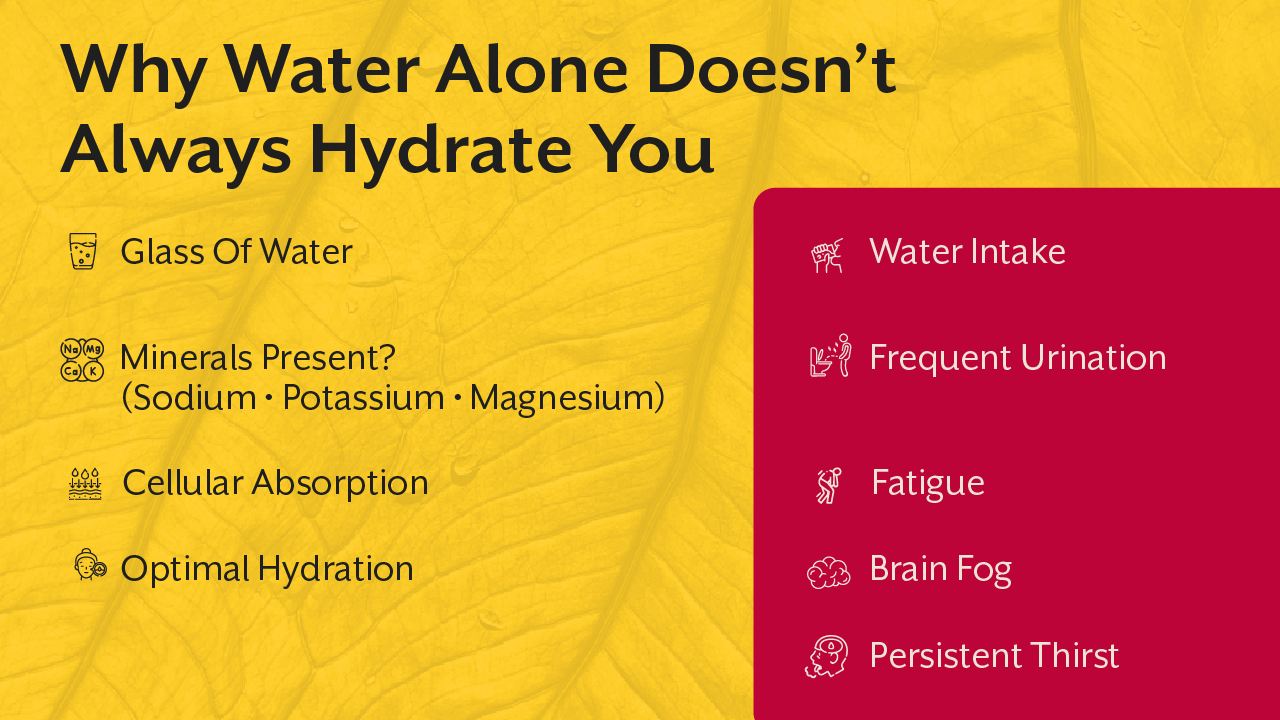
Why Water Alone Doesn’t Always Hydrate You

I’ll tell you something most of you would’ve never realised: plain water especially demineralised or RO purified water without any minerals is not the same as hydrating water.

Your cells don't just absorb water passively like a sponge. Water enters and exits cells through channels regulated by electrolytes which primarily sodium, potassium, magnesium, and chloride. These minerals are what actually pull water into the cell and keep it there. Without them, water flows right through you. You drink, you pee, and you're still thirsty… the loop is on and on. 

Minerals such as calcium, magnesium, as well as potassium are essential not just for bones and muscles, but also for neuromuscular transmission, enzymatic activity, oxygen transport, and basic cellular function. In lay man language I can say without minerals, your body can't do much with the water you give it.

The problem with RO water 

Reverse osmosis water purifiers like Kent RO and similar systems definitely does a fantastic job of removing contaminants, heavy metals, fluoride, and bacteria from drinking water. That part is honestly valuable, especially here in Indian cities where tap water quality is inconsistent.

But let me first talk about the catch: RO filtration strips everything including the naturally occurring minerals that make water beneficial. So basically what you're left with is very clean, very empty water.

Drinking demineralised water consistently, especially during summer or physical activity, can actually dilute your body's electrolyte balance. The result? You may be drinking plenty of water but still experiencing fatigue, brain fog, muscle cramps, or persistent thirst, which are all the classic signs of inefficient hydration.

The fix is simple: remineralise after purification.

  • Add a small pinch of Himalayan pink salt to your water bottle
  • Use a trace mineral supplement like Utah Sea Trace Minerals or BodyBio Minerals, available on iHerb just a few drops per litre
  • Add coconut water to your hydration routine, especially post-exercise.
  • Drop in a pinch of magnesium bisglycinate or use a magnesium-rich mineral supplement as magnesium plays a starring role in cellular energy production and muscle recovery

And no this is not about adding flavour. It's about turning water that your body will pass through, into water that your body can actually use.

The summer hydration trap

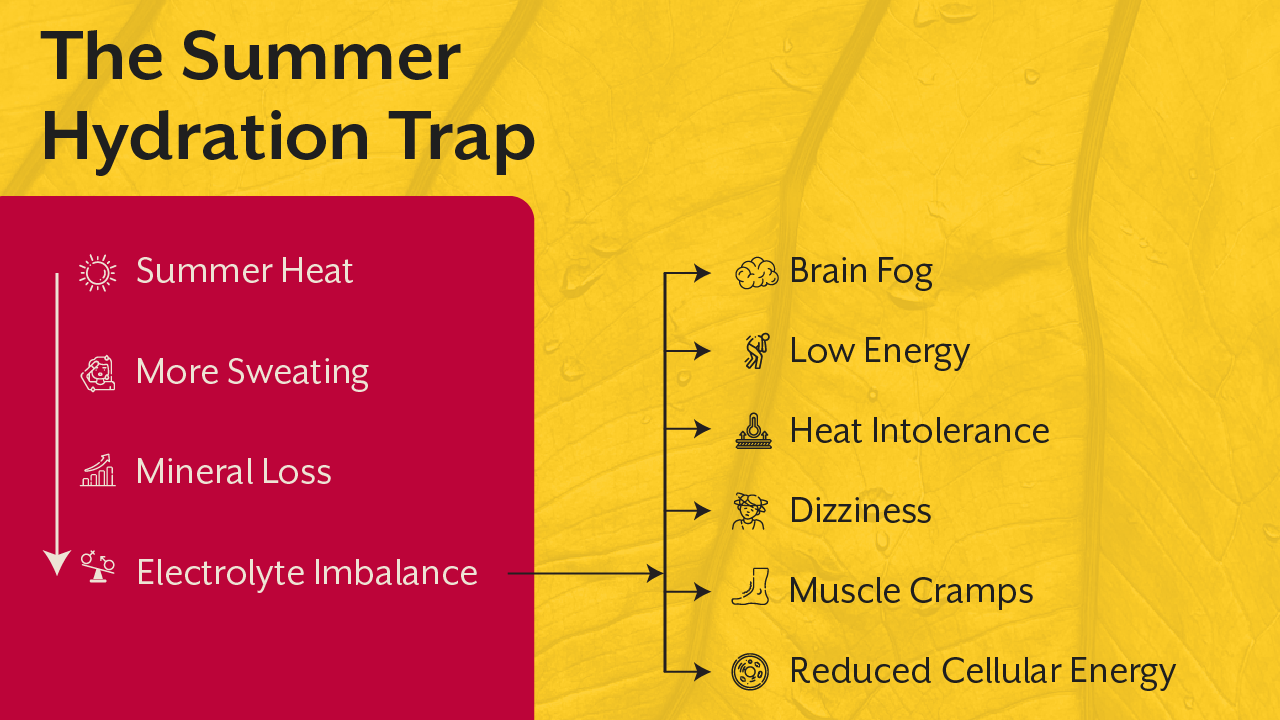
The Summer Hydration Trap

During summer, the stakes are higher than usual. Rising temperatures push your body into continuous fluid stress like you're sweating more, your blood vessels are dilating, and you're losing water and minerals at an accelerated rate. This is when poor hydration practices really start to show up.

What happens when you're sweating but only replacing fluid without minerals?

  • Electrolyte depletion I mean sodium, potassium, and magnesium drop, impairing every system that depends on them
  • Heat intolerance like your thermoregulation breaks down, making you feel the heat far more intensely
  • Brain fog and fatigue even mild dehydration impacts cognition and mood
  • Circulatory strain low plasma volume causes your heart to work harder, leading to dizziness and weakness
  • Cellular inefficiency your mitochondria need proper hydration to function and without it, energy production at the cellular level falters

The major takeaway here is that summer doesn't just increase your need for water, it rather increases your need for minerals. Hydrating smarter beats hydrating more.

How to actually drink water: Practical Habits

Beyond what you put in your water, how you drink matters too.

Sip, and please don't gulp. Drinking large amounts of water at once overwhelms your kidneys and passes through without being absorbed well. Sipping consistently through the day allows your cells to keep pace.

Drink water away from meals or at least don't flood meals with large quantities. 

A small amount of water with food is fine, but large quantities can dilute digestive enzymes and stomach acid.

Morning hydration matters. After 7 to 8 hours of sleep, you wake up mildly dehydrated. Start your morning with a glass of mineral-rich or lightly salted water before coffee.

Listen to your body, never chase not the number just for the sake of it. The 8 glasses a day rule is a general guideline, and not a universal prescription. Your needs vary on the basis of your size, activity level, climate, and diet. Pale yellow urine is a good practical indicator of adequate hydration.

Eat your water too. Foods such as cucumber, watermelon, muskmelon, and citrus fruits are quite  refreshing and they also deliver water alongside micronutrients and electrolytes that support absorption. In summer especially, these can prove to be your allies.

What about Kangen water and ionised water? 

Kangen water machines have become popular in wellness circles, and there's a lot of marketing around their alkaline, ionised output. It's worth understanding what these machines actually do and offcourse what they don't.

Kangen machines work through electrolysis passing an electrical current through water to separate it into alkaline and acidic streams. Sources also claim this also structures the water, but this is where the science gets murky.

Water structuring is about the strength of hydrogen bonds between water molecules. Electrolysis, by its very nature, breaks hydrogen bonds to separate the water's components. Ionisation through electrical hydrolysis creates a water that may carry an electrical charge, but that charge doesn't equal molecular structure. The two are not the same thing.

There are also practical concerns:

  • The hydrogen infused by electrolysis is unstable and dissipates quickly, you need to drink it immediately after pouring for any potential benefit
  • The machines do not remineralise water; alkaline mineral compounds produced through the process may not be recognised by the body, and in people with suboptimal kidney function, could accumulate in tissues
  • Tap water TDS (total dissolved solids) significantly affects the machine's output so if the source water is too hard or too soft, the hydrogen concentration and machine performance both suffer

None of this means ionised water has no benefits, molecular hydrogen does have genuine antioxidant research behind it. But there are simpler, more stable, and far more affordable ways to get those benefits than a machine costing several lakhs. Adding trace minerals and focusing on clean, remineralised water gets you most of the way there.

If you're considering an alkaline or hydrogen water setup, the most important thing is to also remineralise whatever water you're drinking. Any RO system works fine as a base, just put the minerals back in after.

A simple hydration protocol to start today

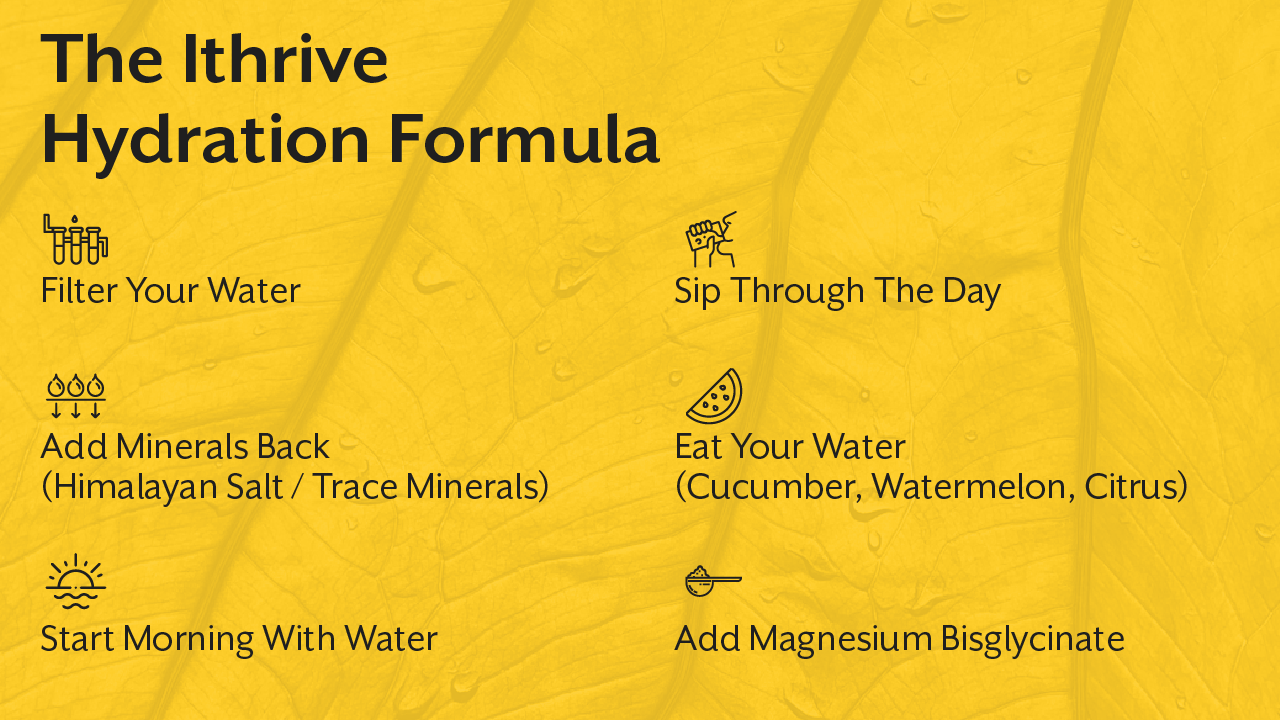
The iThrive Hydration Formula

You don't need expensive equipment. Here's what actually moves the needle:

  1. Filter your water any good RO purifier handles contaminants well
  2. Remineralise after filtering Himalayan pink salt, trace mineral drops, or coconut water
  3. Sip through the day don't wait until you're thirsty, that's already mild dehydration
  4. Prioritise minerals in summer add magnesium bisglycinate, eat hydrating foods, and consider a natural electrolyte drink
  5. Start your morning right warm mineralized water before anything else
  6. Rinse produce with ozone water if available, it's an effective way to remove pesticide residues and surface contaminants without adding chemicals to your food

Key Takeaway 

Hydration isn’t about drinking more water. It’s about helping your cells actually use it.

If you’re still feeling tired, thirsty, bloated, dizzy, or experiencing brain fog despite drinking plenty of water, it may be time to look beyond quantity and focus on water quality, mineral balance, and hydration habits.

Start simple: filter your water, remineralise it, sip consistently, and support hydration with minerals and water-rich foods. Your body doesn’t just need water, it also needs the right environment to use it.

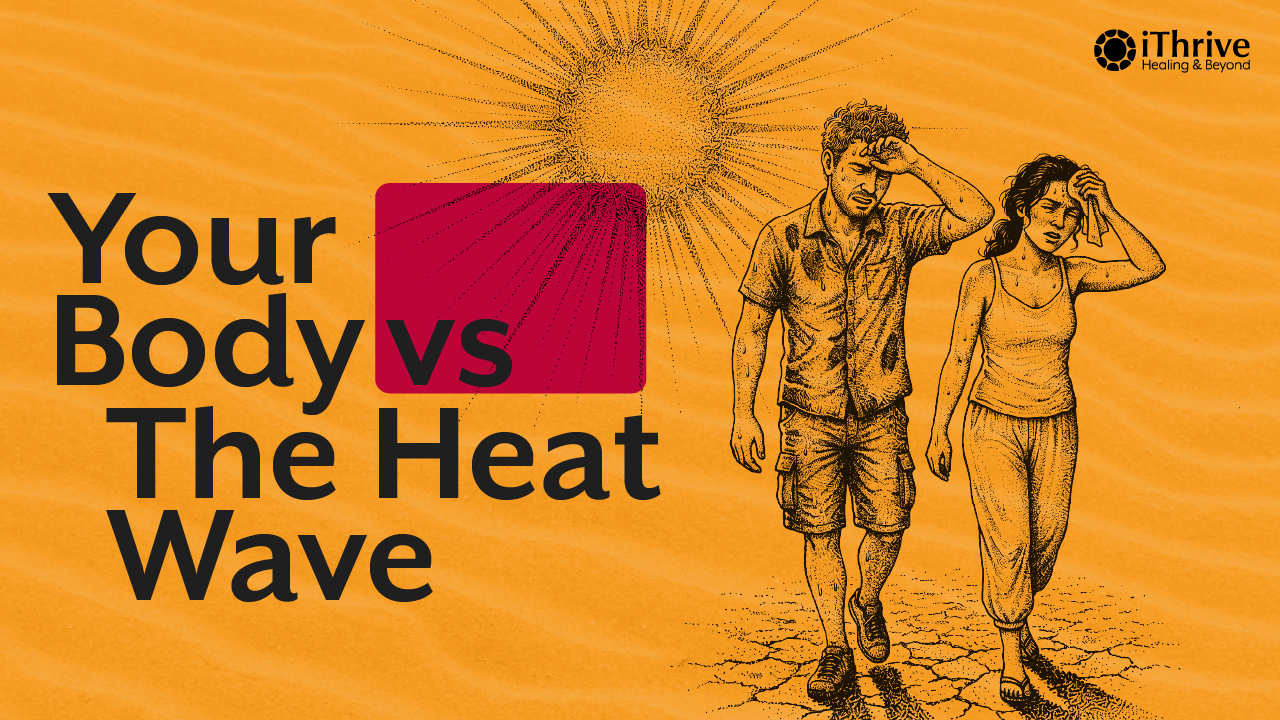
Excessive Heat Is Not “Normal”: How to Protect Your Body During Heat Waves
read count
read time
May 27, 2026

Excessive Heat Is Not “Normal”: How to Protect Your Body During Heat Waves

Extreme temperatures are no longer just uncomfortable, they’re affecting hydration, hormones, inflammation, digestion, and recovery. Learn what excessive heat really does to the body and how to protect yourself naturally during dangerous summer heat waves.

Introduction

You step outside for around 5 minutes and suddenly your head starts feeling heavy. Your skin turns sticky almost instantly, your energy crashes in the middle of the day, and no matter how much water you drink, you still end up feeling drained. 

Let me be honest this is not just summer, it’s also excessive heat and your body is continuously working overtime to survive it. 

Over the last few years, the current temperature across various cities has consistently crossed dangerous and immense limits. Right from rising humidity to prolonged heat waves, the weather this week itself has shown how unpredictable and extreme temperatures have become. Platforms such as Zoom Earth are now constantly tracking heat movement globally because the situation is becoming  near to impossible to ignore.

But here’s the problem.

Most people think excessive heat only means dehydration. In reality, excessive heat in the body can impact various factors such as hormones, blood pressure, nervous system regulation, inflammation levels, digestion, energy production, as well as mineral balance. 

Here at iThrive, after working with clients since 2019 in functional nutrition, we’ve repeatedly observed one common thing every summer that people don’t realise how deeply heat stress affects the body until symptoms become severe and starts backfiring. 

And the scariest part?

At times, the body starts overheating long before a heat stroke happens.

This blog will help you understand the following aspects clearly so that this summer you can be much aware of how to protect yourself from excessive heat. 

  • Excessive heat meaning
  • Why your body struggles during extreme temperatures
  • What excessive heat Celsius ranges become dangerous
  • Symptoms you should never ignore
  • How to actually protect yourself naturally during heat waves

What Does Excessive Heat Actually Mean?

The excessive heat meaning is far more serious than simply “feeling hot.” Excessive heat refers to environmental temperatures high enough to place stress on the cooling system of the body. This typically happens when the temperatures remain abnormally high for a few days, humidity rises drastically, nighttime temperatures don’t cool properly or when the body can’t regulate internal temp effectively. 

Once your internal body temp begins rising faster than your body can cool itself, multiple systems become affected simultaneously. And this is exactly why excessive heat can become dangerous even before a person collapses. So beware. 

Why Excessive Heat Feels Worse Today

If you’ve been feeling like summers suddenly became unbearable, trust me you are not imagining it. The current temperature in many cities is consistently touching dangerous levels earlier in the season itself. On top of it the humidity, and the body experiences even greater thermal stress.

For instance, 38°C with humidity feels like 45°C to the body, sweat stops evaporating efficiently, core temp rises rapidly, and electrolyte loss increases rapidly. 

This is also exactly why many people constantly check platforms like Zoom Earth to monitor heat patterns and weather this week before travelling or stepping outdoors. Honestly, external heat is only one side of the story, internal excessive heat in the body matters too.

What Happens Inside the Body During Excessive Heat?

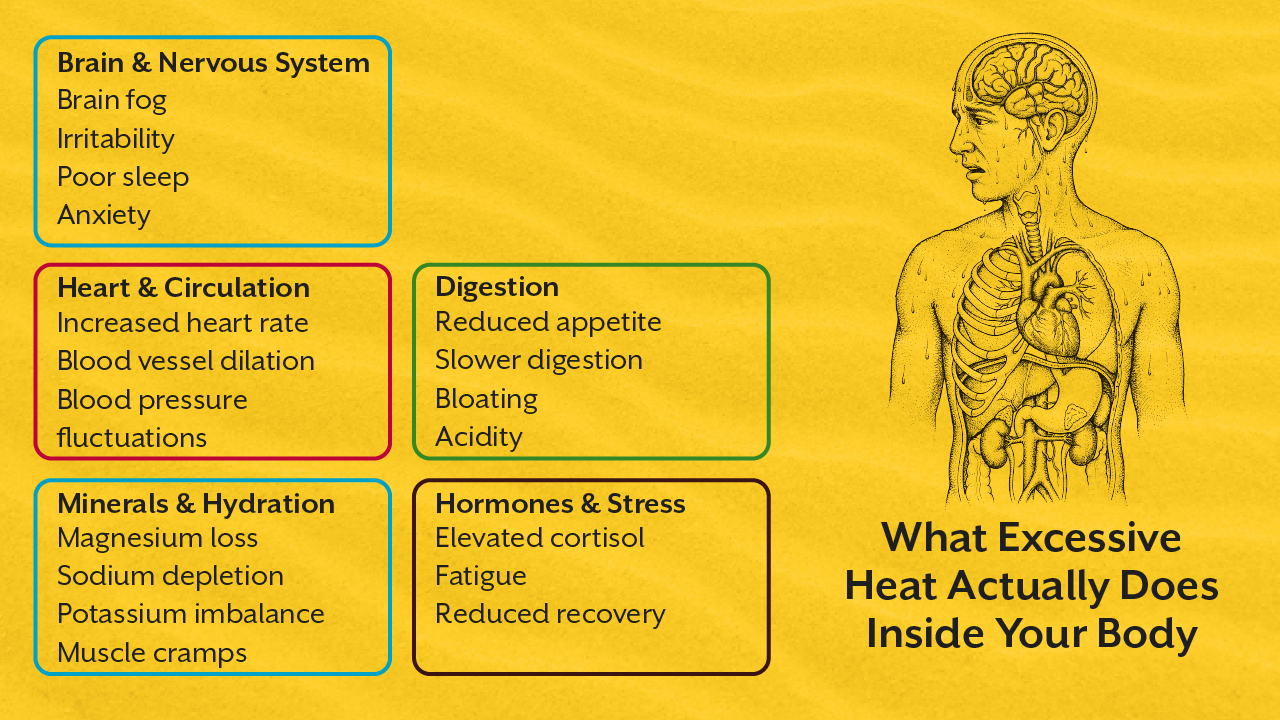
What Excessive Heat Actually Does Inside Your Body

Your body is constantly trying to maintain a stable internal temp. When environmental heat rises excessively the blood vessels dilate, minerals are lost, stress hormones start shifting, sweating increases, and heart rate rises. 

Initially, this is protective but prolonged excessive heat forces the body into survival mode.

1. Mineral Depletion Increases Rapidly

Sweating does not only cause water loss. On the other hand it also depletes sodium, magnesium, potassium, as well as chloride. 

This is why many people experience symptoms such as headaches, dizziness, anxiety, fatigue, muscle cramps, and heart palpitations during heat waves. 

Most people keep drinking plain water but never replace electrolytes properly and that often worsens symptoms.

2. Digestion Slows Down

One of the most overlooked effects of excessive heat in the body is poor digestion. During heat stress the blood flow gets redirected towards cooling mechanisms, the production of acid reduces, appetite decreases and bloating worsens. 

This is why heavy oily meals feel unbearable during peak summer. Your body is already struggling to regulate temp. Digesting inflammatory food adds another layer of stress.

3. Cortisol and Stress Response Increase

Excessive heat itself acts as a physiological stressor. This means your nervous system stays more activated than usual. You might notice symptoms such as poor sleep, brain fog, exhaustion, irritability, anxiety, as well as low patience. 

Most of you’ll assume you all are “burnt out” mentally when in reality your body is struggling with heat adaptation.

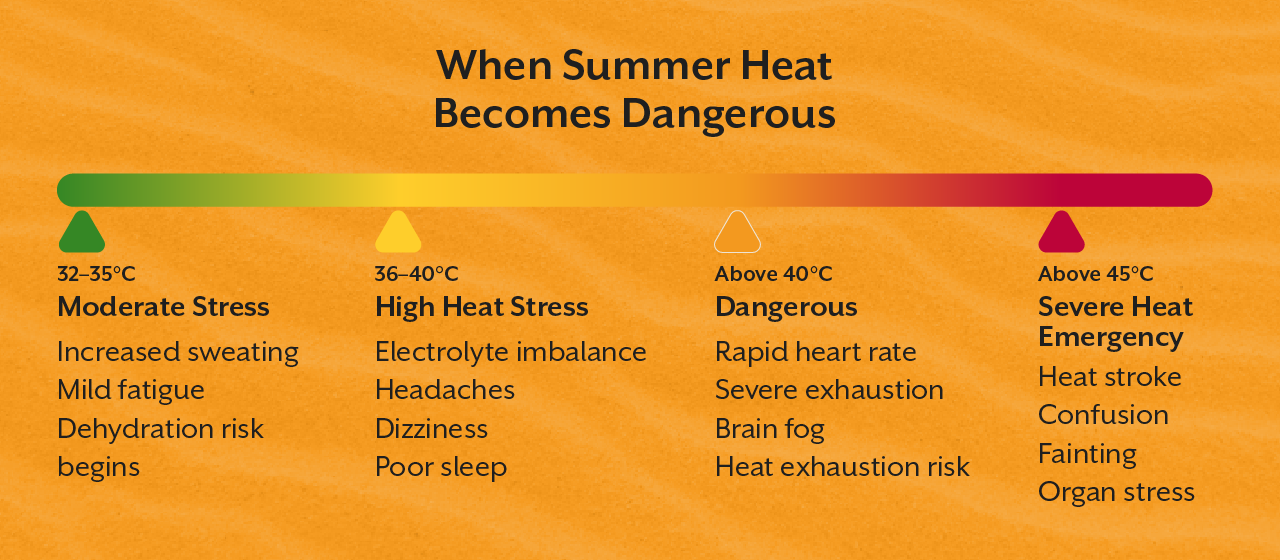
Excessive Heat Celsius: When Does It Become Dangerous?

There isn’t one exact number because humidity changes how heat affects the body.

But in general:

When Heat Becomes Dangerous

However, humidity can make even 34°C dangerous. The body cools itself through sweat evaporation. So when the humidity is too high, sweating becomes inefficient.

This is why coastal cities often feel worse despite slightly lower current temperature readings.

Signs Your Body Is Not Handling Heat Properly

Most people ignore early symptoms. But excessive heat in the body usually starts giving warnings before things become severe.

Early Warning Signs

  • Persistent headaches
  • Heavy fatigue
  • Excess sweating
  • Dizziness
  • Nausea
  • Increased thirst
  • Dark urine
  • Muscle cramps

Moderate Heat Stress Symptoms

  • Brain fog
  • Elevated heart rate
  • Anxiety
  • Weakness
  • Irritability
  • Poor appetite
  • Difficulty sleeping

Severe Symptoms

  • Confusion
  • Fainting
  • No sweating despite heat
  • Rapid pulse
  • High body temp
  • Disorientation

This can indicate heat stroke and requires immediate medical attention.

How to Protect Yourself During Heat Waves

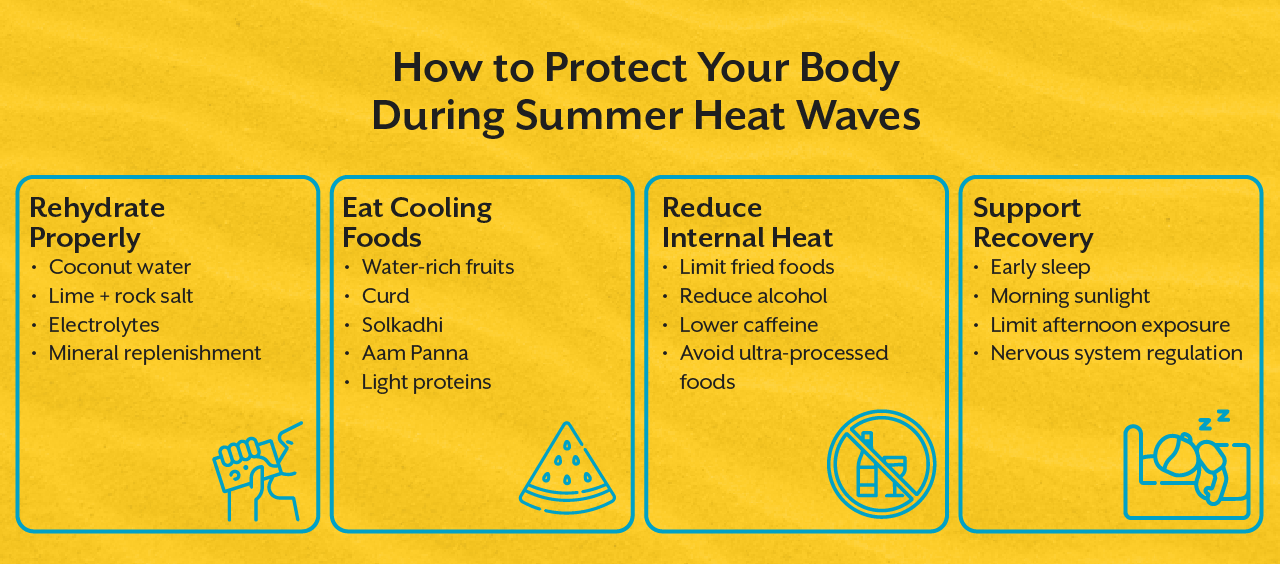
How to Protect Your Body During Heat Waves

Now comes the most important part of this entire blog. 

The goal is not just to drink more water, the goal is helping the body regulate heat effectively.

1. Prioritise Electrolytes, Not Just Water

One of the biggest mistakes during excessive heat is drinking excessive plain water without minerals because this can then dilute electrolytes further.

Focus on consuming fresh coconut water, homemade electrolytes drinks, lime water with rock salt and potassium-rich foods. 

Traditional Indian cooling drinks actually make scientific sense here.

Aam Panna

The raw mango-based drink helps replenish electrolytes while also supporting cooling. You can naturally include recipes such as Aam Panna Recipe during peak summer days.

Solkadhi

Solkadhi supports digestion, hydration, and cooling simultaneously. You can also try Solkadhi Recipe for gut-friendly summer recovery.

2. Reduce Heat-Producing Foods

During extreme weather this week, your digestive system cannot handle heavy inflammatory meals efficiently.

So temporarily reduce consuming fried food, alcohol, ultra-processed food, excessive caffeine, and very spicy meals.

Rather focus on consuming hydrating fruits, mineral-rich vegetables, lighter proteins, curd, and water-rich meals.

3. Respect Circadian Rhythm

This matters more than people realise. Late nights worsen various factors such as dehydration, cortisol imbalance, inflammation, and heat intolerance.

So here at iThrive, we often encourage early dinners, sunlight exposure in the morning, and reduced blue light exposure at night during summers.

The nervous system adapts better to environmental stress when circadian rhythm is well aligned.

4. Avoid Peak Heat Exposure

Try limiting outdoor activity between 12 PM to 4 PM especially if you have diabetes, blood pressure issues, obesity, thyroid dysfunction, or are elderly.

These groups are significantly more vulnerable to excessive heat complications.

The Hidden Link Between Excessive Heat and Inflammation

This is where things become important from a functional nutrition perspective.

Excessive heat does not just affect hydration, it also increases oxidative stress and inflammation. We once had a client casually mention recurring heat exhaustion during consultation. Initially, it sounded minor. But deeper assessment revealed chronic mineral depletion, elevated inflammatory markers, poor sleep, and nervous system dysregulation. And honestly, that conversation changed something for us. As we realised, hundreds of people silently struggle every summer thinking exhaustion is “normal.”

It isn’t.

Heat waves expose weaknesses that are already present inside the body such as nutrient deficiencies, poor metabolic flexibility, inflammation, nervous system dysregulation, and inadequate recovery capacity.

And this is exactly why some people adapt easily while others completely crash during summers.

Key Takeaway 

The reality is simple. Excessive heat is no longer just a seasonal inconvenience, it is becoming a genuine health stressor. So while you are checking the current temperature or monitoring weather this week through tools like Zoom Earth can help you prepare externally, real protection begins internally.

Your body needs minerals, hydration, nervous system support, anti-inflammatory nutrition and proper recovery.

Here at iThrive, after years of working in functional nutrition since 2019, we’ve repeatedly seen how small foundational changes dramatically improve resilience during summers. Because healing is not only about surviving illness. Sometimes it’s about helping the body adapt to the environment it’s living in every single day.

Addison’s Disease Symptoms in Women Mistaken for Burnout
read count
read time
Mar 23, 2026

Addison’s Disease Symptoms in Women Mistaken for Burnout

Tired, dizzy, craving salt? These could be Addison's disease early symptoms in women, not burnout. Learn how low cortisol signs differ and what tests to ask for.

Introduction

You wake up exhausted even after eight hours of sleep. You crave salt so badly you find yourself adding it to everything, even fruit. The skin on your knuckles and elbows has been darkening for months with no explanation. Your blood pressure keeps dropping, and you feel dizzy every time you stand up too fast. You have seen three doctors, and each one hands you the same verdict: burnout, stress, or anxiety.

But what if your body is not reacting to a busy schedule? What if something far deeper is happening?

Addison's disease in women is one of the most underdiagnosed endocrine conditions in the world, not because it is rare, but because its early symptoms mirror the exact language of modern exhaustion so completely that both women and their doctors consistently miss it. This blog is about changing that. It is about understanding what Addison's disease actually does inside the female body, why low cortisol gets confused with adrenal fatigue, what the real warning signs look like, and what a smarter approach to healing involves.

What Is Addison's Disease and Why Does It Affect Women More?

Addison's disease, also called primary adrenal insufficiency, occurs when the adrenal glands stop producing enough cortisol and often aldosterone as well. Cortisol is not just a stress hormone. It regulates blood pressure, controls blood sugar, manages inflammation, and keeps the immune system in balance. When its production collapses, the entire hormonal ecosystem begins to destabilize.

The most important thing to understand about Addison's disease causes is that in roughly 70 to 90% of cases, the trigger is autoimmune. The immune system mistakenly attacks the adrenal cortex, the outer layer responsible for producing these critical hormones. This is why it is called autoimmune Addison disease, and this is why women are disproportionately affected. Estrogen tends to upregulate immune activity, which means the very biology that makes a woman's reproductive system resilient also makes her more susceptible to immune misfires.

Addison's Disease Early Symptoms in Women: What to Actually Watch For

The early symptoms of Addison's disease in women do not arrive loudly. They arrive quietly, over months or years, disguised as life stress.

The Fatigue That Does Not Respond to Rest

This is not regular tiredness. Women with adrenal insufficiency describe a fatigue that sits in the bones. It is persistent, disproportionate to activity levels, and does not improve after rest, weekends off, or even vacations. The body is not producing enough cortisol to sustain energy metabolism, so cells cannot generate the fuel they need to function. Many women spend years attributing this to poor sleep habits before anyone thinks to test adrenal function.

Salt Cravings That Feel Compulsive

When aldosterone production drops, the kidneys lose their ability to retain sodium effectively. The body compensates with intense cravings for salt. If you find yourself adding extra salt to every meal, craving salty snacks even when you are not hungry, or feeling noticeably worse on a low sodium diet, this is not a quirk. It is a physiological distress signal.

Hyperpigmentation in Specific Areas

As cortisol production falls, the pituitary gland releases more ACTH in an attempt to stimulate the adrenals. ACTH shares a molecular structure with melanocyte stimulating hormone, which controls skin pigmentation. The result is a darkening of the skin at pressure points: knuckles, elbows, knees, inner lips, and gum lines. Women often attribute this to sun exposure or natural skin variation. In the context of other symptoms, it is a significant clinical flag.

Low Blood Pressure and Orthostatic Dizziness

Aldosterone helps maintain blood volume and vascular tone. Without adequate levels, blood pressure drops and the body struggles to respond to postural changes. Standing up quickly becomes an event. Dizziness, lightheadedness, and fainting episodes become regular occurrences, typically investigated through cardiology before anyone considers endocrinology.

Nausea, Abdominal Pain, and Unexplained Weight Loss

The gastrointestinal system is exquisitely sensitive to cortisol levels. Low cortisol produces nausea, vomiting, abdominal pain, and diarrhea, symptoms that look indistinguishable from IBS or anxiety driven gut dysfunction. Combined with reduced appetite and altered metabolism, unexplained weight loss over months is another signal that rarely prompts adrenal investigation.

Mood Changes, Irritability, and Depression

Cortisol plays a direct role in mood regulation through its interaction with serotonin, dopamine, and the HPA axis. When cortisol is consistently low, emotional regulation becomes difficult. Irritability, low mood, and a sense of profound emotional flatness are reported by many women with adrenal insufficiency long before any diagnosis is made.

How Addison’s Disease Progressively Drains Your Energy

Low Cortisol vs Adrenal Fatigue: The Distinction That Changes Everything

The term adrenal fatigue has become widely popular in wellness circles. It describes a state in which chronic stress is said to deplete adrenal output, producing suboptimal cortisol levels that cause fatigue and burnout. While stress absolutely disrupts HPA axis function, adrenal fatigue as a distinct diagnosable medical condition is not currently recognized by mainstream endocrinology.

Adrenal fatigue vs Addison's is a comparison that matters because the two sit at very different points on the severity spectrum. With adrenal fatigue, cortisol is described as suboptimally low but not absent. With Addison's disease, the adrenal cortex has been structurally damaged, and cortisol production is genuinely and measurably deficient.

The consequences of confusing the two are serious. Someone managing what they believe to be adrenal fatigue with lifestyle changes and adaptogens, when they actually have Addison's disease, is at real risk of an adrenal crisis. This is a medical emergency in which cortisol levels drop so severely that blood pressure collapses, vomiting occurs, and the body enters shock. It can be life threatening within hours without emergency hydrocortisone.

Low cortisol vs adrenal fatigue symptoms can appear similar on the surface: fatigue, salt craving, mood changes, and digestive discomfort appear in both. The difference lies in the degree, the progression, and the presence of hallmark signs like hyperpigmentation and postural hypotension that point toward true primary adrenal insufficiency rather than functional HPA dysregulation.

Adrenal Fatigue vs Addison's Disease: How to Tell the Difference

Why Addison's Disease Gets Misdiagnosed as Burnout in Women

Studies suggest the average time from symptom onset to diagnosis ranges from one to ten years. In women, the delay is often longer.

Several factors drive this. The symptoms overlap almost perfectly with conditions women are routinely diagnosed with, including depression, anxiety, chronic fatigue syndrome, IBS, and burnout. When a woman presents with tiredness, low mood, stomach issues, and dizziness, medicine has historically looked toward psychological explanations first.

Additionally, standard blood tests ordered in primary care do not include an early morning cortisol or an ACTH stimulation test, which are the investigations needed to identify adrenal insufficiency. A normal complete blood count or metabolic panel will not catch Addison's disease.

Women are also more likely to rationalize symptoms as a function of busy lives. The cultural narrative that exhaustion is normal for women managing careers, households, and family responsibilities creates an internal dismissal that delays help seeking for years.

Addison's Disease Diet: How Nutrition Supports Adrenal Function

While Addison's disease requires medical management with hormone replacement therapy, nutritional support plays a meaningful role in managing symptoms and reducing flare risk.

An Addison's disease diet centers on a few core principles. Sodium intake must remain consistently adequate since aldosterone deficiency means the body is chronically at risk of sodium depletion, particularly during exercise, illness, or stress. A low sodium diet is actively counterproductive in this condition.

Blood sugar stability is equally essential. Without adequate cortisol, the liver cannot maintain stable glucose between meals. Small, frequent meals rich in complex carbohydrates, protein, and healthy fats help prevent the blood sugar dips that trigger symptom flares. Refined sugar and processed carbohydrates amplify the glucose instability that the adrenal compromised body cannot recover from easily.

Because autoimmune Addison disease involves immune dysfunction, an anti-inflammatory dietary approach is broadly supportive. Omega 3 rich foods, colorful antioxidant dense vegetables, and the reduction of processed food all help lower the inflammatory burden on the immune system. Vitamin D, magnesium, vitamin B5, and vitamin C are nutrients specifically involved in adrenal hormone production and immune regulation, and at iThrive we commonly see these depleted in women with both autoimmune and adrenal conditions.

The Addison’s Disease Diet Plate: What Your Adrenals Actually Need

What a Root Cause Approach to Addison's Disease Actually Looks Like

At iThrive Alive, the approach to adrenal conditions begins by asking what made the immune system attack the adrenal glands in the first place. Autoimmune triggers rarely arise in isolation. Gut permeability, chronic infections, heavy metal burden, nutrient deficiencies, and unresolved inflammatory patterns are common upstream contributors to autoimmune activation.

For women already diagnosed and on cortisol replacement therapy, a functional nutrition approach does not aim to replace the medication. It aims to reduce the total inflammatory and immune burden so the body is not fighting on multiple fronts simultaneously. Better gut health, lower inflammatory signaling, stable blood sugar, and optimized nutrient status all contribute to fewer flares and a more stable daily life.

If you are noticing a persistent pattern of unexplained fatigue, intense salt cravings, postural dizziness, or skin changes that has never been adequately explained, it is worth asking whether adrenal function has truly been assessed. You can book a root cause consultation with our nutritionist to get a clearer picture of what is actually driving your symptoms.

Key Takeaway

Addison's disease in women is a real, measurable, and manageable condition that gets buried beneath years of misdiagnosis not because it is invisible but because medicine has not been trained to look for it where women carry it. Fatigue is not laziness. The salt cravings are not a personality trait. The dizziness is not anxiety. The skin changes are not cosmetic. They are a coherent biological story told by a body whose adrenal glands are struggling to keep up. Understanding the difference between low cortisol vs adrenal fatigue symptoms, recognizing the adrenal insufficiency symptoms women actually experience, and knowing that autoimmune Addison disease is far more common in women than the medical system acknowledges are the first steps toward finally getting the right answer. From there, a root cause approach that addresses the immune environment, supports adrenal nutritional needs, and stabilizes the hormonal terrain can meaningfully improve the experience of living with this condition. 

Star Your Root Cause Analysis

Includes home blood sample collection, 1-hour expert consultation, and a next-step protocol.
Pay Now ₹2500
Secure Payments Powered By
NET
Banking

What’s Included in Your Blood Analysis?

Click below to view the complete list of markers included in your analysis.
Complete Blood Count (18 Parameters)
faq arrow
Diabetes Panel (4 Parameters)
faq arrow
Iron Studies (4 Parameters)
faq arrow
Lipid Panel (6 Parameters)
faq arrow
Thyroid Profile (3 Parameters)
faq arrow
Inflammation & Mitochondrial Health (3 Parameters)
faq arrow
Liver Function Test (8 Parameters)
faq arrow
Kidney Function & Electrolytes (9 Parameters)
faq arrow
Pay Now ₹2500
Secured payment via

We’re Not In Your City Yet But We’re Not Letting You Go.

You don’t need to wait to start understanding your body.
Get Free Consultation

You Still Get:

  • Free 1:1 consultation with our clinical team
  • Symptom + history deep dive
  • Direction on what’s actually driving your condition
  • Guidance on next best steps (tests, diet, and protocol)
Oops! Something went wrong while submitting the form.

Talk to our team

Thank you! Your submission has been received!
Oops! Something went wrong while submitting the form.

Talk to our team

Thank you! Your submission has been received!
Oops! Something went wrong while submitting the form.

Download Now

Thank you! Your submission has been received!
Oops! Something went wrong while submitting the form.
Select your Location
Agra
Ahilyanagar
Ahmadnagar
Ahmedabad
Ahmednagar
Akola
Aligarh
Allahabad
Almora
Alwar
Ambala
Ambedkar Nagar
Amravati
Amritsar
Amroha
Anand
Aurangabad
Ayodhya
Azamgarh
Baghpat
Bahadurgarh
Bahraich
Banda
Barabanki
Baraut
Bardhaman
Bareilly
Begusarai
Belgaum
Bengaluru
Bharatpur
Bhatinda
Bhilai Durg
Bhilwara
Bhiwani
Bhopal
Bhubaneswar
Bijnor
Bikaner
Bilaspur
Bokaro
Budhana
Bulandshahar
Chandigarh
Chennai
Chhatrapati Sambhajinagar
Chhindwara
Chomu
Darbhanga
Dehradun
Delhi
Deoband
Deulpur
Dhampur
Dhanbad
Durgapur
Eah
Etah
Etawah
Faizabad
Faridabad
Firozabad
Gadarpur
Gandhinagar
Ganganagar
Gaya
Ghaziabad
Ghazipur
Gonda
Gorakhpur
Greater Noida
Greater Noida Pc
Guntur
Gurgaon
Guwahati
Gwalior
Hajipur
Haldwani
Hapur
Hardoi
Haridwar
Hathras
Hazaribagh
Hisar
Hoshiarpur
Howrah
Hyderabad
Indore
Jabalpur
Jaipur
Jalandhar
Jalgaon
Jalna
Jamnagar
Jamshedpur
Jaunpur
Jhansi
Jhunjhunu
Jind
Jodhpur
Sorry, currently we are not serving this city.
Please try searching for another city or put your city here.
My Location not in the list
Your Location is 'Location'
Book a Test

City

Thank you! Your submission has been received!
Oops! Something went wrong while submitting the form.