
.svg)
.svg)







Introduction
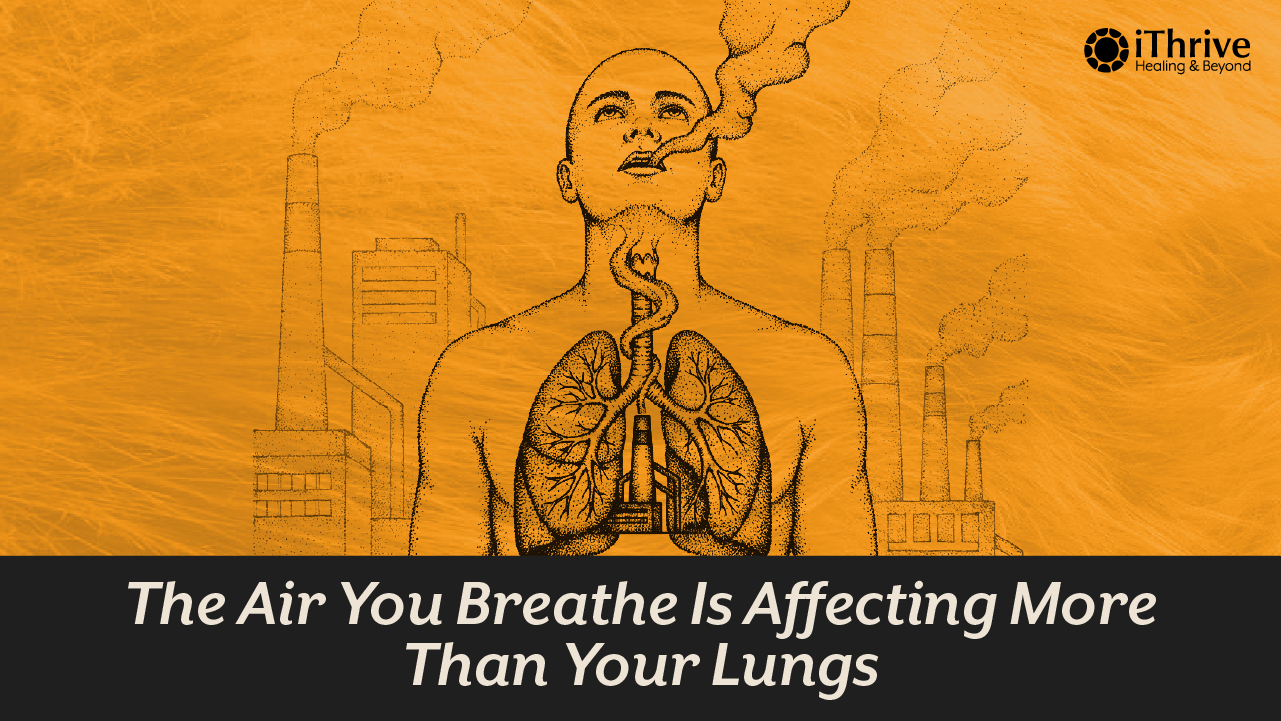
Over the last couple of years, we here at iThrive we’ve been always hearing stories from friends, family, clients, and from you guys too about what poor air quality is doing to our bodies. Whether it’s wildfire smoke blanketing entire cities, crop burning season in the north, industrial haze sitting over urban centres, or just the daily cocktail of construction site dust and vehicle exhaustion, the air in most of the cities is no longer something you can even think of taking for granted.
And the issue isn’t just outdoors, it also follows you inside.
The air most of us are breathing daily is a poisonous mix of particulate matter, carbon monoxide, nitrogen oxide, volatile organic compounds, cadmium, sulphur oxide, and other heavy metals. If you’ve been feeling more fatigued than usual, waking up with a scratchy throat, or even noticing your eyes burning for no reason, trust me it is not a coincidence.
How do these affect your health?
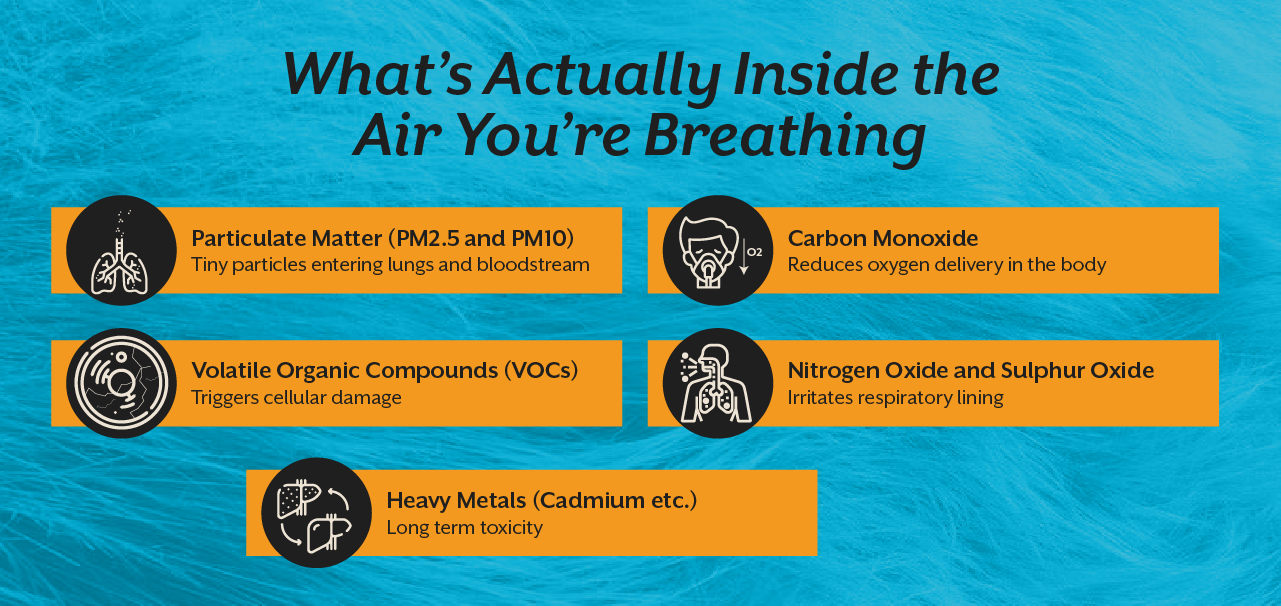
Particulate matter(PM) is a complex mixture of extremely small particles and liquid droplets. These when inhaled affects both the heart and lungs, numerous studies have proven the negative impact of PM on your heart and lung health.
Volatile Organic Compounds or VOC’s are carcinogenic in nature and can trigger genetic mutation at a cellular level. Carbon monoxide can cause dizziness, sweating, restlessness, visual distortion, nausea and even loss of consciousness. Sulphur oxide and Nitrogen oxide are both irritants and can irritate mucus layers in your eyes, nose, throat and respiratory tract which explains why everyone’s eyes are burning.
Apart from this, this air can also impact your cognitive ability, your ability to think and work productively. Your brain needs oxygen to function optimally, and when you are breathing poisons instead of oxygen it starts creating symptoms like excessive irritability, anger, and loss of productivity.
Of course, the fact that we have built cities and systems that do this to human beings is a monstrosity entirely of our own making. There really are no limits to what we will tolerate when it is normalised slowly enough.
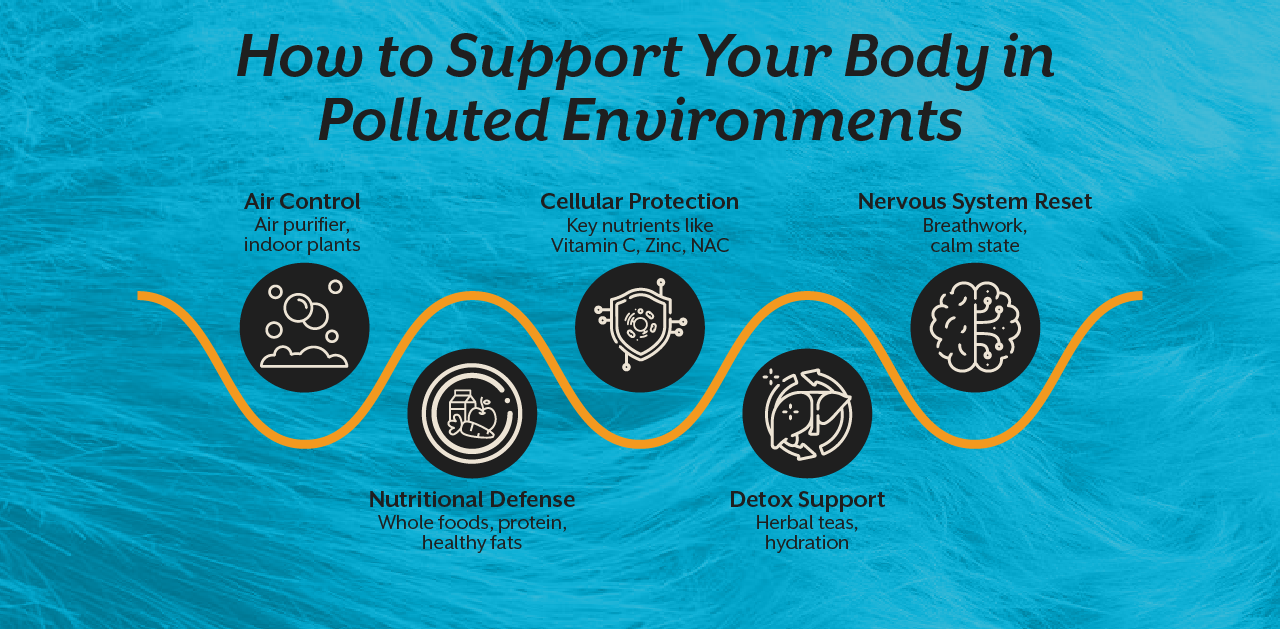
However, now that the problem is created and damage is being done, here are 5 tips from iThrive to help you get through this situation and allow your body to heal.
Step 1 : Create as much clean breathable air around you as possible
Invest in a good quality air purifier at least for your bedroom, this is where you spend the longest time and sleep is when your body is naturally in a recovery mode. Ensure that you are breathing clean air in this room. Get a H12 or H13 HEPA filter with a Clean Air Delivery Rate (CADR) of 2 at medium speed. Ensure it has a carbon filter that weighs at least 500 gms. Pick one that has a noise level below 50 DB at medium speed with a washable pre-filter. If it has sensors to indicate air quality then that’s even better. Keep the air purifier on for as long as there are people in the room.
Bring in indoor plants, they are a gift from this planet to us. They remove pollutants by absorbing harmful gases and VOC’s and create clean air for us. The best ones to get are Money Plant ( Five 8 inch pots per person), Areca Palm (Four shoulder high plants per person), Snake Plant (Six plants per person), Bamboo (Four shoulder high plants)
Avoid lighting agarbattis, using candles and room fresheners and loose powders- these add to indoor air pollution
Step 2 : Eat food that heals and regenerates your body
Food is central to healing. Making sure your diet is healthy, including adequate protein and nutrients from quality sources devoid of harmful processed entities is crucial. It cannot do that on a diet of processed food, refined sugar, and empty calories. Focus on adequate protein from quality sources, nutrient-dense vegetables, healthy fats, and foods that actively reduce inflammation.
Step 3: Supplement with nutrients that support respiratory and cardiovascular health.
Certain nutrients play a direct role in protecting the lungs, neutralising oxidative damage, and supporting the cardiovascular system under stress. These are the ones we consistently recommend:
Vitamin C
MSM (Methylsulfonylmethane)
NAC (N- Acetyl Cysteine)
Step 4: Bring in the healing power of herbs and herbal teas
This one is low effort and genuinely effective. The following have anti-inflammatory and respiratory-supportive properties:
Nettle leaf tea
Lemon balm tea
Lomatium root
Step 5: Practice breathwork
This might sound counterintuitive when the air outside is bad. But breathwork is not just about the air, it is about training your respiratory system, activating your parasympathetic nervous system, and helping your body shift out of the low-grade stress response that chronic pollution exposure creates.
If you already have a Pranayam practice, keep going. If you do not, Soma Breath is an excellent place to start. Their guided breath meditation is about 11 minutes and the impact is surprisingly tangible.
Implement these 5 steps, and we guarantee you will breathe a little easier despite the pollution. If you need to learn more or need help with specific symptoms, please reach out to us and we’ll be more than happy to help.
Key Takeaway
Honestly, we wish we had a more comforting note to end this on. But the truth is, the air in most cities right now is bad. Not "slightly less than ideal" bad but then actually, genuinely bad. And most of us are just... breathing it. Going about our days like it is fine because everyone else is too.
It is not fine.
But here is the thing, your body is remarkably resilient if you give it even half a chance. You do not need to do all five steps perfectly starting tomorrow. Even getting the bedroom air right, or swapping your evening tea for something that actually supports your lungs, is more than most people are doing.
Start somewhere. Even one step is better than zero. And if you have been feeling off lately, tired in a way you cannot explain, foggy, irritable, or just not yourself please do not dismiss it as stress or aging or "just how things are now." Sometimes the answer is simpler and more fixable than we think. The air you breathe every single day is a good place to start looking.






.webp)








.svg)