
Thousands of Indians Are Told to Suppress Their Thyroid or Remove It. Almost None Are Told Why It Overactivated in the First Place.
Book Your Root Cause Analysis
If You See Yourself Here, Don't Ignore It



Hyperthyroidism Isn't What You Think It Is

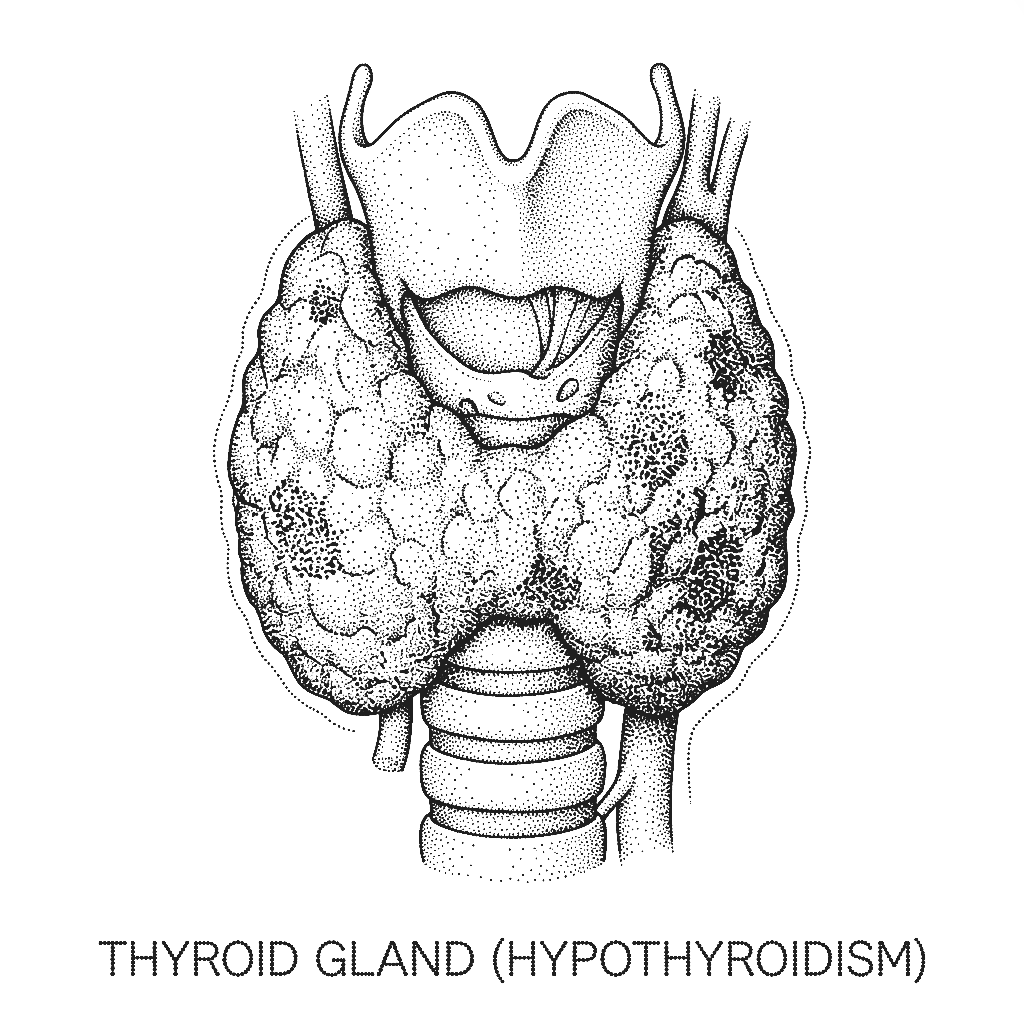
Hyperthyroidism is a condition where the thyroid gland produces excess thyroid hormone further accelerating the body's metabolism beyond what it can sustain. Every system runs too fast: heart rate, digestion, energy expenditure, and neurological activity. The result is a body that is simultaneously overworked and depleted like burning through nutrients, muscle, and reserves at a rate that eventually leads to serious systemic consequences. It is not just an overactive gland. It is a body under unsustainable physiological acceleration.
Graves' Disease is the most common cause of hyperthyroidism, accounting for the majority of cases. It is an autoimmune condition where the immune system produces antibodies, TSH receptor antibodies that mimic the signal telling the thyroid to produce hormones. The thyroid responds to this false signal by producing hormones continuously, without the usual regulatory feedback. This means the root cause of most hyperthyroidism is not the thyroid itself, it is a misdirected immune response. Suppressing the thyroid without addressing the immune driver leaves the underlying dysfunction completely intact.
Hyperthyroidism is significantly more prevalent in India than most people realise, driven by a combination of autoimmune triggers like gut permeability allowing immune dysregulation, iodine excess in certain coastal populations, chronic psychological stress activating immune pathways, widespread nutrient deficiencies impairing immune regulation, and environmental toxin exposure disrupting endocrine function. Genetic predisposition plays a role, but it is the accumulation of these environmental and lifestyle triggers that activates the condition in most people.
The conventional approach to hyperthyroidism targets the thyroid with antithyroid drugs, radioactive iodine, or surgical removal. But when Graves' Disease is the driver, the immune system remains dysregulated regardless of what happens to the thyroid. Destroying or removing the gland converts hyperthyroidism into lifelong hypothyroidism without ever addressing the autoimmune process that caused the problem. The gut is where most immune regulation occurs, and gut dysfunction is consistently present in autoimmune thyroid conditions. Address the gut, the immune driver, and the nutritional deficiencies and the immune attack on the thyroid often begins to resolve.
Hyperthyroidism symptoms such as anxiety, palpitations, weight loss, heat intolerance, tremors, sleep disruption are individually common enough to be attributed to stress, panic disorder, or perimenopause for months before thyroid function is tested. When testing does happen, TSH alone is often measured. A suppressed TSH confirms something is wrong but without Free T3, Free T4, and TSH receptor antibodies the full picture remains incomplete. Graves' Disease in particular can be missed entirely when antibody testing is not included because the autoimmune driver is invisible without it. Early or subclinical hyperthyroidism also frequently presents with TSH at the low end of normal while Free T3 is already elevated and symptoms are significant, the standard range misses it. By the time a clear diagnosis is made the cardiovascular and bone consequences of prolonged excess thyroid hormone are often already accumulating.
The Difference Between Managing Hyperthyroidism and Reversing It
CONVENTIONAL MEDICINE
- TSH and T4 blood test, often the only markers assessed
- Antithyroid medication to suppress hormone production
- Radioactive iodine to partially or fully destroy the thyroid
- Surgery to remove the thyroid in severe cases
- No investigation into why the immune system activated against the thyroid
FUNCTIONAL NUTRITION
- Root Cause Analysis with 60+ Functional Markers
- Full thyroid panel - TSH, free T3, free T4, TSH receptor antibodies, TPO antibodies
- Gut health markers, intestinal permeability, inflammatory indicators
- Selenium, iodine, zinc, Vitamin D, and full nutrient status
- A dedicated functional nutritionist guides every step
Hyperthyroidism Isn't One Problem. It's Multiple Root Causes Working Together.
Three steps to finally understanding your body

Book your Root Cause Analysis

Get your blood work done at Home

Sit down with your nutritionist
What Starts as Hyperthyroidism Doesn't End There


69% of clients saw measurable reduction in thyroid antibody levels

What Real Hyperthyroidism Reversal Looks Like










.png)





Before
After
Before
After
Before
After
Before
After
Before
After
Before
After
Before
After
Before
After
Before
After
Before
After
Before
After
Before
After
Before
After
Before
After
How We Find and Fix the Root Cause of Hyperthyroidism

Personalised Diet Protocol

Smart Supplementation

Lifestyle Interventions
FAQs
Not always and this is one of the most important conversations to have before making an irreversible decision. Radioactive iodine and surgery permanently alter or destroy the thyroid without addressing the autoimmune process driving the condition. Many people pursue these options and develop lifelong hypothyroidism while the immune dysregulation continues. For many cases, particularly early-stage Graves' Disease, addressing the root cause buys significant time and in some cases achieves genuine remission.
For many people, particularly those with Graves' Disease identified early, meaningful reversal is achievable. Several of our clients have achieved significant antibody reduction, stable thyroid levels, and medication tapering by addressing the autoimmune root like gut permeability, immune dysregulation, and nutritional deficiencies rather than just suppressing the thyroid.
Very commonly yes. The physical symptoms of hyperthyroidism such as racing heart, tremors, heat sensitivity, restlessness, and sleep disruption are clinically indistinguishable from anxiety in presentation. Many people are treated for anxiety for months or years before a thyroid panel reveals the physiological driver. A full thyroid panel including antibodies is essential before concluding that anxiety is purely psychological.
Graves' Disease is the most common cause of hyperthyroidism but they are not the same. Graves' is an autoimmune condition that drives the thyroid to overproduce, hyperthyroidism is the result. Other causes include toxic nodular goitre and thyroiditis. Identifying the specific driver matters enormously because the root cause approach and the outlook for reversal differ depending on which is present.
Absolutely and this is the ideal time to begin root cause work. Antithyroid medication controls hormone levels while the underlying autoimmune process continues. Using that window to identify and address the immune drivers such as gut health, nutrient deficiencies, inflammatory load gives the body the best possible chance of achieving genuine remission rather than requiring escalating intervention. We always work alongside your existing medical team, never against it.







.svg)
Talk to our team

Talk to our team
Download Now