


.svg)
.svg)







Introduction
In clinical practice, thyroid dysfunction is rarely an isolated glandular disorder. It is more often a downstream reflection of systemic dysregulation in the form of metabolic, inflammatory, neurological, and cellular.
Yet conventional treatment models frequently operate within a hormone-replacement paradigm. When symptoms persist or worsen, medication dosage is adjusted. When lab markers fluctuate, dosing is recalibrated. The underlying assumption is simple: thyroid dysfunction equals thyroid hormone deficiency.
However, emerging metabolic and systems biology research suggests a more complex reality. Thyroid physiology is tightly integrated with glucose metabolism, mitochondrial activity, immune signaling, gut integrity, and neuroendocrine stress responses. Disruption in any of these systems can impair hormone signaling even when circulating hormone levels appear adequate.
This case breakdown examines a clinical scenario where thyroid function improved significantly without escalating medication, simply by correcting metabolic dysfunction.
The objective is not to argue against medication when needed but to demonstrate how addressing systemic drivers can restore regulatory efficiency, often reducing physiological strain on the thyroid axis itself.
This system's perspective aligns closely with the clinical model discussed in Healing Hypothyroidism: The Functional Role of Nutrition in Thyroid Health, where thyroid regulation is viewed through nutritional and systemic modulation rather than gland-centric intervention.
Section 1: Understanding the Thyroid-Metabolic Axis
Thyroid Hormones Are Metabolic Regulators
Thyroid hormones function less like isolated endocrine outputs and more like metabolic coordinators. They regulate:
- Cellular oxygen consumption
- Mitochondrial energy generation
- Glucose utilization
- Lipid turnover
- Thermogenesis
- Neurotransmitter balance
When metabolic signaling becomes inefficient, thyroid hormone action becomes compromised, not always because hormone production is low, but because hormone utilization is impaired.

Insulin Resistance as a Thyroid Modifier
One of the most powerful modulators of thyroid signaling is insulin sensitivity. Insulin resistance alters hepatic enzyme activity responsible for T4-to-T3 conversion, modifies inflammatory cytokine profiles, and influences receptor responsiveness at tissue level.
This interrelationship is also explored in Causes of Insulin Resistance, which describes how inflammatory signaling and metabolic stress interfere with endocrine communication across multiple systems.
When insulin signaling is impaired, tissues become metabolically inflexible. In this environment, thyroid hormone cannot effectively stimulate energy production, even if circulating levels appear normal.
The result is functional hypothyroid physiology without overt hormone deficiency.
Section 2: Case Presentation: Persistent Symptoms Despite Medication
The individual in this case had been diagnosed with hypothyroidism and maintained on stable medication for several years. Laboratory values remained within reference range, yet symptoms persisted:
- Fatigue and low stamina
- Weight gain resistant to caloric control
- Brain fog
- Poor recovery after exercise
- Cold intolerance
- Increased visceral fat
Despite medication adherence, metabolic function continued to decline.
A deeper evaluation revealed:
- Elevated fasting insulin
- Increased inflammatory markers
- Central adiposity
- Reduced muscle metabolic efficiency
- High perceived stress load
Importantly, thyroid hormone levels were not severely abnormal. The issue was not production failure, it was signaling inefficiency.
This distinction is critical.
The thyroid axis was functioning, but the metabolic environment was hostile to hormone activity.
Section 3: Root Drivers Identified
Detailed assessment identified three major regulatory disruptions.
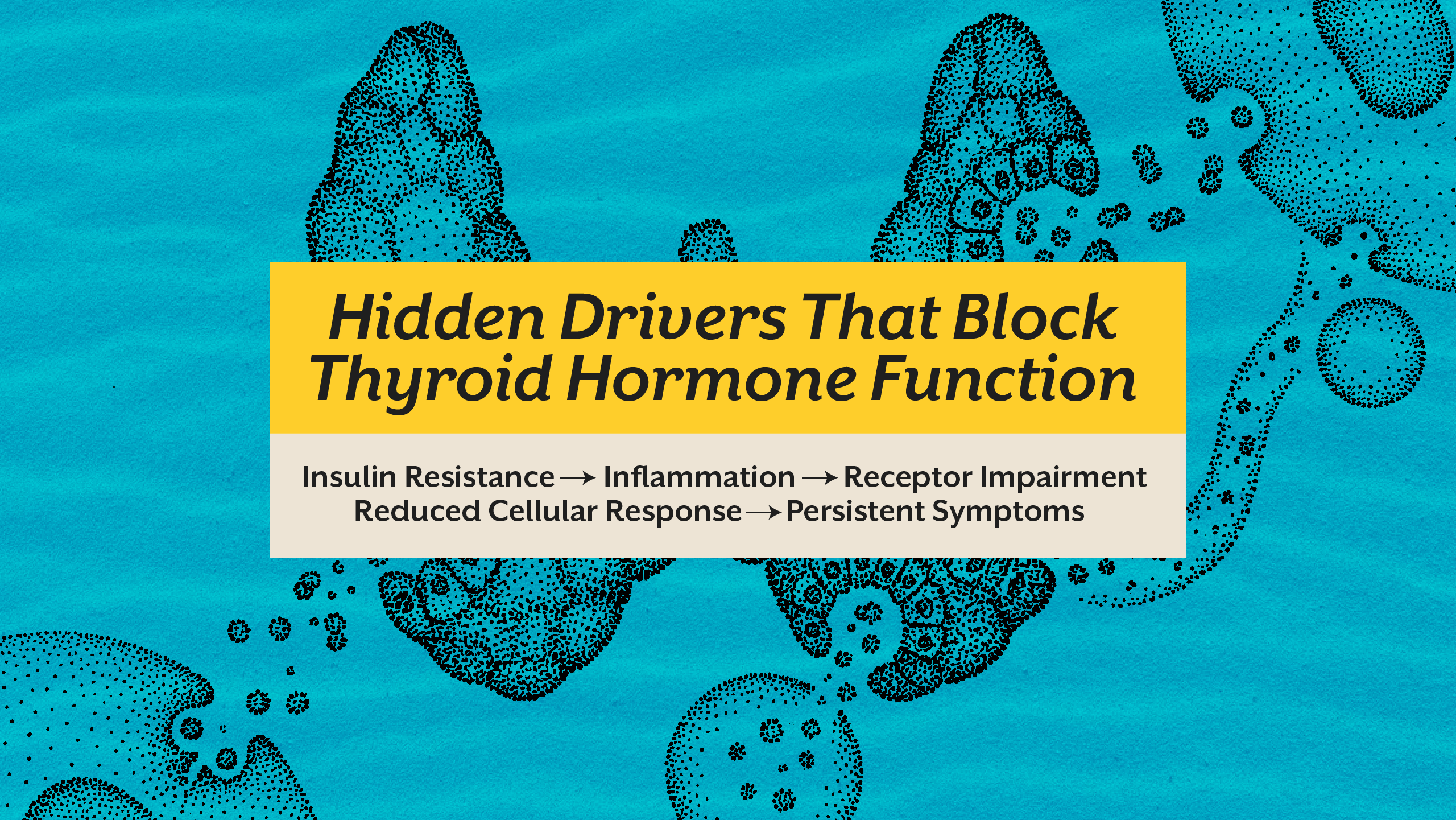
1. Chronic Hyperinsulinemia
Elevated insulin levels suppress lipolysis, increase inflammatory signaling, and impair hepatic hormone conversion. The metabolic environment becomes energy-inefficient despite caloric sufficiency.
2. Inflammatory Signaling
Pro-inflammatory cytokines interfere with receptor binding and intracellular signaling cascades. Hormones reach tissues but fail to trigger metabolic response.
This inflammatory-metabolic relationship is also discussed in What Causes Obesity?, where endocrine disruption is linked to inflammatory and environmental stressors.
3. Stress-Driven Neuroendocrine Dysregulation
Chronic stress alters hypothalamic signaling, modifies cortisol rhythms, and shifts energy allocation toward survival rather than regeneration.
When these drivers coexist, thyroid hormone becomes biologically underutilized.
Section 4: Intervention Strategy: Metabolic Restoration
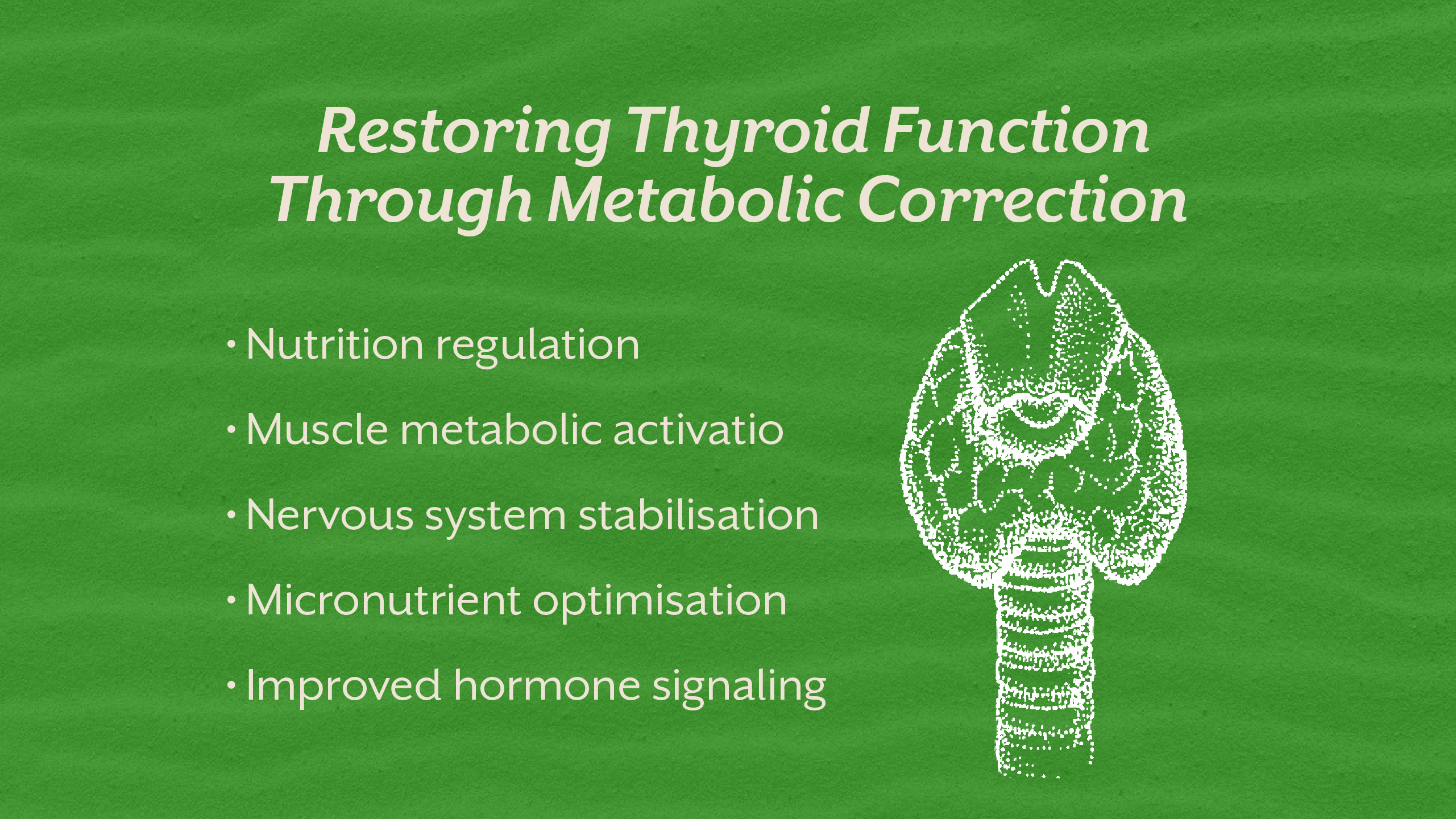
Rather than escalating medication, intervention targeted systemic regulation.
Nutritional Strategy
Structured macronutrient timing to stabilise insulin dynamics and support mitochondrial energy generation. Anti-inflammatory nutrient density prioritised micronutrient sufficiency required for enzymatic conversion.
Resistance Training
Muscle tissue is the largest glucose disposal organ. Increasing lean mass improves insulin sensitivity and enhances metabolic responsiveness to thyroid hormone.
Nervous System Regulation
Stress reduction protocols aimed to restore hypothalamic signaling integrity and reduce cortisol-driven metabolic disruption.
Micronutrient Repletion
Specific nutrients involved in thyroid conversion, receptor function, and mitochondrial activity were optimised.
The intervention did not target the thyroid gland directly, it restored the environment in which thyroid hormones operate.
Section 5: Clinical Outcomes
Over several months, measurable changes occurred:
- Improved insulin sensitivity
- Reduced visceral fat
- Increased lean mass
- Improved thermoregulation
- Enhanced energy stability
- Reduced symptom burden
Most notably, thyroid medication dose remained unchanged yet functional markers improved.
This demonstrates a key physiological principle:
Hormone function depends as much on cellular responsiveness as on hormone quantity.
Section 6: What This Case Teaches About Thyroid Care
This case illustrates that thyroid dysfunction is often a systems disorder expressed through endocrine signaling.
Treating the gland without addressing metabolic context may stabilise lab values but fail to restore physiological function.
A systems-based evaluation including metabolic, inflammatory, gut, and stress parameters enables identification of regulatory bottlenecks that conventional testing may overlook.
This integrative clinical perspective forms the foundation of evaluation models that prioritise functional restoration rather than isolated hormone correction.
Individuals seeking deeper investigation into persistent symptoms despite treatment may benefit from structured metabolic assessment, such as a Book a Root Cause Analysis evaluation or Book a Consult to explore regulatory drivers.
Key Takeaway
This case demonstrates that improving thyroid function does not always require increasing medication. When metabolic dysfunction, inflammatory signaling, and neuroendocrine stress are corrected, hormone efficiency can improve naturally. Thyroid physiology is not governed solely by glandular output but by the biological environment in which hormones operate. A clinically effective strategy therefore focuses on restoring systemic balance, further improving insulin sensitivity, reducing inflammation, enhancing mitochondrial function, and stabilising nervous system signaling. When the regulatory network becomes efficient, thyroid hormone can perform its role effectively, often reducing the need for pharmacological escalation. True endocrine recovery is therefore not about forcing hormone levels upward, but about rebuilding the physiological systems that allow hormones to function properly.











.svg)