

.svg)
.svg)







Introduction
Struggling with your weight? Tired of trying everything to get rid of your stubborn fat? Despite your best efforts, you just can’t lose weight. If you have ever felt this way, believe me, you are not alone. For years, we have been told weight loss is simply a matter of willpower and discipline. Eat less. Exercise daily. Strictly follow a diet. But that narrative is finally starting to shift. Over the past few years, a new class of medications have changed the conversation around obesity. You may have heard about peptides - semaglutide (Ozempic) or tirzepatide (Mounjaro). Now, there is a new peptide that is even more effective - Retatrutide.
Early weight loss results from clinical trials have stunned researchers. Subjects lost up to 24% of their body weight in less than a year. That is more than double what most weight loss drugs could accomplish. And for the first time, it actually worked long-term.
But how does retatrutide work? For this, we need to take a deeper look. In order to understand how this peptide works, we first need to understand why weight loss is so tough in the first place. Your body does not want to lose weight. You may feel like you need to lose weight, but your body might not agree. Don’t blame yourself if this is you. Your body is naturally programmed to maintain its current fat stores. This is why when you go on a diet, your body fights you. When you try to shed those extra pounds, hunger signals kick in and your metabolic rate slows down. It’s not your fault, this is just biology. So what hormones are we talking about here? GLP-1, GIP and glucagon are the big players. Each of these signal hunger, fullness, blood sugar levels, and fat burning to your brain and body in different ways. Most weight loss peptides target one or some combination of these pathways. Retatrutide hits all three at once.
What is Retatrudite?
Retatrutide is a novel triple receptor agonist developed by Eli Lilly and Company that supports weight loss, improves glycemic control and also provides cardiovascular benefits. It is basically a peptide that binds to three different hormone receptors in our body. When we take it, this peptide works by activating the following receptors.
- GLP-1 (Glucagon-Like Peptide-1) Receptor
- GIP (Glucose-Dependent Insulinotropic Polypeptide) Receptor
- Glucagon Receptor
You can think of your weight management system as a fancy security system with three locks on it. Every other peptide in this class can only unlock 1. Retatrutide unlocks them all at the same time.
If you’re curious about how peptides compare to other emerging therapies, you can read more about it here: https://www.ithrive.academy/blogs/bioregulators-vs-peptides-how-to-choose
What is the mechanism of action of Retatrutide?
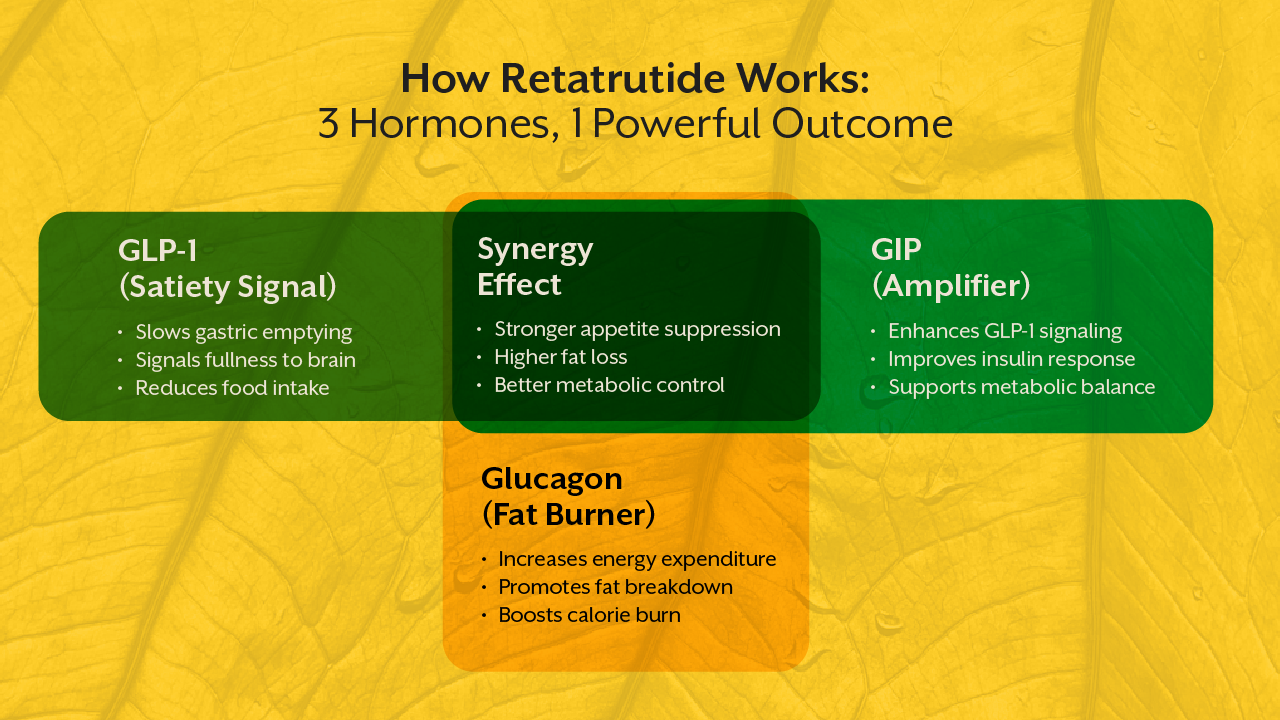
Retatrutide acts as a triple receptor agonist, simultaneously targeting the three receptors that play crucial roles in metabolic regulation.
The GLP-1 hormone is naturally released by the intestines when we eat food. GLP-1 does a few different things. For starters, it causes the pancreas to release insulin and lower our blood sugar. It also slows down the rate at which food leaves your stomach. This is great for weight loss because it keeps food in your stomach longer, making you feel more satiated. But most importantly, GLP-1 sends a signal to your brain that you are full.
When someone is obese, this signal may not be as strong as it needs to be. You feel hungry so you eat, but your body doesn’t send the “I’m full now” signal properly, or it takes too long to send. As a result, you consume more food than your body actually needs. But when you take retatrutide, it activates GLP-1 receptors. It supercharges your body’s “I’m full” signal. Your body gets the message that you’re full clearly and quickly. Food takes longer to process, so you feel fuller after meals. You end up eating less naturally, without forcing yourself to do so. This mechanism is how peptides like semaglutide and tirzepatide work. But again, retatrutide targets GLP-1 receptors as well as GIP receptors
The GIP hormone works extremely similarly to GLP-1. Like GLP-1, it’s also released from your intestines when you eat. On its own, activating GIP won’t do much for you. But studies have shown that the simultaneous activation of GIP and GLP-1 causes something called synergism. Essentially, GLP-1 and GIP communicate with each other. When both are activated at the same time by retatrutide, they send each other stronger signals. The brain is better able to receive GLP-1’s full signal and as a result, you feel fuller faster and for longer.
Research has also indicated that GIP signals fat cells directly, though more research is needed to understand this effect. It’s the exact same reason why tirzepatide (GLP-1 and GIP dual agonist) works better than semaglutide (GLP-1 agonist only). Retatrutide just adds to it by activating the glucagon receptor too.
Glucagon is a hormone we usually think of as doing the opposite of weight loss medications- it raises blood sugar. But it turns out that if glucagon activation is precisely calibrated with GLP-1 and GIP activation, it provides incredible benefits. By itself, glucagon ramps up energy expenditure. It signals the liver to burn more fat and independently decreases appetite from GLP-1. Together, these effects give retatrutide an extra edge for appetite suppression. Researchers realized that if GLP-1 is simultaneously activated while also turning on glucagon, the GLP-1 effects will blunt the blood sugar-increasing properties of glucagon while allowing everything else to persist. You get increased calorie burning and appetite suppression without the side effects. GLP-1, GIP and glucagon are hence synergistic.

What happens in your brain on Retatrutide?
Most people think of peptides as working on the stomach. They also work on metabolism. But they work predominantly in the brain. The frontal hunger centre of the brain is called the hypothalamus. That’s where GLP-1, GIP and glucagon are sending most of their signals to reduce hunger and increase energy expenditure. As more and more satiety inputs hit the hypothalamus from retatrutide, the brain stops perceiving hunger. GLP-1 also works on the brain’s reward centres. Activation of this receptor can reduce food cravings, particularly high-fat and high-sugar foods. Many people describe how food just isn’t as appealing while they are on these peptides. This isn’t caused by misery or deprivation, either. There is actual evidence showing that food rewards are genuinely less satisfying. If you have spent any length of time struggling with obesity, having your brain stop obsessing about food can seem like a miracle.
How is Retatrutide given?
The peptide is given by injection just under the skin. Common injection sites are the abdomen, thigh, or upper arm. The starting dose is typically low and increases every few weeks until the target dose is reached. This allows the body to adjust to the medication and minimizes side effects.
What are the side effects of Retatrutide?
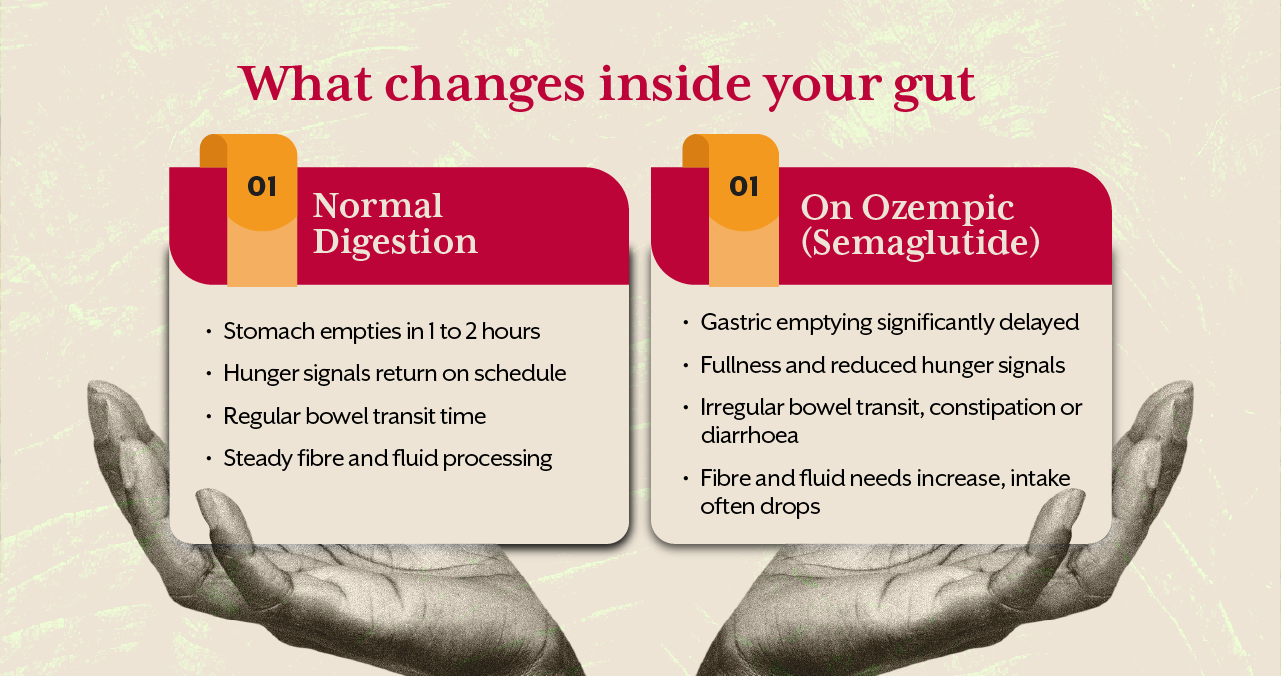
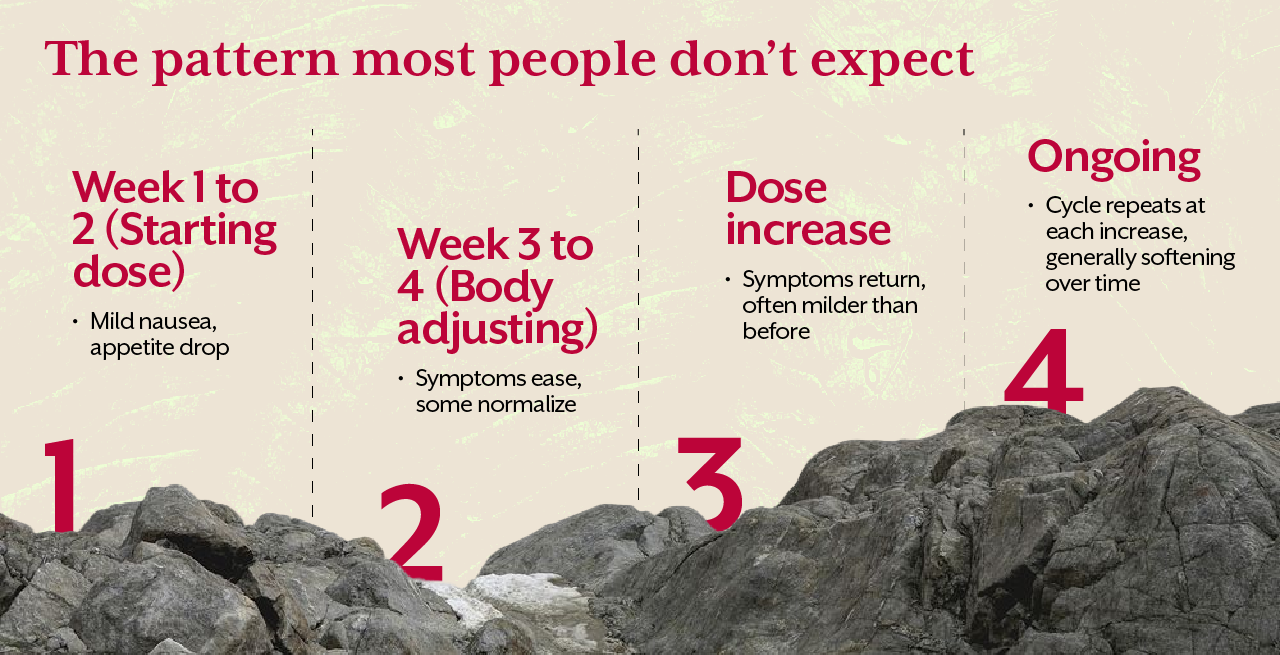
Nausea, vomiting, constipation, and diarrhea are the most commonly reported side effects. These side effects are very common with all GLP-1 medications, and tend to be more pronounced during the initial starting dose and when increasing the dose. For most patients, gastrointestinal upset subsides after the first month or two of treatment.
Concerningly, retatrutide also activates glucagon receptors, which can impact blood sugar levels. Researchers are paying special attention to changes in liver enzymes, heart rate, and blood glucose in trial participants. To date, the side effect profile looks manageable, and no unexpected major safety issues have been revealed in Phase 2 clinical trials.

Key Takeaway
Obesity is a disease. It is not a cosmetic concern. It is a chronic, complex, biological condition that predisposes patients to 2 types of diabetes, heart disease, liver disease and sleep apnea. For years, there were few treatment options for patients. Diet and exercise are helpful for sure, but human biology is strongly against most people at every turn. It is because of that reality that peptides including retatrutide represent such a pivotal breakthrough in how medicine can treat people living with obesity. Modern science is starting to catch up with what people who have struggled with their weight know intuitively. Regulating your weight involves far more than willpower, cravings, and exercise. It is a complex interplay of hormones, brain signaling, and metabolic function that we can now target with incredible precision, backed by science.
References
1. Jastreboff AM, Kaplan LM, Frías JP, et al. Triple–Hormone-Receptor Agonist Retatrutide for Obesity — A Phase 2 Trial. New England Journal of Medicine. 2023;389(6):514–526. https://doi.org/10.1056/NEJMoa2301972
2. Abdul-Rahman, T., Roy, P., Ahmed, F. K., Mueller-Gomez, J. L., Sarkar, S., Garg, N., ... & Sood, A. (2024). The power of three: Retatrutide's role in modern obesity and diabetes therapy. European Journal of Pharmacology, 985, 177095. https://doi.org/10.1016/j.ejphar.2024.177095
3. Katsi, V., Koutsopoulos, G., Fragoulis, C., Dimitriadis, K., & Tsioufis, K. (2025). Retatrutide-A Game Changer in Obesity Pharmacotherapy. Biomolecules, 15(6), 796. https://doi.org/10.3390/biom15060796
4. How I lost 16 kgs in 4 months- Mugdha Pradhan’s easy weight loss journey with GLP agonists. https://www.ithrivein.com/blog/lost-16-kg-in-4-months-glp-agonist-weight-loss-journey















.svg)