Top 6 Simple, Quick, Healthy Diwali Snacks That Won’t Ruin Your Diet
Table Of Content

Top 6 Simple, Quick, Healthy Diwali Snacks That Won’t Ruin Your Diet

iThrive Team
Sep 25, 2024

Diwali is just around the corner, and we know that you have already started planning for the celebrations, especially the food! But amidst all the excitement, there is always a growing concern in our country. Increased sweets and junk food intake during Diwali, which then leads to mental and physical stress, weight gain, and cholesterol spikes.

If you want to make your own snacks this year, you don't have to give up your favourites or spend hours in the kitchen. A few simple ingredient swaps and baking instead of deep-frying can make homemade snacks easier to prepare, and they’re healthy too. 

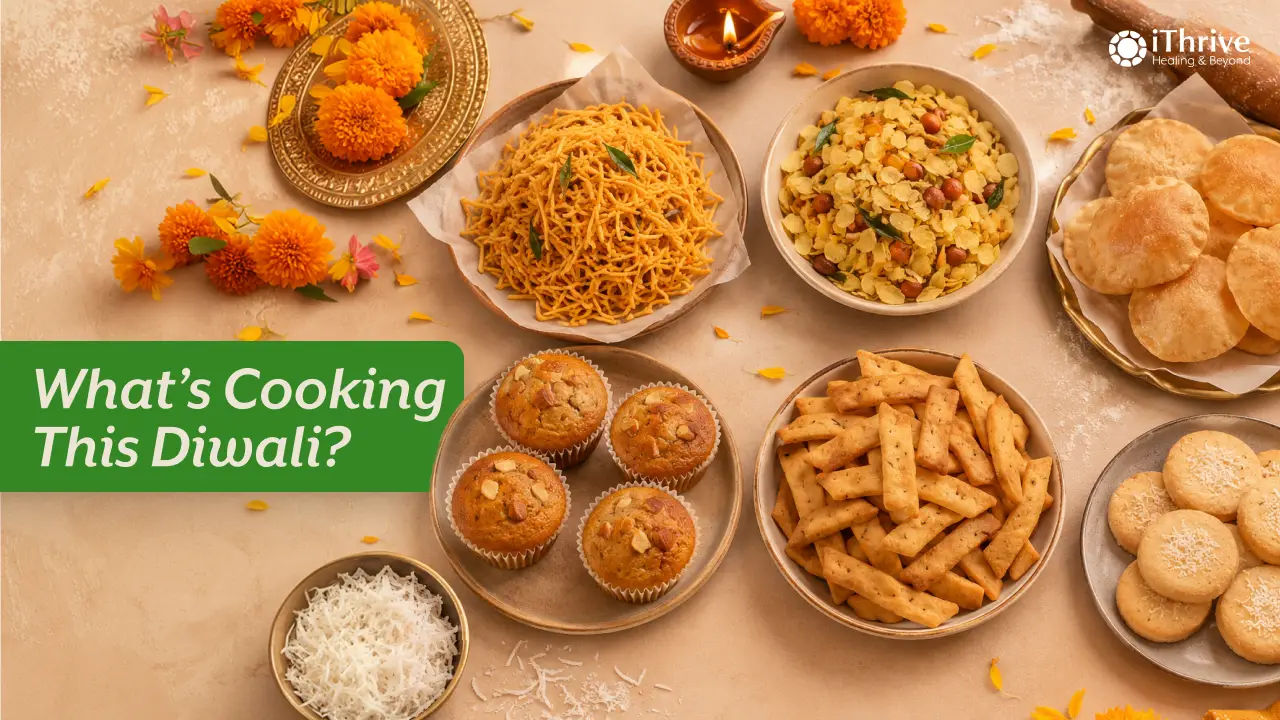
Here are six healthy Diwali snacks you can make at home, with simple ingredients, cooking instructions, and tips to get them right.

At iThrive we know how important these health concerns are and that is why we are offering healthy Diwali snacks that allow you to enjoy Diwali without compromising on your health.

What Are the Best Healthy Diwali Snacks?

The best Diwali snacks are those that you can enjoy munching on without any guilt, and those that you can prepare with ingredients that suit your everyday diet. Homemade options are a much better way to go as it helps you control the amount of salt, sugar and oil. You know what you’re putting in, so you know they’re good for you. 

Traditional Diwali favorites like sev, puri, and namak paras can be baked instead of being deep fried. On the other hand, sweets like banana muffins and coconut cookies can be easy and healthy alternatives to packaged biscuits and desserts. 

You can also try using ingredients like jowar flour, whole wheat flour, bananas, and coconut to add variety to your festive menu. Remember, healthy eating doesn't mean you need to avoid festive foods altogether. You can enjoy them in portions that feel right for you, and add ingredients that feel good for your gut and body.

Best 6 Delicious and Healthy Diwali Snacks Recipe

1. Baked Sev- Crispy Joy, No Fried Fat!
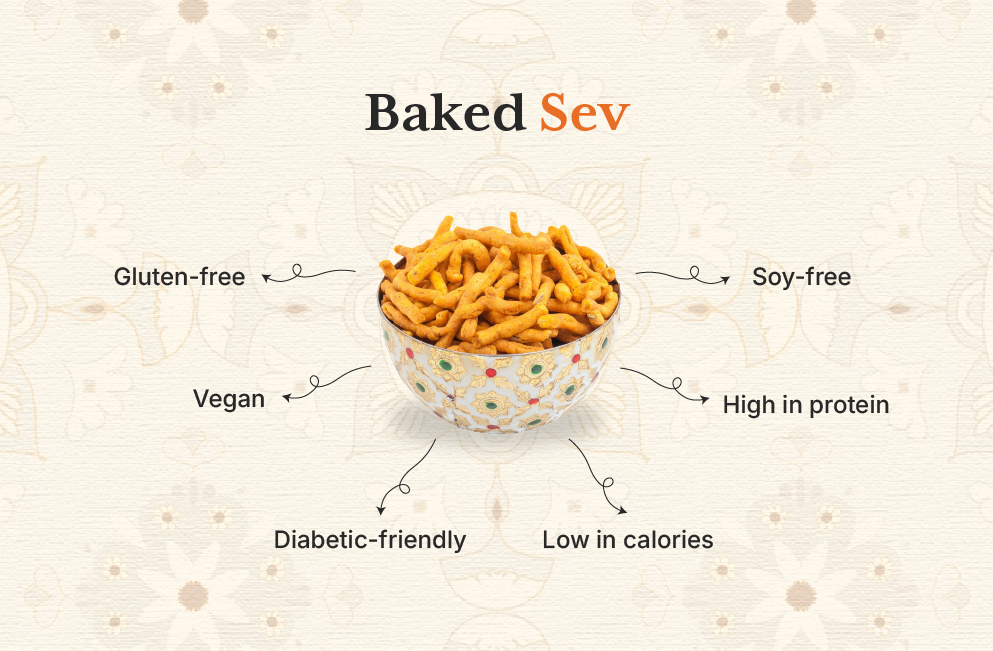
Sev is a Diwali classic in many homes, especially when it is served with poha, chivda, or a cup of chai in the evening. We all know that sev is typically deep fried, but this baked version gives you a healthier way to enjoy it. Since baked sev is a lighter option, it also makes you less bloated. They are also packed with protein and low in calories. 

Check out the full baked sev recipe and elevate your festive snacks!

2. Baked Puri- Crunchy, Not Greasy

Crispy puris are easy and fun to snack on, but deep-frying them can make them greasy and heavy on the stomach. Baking them instead offers a simpler and healthier alternative for those who enjoy that crunch. Baked Puris are delicious and have several health benefits if you just swap out the method with which you cook them. Since these are low in calories, they can also be suitable for a diabetic-friendly diet. They are also rich in iron and calcium, so they help support strong bones and boost your daily nutrient intake, thus making them a nutritious snack. You can also make them with any healthy flour options, even poppy seeds, which are great for boosting overall health.

Check out the full baked puri recipe here and make your Diwali celebrations a little lighter and a lot more delicious!

3. Banana Muffins- Healthy Muffins for Happy Tummies

If you want a delicious, sweet, guilt-free, and healthy Diwali snack, then banana muffins are the perfect choice for you. You can put a few overripe bananas at home to good use by adding them to these soft, naturally sweet muffins. They are also an easy and convenient option for guests who would want something sweet with their evening tea. You can also replace the refined sugar for maple syrup, dates powder, or coconut sugar. Bananas are rich in potassium, which helps to regulate blood pressure and maintain hydration. Additionally, their high fiber content helps in digestion, making them a smart addition to your diwali snack list.

Check out the full banana muffins recipe to bring a sweet, healthy twist to your Diwali celebrations.

4. Jowar Chivda
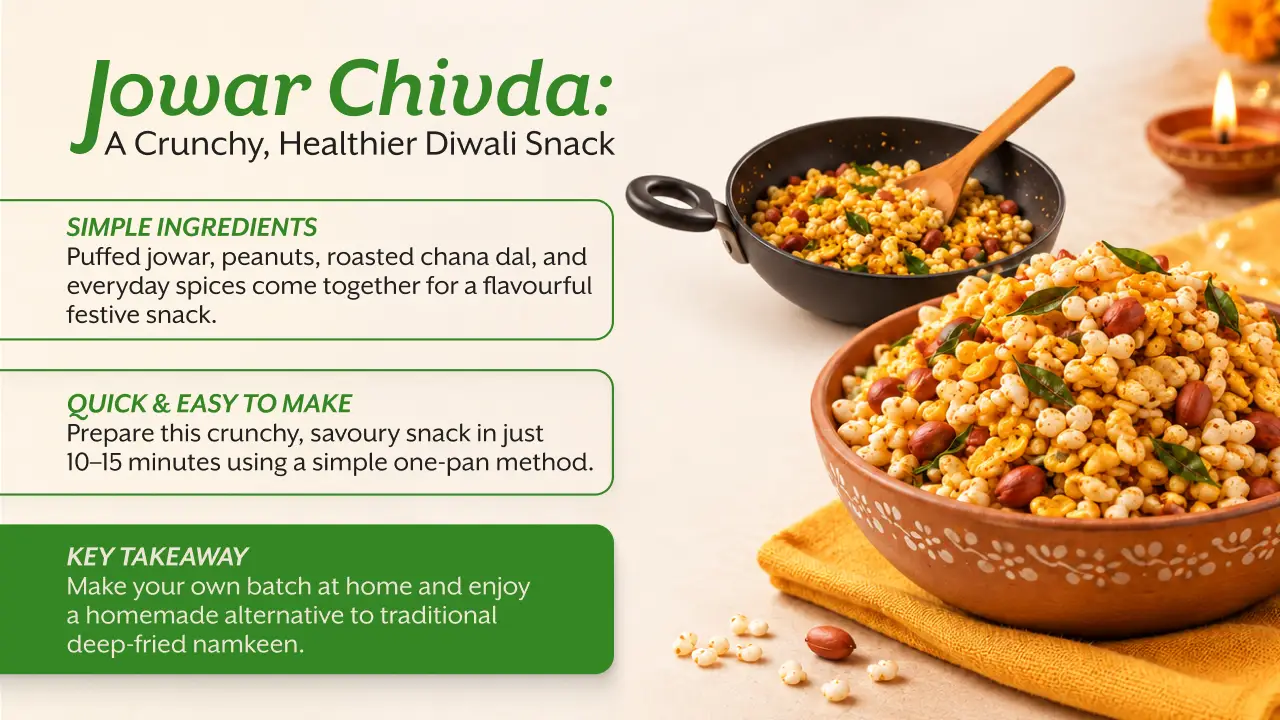
jowar chivda

Jowar chivda is a savoury, crunchy option that combines puffed jowar with nuts and spices. Made with puffed jowar, peanuts, roasted chana dal, and a handful of everyday spices, it’s easy to put together in one pan. You can prepare a batch ahead of time and serve it with tea when friends and family drop by.

Make this delicious and nutritious treat for Diwali with our full jowar chivda recipe.

5. Baked Namak Para
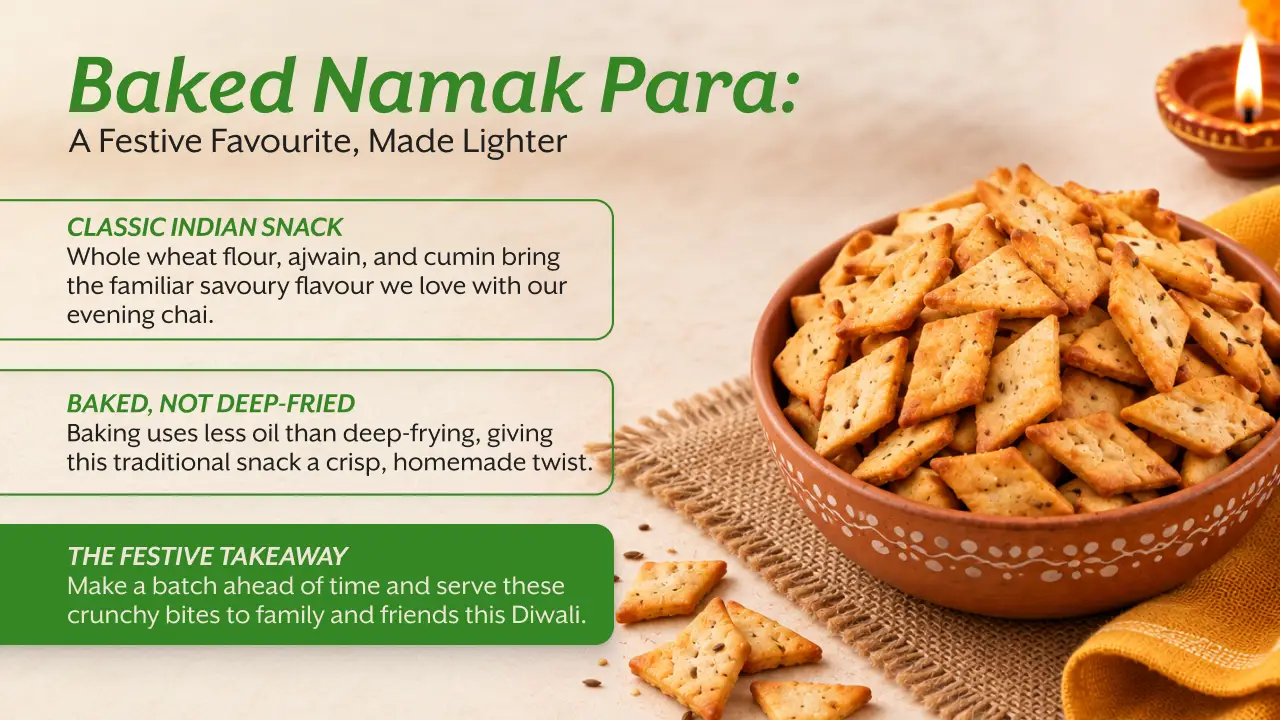
Baked Namak Para

Namak para is a familiar teatime snack in many Indian homes. Baking it instead of deep-frying makes it a useful addition to your homemade Diwali snack platter. Namak para is one of those classic teatime snacks that's hard to resist during Diwali. This homemade version uses whole wheat flour, ajwain, and cumin for that familiar savoury flavour, with baking instead of deep-frying. They're crisp, easy to make in batches, and perfect to keep around when guests drop in or when you're craving something crunchy with your evening chai.

You can easily make this easily at home with our quick baked namak para recipe.

6. Coconut Cookies- Soft, sweet, and nutrient-rich treat

If you like the taste of the coconut but want something that is different from the usual festive sweets, then these simple cookies are definitely worth trying. They go great with tea or coffee and they need only a few common ingredients. Since coconuts are high in fiber, vitamins, and minerals, it makes them a healthy snack choice. They are also a great source of manganese, which is a great nutrient for strong bones.

Check out the full coconut cookies recipe here!

Baked Vs Fried: What’s the Difference?

Baked and fried Diwali snacks are different based on their cooking method and the quantity of oil that is being used. Deep-fried snacks tend to soak up oil, which can increase calories and fat. On the other hand, baking uses far less oil, but it still gives the sev and namak para that satisfying crunch. Of course, not all baked goods are healthy. Things like flour, sugar and how much oil or butter you use still count. If you enjoy traditional Diwali favourites, baking them at home is a simple way to experiment with lighter versions without giving up the flavours you look forward to every festive season.

Here’s a quick overview of the ingredients you’ll need to prepare these six healthy Diwali snacks at home. Most use simple, everyday ingredients, with whole wheat flour, millets, and lighter cooking methods offering alternatives to traditional festive snacks. Use the table below to check what you need:

Recipe Ingredients
Baked Sev Besan (gram flour), oil, turmeric powder, red chilli powder, asafoetida (hing), salt, water.
Baked Puri Whole wheat flour, oil, ajwain, turmeric powder, salt, water.
Banana Muffins Ripe bananas, whole wheat flour, milk, oil, optional jaggery powder, baking powder, cinnamon powder, salt.
Jowar Chivda Puffed jowar, peanuts, roasted chana dal, oil, mustard seeds, curry leaves, turmeric powder, chilli powder, salt.
Namak Para Whole wheat flour, semolina (sooji), oil, ajwain, cumin seeds, salt, water.
Coconut Cookies Whole wheat flour, desiccated coconut, powdered jaggery, oil or melted butter, milk, baking powder, salt.

‍

Tips for Preparing Healthy Snacks at Home

A little preparation can make festive cooking much easier. Keep these tips in mind while you are planning your Diwali menu.

  • You can make dry snacks like sev, chivda and namak para in advance, ahead of time in batches so it doesn’t become too much to handle.
  • Control the level of oil you are using. A little can help in texture without completely weighing down the recipe and making it greasy. 
  • Try using different types of healthy flours like whole wheat and jowar. This can add variety to your regular recipes.
  • Use ripe bananas to bring out their natural sweetness. You can add jaggery, honey, or maple syrup only if needed.
  • Make sure you are storing baked snacks the correct way. Allow them to completely cool before you store them. Use airtight containers to keep them fresh and crunchy for longer. 
  • Rather than leaving out large containers all day long, put the snack into small bowls. This can help in portion control. 

If you want more healthy Diwali tips, then do check out our blog Healthy Diwali 2026: Tips for Sweets, Snacks and Festive Eating.

A
Ask your doubts
Thank you! Your submission has been received!
Oops! Something went wrong while submitting the form.

FAQs

Can I make Diwali snacks ahead of time?
faq arrow

Yes. You can make dry snacks like namak para, baked sev and namak para in advance and store it properly in an airtight container.

Are baked snacks healthier than deep fried snacks?
faq arrow

Yes. Baked snacks use less oil than fried and packaged snacks, making them a better choice. But total nutritional value depends on recipe, portion size and ingredients.

How to make Diwali sweets less sweet?
faq arrow

You can substitute refined sugar with more natural sweeteners like jaggery, honey, dates or even fruits.

How to store homemade Diwali sweets?
faq arrow

To store your diwali sweets properly, allow them to cool down completely before transferring them to clean, airtight containers. Store in a cool, dry place, refrigerate perishable items.

What are the best diabetic snacks for Diwali?
faq arrow

Avoid heavily sugared sweets or deep fried snacks, especially for diabetics. Instead they should opt for baked, high fiber and protein rich snacks.

Related Blogs

Healthy Diwali 2026: Tips for Sweets, Snacks and Festive Eating
read count
read time
Nov 7, 2026

Healthy Diwali 2026: Tips for Sweets, Snacks and Festive Eating

Learn about healthy tips for Diwali for enjoying sweets, snacks and festive meals through smart food swaps, portion control and monitoring blood sugar.

We all await the time when Diwali lamps illuminate our homes, bringing with it, a delightful excitement, followed by last minute cleaning, fireworks brightening up the sky line and the most awaited act of wolfing down a special Diwali food menu which includes but isn’t limited to special Diwali sweets and deep-fried snacks. Nonetheless, in the thick of festive chaos, it’s  imperative that  health and safety factors are considered to ensure a safe Diwali. 

How to Celebrate a Healthy Diwali?

Make healthy and mindful food and lifestyle choices this Diwali. Enjoy sweets with natural sweeteners, include protein-rich foods, fruits and nuts in your diet, control portion sizes and opt for baked or roasted snacks .Keep yourself hydrated, exercise regularly, get enough sleep and maintain your blood sugar levels so you can enjoy a happy, healthy and energetic festive season.

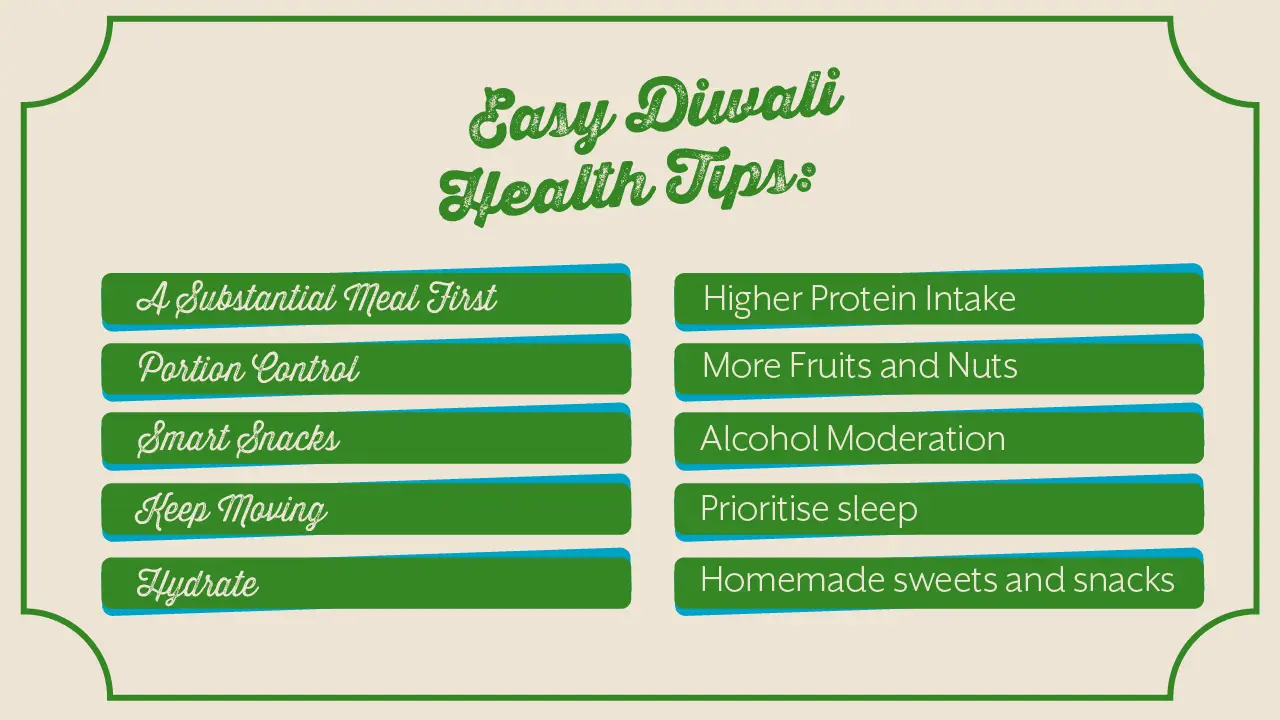
10 Healthy Diwali health Tips and Diet Tips for Better Festive Eating

10 Healthy Diwali health Tips and Diet Tips for Better Festive Eating

1. A Substantial Meal First

Ensure that before going to any Diwali party or celebration, you are not hungry. Eat a wholesome and balanced meal or a healthy snack so you can avoid binge eating the heavy Diwali snacks and sweets.

‍2. Portion Control

As the Diwali spirit and joy overtakes, make sure to practice portion control and savour your favorite Diwali snacks and sweets in controlled quantities throughout the day instead of binging on them.  

3. Choose Smart Snacks

‍To avoid the same old Diwali heartburn because of refined sugar and excessive oil, swap the same with natural sweeteners like dates, honey or jaggery and instead of consuming traditional savoury, fried snacks, opt for roasted or baked goods.

4. Keep Moving

‍Do not let the festive chaos of Diwali hold you back from exercising regularly. A slightly longer walk after a meal, some fun family zumba sessions would be vital to maintain physical agility. 

5. Hydration for Wholesome Health

‍Maintain your water intake as it will help you to keep up with the Diwali festive cheer and regulate your digestion process and flush out toxins from your body. You can drink herbal teas to aid further digestion. 

6. Higher Protein Intake

‍Make sure to add protein dense foods to your Diwali food list to balance the heavy oils and richness of traditional Diwali food menu. Increasing your protein intake during Diwali season will regulate blood sugar levels, prevent post Diwali weight gain and will reduce the cravings for fried snacks and sweets. Use low fat paneer, tofu, focus on millets and legumes. 

‍7. Use of Fruits and Nuts

‍Add more nutritional value to your sweets with fruits and nuts by adding them to your Diwali food traditions. They not only make for healthier sweets, but also add texture, flavour and nutritional value, resulting in making a snack healthier, leading to a healthy Diwali diet.

8. Drink alcohol in moderation

‍Consuming excess alcohol eventually leads to dehydration, bloating and digestive issues. Drink in moderation, avoid drinking on an empty stomach and alternate alcoholic drinks with plain water. Also be on the lookout for sugary mixers and cocktails that add to your total sugar intake or consumption.

9. Late Nights? Think again

‍Late night celebrations and parties are unavoidable during Diwali. Nevertheless, make sure to not stay up too late and disrupt your natural sleep cycle. Maintaining a regulated circadian rhythm helps in keeping overall hormone balance and in managing blood sugar. 

10. Homemade Sweets and Snacks

‍Store bought Diwali snacks and sweets are filled with excess sugars, preservatives and additives. Use alternative ingredients and make healthy Diwali recipes by using natural ingredients and sweeteners instead.

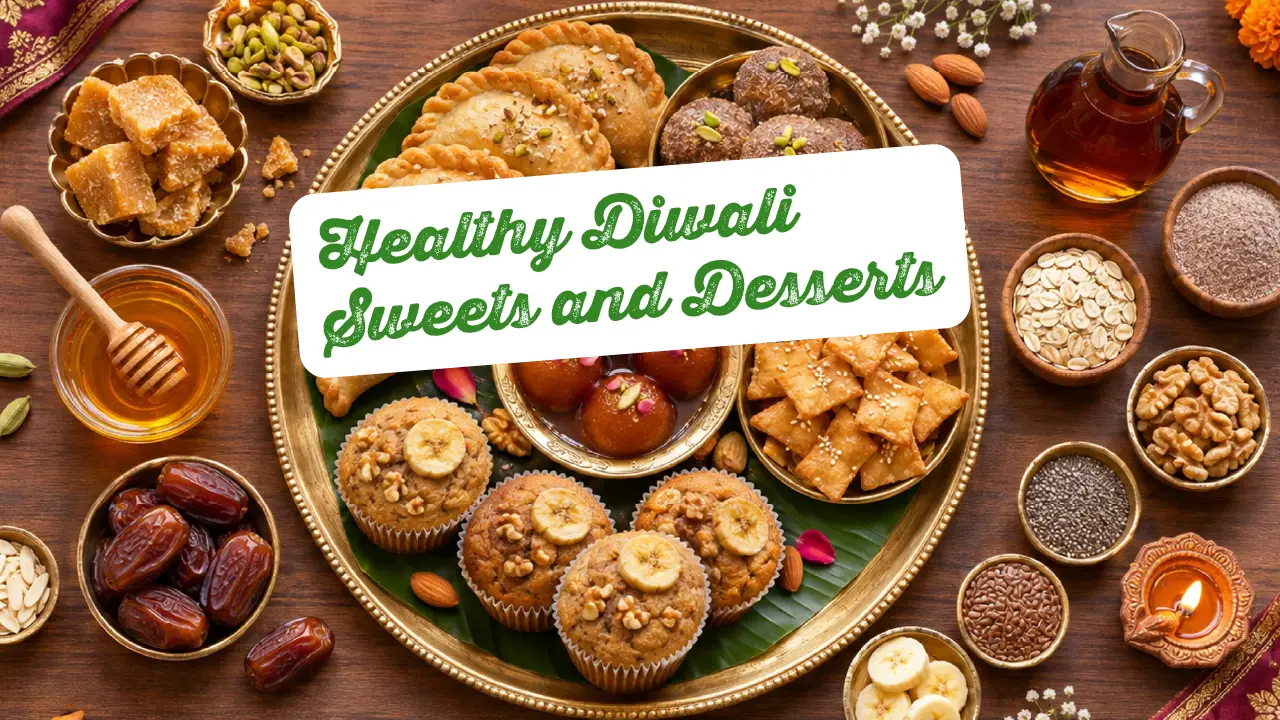
Healthy Diwali Sweets and Desserts

heathy diwali sweets and desserts

Eating Diwali sweets and desserts is next to impossible as they are present in every Diwali celebration. The sugar cravings during Diwali season are heightened because of easy availability but the sugar crash is equally harder to deal with along with the harsh effects excessive sugar has on your heart health and digestive health. Opt for healthier sweets by going for alternate options like Baked karanj/Gujia, Ragi Laddoos, Sweet Shakkarpara, Gulab Jamun and Banana Muffins. Use alternate natural sweeteners like jaggery, honey, dates or maple syrup. 

Read our blog on ”4 Diabetic-Friendly Diwali Sweet Recipes to Try in 2026” for more information

Healthy Diwali Snacks to Try at Home

Traditional Diwali food items call for an abundant usage of oil and that means extra fats and calories. Instead of using traditional Diwali snack recipes that recommend frying with oil, make baked or roasted snacks instead. Fried snacks increase calorific value, causing heartburn often, but eventually leading to long term heart issues, diabetes, gall bladder issues, and digestive issues. Healthy Diwali recipes like Baked Sev and Baked Puri, are wonderful replacements for fried snacks. 

Get a deeper insight into healthier Diwali snacks with this 6 Healthy Diwali Snacks: Easy Homemade Recipes

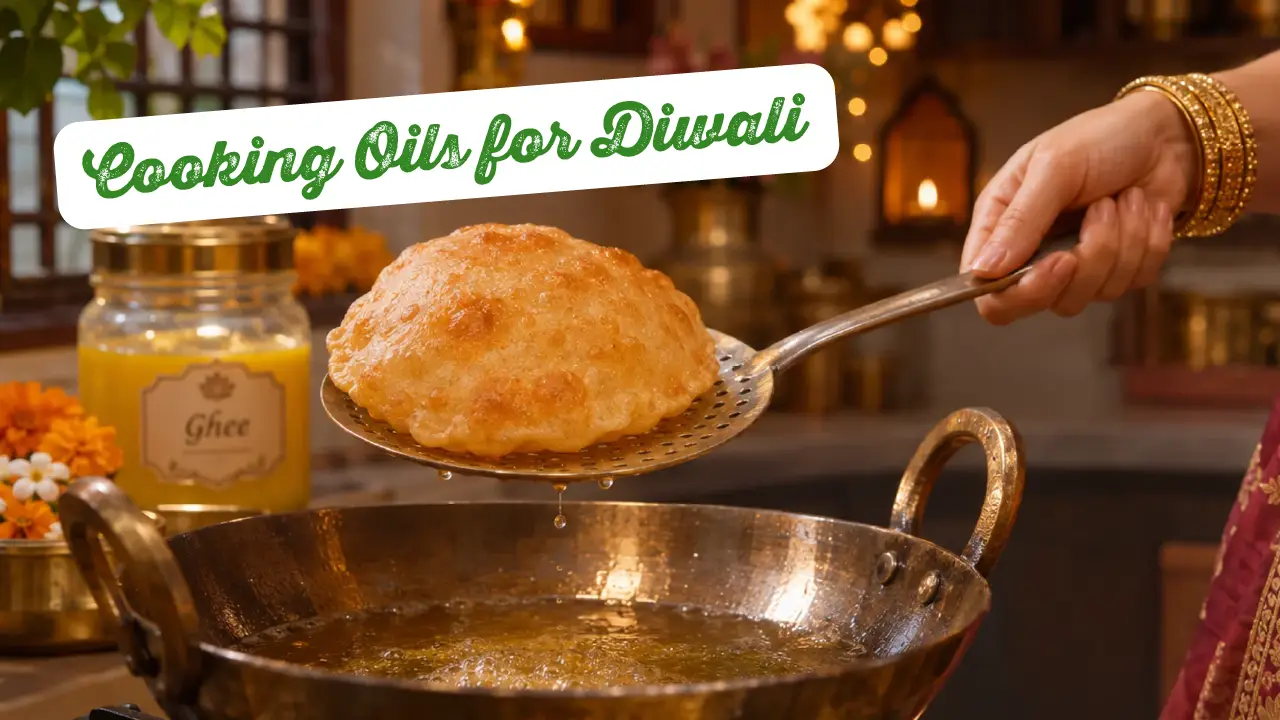
What Are the Best Cooking Oils for Diwali?

Best Cooking Oils for Diwali

Traditional Diwali recipes and festive cooking involves excessive use of oil for deep frying large quantities of sweet and savoury snacks. Use of oil, when and if required must be measured so that the long-term health risks can be avoided. All fats are not equal in nature. Saturated fats, mainly found in ghee, butter and coconut oil should not be consumed in large quantities. Unsaturated fats, which are found in groundnut, mustard, soybean and sunflower oil are generally the best choices for general and festive cooking as they retain the flavour without adding any risk for health. 

Take a look at our blog on “Best Cooking Oils for Diwali: How to Make Healthier Choices” for more insights on which oil is best for you this Diwali. 

Re-usage of oil and constant heat changes the chemical nature of compounds causing a spike in cholesterol, blood pressure, causing indigestion and increasing the risk for long-term heart diseases, chronic diseases like cancer. Using new batches for frying or even better, swapping the fried snacks with baked or air-fried snacks with minimal usage of oil is a much favourable course of action. 

It’s never about labelling any particular type of oil as bad, it’s about maintaining consistency and making choices that put your health at risk and could have possible long term health effects.  

Take Care of Your Blood Sugar During Diwali

Managing your blood sugar and diabetes while enjoying Diwali festivities is crucial and can be done through simple measures such as timely meals, portion control, and monitoring your sugar levels.

Monitor your Glucose by sticking to your schedule. Do not skip any meals or delay them for too long as it affects your overall glucose levels throughout the day. Always make sure to set alarms for yourself so as to not skip any oral medications or insulin doses, especially when late night Diwali parties go on. Check your blood sugar more regularly, especially before and after meals to see how the body handles certain food items. 

Look out for warning signs of high blood sugar, especially excessive sweating, dizziness, fatigue and feeling more thirsty than usual.

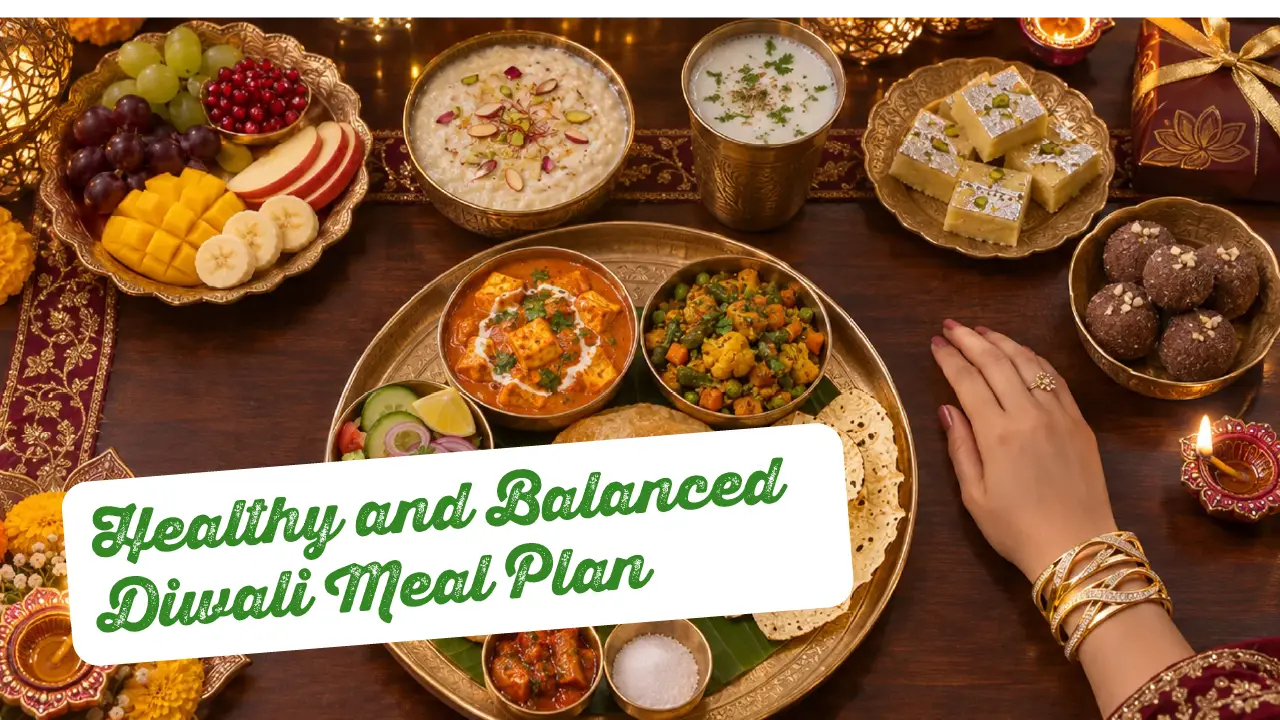
Healthy and Balanced Meal Plan

Healthy and Balanced Meal Plan

Having a light yet revitalising breakfast that is high in protein, probiotics is essential during the festive season. A besan cheela, topped with low-fat paneer, with curd on the side is an excellent source of protein and probiotics in the morning for a first meal.

Your lunch can be wholesome without being heavy so as to manage your glucose levels. Paneer tikkis made in an airfryer or baked in an oven, with lentils and some rice or whole grain roti, and dry sauteed vegetables on the side is a fulfilling lunch, aiding in re-energising you. 

Evening snacks is something everyone looks forward to, but instead of having traditional Diwali snacks, you can swap the fried items with Baked Sev and Baked Puri that have the same, yummy extra crunch and no guilt. Swap the traditional Diwali sweets and desserts with alternate sweets with natural sweeteners. You can have healthier snacks like Baked karanj/Gujia, Ragi Laddoos, Sweet Shakkarpara, Gulab Jamun and Banana Muffins instead.

Dinner, as it is the last meal of the day should be light on the stomach, easily digestible to make for a healthy gut. You can have a variety of vegetables that can be incorporated into cooked lentils or a millet khichdi 

Final Thoughts

This Diwali, do not eat cautiously or in fear of a post Diwali fatigue. Instead make smarter, healthier and conscious choices. Follow Diwali health tips, incorporate healthy recipes, eating choices, lifestyle changes and regular physical movement for a flawless and high energy Diwali. Begin with small actions today which will lead to a smarter and healthier tomorrow for many more Diwalis.

Best Cooking Oils for Diwali: How to Make Healthier Choices
read count
read time
Nov 5, 2026

Best Cooking Oils for Diwali: How to Make Healthier Choices

Learn about why seed oils are not good for your health, why you should try to avoid them, and what you can substitute them for, especially during festivals.

Festive season is here! And it comes with joy, lights, and most importantly, lots of delicious food. Indian festive celebrations are always linked with preparing a variety of sweets, snacks, and other delicious dishes. A staple on the grocery list during this time is seed oil, as festive foods and seed oil go hand in hand.

We know oily foods taste great, but have you ever wondered if they are actually good for your health? As today’s generation is actively becoming more health-conscious, it is important to understand how seed oils can affect our body and overall health.

Choosing the right oil doesn’t mean you have to give up your favorite festive foods. That means knowing what types of fats you cook with, what other oils you can substitute, and how much you should eat.

Let’s see how you can make informed choices this Diwali, while still keeping the festive spirit at full swing.

Why Cooking Oil Choices Matter During Diwali

Festive cooking usually involves cooking a number of different dishes and this means that you will use more oil than you would on a normal day. Repeated servings and deep-fried snacks and rich sweets can add up to our total fat and calorie intake.

It’s important to remember that not all fats are created equally. Saturated fats, which are found in foods such as ghee, butter and coconut oil, should be limited if they are normally consumed in large amounts. Groundnut, mustard, sunflower and soybean oil are generally the best choices for daily cooking as these are rich in unsaturated fats.

The goal isn't to label one oil as good and another as bad. It's to consider what type of fat the oil has, what the cooking method is, and how much amount is being used.

Which Cooking Oils Are Suitable for Indian Festive Foods?

The best cooking oil for Diwali treats depends on what you are cooking. For your daily cooking you can use oils rich in unsaturated fats like groundnut, mustard, sunflower, soybean and even rice bran. In contrast, if you are making something traditional or festive then pick something that adds flavor but still keeps the health aspect in mind. Ghee can add flavor to sweets and coconut oil can give a distinct taste which also compliments the dish. However, both ghee and coconut oil are high in saturated fat so use sparingly.

You don’t need to replace all the fats that are there in your kitchen for cooking. Some are good choices, if used consciously and in limit. This can make festive cooking feel a little more better and balanced. Your food can be festive and still take care of your gut and your overall health.

Seed Oils vs Ghee vs Coconut Oil: What Does Research Say?

There is a lot of debate going around seed oils, ghee and coconut oil, especially when we talk about choosing something that has a healthier cooking fat. But, the answer cannot simply be divided into good or bad. What matters here is which type of fat each oil contains, and how it affects your body. 

Common seed oils like sunflower, soybean, and safflower oil are rich in unsaturated fats, particularly polyunsaturated fats. Unsaturated fats, which are liquid at room temperature, are considered beneficial or healthier because they can help to improve blood cholesterol levels, ease inflammation, stabilize heart rhythms, and several others. They also mainly come from plant-based foods. 

Saturated fats on the other hand, all foods containing fat have a mix of specific types of fats. Even healthy foods have small amounts of saturated fat. They are naturally present in animal products like butter, cheese, and meat. These fats are typically solid at room temperature. Ghee, and coconut oil also contain saturated fats, so it is important to keep a check on much you are consuming. 

Although both can be used in cooking, neither has been shown to be a universally healthier replacement for unsaturated vegetable oils. Using them occasionally for flavour is different from making them the main source of fat in your everyday diet.

Everything points towards a balanced approach. You can use unsaturated oils for regular cooking, use ghee and coconut oil for special occasions, and control how much oil you are using in general. The cooking method, frequency of use, portion sizes, and your overall dietary pattern also plays an important role.

Cooking fat

Fat profile

Practical use

Sunflower oil

High in polyunsaturated fats

Everyday cooking and sautéing

Soybean oil

Polyunsaturated fats

Cooking and general-purpose use

Groundnut oil

Rich in monounsaturated fats

Indian cooking and sautéing

Mustard oil

Contains mono and polyunsaturated fats

Traditional Indian dishes

Ghee

High in saturated fats

Sweets and flavouring

Coconut oil

High in saturated fats

Recipes where coconut flavour works well

‍
During Diwali, using an oil that suits the cooking style, not reusing oil, measuring quantities precisely and replacing some fried foods with baked ones can help make the festive meals feel more balanced without having to give up on favorite traditional dishes.

If you want to know more about healthy cooking oils and how to integrate them in recipes, then check out this blog by iThrive 4 Diabetic-Friendly Diwali Sweet Recipes to Try in 2026

How to Reduce Oil Use in Diwali Snacks

You can still enjoy festive favourites without making every dish oil-heavy. A few simple changes can make a difference:

  • Use a teaspoon to measure and control how much oil you are using in a dish. 
  • Try baked foods rather than fried foods. They can be a healthier alternative and can still offer that crispy, crunchy feel you want on festive occasions. 
  • Measure instead of pouring: Use a teaspoon to control how much oil goes into a recipe.
  • You can try to roast chivda ingredients, nuts, and seeds, or they can also be prepared with a small amount of oil.
  • You can use an air fryer as it can help prepare certain snacks with less added oil, while still maintaining the crispiness. 
  • Watch your portions. You can be mindful and avoid snacking continuously throughout the day.
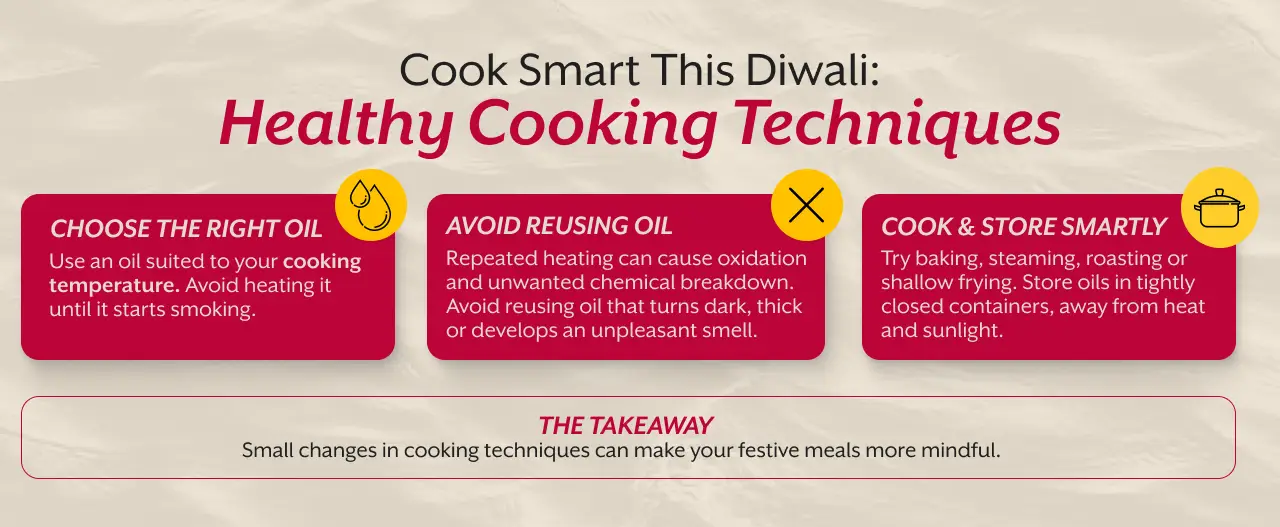
Cook Smart This Diwali: Healthy Cooking Techniques

Healthy Cooking Techniques for Festive Recipes

How you cook matters just as much as the type of oil you are using. Choose an oil that is well suited to the cooking temperature, and avoid heating it until it starts smoking. When you repeatedly heat and reuse frying oil, it can lead to oxidation and also lead to an unwanted breakdown of products. It is better to avoid reusing the same oil and again and again, especially when you notice that it has become darker, thicker or has an unpleasant smell. 

For everyday festive cooking, try baking, steaming, roasting, or shallow frying, depending on what the recipe allows. Store oils in tightly closed containers away from direct sunlight and heat to maintain their quality even more. 

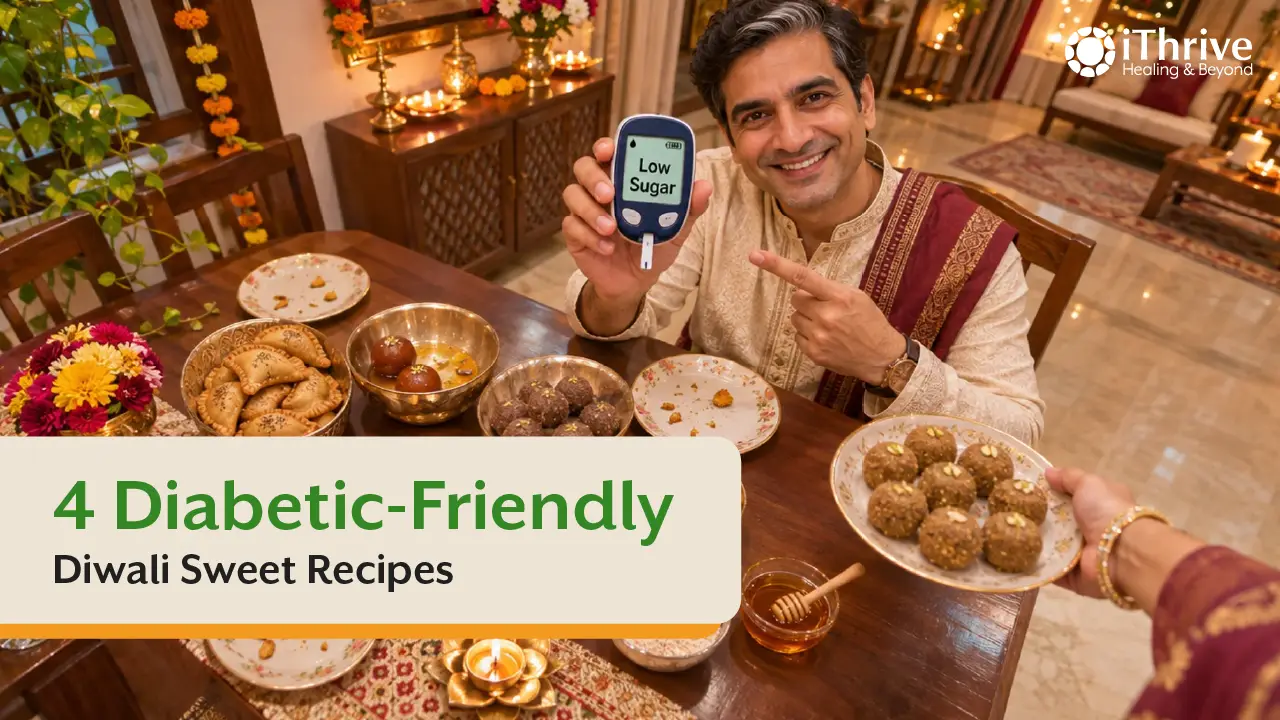
4 Diabetic-Friendly Diwali Sweet Recipes to Try in 2026
read count
read time
Nov 5, 2026

4 Diabetic-Friendly Diwali Sweet Recipes to Try in 2026

Learning about diabetic friendly Diwali sweet recipes to manage blood sugar, lessen sugar spike and practice portion control for a prosperous Diwali.

Diwali is the festival of joy, lights and  excitement. The celebratory chaos of fire-crackers, Diwali parties, catching up with friends and spending time with family is the best part of Diwali. But the show stealer is eating Diwali sweets and snacks. Diwali is  just a few days away and the grocery lists are probably piled-up with extra sugar, wheat flour (maida) and oils for the preparation of all these delicious Diwali sweets.. 

However, for those who have Diabetes, this festive celebration is a bit more wistful, and tart rather than sweet as it is nearly impossible for them to have healthy Diwali sweets without sugar, while everyone is able to do so fearlessly. The much-beloved Diwali sweets like laddoos, barfis and halwas overflow with sugar, endangering the health of diabetic people. 

Well, worry less and take a look at these diabetic-friendly Diwali sweet recipes that are especially catered to make you embrace healthy Diwali sweets by using ingredients which will help you manage your blood sugar and have a delectable Diwali. 

4 Healthy Sweets for Diabetics to Make for Diwali this Year

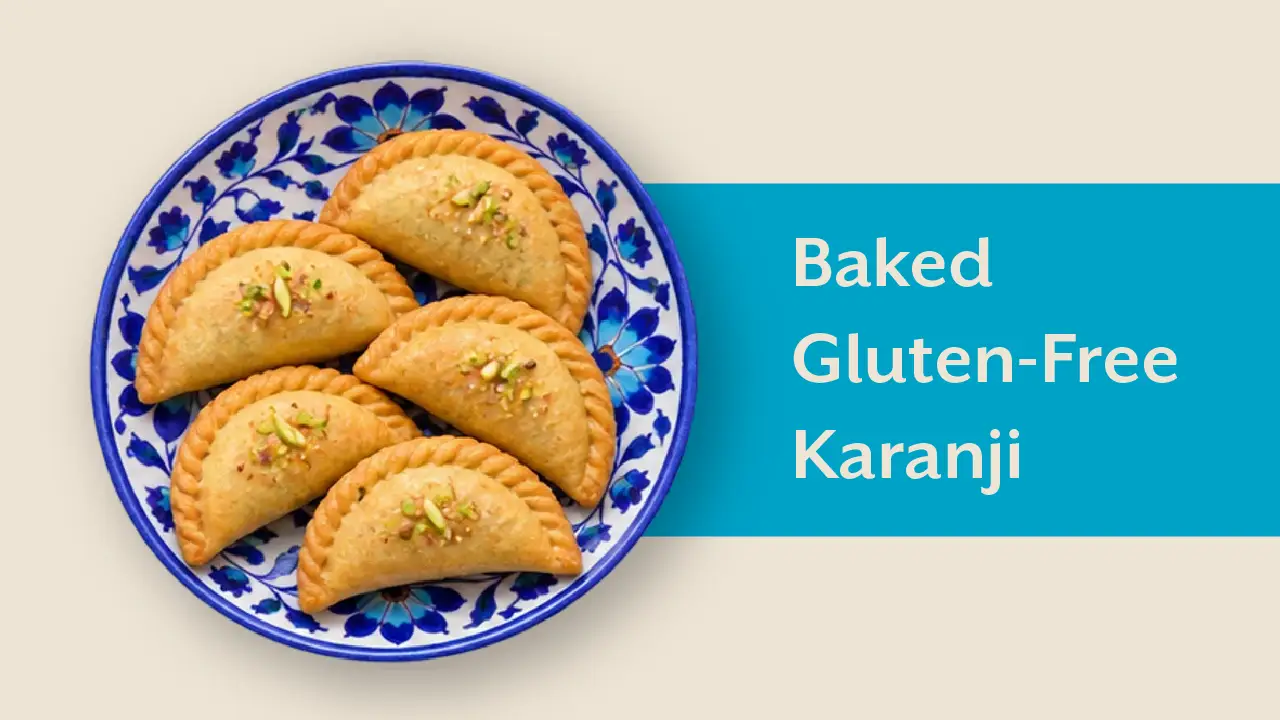
1. Baked Gluten-Free Karanji

Baked Gluten-Free Karanji

The baked gluten-free karanji is a much feasible and healthier alternative option and a smarter swap with the traditional Karanji/Gujia which is deep-fried. The use of gluten-free flours instead of refined wheat flour makes the karanji more nutrition dense while adding protein and the use of dates as a natural sweetener makes it Diabetes-friendly.

Prep time : 10-15 minutes | Cooking time : 25-40 minutes

Ingredients:

  • Organic oat flour - 50 grams
  • Organic quinoa flour - 50 grams
  • Tapioca flour - 15 grams
  • Salt -  1 pinchful
  • Water - As required (for the dough)

Filling ingredients:

  • Fresh grated coconut - 20 to 30 grams
  • Kimia dates - 100 to 120 grams
  • Cardamom and nutmeg powder: 1/2 table-spoon
  • Salt -  1 pinchful

Serving size: 4 to 5 units of karanji

Estimated carbohydrates:  150 to 200 grams

Procedure: See the full recipe for Baked gluten-free karanji

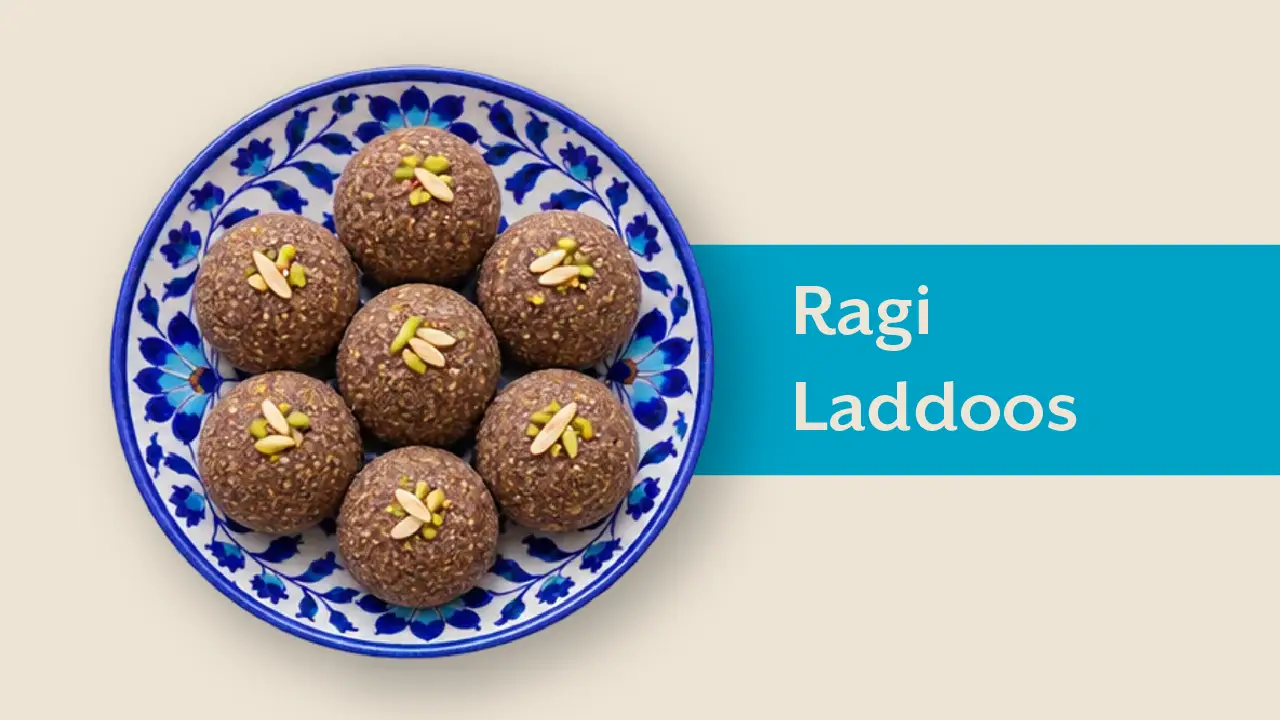
2. Ragi Laddoos

ragi ladoos

Ragi Laddoo is a much finer option as a Diwali treat as it is a great source of fiber, calcium and protein. Combined with dates, a natural sweetener, it  adds fiber to the treat. This recipe is quick to prepare and is a healthy option for those with Diabetes as well as growing children as it is packed with nutrients.

Prep time: 10 minutes | Cooking time: 10-15 minutes

Ingredients:

  • Organic ragi flour - 100 grams
  • Kimia dates - 80 to 100 grams

Serving size: 5 to 6 medium sized laddoos

Estimated carbohydrates: 120 to 150 grams

Procedure: Check out the full recipe for Ragi Laddoo and fulfill your sweet craving.

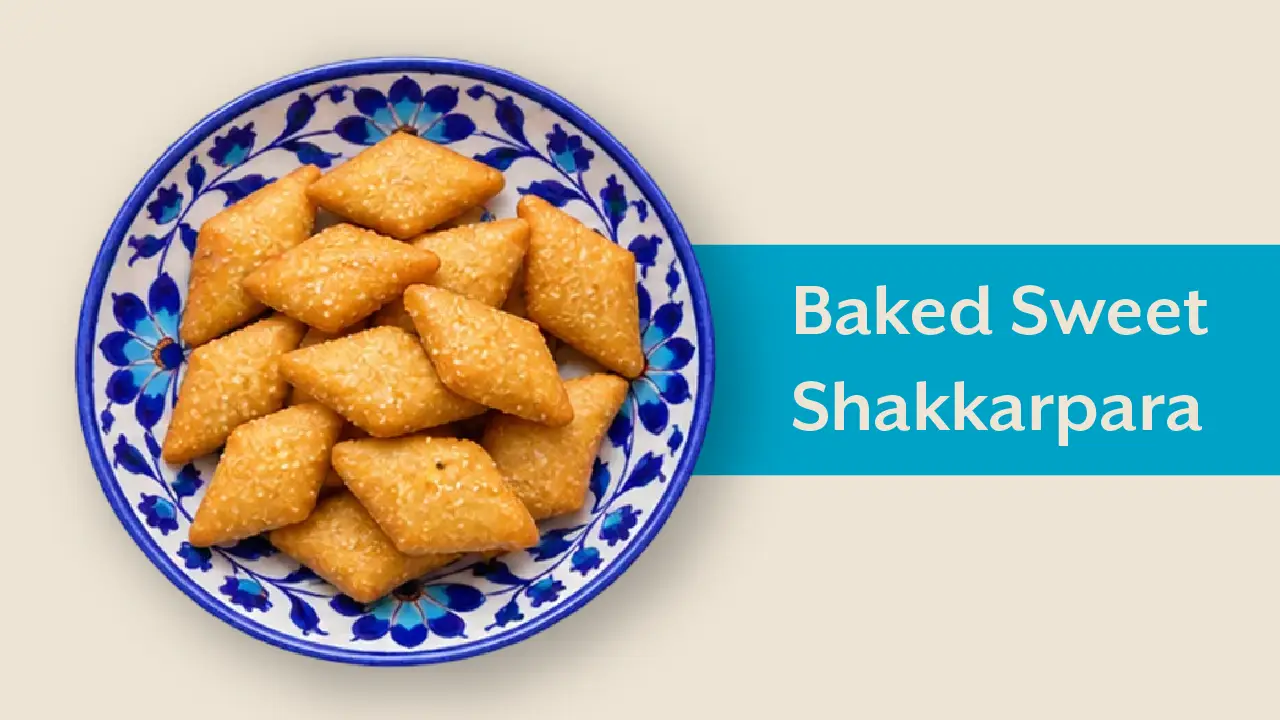
3. Baked Sweet Shakkarpara

Sweet Shakkarpara is an eternal Diwali favorite that is traditionally made with refined wheat flour and sugar. For this treat to be diabetic-friendly, there is a healthier version that uses organic gluten-free flours and date paste and adding nutritional value as compared to the traditional Shakkarpara. 

Prep time: 10-15 minutes | Cooking time: 25 - 30 minutes

‍Ingredients:

  • Organic oat flour - 50 grams
  • Organic quinoa flour - 50 grams
  • Tapioca starch - 15 grams
  • Kimia dates - 100 to 120 grams
  • Cardamom powder - 1 pinchful
  • Nutmeg powder - 1 pinchful
  • Salt -  1 pinchful
  • Water - As required (for the dough)

Serving size: 200 to 225 grams

Estimated Carbohydrates: 150 to 180 grams

Procedure: Take a look at the full recipe of baked sweet shakkarpara

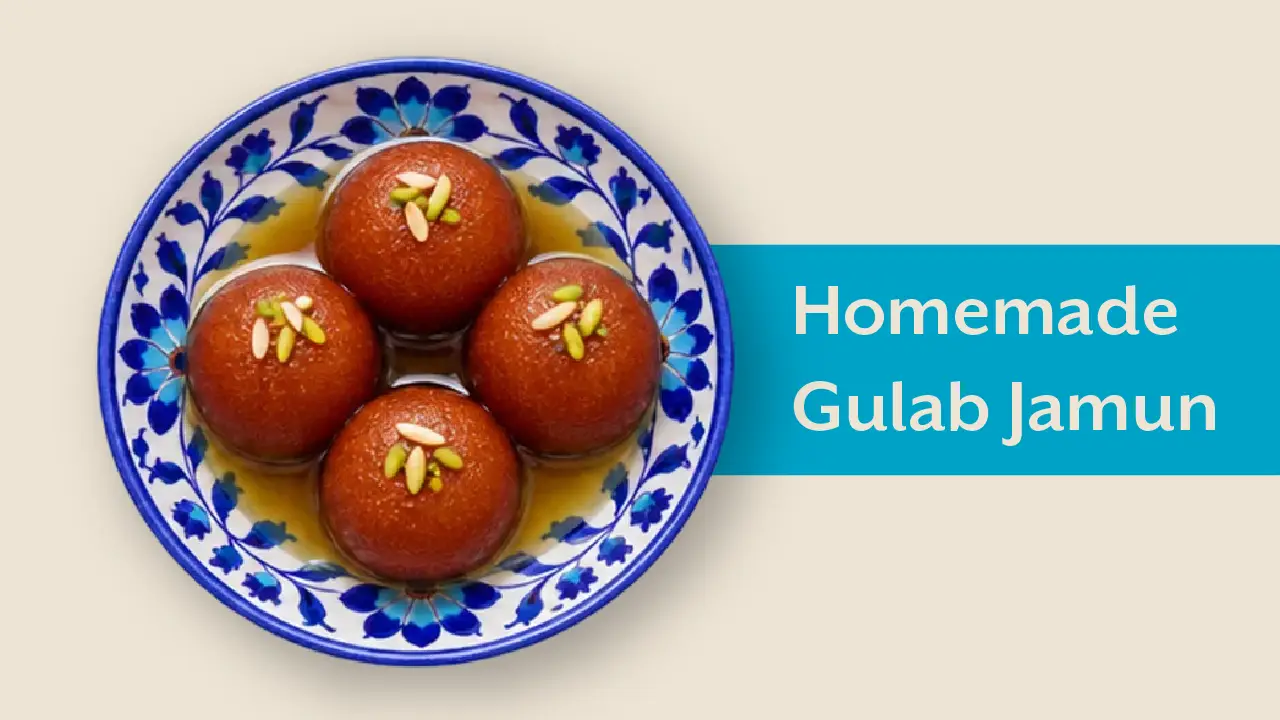
4. Homemade Gulab Jamun

This version of Homemade Gulab Jamun is a well moderated and healthy version as compared to the traditional version. We use ingredients like sweet potato, oats flour and dates to make it nutrient-dense while still sustaining the creamy texture. Instead of using refined wheat flour and sugar syrup, you swap the white sugar syrup with honey. All the alternatives are better for people who are diabetic and need to monitor their glucose levels.

Prep time: 10-15 minutes | Cooking time: 30-40 minutes

Ingredients:

  • Organic oat flour - 20 grams
  • Sweet potato - 100 grams
  • Kimia dates - 50 to 60 grams
  • Cardamom powder - 1 pinchful
  • Nutmeg powder - 1 pinchful
  • Raw organic honey - 50 ml
  • agar agar - 1 pinchfu

Serving size: 200 to 250 grams

Estimated Carbohydrates:  120 to 150 grams

Procedure: Check out the full recipe for homemade gulab jamun

Lower Added Sugar in your Sweets this Diwali 

“Sugar free Diwali sweets” is a false notion assumed by most people. Every ingredient has its own levels of natural sugars, fats  and carbohydrates and other components in its profile. Over-consumption of such ingredients will increase sugar levels. The real difference depends on which kind of natural sweetener is used and the overall composition of the sweet treat. Natural sweeteners function differently than refined sugar, as it gradually releases glucose into the bloodstream, whereas refined sugar causes a spike quickly and the crashdown from the sugar spike is equally intense. 

Lowering added sugar through natural sweeteners and avoiding binge eating just because they are made with natural sweeteners is much more impactful for maintaining blood sugar for diabetic patients this Diwali. 

Instead of using refined wheat flour which ends up adding to the overall calorific value and fats, leading to insulin spikes, the usage of gluten free flours like oat flour, tapioca flour and quinoa flour and sweet potatoes not only adds texture but also contributes fibre and protein to the overall composition of the sweet treat. They are low-glycemic ingredients which prevent insulin spikes 

Balance Your Sugar with Portion Control 

Dates and honey, when compared to refined white sugar, are still concentrated sources of natural sugars. It is not possible to consume endless quantities of date based laddoos or karanji and honey based sweet treats without expecting a spike in sugar levels. Practicing portion control is vital for enjoying a diabetic friendly Diwali. 

Portion Control Tips: 

  • No sweets on an empty stomach: Eat your sweet treat after a balanced meal that has the right amount of fats, fibre and protein to slow glucose absorption. 
  • Limit to Small Quantities; Pick a favorite sweet treat rather than multiple ones as one small piece contains roughly 20-25 grams of sugar.
  • Watch out for “Sugar Free” Traps: Alternate natural sweeteners still contain more sugar as compared to sweets made with refined sugar, so the proportion must be small and controlled. 
  • Post meal Movement: Take slightly longer walks of 20-25 minutes after meals to allow your muscles to use up the extra glucose. 
  • Monitor Blood Sugar: Check blood glucose levels more than usual, especially 2 hours before and after meals as festive meals end up being slightly more heavy. 
  • Stick to Schedule: Enjoy the festive excitement and Diwali parties, but do not forget to skip any oral medications or insulin doses even if you are with friends and family. 

Final Thoughts

This Diwali, stop frowning and smile as you give the delectable sweetness of the festival to yourself without guilt and concern. Use these Sweet recipes that are delicious, but also support your diabetic requirements and help with blood sugar management. 

Enjoy the delectable sweetness of Diwali this year through these recipes.

‍

Star Your Root Cause Analysis

Includes home blood sample collection + 1-hour expert consultation to understand your health findings.
12-week Alive Program available separately at an additional cost.
Pay Now ₹2500
Secure Payments Powered By
NET
Banking

What’s Included in Your Blood Analysis?

Click below to view the complete list of markers included in your analysis.
Complete Blood Count (18 Parameters)
faq arrow
Diabetes Panel (4 Parameters)
faq arrow
Iron Studies (4 Parameters)
faq arrow
Lipid Panel (6 Parameters)
faq arrow
Thyroid Profile (3 Parameters)
faq arrow
Inflammation & Mitochondrial Health (3 Parameters)
faq arrow
Liver Function Test (8 Parameters)
faq arrow
Kidney Function & Electrolytes (9 Parameters)
faq arrow
Pay Now ₹2500
Secured payment via

We’re Not In Your City Yet But We’re Not Letting You Go.

You don’t need to wait to start understanding your body.
Get Free Consultation

You Still Get:

  • Free 1:1 consultation with our clinical team
  • Symptom + history deep dive
  • Direction on what’s actually driving your condition
  • Guidance on next best steps (tests, diet, and protocol)
Oops! Something went wrong while submitting the form.

Talk to our team

Thank you! Your submission has been received!
Oops! Something went wrong while submitting the form.

Talk to our team

Thank you! Your submission has been received!
Oops! Something went wrong while submitting the form.

Download Now

Thank you! Your submission has been received!
Oops! Something went wrong while submitting the form.
Select your Location
Agra
Ahilyanagar
Ahmadnagar
Ahmedabad
Ahmednagar
Akola
Aligarh
Allahabad
Almora
Alwar
Ambala
Ambedkar Nagar
Amravati
Amritsar
Amroha
Anand
Aurangabad
Ayodhya
Azamgarh
Baghpat
Bahadurgarh
Bahraich
Banda
Barabanki
Baraut
Bardhaman
Bareilly
Begusarai
Belgaum
Bengaluru
Bharatpur
Bhatinda
Bhilai Durg
Bhilwara
Bhiwani
Bhopal
Bhubaneswar
Bijnor
Bikaner
Bilaspur
Bokaro
Budhana
Bulandshahar
Chandigarh
Chennai
Chhatrapati Sambhajinagar
Chhindwara
Chomu
Darbhanga
Dehradun
Delhi
Deoband
Deulpur
Dhampur
Dhanbad
Durgapur
Eah
Etah
Etawah
Faizabad
Faridabad
Firozabad
Gadarpur
Gandhinagar
Ganganagar
Gaya
Ghaziabad
Ghazipur
Gonda
Gorakhpur
Greater Noida
Greater Noida Pc
Guntur
Gurgaon
Guwahati
Gwalior
Hajipur
Haldwani
Hapur
Hardoi
Haridwar
Hathras
Hazaribagh
Hisar
Hoshiarpur
Howrah
Hyderabad
Indore
Jabalpur
Jaipur
Jalandhar
Jalgaon
Jalna
Jamnagar
Jamshedpur
Jaunpur
Jhansi
Jhunjhunu
Jind
Jodhpur
Sorry, currently we are not serving this city.
Please try searching for another city or put your city here.
My Location not in the list
Your Location is 'Location'
Book a Test

City

Thank you! Your submission has been received!
Oops! Something went wrong while submitting the form.