





What is NAD+? Benefits, Safety, Weight Loss & Best NAD+ Supplements Explained.
Table Of Content
The molecule your cells depend on for energy, repair, metabolism, and longevity.

What is NAD+? Benefits, Safety, Weight Loss & Best NAD+ Supplements Explained.

iThrive Team
Jun 9, 2026

Introduction 

You have probably heard of NAD+ being discussed everywhere lately. From wellness magazines, conversations around anti-aging, to supplement stores, almost everywhere. But what is it exactly? Does it really work like they say? Here’s the truth. NAD+ is one of the most important molecules in your body, and yet most people have never heard of it. That is, until aging starts to become a problem. They start feeling tired all the time, notice their energy is not what it used to be or cannot seem to lose weight. Let’s dive into a very simple explanation of what NAD+ is.

What is NAD+?
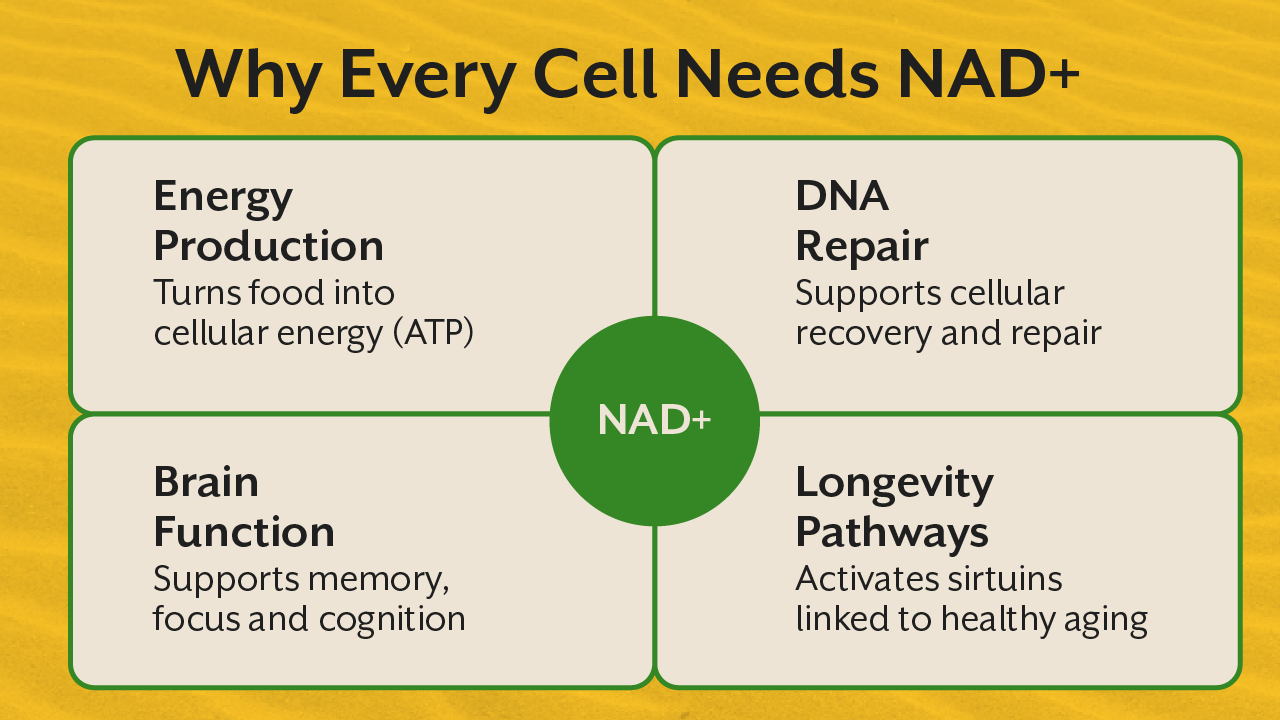
Why Every Cell Needs NAD+

NAD+ is Nicotinamide Adenine Dinucleotide, a coenzyme present in every living cell of the body. Basically, NAD+ is your body’s energy molecule. Every cell in your body requires NAD+ to turn food into energy. But that’s not all NAD+ does. It is also crucial for:

  • DNA repair
  • Sleep-wake cycle regulation 
  • Brain health
  • Inflammation control
  • Sirtuin activation

The problem is that your body’s natural production of NAD+ slows with age. By your 40s or 50s, you might only have half of the NAD+ you had in your 20s. Low levels of NAD+ are associated with fatigue, poor metabolism, brain fog and accelerated aging. In short, low NAD+ equals low energy.

So what causes NAD+ to decline? 

Several factors contribute to NAD+ depletion

  • Chronic stress
  • Poor sleep
  • Alcohol consumption
  • Obesity
  • Lack of exercise
  • Inflammation

And chances are, if you struggle with any kind of metabolic dysfunction, excess stress, weight gain or want to lose weight, your NAD+ levels are already pretty low. 

What are the benefits of NAD+?

By restoring NAD+levels through diet, lifestyle changes, and/or supplementation, researchers have discovered many incredible benefits: 

Increased Energy

At the center of your cells are your mitochondria. These act as the powerhouses that create energy for your body to function. But they need NAD+ to do their jobs. More NAD+ means higher energy production. And more energy means increased stamina, less fatigue, and clear thinking. 

Slowed Aging 

One of NAD+'s many functions is to activate proteins called sirtuins, also known as your “longevity genes.” They help repair DNA damage, fight inflammation, and promote healthier cell function. Numerous animal studies show that supplementing with NAD+ precursors increases lifespan, suggesting that increasing NAD+ will possibly slow the aging process. 

Improved Brain Health

Did you know your brain consumes over 20% of your body’s total energy? It’s true. And NAD+ helps fuel your brain’s mitochondria.

Without sufficient NAD+, you can experience brain fog, memory loss, and cognitive decline. Increasing NAD+ has even shown some promise in neurodegenerative diseases; however, more research is required for this. 

Better Workout Recovery

Athletes and fitness enthusiasts often take NAD+ to decrease muscle fatigue and recover faster from exercise. As we age past 40, our bodies take longer to recover from workouts. Adding NAD+ can help get you back to your best. 

Metabolic and Heart Health 

Research shows that supplementing with NAD+ can regulate blood sugar, improve insulin sensitivity, and support healthy cholesterol metabolism-  all of which are important factors in heart health and metabolic balance. 

Can You Lose Weight With NAD+?
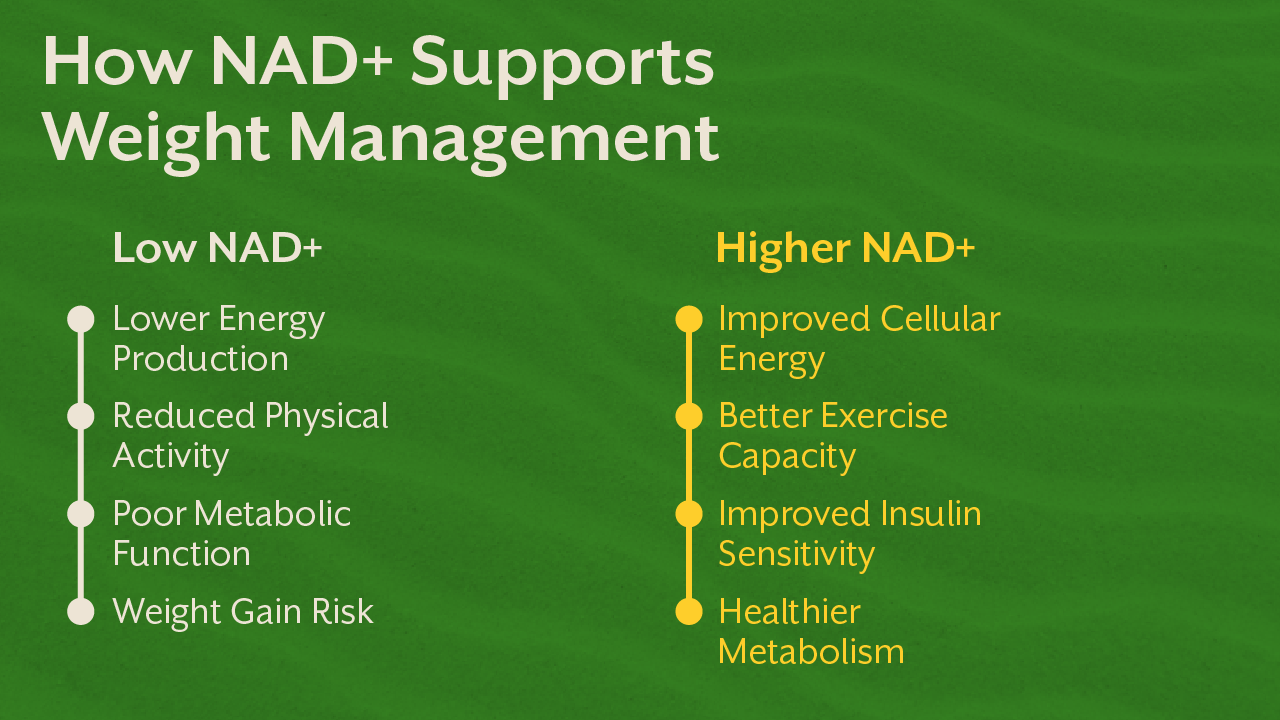
How NAD+ Supports Weight Management

If you have read this, you are probably at the part you came for. Will NAD+ help me lose weight? NAD+ does not directly cause weight loss. However, it supports almost every process in your body that does. It boosts your metabolism. Remember how NAD+ is required to turn food into energy? If you do not have enough NAD+, your body simply cannot process calories efficiently. You will have a harder time losing weight and an easier time gaining weight.

It increases SIRT1 activity. SIRT1 is one of the sirtuin proteins activated by NAD+. It is specifically responsible for regulating fat storage and breakdown. People with higher levels of SIRT1 experience less visceral fat around the organs and better fat-burning abilities.

It improves insulin sensitivity. Insulin resistance is a primary driver of weight gain, especially in the belly. NAD+ allows your cells to use insulin more efficiently, keeping your waistline in check.

It enhances exercise efficiency. This all comes back to energy. More energy = better workouts = more calories burned. 

What is the difference between NAD+ and NAD peptides? Are there NAD peptides?

NAD+ is not a peptide; it is actually a coenzyme. You see them talked about together a lot in the wellness industry because they are both innovative injectables used in the cell renewal and anti-aging process.

What are NAD+ injections?

As the name implies, NAD+ injections introduce this powerful coenzyme directly into your body. They have several advantages over oral NAD+ supplements, primarily that you absorb far more into your system when taking them this way. When you take a pill, it must pass through your digestive system and break down much of the potency before entering your bloodstream. With injections, you can bypass that process entirely.

How is NAD+ injection given?

NAD+ injection is typically administered in either of the two ways, subcutaneous and intramuscular, for 10 days every month.

What are the best NAD+ supplements?
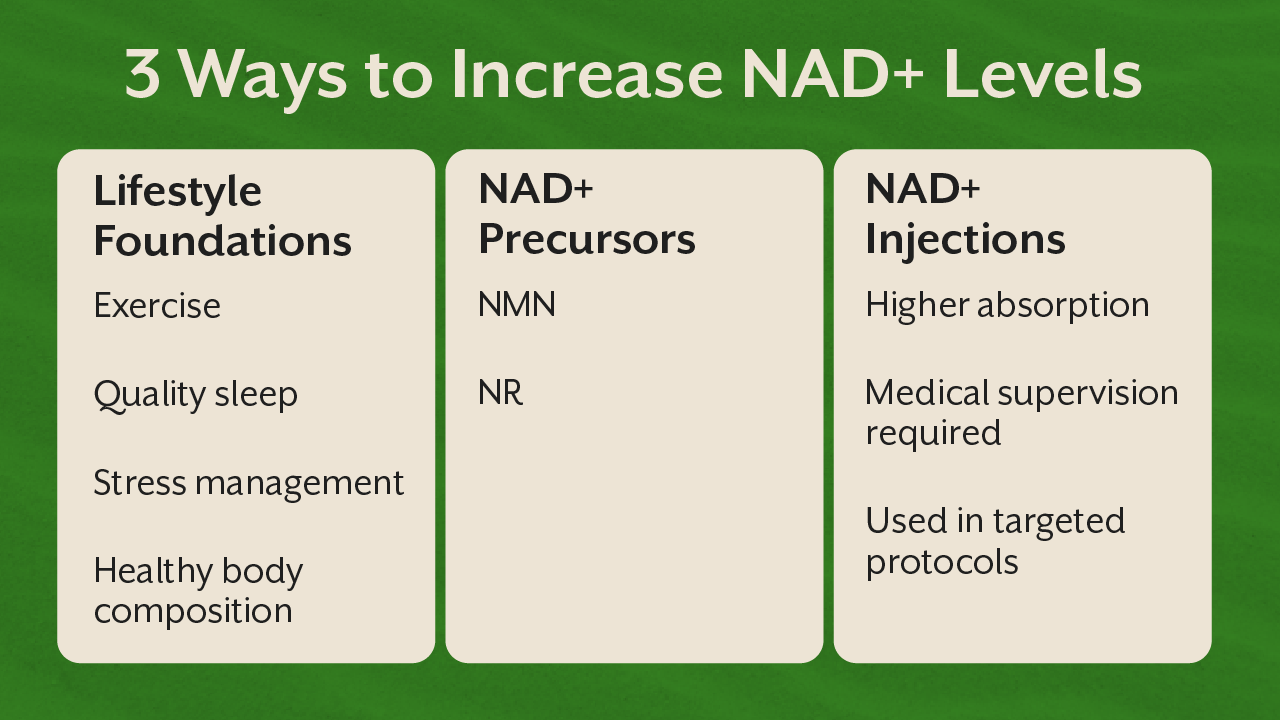
3 Ways to Increase NAD+ Levels

You cannot take NAD+ directly as a supplement since it is a relatively large molecule. Thankfully, your body can convert certain nutrients into NAD+. These are known as NAD+ precursors. The two most common and scientifically-backed precursors are:

NMN (Nicotinamide Mononucleotide)

NMN has been studied extensively. There have been multiple human studies showing that it increases NAD+ levels and improves many metabolic markers. It is one of the most studied supplements out there and continues to show promise.

NR (Nicotinamide Riboside)

NR is another powerful NAD+ precursor with human research backing its uses. Numerous studies show that NR effectively and safely increases blood NAD+ levels. 

Should You Take NAD+? Is it safe?

For the majority of healthy adults, NAD+ is safe. If any side effects occur, they are typically mild (nausea, headache, flushing) and go away after your body acclimates. But for most people, NAD+ is safe and likely beneficial. 

Final Thoughts on NAD+

NAD+ is not a wellness trend. It is one of the foundational compounds your body needs to function. And without it, you feel tired, your metabolism slows down, and you start to age faster. NAD+ has been linked to increased energy, metabolism, brain function, and longevity. If you are tired of feeling tired, cannot seem to lose weight no matter what you try, or want to optimize your health as you age, NAD+ can be the missing piece of your puzzle. 

References

  1. Lautrup S, Sinclair DA, Mattson MP, Fang EF. NAD+ in Brain Aging and Neurodegenerative Disorders. Cell Metab. 2019;30(4):630-655. DOI: https://doi.org/10.1016/j.cmet.2019.09.001    
  2. Cantó C, Menzies KJ, Auwerx J. NAD+ Metabolism and the Control of Energy Homeostasis: A Balancing Act between Mitochondria and the Nucleus. Cell Metab. 2015;22(1):31-53. DOI: https://doi.org/10.1016/j.cmet.2015.05.023 
A
Ask your doubts
Thank you! Your submission has been received!
Oops! Something went wrong while submitting the form.

FAQs

What is NAD+ and why is it important?
faq arrow

NAD+ (Nicotinamide Adenine Dinucleotide) is a coenzyme found in every cell that helps produce energy, repair DNA, and support healthy aging.

Can NAD+ help with weight loss?
faq arrow

NAD+ does not directly burn fat, but it supports metabolism, insulin sensitivity, energy production, and exercise performance, all of which can contribute to weight management.

Are NAD+ injections better than supplements?
faq arrow

NAD+ injections generally provide higher absorption because they bypass digestion, while supplements like NMN and NR work by helping the body naturally produce more NAD+.

What are the best NAD+ supplements?
faq arrow

The most researched NAD+ precursors are NMN (Nicotinamide Mononucleotide) and NR (Nicotinamide Riboside), both of which have been shown to increase NAD+ levels.

Is NAD+ safe to take daily?
faq arrow

For most healthy adults, NAD+ supplements are considered safe when used appropriately. Mild side effects such as headache, nausea, or flushing may occur in some individuals.

Related Blogs

MOTS-c Explained: How This Peptide Supports Energy, Metabolism, and Healthy Aging
read count
read time
Jul 24, 2026

MOTS-c Explained: How This Peptide Supports Energy, Metabolism, and Healthy Aging

MOTS c is a mitochondrial peptide linked to better energy production, metabolism, insulin sensitivity, and healthy aging. Discover how it works, what current research says, its potential benefits, safety, and why it’s gaining attention in longevity medicine.

Introduction

The majority of peptides that have been discussed up until this point have originated in the pituitary, gut, or connective tissue. MOTS-c is different. MOTS-c originates from your mitochondria, which are tiny organelles found in nearly every cell in your body that are responsible for creating energy. For years, mitochondria were thought of purely as the “powerhouse of the cell,” quietly converting nutrients into ATP. Later, it was discovered that mitochondrial DNA encodes its own small biologically active peptides that are released from the mitochondria and act as hormone-like signaling molecules throughout the body. MOTS-c is the most studied of these peptides.

Ever since MOTS-c was discovered back in 2015, it has created quite the buzz in the realms of metabolic health, exercise physiology, and longevity science due to its potential to affect the body’s glucose metabolism, stress response, and cellular aging. In this blog, we will cover what MOTS-c is, how it works, what benefits science currently backs, common dosing practices, and its safety profile.

What is MOTS-c?

MOTS-c (Mitochondrial Open Reading Frame of the 12S rRNA- c) is a small peptide comprised of 16 amino acids, which is encoded by DNA not in the nucleus, but inside the mitochondrial genome, specifically inside the gene that encodes the mitochondrial 12S ribosomal RNA. MOTS-c is one of the several “mitochondrial-derived peptides,” including humanin and the SHLP family of peptides.

Once synthesized, MOTS-c is actively transported out of the mitochondria and into the nucleus during conditions like exercise or metabolic stress. From there, it can enter the bloodstream, where it seems to function as a signal conveying information about the energetic state of the cell to other tissues. In fact, circulating MOTS-c levels are shown to increase with exercise and, much like GHK-Cu and other endogenous peptides, natural levels of MOTS-c tend to decrease with age, and for this reason it has gained interest in the field of aging research.

How MOTS-c Works: The Mechanism

What Makes MOTS c Different?

Activating AMPK

The most well-known mechanism of MOTS-c is activation of AMP-activated protein kinase (AMPK). AMPK has been called the master metabolic switch of the cell. AMPK activation is the same pathway triggered by exercise, caloric restriction, and drugs like metformin. AMPK activation causes cells to utilize their stored fuel more efficiently, improving insulin sensitivity and glucose uptake into muscles.

Regulating Glucose Metabolism

MOTS-c has been shown to increase insulin-independent glucose uptake into skeletal muscle. Along with many other traits, this unique capability of MOTS-c has piqued researchers’ interest in developing this peptide as a possible therapy for insulin resistance and metabolic syndrome. In addition, MOTS-c has also been found to improve glucose tolerance and reverse diet- and age-related insulin resistance in animal models. 

Mimicking the Effects of Exercise

Since MOTS-c activates many of the same downstream pathways triggered by physical activity, including AMPK signaling, increasing mitochondrial efficiency, and improving fatty acid oxidation, MOTS-c has also been called an “exercise mimetic” in scientific literature. In animal studies, MOTS-c administration has been found to increase exercise capacity and improve metabolic parameters independent of activity levels; however, this does not necessarily mean exercise can be replaced by MOTS-c supplementation.

Retrograde Mitochondrial-Nuclear Signaling

One interesting feature of MOTS-c biology is that MOTS-c seems to travel to the nucleus of cells under conditions of stress and alter the expression of nuclear genes that control antioxidant defences as well as metabolic programs. This process of “retrograde signaling” or mitochondria talking to the nucleus is a newly recognized aspect of cell biology, and MOTS-c is one of the best examples we know of.

Cellular Stress Resistance

In preclinical models, MOTS-c has also been shown to help cells tolerate metabolic and oxidative stress, which is part of the basis for interest in its potential role in aging and age-related disease.

Since MOTS c works at the level of cellular energy production, you may also enjoy reading our blog on Epitalon, another longevity focused peptide that supports healthy aging through telomere maintenance and cellular renewal.

Benefits of MOTS-c Peptide

How MOTS c Supports Your Cells

Based on current scientific literature, the areas where MOTS-c shows the most promising effects include:

- Improved insulin sensitivity and glucose metabolism: Multiple animal studies have demonstrated improvements in glucose tolerance and insulin sensitivity with MOTS-c treatment

- Metabolic health and weight management: By activating AMPK and enhancing fat oxidation, MOTS-c may help achieve/maintain healthier body composition, particularly in the context of diet-induced or age-related metabolic decline

- Exercise capacity and endurance: MOTS-c has been shown to improve exercise capacity in animal studies, possibly due to mitochondrial efficiency as well as enhanced muscle metabolism

- Healthy aging: MOTS-c is one of the well-studied peptides when it comes to longevity. As a peptide that declines with age and intersects with many well-established longevity pathways, it stands to have significant effects on age-related decline

- Cardiometabolic health: Research suggests improvements in several markers associated with metabolic syndrome, but more studies are required regarding cardiovascular outcomes in humans.

If you’re interested in peptides that support immune resilience alongside healthy aging, explore our detailed guide on Thymosin Alpha 1 and how immune health influences long term wellness.

It is to be noted that the best data for MOTS-c to date comes from cell and animal studies. Clinical trial data in humans is just beginning to emerge. So, while the mechanism is persuasive, it is not quite at the level of, say, well-known medications that affect metabolism.

How is MOTS-c Peptide Administered?

Subcutaneous injection is by far the most common route of administration for MOTS-c. Injection sites include the abdomen and thigh. MOTS-c is often provided as a lyophilized powder that must be reconstituted with bacteriostatic water using sterile technique before use. 

Why Researchers Are Excited About MOTS c

Safety Considerations and Side Effects

The safety of MOTS-c peptide appears to be favourable based on available research; however, there are important caveats: 

- Injection-site reactions: As with any injectable peptide, mild redness, swelling, or irritation at the injection site appear to be the most commonly reported side effects. 

- Impact on blood sugar levels: MOTS-c has been shown to influence glucose metabolism. People taking diabetes medications should be cautious, as the combined effects of both MOTS-c supplementation and diabetes medications on blood sugar have not been studied extensively in humans. 

- Pregnancy and breast-feeding: As there is no established safety data for MOTS-c use during pregnancy or breast-feeding, it should be avoided.

Peptides are only one piece of the puzzle. Before considering any longevity focused intervention, it’s important to understand your current metabolic health, inflammation, nutrient status, and biological drivers. Book your Root Cause Analysis with iThrive to build a personalised health roadmap based on your body’s needs.

Key Takeaway  

MOTS-c is a mitochondrial-derived peptide, which is a small molecule encoded by the mitochondrial DNA responsible for energy production in cells. It is unique because it can pass through the mitochondria and enter the nucleus of the cell, where it activates signals that promote normal metabolic homeostasis of glucose and lipid metabolism. For this reason, MOTS-c is thought of as an exercise mimetic and has been linked to metabolic improvements and increased insulin sensitivity. MOTS-c has also garnered attention for possible benefits related to aging. Mitochondrial function naturally declines with age, and it is directly linked to reduced energy, slower metabolism, and increased susceptibility to age-related diseases. MOTS-c helps with mitochondrial signaling, and it represents a promising piece of the puzzle for those interested in the science of healthy aging and longevity.

References

1. Lee, C., Zeng, J., Drew, B. G., Sallam, T., Martin-Montalvo, A., Wan, J., Kim, S. J., Mehta, H., Hevener, A. L., de Cabo, R., & Cohen, P. (2015). The mitochondrial-derived peptide MOTS-c promotes metabolic homeostasis and reduces obesity and insulin resistance. Cell metabolism, 21(3), 443–454. https://doi.org/10.1016/j.cmet.2015.02.009

2. Reynolds, J. C., Lai, R. W., Woodhead, J. S. T., Joly, J. H., Mitchell, C. J., Cameron-Smith, D., Lu, R., Cohen, P., Graham, N. A., Benayoun, B. A., Merry, T. L., & Lee, C. (2021). MOTS-c is an exercise-induced mitochondrial-encoded regulator of age-dependent physical decline and muscle homeostasis. Nature communications, 12(1), 470. https://doi.org/10.1038/s41467-020-20790-0 

3. Kim, K. H., Son, J. M., Benayoun, B. A., & Lee, C. (2018). The Mitochondrial-Encoded Peptide MOTS-c Translocates to the Nucleus to Regulate Nuclear Gene Expression in Response to Metabolic Stress. Cell metabolism, 28(3), 516–524.e7. https://doi.org/10.1016/j.cmet.2018.06.008

Glow Peptide: Benefits, Science, Side Effects, and How to Use It
read count
read time
Jul 22, 2026

Glow Peptide: Benefits, Science, Side Effects, and How to Use It

Glow Peptides are gaining attention for their potential role in collagen production, skin repair, and tissue regeneration. Explore the science, ingredients, benefits, safety, and what current research really says before trying them.

Introduction 

Peptides are one of the hottest topics trending in regenerative medicine and longevity right now. More and more people are talking about glow peptides, specifically how this peptide blend may promote healthier-looking skin, tissue regeneration, and skin repair/rejuvenation. Influencers are pushing glow peptides on social media every day, peptide shops are advertising them on billboards at every intersection, and the biggest peptide junkies are swearing by them. Everyone is talking about how glow peptides may help you achieve the brightest, firmest, and youngest-looking skin.

But what are glow peptides, how do they work, and what does science actually say about them? Before trying any peptide protocol, it’s important to understand what you’re putting in your body. So what are the ingredients in glow peptides? What are the pros and cons? Are there any glow peptide side effects? And most importantly, how can you use glow peptides safely?

We cover the science behind glow peptide blends, analyze the research that is currently out there, discuss glow peptide side effects, and tackle the question of how to use glow peptides from a learning standpoint.

What Is a Glow Peptide?

Unlike single amino acid chain peptides, the glow peptide itself is typically not just one amino acid sequence but rather a proprietary blend of multiple peptides with regenerative properties. There is no one size fits all formula and each brand may have different ingredients.

The most common glow peptide blend:

  • GHK-Cu (Copper Tripeptide-1)
  • BPC-157
  • TB-500 (a synthetic fragment of Thymosin Beta-4)

One theory is that each ingredient supports various mechanisms of tissue regeneration and repair. Combined, the ingredients are purported to promote skin quality, collagen production, wound healing, and recovery. Though the individual ingredients have been studied, this combination has not been well researched in large clinical trials on humans.

Understanding the Science Behind Glow Peptides

What’s Inside a Glow Peptide Blend?

Glow peptides are built on the idea that if you pair peptides against multiple biological pathways related to repair and tissue maintenance you will achieve better results.

GHK-Cu

GHK-Cu is probably the most studied ingredient of the majority of Glow formulations. It is naturally found in human plasma, saliva, and urine as a copper-binding peptide. Levels decrease with age. 

Research suggests that GHK-Cu may:

  • Support collagen synthesis
  • Improve skin elasticity
  • Encourage elastin production
  • Promote wound healing
  • Reduce oxidative stress
  • Modulate inflammatory responses

Laboratory and clinical studies have reported topical GHK-Cu is efficacious for improving skin appearance. This qualifies it as one of the most evidence-based cosmetic peptides available today.

Want to understand why GHK-Cu is considered one of the most researched regenerative peptides? Read our complete guide on GHK-Cu peptide benefits and how it supports skin repair and collagen production.

BPC-157

BPC-157 is a synthetic peptide originally derived from a protective protein sequence found in gastric juice.

Most available evidence comes from laboratory and animal studies, where researchers have observed potential effects on:

  • Tendon healing
  • Ligament repair
  • Muscle recovery
  • Gastrointestinal tissue repair
  • Angiogenesis
  • Inflammatory signaling

Although these findings are promising, robust human clinical trials remain limited.

TB-500

TB-500 is a synthetic fragment modeled after the naturally occurring protein Thymosin Beta-4.

Research has explored its potential role in:

  • Cell migration
  • Tissue remodeling
  • Wound healing
  • Muscle recovery
  • Reduced scar formation

Like BPC-157, much of the evidence comes from preclinical studies rather than large-scale human research.

Tissue repair involves multiple biological pathways. Learn how KLOW Peptide Blend combines GHK-Cu, BPC-157, TB-500, and KPV to support healing from multiple angles.

How Does the Glow Peptide Blend Work?

Glow Peptides: What Research Actually Says

The idea behind the glow peptide blend is that combining peptides with complementary biological actions may support multiple aspects of tissue repair simultaneously.

Researchers believe these peptides may influence processes such as:

  • Collagen remodeling
  • Fibroblast activation
  • Angiogenesis
  • Cellular communication
  • Extracellular matrix maintenance
  • Oxidative stress regulation

Instead of filling things in like moisturizers and creams, peptides signal cells. Peptides are like communication signals your body sends to potentially stimulate repair-type activities from your cells.

Just so you know, although these actions make sense biologically there is still limited research on the combination Glow Peptide formula.

Potential Benefits of Glow Peptides

Glow Starts Beyond Peptides

Clinics offering wellness injections and peptide suppliers often list an extensive list of potential benefits that glow peptides may offer cosmetically. Some results that have been reported include: 

  • Improved skin moisture 
  • Radiant skin 
  • Increased skin elasticity 
  • Decreased fine lines 
  • Improved skin texture 
  • Promotes collagen production 
  • Accelerated healing post cosmetic procedures 
  • Healthy hair 
  • Strong nails 

In reality, the majority of these claims come from provider experience/anecdotal feedback or are being made by taking the data from studies that have been done on the individual ingredients of the peptide blend (versus a clinical study on the blend).

What Does Current Research Say?

A number of ingredients in regenerative peptides are still being explored scientifically. Some ingredients have better evidence than others. 

So far GHK-Cu has the best research and it seems to have promise when used topically for cosmetic purposes. There are several studies that indicate it may help promote collagen production and improve skin appearance.

BPC-157 and TB-500 on the other hand still lack randomized controlled trials in humans. Research in a laboratory and animal settings look promising, but we still require high quality studies in humans.

We also do not have any large clinical studies that show if the full glow peptide formula works or not.

Glow Peptide Side Effects

One of the most common questions people ask concerns glow peptide side effects.

Since Glow Peptide formulations vary, side effects may differ depending on the ingredients, dosage, product quality, and route of administration.

Reported side effects may include:

  • Injection-site redness
  • Mild swelling
  • Temporary discomfort
  • Bruising
  • Headache
  • Fatigue
  • Nausea
  • Skin irritation
  • Allergic reactions

In addition to ingredient-related effects, there are also important considerations regarding manufacturing quality. Some peptide products are sold for research purposes or compounded under varying standards, which may affect purity, consistency, and sterility.

Because long-term human safety data are limited, the complete safety profile of many Glow Peptide formulations has not yet been established.

Glow Peptide How to Use

People frequently search for how to use glow peptide, but there is no universally accepted dosing protocol or standardized treatment regimen.

The appropriate approach depends on several factors, including:

  • The specific formulation
  • Concentration of each peptide
  • Intended purpose
  • Individual medical history
  • Clinical supervision

Anyone considering peptide therapy should consult a qualified healthcare/nutrition professional who is knowledgeable about peptide-based treatments, particularly if they have underlying medical conditions, are pregnant or breastfeeding, or take prescription medications.

Who May Be Interested in Glow Peptides?

Interest in glow peptides is particularly common among individuals seeking non-surgical approaches to skin health and regenerative medicine.

These may include people looking to support:

  • Healthy aging
  • Skin quality
  • Recovery following cosmetic procedures
  • Tissue repair after injury
  • General wellness

However, expectations should remain realistic. Current scientific evidence does not support viewing Glow Peptide as a proven anti-aging treatment or replacement for established medical or dermatological care.

Lifestyle Factors Still Matter

Even the most promising regenerative therapies cannot replace the fundamentals of healthy skin.

Research consistently shows that skin health is influenced by:

  • Adequate sleep
  • Balanced nutrition
  • Regular physical activity
  • Sun protection
  • Smoking avoidance
  • Proper hydration
  • Stress management

Peptides, where appropriate, should be viewed as one possible component of a broader approach rather than a standalone solution.

Before considering any peptide protocol, it’s important to understand what’s actually driving your skin concerns, inflammation, or recovery challenges. Book your Root Cause Analysis for a personalized functional health assessment.

Final Takeaway

The Glow peptide formulation is one of the more controversial peptide stacks in the regenerative wellness community due to the fact that it bundles together three different peptides. GHK-Cu shows some promising preliminary data when it comes to skin health while BPC-157 and TB-500 are both under investigation for their possible tissue healing capabilities.

While the buzz around glow continues to build year after year, it’s critical we separate promising early science from true clinical data. As far as the Glow peptide specifically goes, there’s a lot of support for GHK-Cu on its own but not much when it comes to the synergistic effects of the glow peptide formula. Anyone looking into “how to take” will also need to realize that there are no formal dosing guidelines. Deciding on dosage amounts and treatment lengths should be done so in consultation with a trained medical professional.

Understanding Glow peptide side effects, researching the limitations of current research data and having realistic expectations going into your wellness journey are always important. We hope to see more human clinical research in the near future to better understand Glow Peptide's role in skin health and regenerative medicine. For now, consider it a budding field of study rather than an “get younger” magic bullet.

Thymosin Alpha-1: The Immune-Modulating Peptide Transforming Modern Integrative Medicine
read count
read time
Jul 17, 2026

Thymosin Alpha-1: The Immune-Modulating Peptide Transforming Modern Integrative Medicine

Thymosin Alpha-1 is one of the most researched immune modulating peptides today. Learn how it supports T cells, balances inflammation, promotes healthy aging, and strengthens immune resilience through science backed mechanisms.

Introduction

The human immune system is an extremely complex network of biological processes working together throughout your entire body. All day, every day, your immune system fights off infection, removes damaged cells from your body, balances inflammation, and works tirelessly to keep you healthy. However, as we age, as well as dealing with chronic stress, environmental toxins, poor diet, infections and metabolic dysfunction our immune system can become compromised and your body is left susceptible to disease. In the world of medicine, peptides have become a cutting edge solution to help rebalance physiology and assist the body in healing itself. Thymosin Alpha-1, or Tα1, is a peptide that’s becoming quite popular in the field of functional and regenerative medicine as one of the most clinically-studied immune-modulating peptides available.

Thymosin Alpha-1 was first extracted from the thymus gland where it regulates both development and function of several components of the immune system. Thymosin is different from typical immune stimulators or suppressors because it acts as an immune modulator. What this means is Thymosin helps your body build the right immune response while simultaneously balancing inflammation. Over time this has led to research using Tα1 in numerous conditions spanning everything from immune deficiency, chronic infection, oncology, healthy aging and immune recovery. Today we understand so much more about the immune system and Thymosin Alpha-1 has become a valuable weapon in our arsenal to help patients build resilient immunity.

What is Thymosin Alpha-1?

Thymosin Alpha-1 (abbreviated to Tα1) is a peptide hormone that occurs naturally in the body. It contains 28 amino acids and is produced from prothymosin alpha. Prothymosin alpha is produced by the thymus gland. The thymus gland is situated behind the breastbone and is instrumental in training and developing the body's immune system. It promotes the differentiation and maturation of T-lymphocytes or T-cells. T-cells play an important role in recognizing foreign pathogens and destroying them, as well as other roles like regulating and remembering immune responses.

The thymus is very active in children and adolescents. As people reach early adulthood the thymus starts to slowly decrease in activity. This is known as thymic involution. The decrease in activity causes fewer amounts of hormones and peptides to be produced by the thymus. The decline in thymic function has been linked to infections, immune dysfunction and loss of surveillance with age. Thymosin Alpha-1 was one of many peptides discovered to play a role in immune competence. Scientists were then able to create synthetic Tα1. 

Understanding the Immune-Modulating Effects of Thymosin Alpha-1

Thymosin Alpha-1 Supports Your Immune System

Thymosin Alpha-1's most unique feature is its ability to modulate, or regulate immune response. The immune system can be split into two basic categories:

Innate Immunity

The innate immune system is your body's first line of defense. This includes macrophages, dendritic cells, neutrophils and NK cells that quickly attack pathogens that have been detected.

Adaptive Immunity. 

The adaptive immune system consists of specialized T-cells and B-cells that can recognize specific pathogens and create an immune memory against them. Thymosin Alpha-1 positively regulates both of these systems. By doing so it can enhance immune response while simultaneously preventing over-active inflammation. 

Mechanism of Action

Immune Stimulation vs Immune Modulation

Regulation of immune system

Stimulation of T-Cell Activity

T-cells play an important role in immune surveillance. They help fight off infections and other diseases. Thymosin Alpha-1 increases maturation, differentiation, and activation of T-cells. This increases the body’s ability to recognize pathogens and strengthens T-cell responses.

Stimulation of Dendritic Cell Activity

Dendritic cells are like messengers of the immune system. They detect foreign invaders in the body and pass this information along to T-cells. Scientific studies have shown Tα1 to stimulate dendritic cell activity. This triggers appropriate immune responses to fight off bacteria, viruses, and abnormal cells.

Increase in Natural Killer Cell Activity

NK or natural killer cells are immune cells that destroy virus-infected cells as well as cancer cells. Some studies show Thymosin Alpha-1 increases NK cell activity.

Regulation of cytokine activity

Our immune system relies on chemical messengers known as cytokines to work properly. When too many cytokines are produced, it can lead to chronic inflammation. Not enough cytokine production can also negatively affect your immune system. Thymosin Alpha-1 has been shown to promote healthy cytokine signaling.

Reduction of Inflammation

Chronic inflammation has been shown to be a driving force of aging and many chronic diseases. Low-grade inflammation can sneak up on you over years. Tα1 helps balance your immune response by regulating inflammatory activity.Thymosin Alpha-1 and Infectious Diseases

One of the earliest areas of research involving Thymosin Alpha-1 focused on infectious diseases. A healthy immune system requires effective communication between innate and adaptive immune cells. When immune regulation becomes impaired, the body's ability to eliminate infections may be compromised. Research has explored the use of Tα1 as an adjunctive therapy in various viral, bacterial, and chronic infectious conditions due to its ability to enhance immune responsiveness. Its immune-modulating properties have attracted considerable interest among clinicians seeking supportive therapies for individuals with recurrent infections or impaired immune function. By promoting immune coordination rather than indiscriminate stimulation, Tα1 may help improve the body's natural ability to respond to infectious challenges.

Chronic inflammation affects much more than immunity. Learn how KPV peptide helps regulate inflammatory pathways throughout the body.

Where Thymosin Alpha-1 May Help

Thymosin Alpha-1 in Integrative Oncology

In addition to mutation, cancer can develop due to immune surveillance. Immune surveillance constantly examines the body for abnormal cells then eliminates them before they progress to clinical disease. As immune surveillance decreases abnormal cells can go undetected and thrive. Studies indicate Thymosin Alpha-1 may aid in multiple aspects of anti-tumor immunity by: Enhanced T-cell activation

  • Improved dendritic cell function
  • Increased natural killer cell activity
  • Improved immune communication
  • Better immune surveillance

As a result, Tα1 has been investigated as a complementary therapy in oncology settings, particularly where immune support is desirable. While it is not a standalone cancer treatment, its ability to support immune competence has made it an area of significant scientific interest.

Thymosin Alpha-1 and Autoimmune Conditions

Autoimmune diseases occur when the immune system mistakenly attacks the body's own tissues.

Examples include:

  • Rheumatoid arthritis
  • Multiple sclerosis
  • Hashimoto's thyroiditis
  • Lupus
  • Psoriasis

Historically autoimmune diseases have been treated with immune suppression. Recently it has become apparent that immune dysregulation rather than an overactive immune response per se can play a significant role in disease pathology. Since Thymosin Alpha-1 is an immune modulator, the possibility has been explored that Tα1 could encourage immune homeostasis. Tα1 may promote immune tolerance and regulation, allowing the body to better encourage proper immune response rather than broadly suppressing the immune system.

Thymosin Alpha-1 and Healthy Aging

Aging is associated with progressive deterioration of immune function, a process known as immunosenescence.

Immunosenescence contributes to:

  • Increased infection risk
  • Slower recovery from illness
  • Reduced vaccine responsiveness
  • Chronic inflammation
  • Greater susceptibility to age-related diseases

At the same time, many older adults experience "inflammaging," a state of persistent low-grade inflammation that accelerates biological aging. Thymosin Alpha-1 may help address both of these challenges by supporting immune competence while promoting inflammatory balance. As longevity medicine increasingly focuses on preserving physiological function rather than merely extending lifespan, immune optimization has become a major therapeutic target. Tα1 offers a promising approach for maintaining immune resilience throughout the aging process.

Healthy immunity becomes even more important with age. Read how Epitalon peptide supports cellular longevity, sleep, and healthy aging.

Applications in Functional Medicine

Functional medicine practitioners often view immune dysfunction as a root cause of chronic disease. Rather than focusing solely on symptom management, functional medicine seeks to identify and address underlying biological imbalances. Thymosin Alpha-1 may be incorporated into comprehensive protocols aimed at supporting:

  • Immune resilience
  • Recovery following illness
  • Healthy aging
  • Chronic inflammatory conditions
  • Stress-related immune dysfunction
  • Gut-immune axis restoration
  • Cellular repair and recovery

When combined with personalized nutrition, sleep optimization, stress reduction, exercise, microbiome support, and metabolic interventions, peptide therapies may contribute to a more comprehensive approach to health restoration.

Safety and Tolerability

Another reason why Thymosin Alpha-1 has been seeing a surge in popularity is because it has been shown to have great tolerability and adverse side effects are uncommon. Most clinical trials have reported few side effects when taking Thymosin Alpha-1. Side effects that are noted are usually mild and include momentary irritation at the injection site and fatigue.

Like all forms of therapy, administration of peptides should always be tailored to the individual under the care of skilled professionals who have experience with peptide use. It is very important to take into consideration current medications as well as medical history and goals prior to starting any peptide regimen.

The Future of Thymosin Alpha-1 Research

Awareness of immune health has skyrocketed in the last 10 years. We are discovering just how important the immune system is to every area of health. Fighting infection, cancer surveillance, regulating metabolism, brain health, and longevity are just a few areas of health affected by the immune system. As we learn more about the important role the immune system plays in all these areas Thymosin Alpha-1 will continue to lead the pack in immune-modulating drugs. Ongoing research is exploring its potential applications in:

  • Healthy aging
  • Immune restoration
  • Chronic inflammatory conditions
  • Oncology support
  • Infectious disease management
  • Vaccine response optimization
  • Precision medicine approaches

The growing body of evidence suggests that immune regulation, rather than simple immune stimulation, may represent the future of preventive and regenerative healthcare.

Every immune system is different. Book your Root Cause Analysis to understand the biological factors influencing your immune health before considering any peptide protocol.

Key Takeaway

Thymosin Alpha-1 is one of the most widely researched immune-modulating peptides currently. This peptide is extracted from the thymus gland and has been shown to support immune health through multiple pathways including T-cell stimulation, immune surveillance, and inflammation control. What sets Thymosin Alpha-1 apart from most other immune supportive therapies is its immune-modulating effect vs simply trying to amp up the immune system. By modulating both the innate and adaptive arms of the immune system, Thymosin Alpha-1 has shown incredible promise in fields as diverse as infectious disease/infectious medicine, oncology, healthy aging, and functional medicine. Given the rising trends in longevity, regenerative medicine, and immune health, Thymosin Alpha-1 will likely continue to be used in the pursuit of resilience, recovery, and lifelong health.

Star Your Root Cause Analysis

Includes home blood sample collection, 1-hour expert consultation, and a next-step protocol.
Pay Now ₹2500
Secure Payments Powered By
NET
Banking

What’s Included in Your Blood Analysis?

Click below to view the complete list of markers included in your analysis.
Complete Blood Count (18 Parameters)
faq arrow
Diabetes Panel (4 Parameters)
faq arrow
Iron Studies (4 Parameters)
faq arrow
Lipid Panel (6 Parameters)
faq arrow
Thyroid Profile (3 Parameters)
faq arrow
Inflammation & Mitochondrial Health (3 Parameters)
faq arrow
Liver Function Test (8 Parameters)
faq arrow
Kidney Function & Electrolytes (9 Parameters)
faq arrow
Pay Now ₹2500
Secured payment via

We’re Not In Your City Yet But We’re Not Letting You Go.

You don’t need to wait to start understanding your body.
Get Free Consultation

You Still Get:

  • Free 1:1 consultation with our clinical team
  • Symptom + history deep dive
  • Direction on what’s actually driving your condition
  • Guidance on next best steps (tests, diet, and protocol)
Oops! Something went wrong while submitting the form.

Talk to our team

Thank you! Your submission has been received!
Oops! Something went wrong while submitting the form.

Talk to our team

Thank you! Your submission has been received!
Oops! Something went wrong while submitting the form.

Download Now

Thank you! Your submission has been received!
Oops! Something went wrong while submitting the form.
Select your Location
Agra
Ahilyanagar
Ahmadnagar
Ahmedabad
Ahmednagar
Akola
Aligarh
Allahabad
Almora
Alwar
Ambala
Ambedkar Nagar
Amravati
Amritsar
Amroha
Anand
Aurangabad
Ayodhya
Azamgarh
Baghpat
Bahadurgarh
Bahraich
Banda
Barabanki
Baraut
Bardhaman
Bareilly
Begusarai
Belgaum
Bengaluru
Bharatpur
Bhatinda
Bhilai Durg
Bhilwara
Bhiwani
Bhopal
Bhubaneswar
Bijnor
Bikaner
Bilaspur
Bokaro
Budhana
Bulandshahar
Chandigarh
Chennai
Chhatrapati Sambhajinagar
Chhindwara
Chomu
Darbhanga
Dehradun
Delhi
Deoband
Deulpur
Dhampur
Dhanbad
Durgapur
Eah
Etah
Etawah
Faizabad
Faridabad
Firozabad
Gadarpur
Gandhinagar
Ganganagar
Gaya
Ghaziabad
Ghazipur
Gonda
Gorakhpur
Greater Noida
Greater Noida Pc
Guntur
Gurgaon
Guwahati
Gwalior
Hajipur
Haldwani
Hapur
Hardoi
Haridwar
Hathras
Hazaribagh
Hisar
Hoshiarpur
Howrah
Hyderabad
Indore
Jabalpur
Jaipur
Jalandhar
Jalgaon
Jalna
Jamnagar
Jamshedpur
Jaunpur
Jhansi
Jhunjhunu
Jind
Jodhpur
Sorry, currently we are not serving this city.
Please try searching for another city or put your city here.
My Location not in the list
Your Location is 'Location'
Book a Test

City

Thank you! Your submission has been received!
Oops! Something went wrong while submitting the form.