


.svg)
.svg)







Introduction
For many people living with fibromyalgia, the experience goes far beyond occasional pain. It often feels like the body has lost its internal energy system. Simple daily activities become exhausting, muscles feel persistently sore, and concentration becomes difficult. Many individuals describe waking up already tired, even after what should have been a full night of sleep.
This is why fibromyalgia chronic fatigue is one of the most frustrating aspects of the condition. Patients frequently report that the exhaustion feels deeper than normal tiredness. It is not the type of fatigue that disappears after rest. Instead it persists for months or years, creating a cycle of low energy, pain, and mental fog.
For decades fibromyalgia was largely misunderstood. It was often described simply as a pain disorder, or in some cases dismissed as a psychological condition. Modern research now suggests a much deeper biological story. The condition appears to involve fibromyalgia nervous system dysfunction, altered pain processing in the brain, mitochondrial energy disruption, and chronic low grade inflammation.
At iThrive Alive we frequently observe that fibromyalgia symptoms rarely begin at the level where they appear. The pain felt in muscles and joints often originates from deeper biological disturbances involving energy metabolism and neural signaling.
Understanding this hidden biology can help explain why fibromyalgia is so exhausting and why addressing root causes may improve recovery outcomes.
Understanding Fibromyalgia Beyond Pain
The Role of Central Sensitization
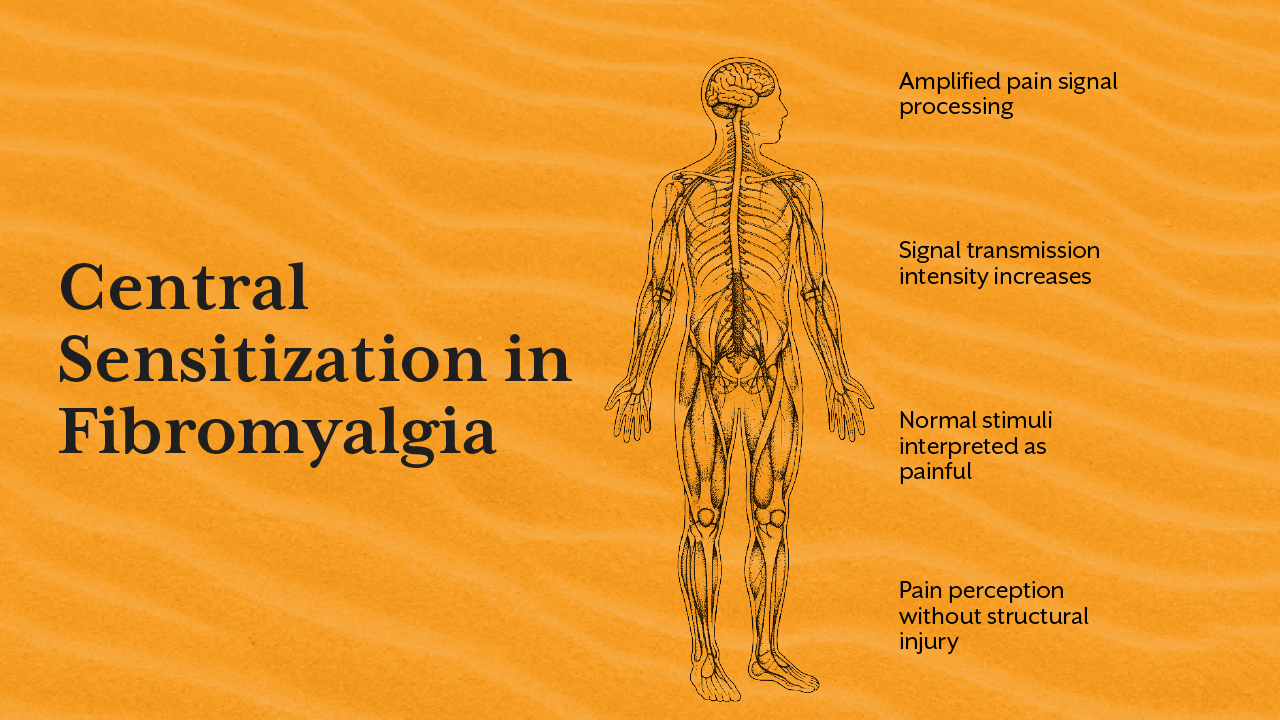
One of the most important concepts in fibromyalgia research is fibromyalgia central sensitization. This term describes a state where the nervous system becomes excessively sensitive to normal sensory signals.
In a healthy nervous system, pain signals are carefully regulated by the brain and spinal cord. However in central sensitization the brain amplifies incoming signals. Stimuli that would normally feel mild can begin to feel painful.
This helps explain why individuals with fibromyalgia may experience pain in multiple parts of the body even without clear injury. The brain essentially becomes a volume amplifier for pain signals.
Researchers have also observed that this hypersensitive state can affect other sensory experiences. Patients frequently report sensitivity to sound, light, temperature changes, and emotional stress.
This phenomenon illustrates why fibromyalgia hidden symptoms extend far beyond musculoskeletal pain. The condition involves the entire neural processing network.
The Brain Fog Connection
Another common experience among fibromyalgia patients is cognitive impairment, often referred to as fibro fog. This symptom includes memory difficulties, reduced concentration, and slower mental processing.
Fibromyalgia brain fog causes are increasingly being linked to disruptions in brain energy metabolism. The brain consumes a large portion of the body’s total energy supply, and even small reductions in mitochondrial function can impair neural performance.
When cellular energy production declines, neurons struggle to maintain efficient communication. This may contribute to the mental fatigue that many patients describe.
Studies also show altered blood flow patterns in certain brain regions among individuals with fibromyalgia. These changes may further affect cognitive clarity and emotional regulation.
Why Fibromyalgia Is So Exhausting
Many patients ask the same question during consultations. Why is fibromyalgia so exhausting even when physical activity is limited.
One emerging explanation involves mitochondrial dysfunction.
Mitochondria are microscopic structures within cells responsible for producing ATP, the molecule that fuels nearly every biological process. Muscles, nerves, and immune cells rely heavily on this energy supply.
When mitochondrial efficiency declines, cells struggle to maintain normal function. This creates a state of systemic energy deficit that can affect the entire body.
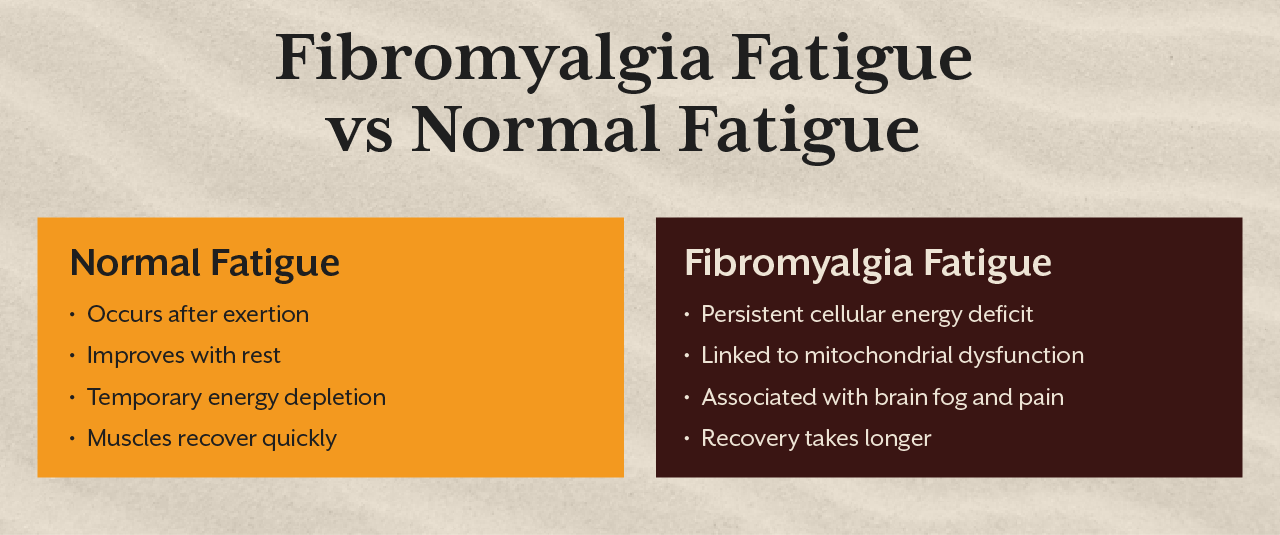
This biological explanation helps clarify the difference between fibromyalgia fatigue vs normal fatigue. Ordinary tiredness often results from temporary overexertion or sleep deprivation. Once rest occurs, energy levels usually return.
Fibromyalgia fatigue behaves differently. It reflects a deeper energy production problem. Even simple physical tasks may feel disproportionately draining because cells cannot generate adequate ATP.
Over time this energy shortage can contribute to chronic fatigue and pain connection seen in fibromyalgia. Muscles lacking sufficient energy may accumulate metabolic byproducts more quickly, increasing discomfort and stiffness.
The Inflammation and Immune Link
Another important contributor to fibromyalgia symptoms involves chronic low grade immune activation.
Inflammatory molecules known as cytokines can influence pain perception and fatigue levels. Elevated cytokine activity has been observed in many individuals experiencing chronic fatigue conditions.
Inflammation can also interfere with mitochondrial function. Oxidative stress damages mitochondrial membranes and reduces their efficiency. This creates a feedback loop where inflammation worsens fatigue and fatigue further amplifies inflammatory signaling.
This interaction between immune activity and cellular energy metabolism may explain why fibromyalgia symptoms often fluctuate during periods of physical stress, illness, or emotional strain.
The Chronic Fatigue and Pain Connection
When mitochondrial output declines and nervous system sensitivity increases, the body enters a state where energy availability and pain regulation both become compromised.
Muscle tissue requires significant energy to maintain normal contraction and relaxation cycles. Without adequate ATP production, muscles remain in a partially stressed metabolic state. This can produce persistent soreness even without physical injury.
The nervous system also depends on energy intensive processes to regulate neurotransmitter balance and nerve signaling speed. When these systems slow down, pain signals may remain active longer than necessary.
This interaction explains the chronic fatigue and pain connection frequently observed in fibromyalgia.
Patients often describe feeling trapped in a cycle where fatigue limits activity, reduced activity weakens muscles, and weakened muscles further increase pain sensitivity.
At iThrive Alive we often evaluate these patterns through metabolic assessments that look beyond surface symptoms. When mitochondrial stress and inflammatory signaling are addressed together, improvements in both fatigue and pain are often observed.
A Systems Approach to Fibromyalgia Recovery
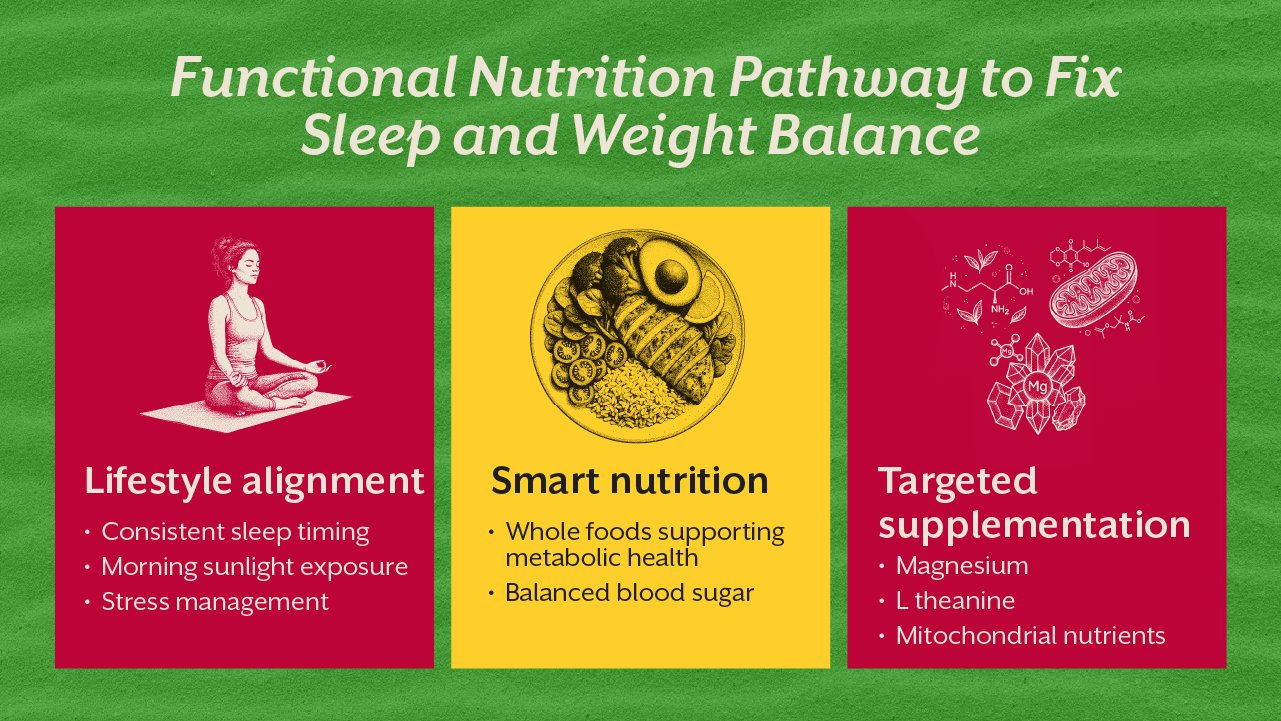
Because fibromyalgia involves multiple biological systems, a narrow treatment strategy rarely produces long term improvement. At iThrive Alive the focus is often on restoring internal balance through a combination of lifestyle regulation, nutritional therapy, and targeted supplementation.
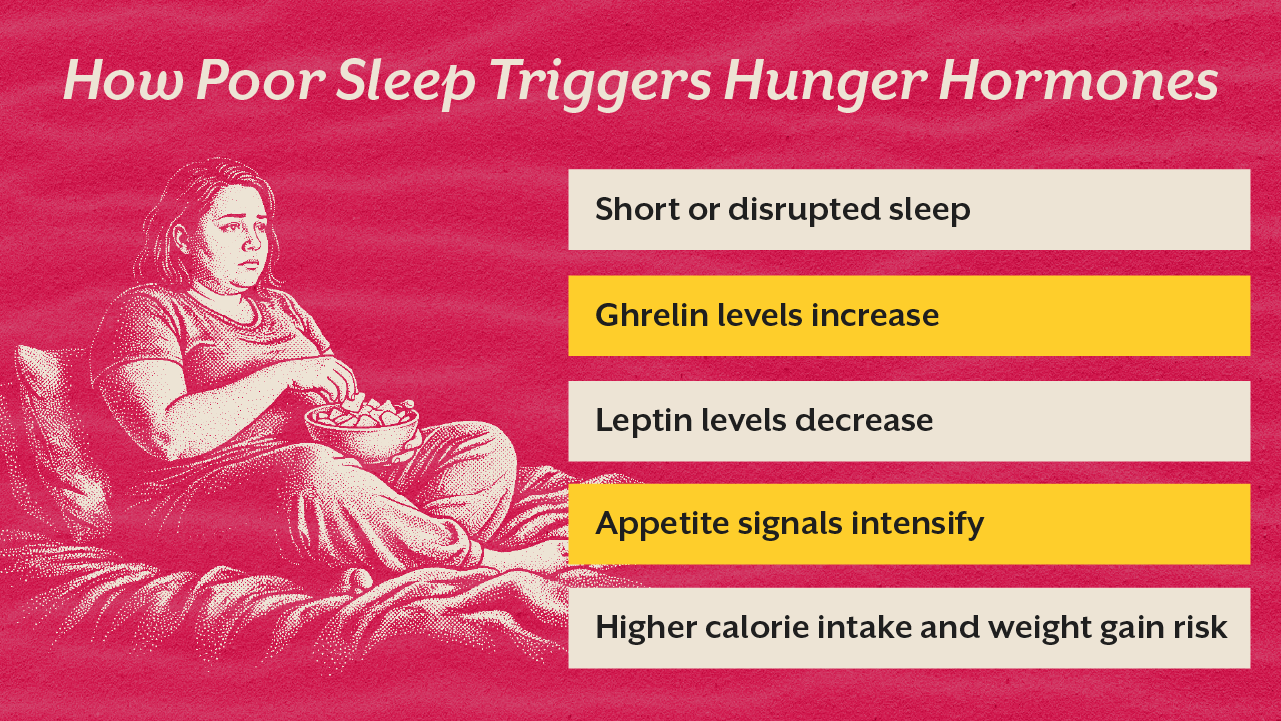
Sleep regulation is often one of the first priorities. Mitochondrial repair processes and nervous system recalibration largely occur during deep sleep cycles. Without consistent circadian rhythms the body struggles to repair damaged cellular components.
Smart eating patterns also play an important role. Stable blood glucose levels support consistent energy supply to mitochondria. Nutrient dense foods provide the micronutrients required for ATP production and antioxidant defense.
Targeted supplementation may further support mitochondrial function. Nutrients such as magnesium, B vitamins, and certain mitochondrial cofactors assist enzymes involved in energy metabolism.
Movement therapy is introduced gradually. Gentle physical activity can stimulate mitochondrial biogenesis which is the process through which cells produce new mitochondria. This helps rebuild cellular energy capacity over time.
The three month Alive program integrates these principles into a structured intervention that addresses the biological drivers of chronic fatigue rather than focusing only on symptom suppression.
For individuals who want a deeper evaluation of their underlying health patterns, the option to book a root cause analysis can help identify metabolic drivers that may be contributing to fibromyalgia symptoms.

Key Takeaway
Fibromyalgia is far more complex than a simple pain condition. It represents a biological intersection between nervous system hypersensitivity, mitochondrial energy disruption, and immune signaling imbalance. When cellular energy production declines and the nervous system becomes overly reactive, the body enters a cycle where fatigue, cognitive fog, and chronic pain reinforce each other. Understanding this hidden biology helps explain why fibromyalgia can feel so exhausting and unpredictable. At iThrive Alive the goal is not only to reduce symptoms but to restore the internal systems that regulate energy and neural communication. By focusing on mitochondrial health, lifestyle rhythms, and metabolic resilience, it becomes possible to move beyond symptom management and begin rebuilding the body’s capacity for sustained energy and recovery.
















.svg)