


.svg)
.svg)







Introduction
You literally did everything you were always told. Tried eating clean, did strength training, fixed sleep schedule and yet after all of this, something always felt off.
Your periods were still irregular, energy dipped rapidly, weight didn’t respond the way it was supposed to and somewhere along the way, you were constantly told you might have PCOS. But even that diagnosis didn’t entirely explain what you were experiencing because deep down, it never felt like it was just about your ovaries. And now finally after years, for the very first time medicine is catching up with that reality.
PCOS has officially been renamed PMOS which stands for Polyendocrine Metabolic Ovarian Syndrome.
This entire shift from pcos to pmos is more than just a change in the name. For your information it’s a complete reframing of how you understand this condition. And most importantly, it is finally being validated what women have been saying for years and years.
PCOS Renamed PMOS

Why does this change even matter?
After a global consensus including around 14,000+ women and about 56 business organisations, the term PCOS was reconsidered. Because the board finally concluded stating that the name itself was misleading.
The breakthrough of PMOS is as follows:-
PMOS is referred to Polyendocrine Metabolic Ovarian Syndrome
- Polyendocrine means multiple hormone systems are involved
- Metabolic related to insulin resistance at the core
- Ovarian redirects to the reproductive symptoms
Earlier, pcos pmos was understood largely just as an ovarian issue.
But in reality pcos and pmos are whole-body conditions. They involve factors such as metabolism, inflammation, hormones, stress, as well as gut health. This is exactly why the shift from pcos renamed pmos is so significant. It moves complete focus from symptoms to systems.
You Don’t Need Cysts to Have PCOS (or PMOS)
One of the biggest misconceptions around pmos and pcos is that you need cysts to be diagnosed but in reality you don’t.
Many women with pcos pmos:
- Have clear ultrasounds
- But still experience symptoms
- And still meet diagnostic criteria
But always know diagnosis can still come from factors like irregular or absent cycles, elevated androgens (testosterone, DHEA-S), along with signs of insulin resistance
So if your scan was “normal” but your symptoms weren't, trust me when I say your experience is still valid and in fact worth investigating.
The “Cysts” Were Never Really the Problem
Here’s something most of you aren’t told. Those “cysts” seen in PCOS? They are not actually cysts. They are immature follicles which are the eggs that didn’t fully develop due to hormonal imbalance.
This clearly states that the ovaries are responding to a deeper issue but they are not the root cause. And this is exactly what pcos to pmos helps in clarifying.
The Real Root Causes Behind PMOS
At iThrive, we don’t ever really stop at labels like pcos and pmos. We have always known in the nutrition field for going deeper into why exactly your body is responding the way it is.

1. Insulin Resistance
This one is the big one. Somewhere between 50–70% of women with PMOS have insulin resistance at the core and most of them have no idea.
Here's what's actually happening: when your cells stop responding to insulin properly, your body compensates by producing more of it. And excess insulin directly tells your ovaries to produce more testosterone. More testosterone means disrupted ovulation, more fat storage, more cravings and suddenly you're in a loop that no amount of clean eating seems to break.
That frustrating feeling of doing everything right and seeing no results? This is usually why.
2. Chronic Low-Grade Inflammation
When I say inflammation in pcos renamed pmos, I don't mean the kind where something visibly hurts or swells. This kind is invisible. It's quiet. And it's been running in the background for years.
At a cellular level, chronic inflammation keeps your body stuck in a constant state of alert. It stimulates the cells in your ovaries to produce more androgens. It makes your insulin receptors less responsive. It raises markers like hs-CRP and IL-6 that most standard blood panels don't even bother checking.
And you would like to know the worst part? It feeds itself. Inflammation disrupts hormones, and hormonal imbalance drives more inflammation. Round and round.
The triggers are usually coming from processed foods, a compromised gut, environmental toxins, or chronic stress. Which means until inflammation is actually addressed at the root the pmos symptoms keep coming back.
3. Stress & HPA Axis Dysfunction
We've all been trained to think of stress as a mindset problem. But physiologically, stress is a hormonal event and a serious one.
Your HPA axis is your body's central stress response system. When it's chronically activated, cortisol stays elevated. Elevated cortisol destabilises blood sugar, which increases insulin demand. And your adrenal glands start pumping out androgens like DHEA-S independently of your ovaries.
This is where it gets interesting. Even if your ovarian hormones look completely normal on paper, adrenal-driven androgens can still cause acne, hair thinning, and irregular cycles. This subtype that is adrenal pmos is especially common in women with high-pressure, high-performance lifestyles. And it gets missed constantly because nobody's looking for it.
The HPA axis is the central stress response system of your body. When it is activated repeatedly, it starts affecting multiple pathways that are involved in pcos to pmos progression.
4. Gut Dysbiosis & Leaky Gut
Your gut is deeply connected to your immune system, hormones as well as metabolism.
In pmos pcos, gut dysfunction often shows up as reduced microbial diversity, increased intestinal permeability also known as leaky gut, and overgrowth of harmful bacteria. This results in something called metabolic endotoxemia wherein the bacterial toxins like LPS leak into the bloodstream.
So what do they do?
Firstly they trigger the systemic inflammation, secondly it worsens the insulin resistance and lastly it disrupts estrogen metabolism through the estobolome.
The estrobolome which is the gut bacteria that is responsible for the procession of estrogen plays a significant role in maintaining hormonal balance.
When it’s compromised even slightly, it leads to affected estrogen clearance, worsened hormonal balance, and intensified symptoms of pcos and pmos.
This is why many women with pcos renamed pmos also report:
- Bloating
- Constipation or irregular bowel movements
- Food sensitivities
5. Nutrient Deficiencies
This is by far one of the most underestimated drivers of pcos pmos. Because most of you including our clients who came to us initially assume that if you’re eating well, you wouldn’t be deficient.
But always remember nutrient sufficiency ≠ nutrient absorption.
In pcos renamed pmos, deficiencies are extremely common due to factors such as poor gut absorption, maximised metabolic demand, chronic inflammation and stress related depletion.
Let me take you deep into the key nutrients:
Vitamin D
Vitamin D acts like a hormone, improves insulin sensitivity and also regulates the function of ovaries.
Low levels of Vitamin D are strongly linked to insulin resistance and irregular cycles.
Magnesium
Magnesium is required for around 300 enzymatic reactions, it supports glucose metabolism and also calms down the nervous system.
Deficiency can worsen to insulin resistance and stress response.
Zinc
Zinc is critical for the functioning of ovaries, as it helps reduce the activity of androgen and also supports skin health.
Low zinc often shows up as hair fall as well as acne.
B Vitamins
B vitamins are essential for production of energy, it also supports hormone detox pathways and helps in regulating mood.
Inadequate levels can slow down the metabolic processes and further affect ovulation.
So basically besides a “healthy diet,” your body still needs smart supplementation.
6. Environmental Toxins
This is exactly where the modern lifestyle silently interferes with biology.
Endocrine Disrupting Chemicals (EDCs) such as:
- BPA (plastics)
- Phthalates (cosmetics, packaging)
- Heavy metals (mercury, lead)
…can mimic or block natural hormones.
In pmos and pcos, this becomes particularly problematic because these chemicals bind to the receptors of hormones. Then they alter the pathways of signalling further disrupting the feedback loops between ovaries, brain, and metabolism.
Over time what happens is the body loses its ability to regulate hormones efficiently. Additionally, toxin exposure increases oxidative stress, burden of liver detox, and inflammation which further worsens the progression of pcos to pmos.
None of these causes exist in isolation. What you see in pcos pmos is an interconnected web of all the mentioned factors and treating just one symptom never really works. Therefore pcos renamed pmos is such a necessary shift.
PCOS PMOS is a multi-system imbalance, and not a single-organ disorder.
The 5 Functional Types of PMOS
Not all pmos pcos is the same.
Functional medicine identifies 5 types:
1. Insulin-Resistant PMOS
Most common which is majorly driven by poor blood sugar control.
2. Adrenal PMOS
Triggered by chronic stress and high cortisol.
3. Inflammatory PMOS
Linked to gut issues, food sensitivities, and toxins.
4. Post-Pill PMOS
Occurs after stopping birth control.
5. Hidden PMOS
Triggered by factors like thyroid dysfunction or nutrient deficiency.
Understanding your type changes everything about treatment.
Symptoms You Shouldn’t Ignore
Pcos and pmos don't always look obvious.
It can show up as:
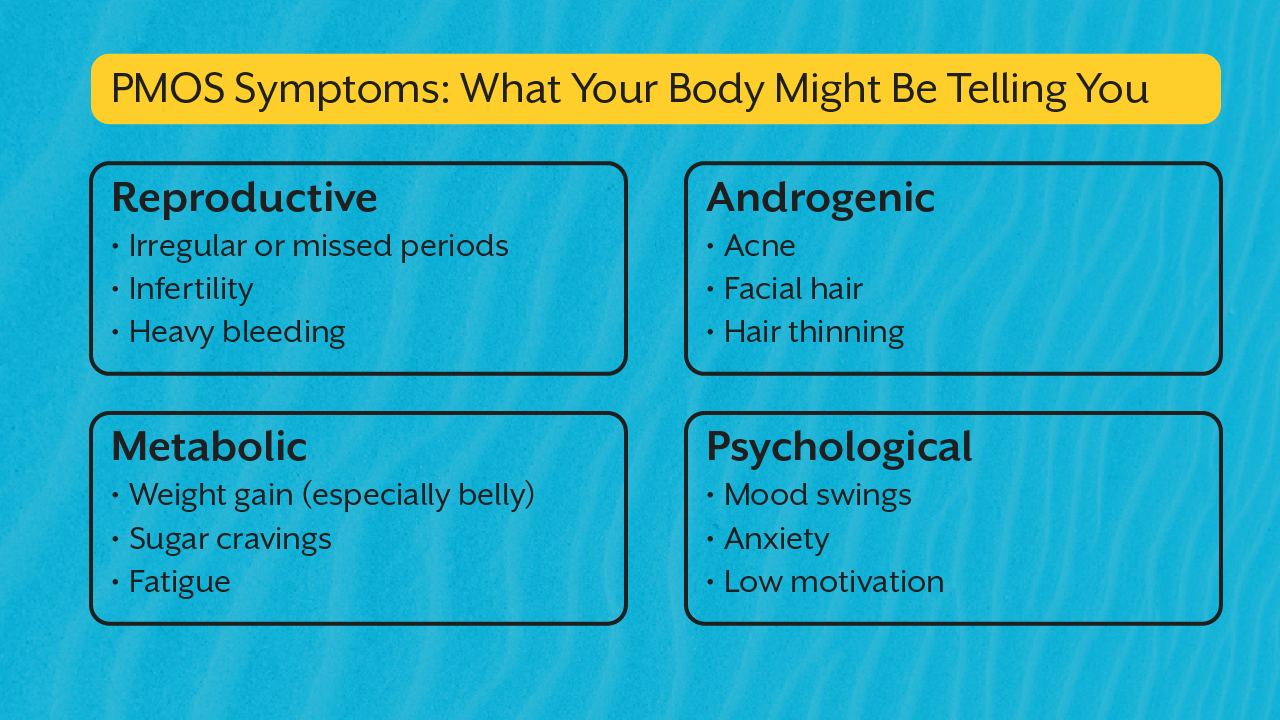
This is why pcos renamed needed a broader lens.
What You Should Actually Test
Instead of guessing, look deeper:
- Fasting insulin
- HbA1c
- Testosterone & DHEA-S
- LH:FSH ratio
- Thyroid panel
- Inflammatory markers
Book Root Cause Analysis to identify your specific triggers or if you want clarity instead of trial-and-error
Because pmos and pcos are never one-size-fits-all.
How iThrive Approaches PMOS
We have around 8 years of experience in the functional nutrition field, we’ve seen endless clients but one thing that we swear by right from the start is that we don’t just manage symptoms, we decode systems.
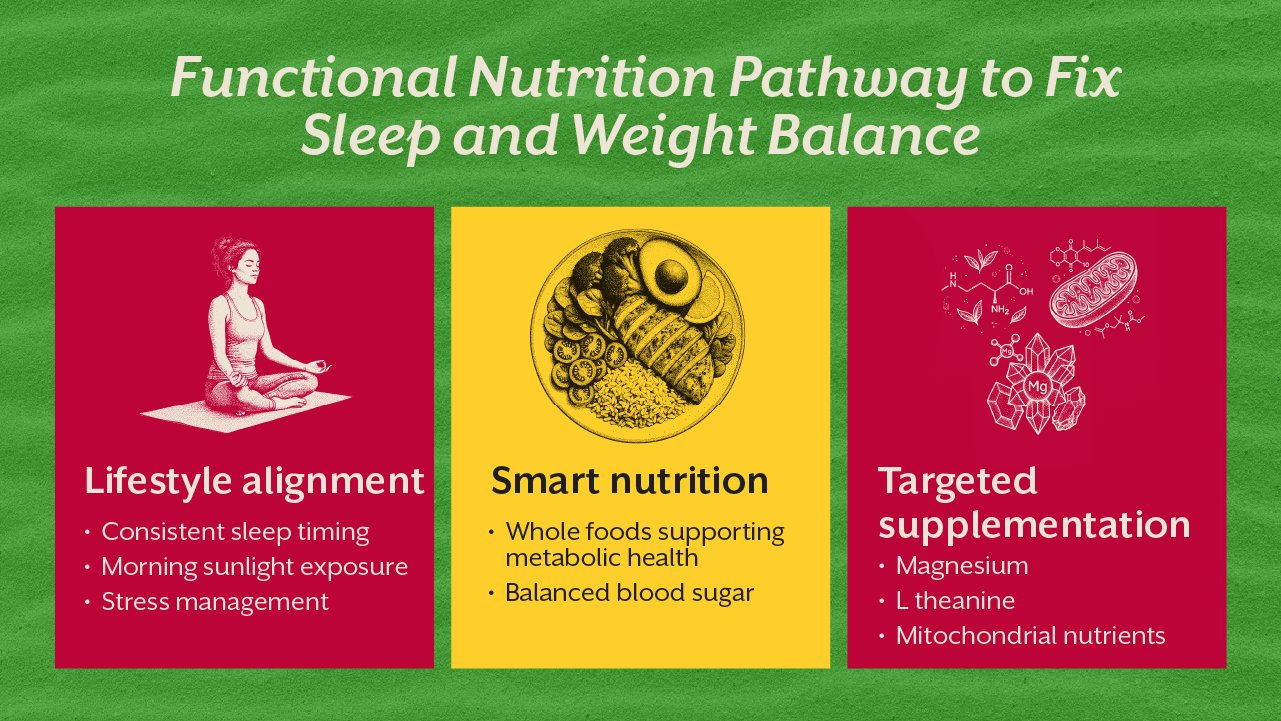
Our Alive Programme revolves around three factors that are personalised diet protocol, smart supplementation and lifestyle interventions. Because the goal has never been suppression it has always been reversal.
Key Takeaway
For years, most of you have been told to just lose weight, everything is normal, acne would disappear, and that this is common. But now, with pcos renamed pmos, the narrative has finally and for once changed. Because your body was never confused, it was always communicating.
Each and every symptom, the fatigue, the irregular cycle, and the sweet cravings were a signal. And now that we finally understand pcos and pmos the way it was always meant to be understood.. you’ve got a choice.
Either to ignore it again or to finally listen and book a root cause analysis to know the triggers so we start reversing as soon as possible. Because healing doesn’t begin when symptoms disappear. It begins when you start understanding what your body has been trying to tell you all along.















.svg)