


.svg)
.svg)







Introduction
Every monsoon, the same story keeps repeating. A colleague gets extremely drenched in the rain and shows up perfectly fine the next day. Someone else spends just a couple of minutes in the same weather and suddenly they’re battling a sore throat, body aches, fever, congestion, as well as exhaustion that lingers for days.
So if this sounds familiar, let me tell you the problem is not the rain rather it’s your immune system.
Seasonal changes have always challenged the body, but I’ve observed that in recent years, many people including me feel like we are falling sick more often than ever before. One viral infection blends into another by default and recovery takes longer than usual. Energy never fully returns and antibiotics become a regular part of life.
This is exactly why conversations around immunity peptides have exploded over the past few years and also one of the reasons I’m here again with a blog. More people now are looking far beyond symptom management and asking a deeper question:
Why does my body keep struggling to defend itself?
So before we dig into the specific peptides, let’s start with the basics.
What are peptides and what do peptides do?
If you’ve been searching this online for a while, you’ve probably come across terms such as peptide therapy, regenerative peptides, or even immunity peptides.
But what exactly are peptides?
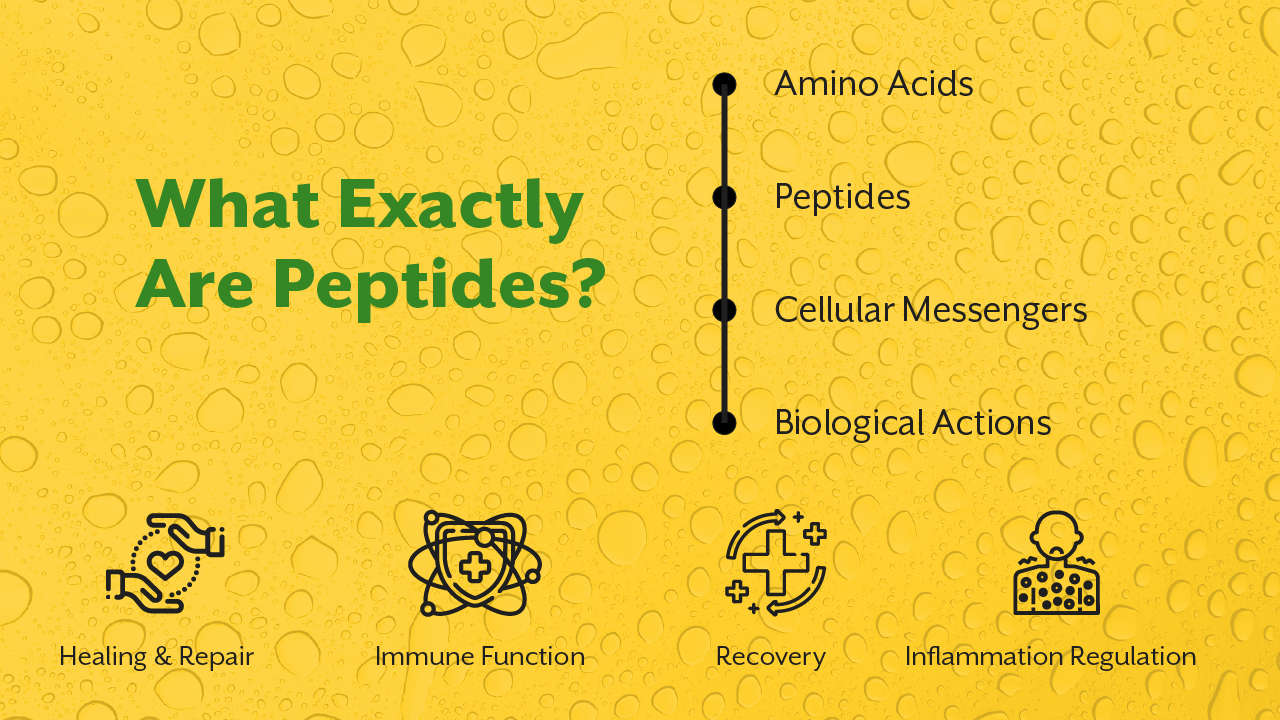
Peptides are short chains of amino acids that act as messengers inside the body. They help cells communicate with one another and also regulate important functions such as healing, recovery, inflammation control, hormone balance, and also immune function.
You can simply think of peptides as biological instructions. They never force the body to do something unnatural. Instead, they just signal the body to perform processes it has already been designed to perform.
This is the only reason peptide therapy has attracted so much attention in functional and regenerative medicine. So basically different peptides have different jobs. Some support tissue repair, some help regulate inflammation, some support gut health, and some also play a direct role in immune function.
Why do some people catch every viral infection going around?
One thing that I’ve got to know about readers is that most of you’ll think about immunity, and imagine white blood cells fighting off germs. But let me be frank, immunity is far more complex than that.
Your immune system is influenced by a cluster of factors such as sleep quality, gut health, blood sugar balance, recovery capacity, stress levels, nutrient status, and chronic inflammation.
Since 2019, we've worked here at iThrive with thousands of clients through functional nutrition and one pattern that has appeared repeatedly is as follows:-
The people who get sick most often are rarely dealing with “bad luck.” More often, it’s their bodies that are carrying underlying stressors that quietly weakens immune resilience over time.
Our nutritionists commonly see such issues as chronic stress, low vitamin D levels, persistent inflammation, poor sleep, gut dysfunction, as well as blood sugar imbalances.
All of these can make the immune system comparatively less effective and slower to respond when viral infections appear.
Before we talk about peptides, let’s clear up one common myth.
Are peptides steroids?
When I was researching peptides one of the most searched questions online is: are peptide steroids?
The answer is a big NO.
Peptides and steroids are entirely different things. Steroids are nothing but hormones or rather hormone-like compounds that have a direct influence on specific physiological processes.
Peptides are signaling molecules made from amino acids. Their role is to communicate with cells and encourage natural biological processes.
While both are utilized in medical settings, peptides do not work through the same mechanisms as anabolic steroids. So understanding this distinction is very important because many of you avoid learning about peptides just because you assume they’re another form of steroid.
What makes immunity peptides different?
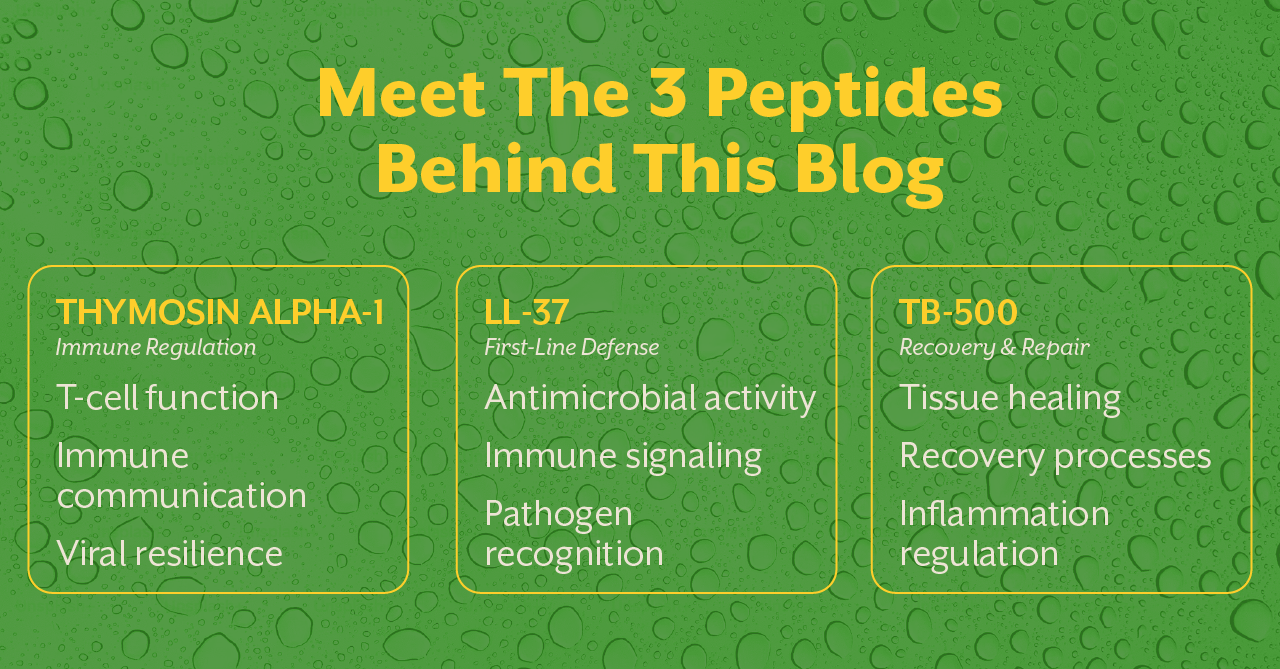
Let’s get one thing very clear that not every peptide is specifically designed for immunity. The peptides that will be discussed in this blog are gaining a lot of attention because of their potential roles in immune regulation, antimicrobial defense, and yes recovery as well.
Thymosin Alpha-1: The Immune System Coach
If there is a single peptide that has generated massive interest for immune health, it has to be none other than Thymosin Alpha-1.
Thymosin Alpha-1 is a naturally occurring peptide which is produced by the thymus gland, an organ that plays a major role in immune system development. So as you age, thymus function naturally declines. That specific decline can affect how efficiently the immune system responds to challenges.
Thymosin Alpha-1 works by supporting immune regulation, particularly through its effects on T-cells and other immune signaling pathways. So rather than simply boosting immunity, it also helps the immune system respond more intelligently and in fact effectively.
This is one reason why Thymosin Alpha-1 has been explored in areas involving immune dysfunction, recurrent infections, and viral illnesses. So much so that we here at iThrive have already started the 3 days course of this injectable booster so we don’t get sick this monsoon.
Thymosin Alpha-1 Injection
The most common delivery method is a Thymosin Alpha-1 injection, which typically has to be administered under professional supervision. As peptide protocols vary significantly from person to person, dosing as well as administration should always be well guided by a qualified healthcare practitioner.
How to reconstitute Thymosin Alpha-1
Most of you researching peptide therapy eventually search for how to reconstitute Thymosin Alpha-1. Let me tell you this process usually involves combining the peptide with bacteriostatic water before administration. However, peptide preparation, storage, and administration requires proper training and should never be approached casually or without medical guidance.
LL-37: Your body’s natural antimicrobial shield
Umm okay in lay man language if Thymosin Alpha-1 acts like a coach for the immune system, LL-37 functions more like a defender.
LL-37 is an antimicrobial peptide which is naturally produced by the human body. It forms part of our innate immune system, which is the body’s first line of defense against invading pathogens.
Scientists have studied LL-37 because of its role in antimicrobial defense, inflammation control, immune regulation, and majorly tissue repair.
One reason LL-37 is so fascinating is that the body already produces it naturally. Researchers continue exploring how supporting these natural pathways contributes to better immune resilience.
During periods of increased viral exposure, interest in LL-37 mostly rises because of its role in helping the body recognize and respond to potential threats.
TB-500: recovery matters too
Most of the discussions about immunity focus only on prevention but recovery matters just as much. Every infection creates a lot of inflammation and every illness demands repair, and with that every recovery process requires resources.
This is exactly where TB-500 enters the conversation. Amongst the most discussed TB-500 uses are tissue repair, recovery support, and inflammation management as well. TB-500 is derived from a naturally occurring protein called thymosin beta-4, that plays a role in healing and regeneration.
Researchers have explored its potential involvement in:
The potential involvement of TB-500 is majorly in tissue repair, cellular migration, recovery processes, and inflammation regulation.
While TB-500 injections are mostly discussed in sports medicine and injury recovery circles, many practitioners also view recovery support as an important component of overall resilience. After all, a body that recovers well often performs better during future challenges.
If you’re completely new to the world of peptides, our Bioregulators Guide for Beginners can help you understand how different peptide categories fit into a broader health and longevity strategy.
The case that changed how we think about seasonal immunity
Just yesterday, a client came to one of our functional nutritionists Aakansha with a lot of frustration saying that I get viral every single time the weather changes.
And honestly, it wasn’t an exaggeration. Every rainfall season means another fever for us and off course another course of antibiotics, another week of missed work, and another period of feeling completely drained.
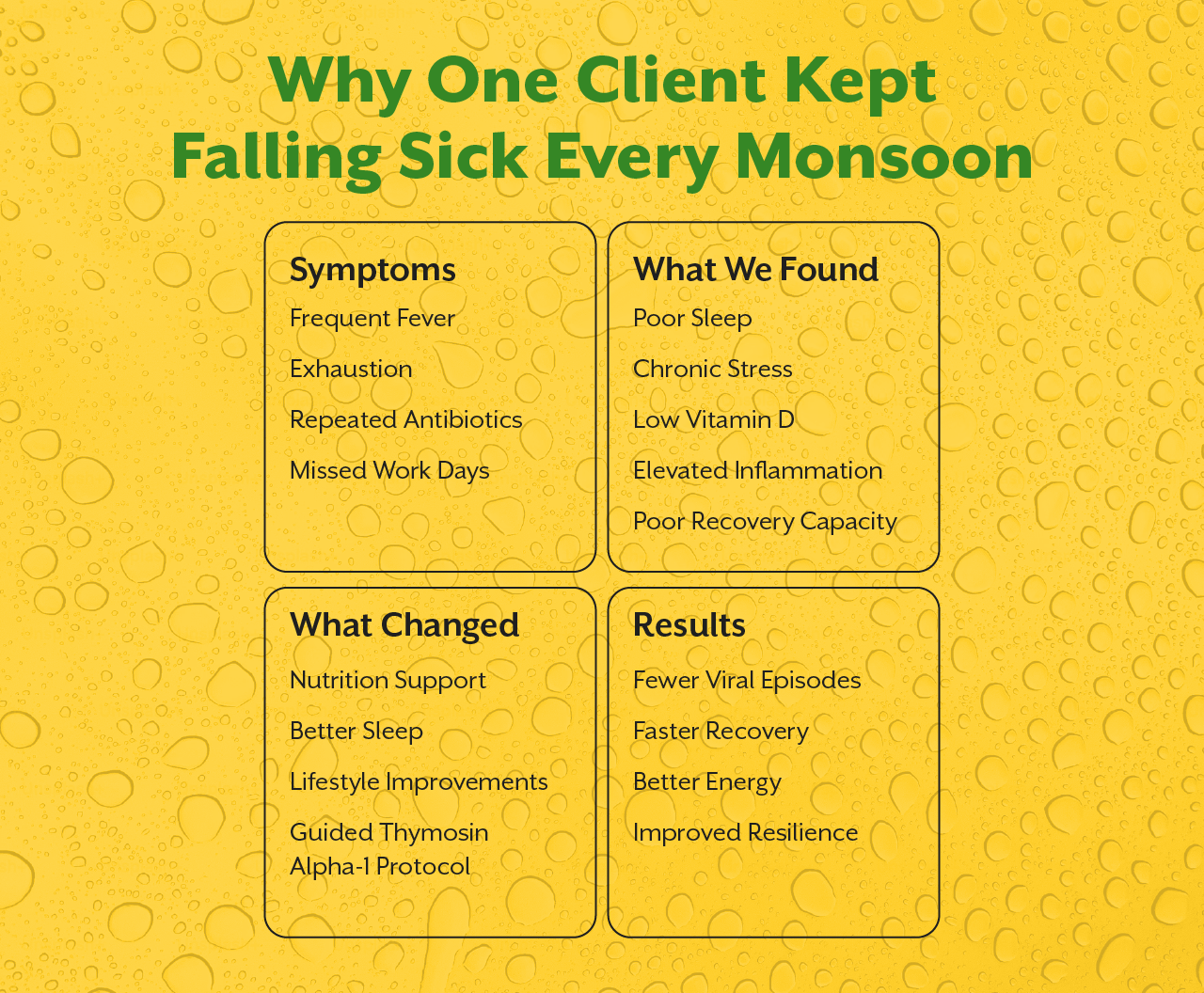
Initially, he assumed he simply had poor immunity but when our team looked deeper, a completely different picture emerged. He was dealing with chronic stress, his sleep quality was poor, and his Vitamin D levels were extremely low.
Another factor involved that inflammation markers were elevated, and recovery capacity was compromised. Saloni and the team then worked on his case from multiple angles, nutrition was addressed, lifestyle factors were corrected, and most importantly sleep became a priority.
And as part of a carefully supervised plan, Thymosin Alpha-1 was then introduced. The goal was never to suppress symptoms, rather the goal was to help the body become more resilient. Over time, the frequency of infections reduced majorly and recovery became much faster whenever illness occurred.
The lesson was quite simple and sometimes immunity isn’t weak.
Why we don’t believe in one-size-fits-all peptide protocols
One of the biggest mistakes happening in the peptide landscape right now is the assumption that everyone needs the same protocol. Quite honestly, they don’t.
Here at iThrive, every case is reviewed individually. Our certified functional nutritionists work together to understand the entire picture before making any recommendations. We’ve been working in the functional nutrition space since 2019 and one thing has become very clear since then is that:
Two people with similar symptoms can have completely different root causes. One person might need immune support, and another might need gut healing. Third, I might need stress reduction before anything else. This is why every peptide recommendation starts only with a conversation, not a prescription.
Who should consider exploring immunity peptides?
While peptide therapy is never a replacement for nutrition, sleep, movement, and stress management, certain individuals might choose to explore it under professional guidance.
This includes people who fall sick repeatedly throughout the year, recover slowly after illness, frequently travel and face high exposure environments, struggle with seasonal viral infections, experience chronic stress, or want additional support for immune resilience.
The key is understanding whether your immune system truly needs support and what type of support would be most appropriate.
Before you start any peptide
Peptides are powerful tools, but they are not magic solutions. No peptide can compensate for factors such as poor sleep, chronic stress, nutritional deficiencies, or an unhealthy lifestyle.
They should never be self-prescribed on the basis of social media trends or internet recommendations and that’s why a proper assessment matters. The right peptide for the wrong person can be just as ineffective as the wrong peptide entirely.
This is why understanding your biology always comes before choosing a protocol.
Key Takeaway
If you’re tired of feeling like every weather change comes with another fever, another antibiotic prescription, or another week of exhaustion, it may be time to look deeper. Your immune system is not simply a collection of cells fighting viruses.
It’s a reflection of your nutrition, stress levels, recovery capacity, inflammation status, and overall health. Peptides such as Thymosin Alpha-1, LL-37, and TB-500 have generated significant interest because they support different aspects of resilience, recovery, and immune function.
















.svg)