
.webp)

.svg)
.svg)







Introduction
Peptides are rapidly becoming one of the most-talked about categories of molecules when it comes to regenerative medicine, anti-aging skin care, and longevity science. GHK-Cu peptide is one of the most interesting peptides out there and also happens to be one of the most studied molecules on the planet. GHK- Cu, also known as the “copper peptide”, is renowned for its potential involvement in tissue regeneration, collagen synthesis, wound healing, and skin regeneration.
Scientists have recently begun applying GHK-Cu in regenerative skincare due to its ability to help initiate various cellular repair processes. However, GHK-Cu has also been a hot topic outside of skincare in the larger field of regenerative biology. Let’s take a closer look at GHK-Cu and how it works:
GHK peptide bound to copper was first discovered by Loren Pickart in the 70s. It is found naturally in human plasma, saliva, and urine. Interestingly, scientists noted that GHK-Cu concentration decreases with age. As you may know, aging tissue has a harder time repairing itself. Research into GHK- Cu has been examined in great detail since its discovery. Studies have looked into its potential role in collagen production, anti-inflammation, antioxidation, stem cell regulation, gene expression, tissue repair, and even longevity.
What Is GHK?
GHK is a tripeptide naturally formed from three amino acids glycine, histidine, and lysine. Found naturally in the human body's tissues and fluids, GHK serves as a signaling peptide that plays a role in tissue repair and regeneration. Many scientists suspect GHK to be crucial for maintaining proper tissue remodeling and repair everywhere in the body.
It's been found that GHK's levels begin to decrease with age. Research has shown that levels of GHK in plasma are considerably higher in young adults and decline with age. The loss of GHK over time may lead to reduced healing, collagen production, and regeneration of tissues as we age.
What Does GHK Stand For?
GHK stands for Glycyl-L-histidyl-L-lysine. The name reflects the three amino acids that form the peptide structure:
- Glycine
- Histidine
- Lysine
Although GHK itself is biologically active, its most studied and therapeutically relevant form is GHK-Cu, which is formed when the peptide binds with a copper ion.
What’s GHK Peptide?
GHK peptide may be more accurately defined as an endogenous messenger molecule that signals to cells and helps modulate repair pathways. It doesn't appear to work like most pharmaceuticals that latch on to one specific receptor. Instead GHK seems to have a more multi-faceted effect on many different systems.
GHK appears to affect tissue remodeling and collagen synthesis. It plays a role in antioxidant response and helps increase our ability to heal wounds. Researchers even believe GHK controls thousands of genes related to regeneration and inflammation, which is why GHK has been studied so much in regards to longevity medicine.
What Is GHK-Cu Peptide?
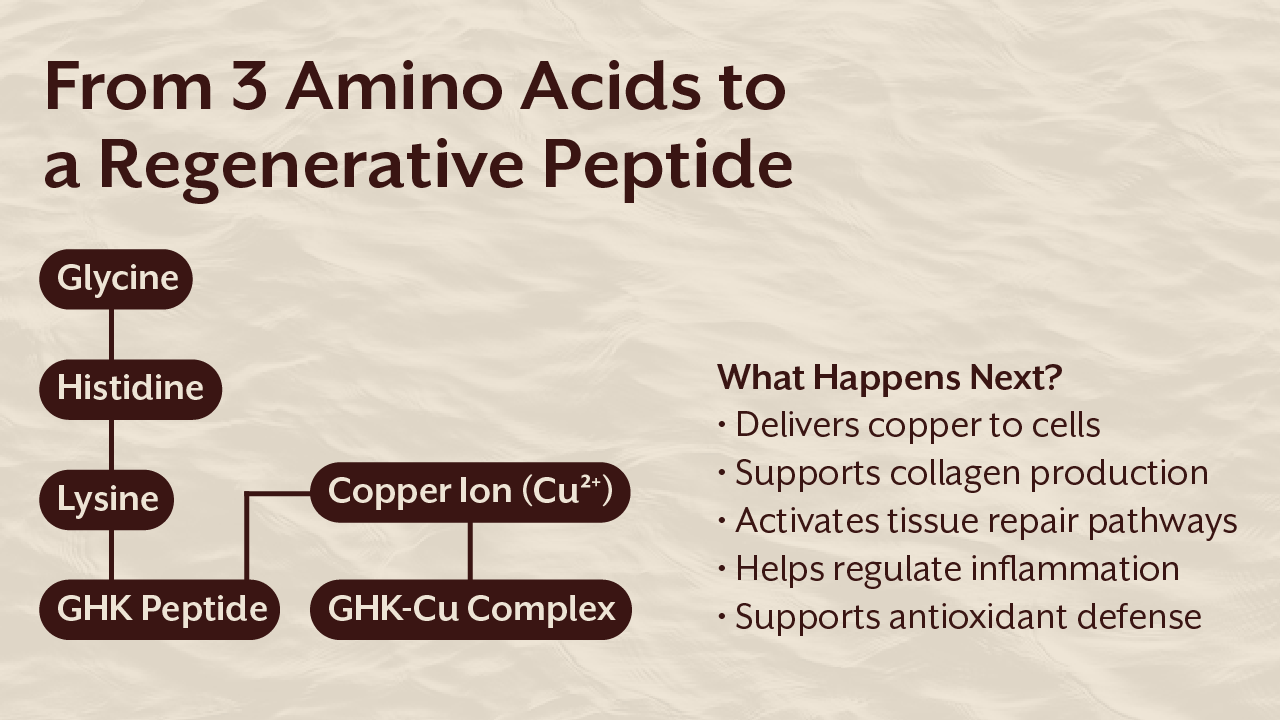
GHK-Cu peptide is the copper-bound form of GHK. When the peptide binds with copper ions, it forms a biologically active complex capable of transporting copper into tissues and cells. Copper is an essential trace mineral involved in numerous enzymatic reactions, especially those associated with collagen formation, antioxidant defense, and tissue repair.
The copper-binding ability of GHK is one of the reasons the peptide has become so heavily researched in dermatology and regenerative biology. Studies have shown that GHK-Cu can stimulate collagen and glycosaminoglycan synthesis, improve skin remodeling, and support wound healing processes.
How Does GHK-Cu Work?
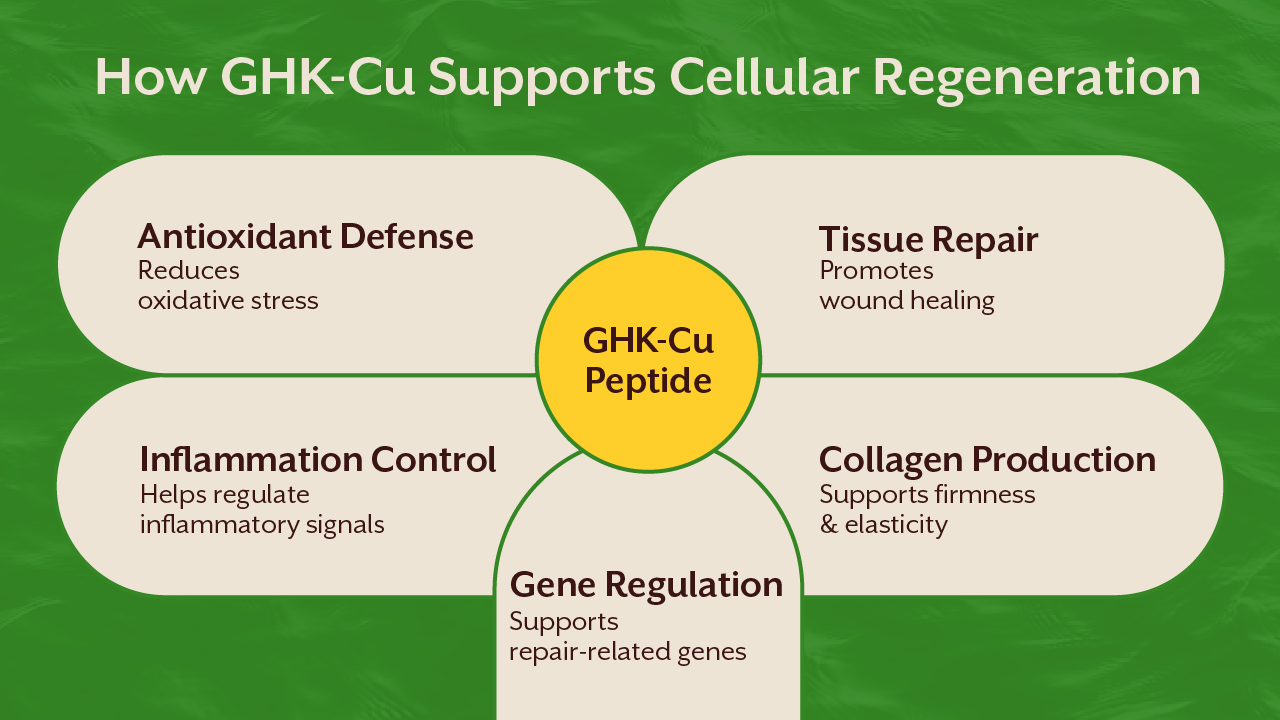
GHK-Cu exerts several overlapping biological activities thought to be responsible for its effects. First, it acts as a vehicle of copper, an element essential for multiple enzymes responsible for connective tissue formation, antioxidant activity, and cellular respiration. GHK allows copper transport into cells without unleashing free copper and its associated oxidative stress.
Gene modulation is another significant mechanism of GHK-Cu. The review article referenced findings that GHK-Cu modulates thousands of human genes involved in healing and inflammation, tissue remodeling, and antioxidant responses. The authors even went so far as to call this action “resetting” genes to promote normal functioning.
Modulation of transforming growth factor-beta (TGF-beta), integrins, and stem cell pathways have also been observed. These pathways affect collagen remodeling, tissue regeneration, and other cellular signals involved in healing.
What Does GHK Peptide Do?
One of the most common questions online is: what does GHK peptide do?
GHK-Cu is believed to be involved in multiple mechanisms of regeneration and protection in different tissues around the body. This encompasses collagen induction, promotion of wound healing, antioxidant effects, inhibition of inflammatory cytokines, and promotion of skin repair. Research also indicates improvements to fibroblast production, keratinocyte proliferation, and overall healthier tissue remodeling post injury. Due to this wide variety of biological mechanisms, GHK-Cu has become increasingly popular in anti-aging skincare and hair-growth applications.
GHK-Cu Peptide Benefits
1. Skin Rejuvenation and Anti-Aging
GHK-Cu may be best known for its ability to benefit skin health. In studies with women suffering from photoaged skin, topical application of GHK-Cu cream showed improvement in firmness, elasticity, density, and overall appearance with continued use. Researchers noted that there were less fine lines, wrinkles, and hyperpigmentation as well.
It is believed that GHK encourages fibroblasts to produce collagen and elastin, and promote healthy remodeling of skin tissue. As collagen depletion is one of the biggest factors leading to visible signs of aging, this effect has made GHK-Cu a coveted ingredient when it comes to anti-aging solutions.
2. Collagen Production
Several studies referenced by the review article showed GHK-Cu increased collagen synthesis and glycosaminoglycan production. Collagen and glycosaminoglycans play a key role in skin hydration, elasticity, and structural strength.
The reviewed studies also noted increased production of decorin, a proteoglycan that plays a role in collagen formation and wound healing. This may indicate that GHK-Cu promotes collagen production and increases collagen quality.
3. Hair Growth and Scalp Health
GHK-Cu has recently become more prevalent in hair regrowth formulas. The peptide is thought to promote follicular activity as well as scalp health. Though studies on hair growth are less conclusive than skincare, GHK-Cu is thought to promote healthier follicles through increased circulation and reduced inflammation and promoting healing of the tissue surrounding hair follicles.
Helping regenerate tissue and reducing inflammation may promote a healthier environment for regrowth and less shedding.
4. Wound Healing and Tissue Repair
One of the earliest indications used for GHK-Cu was its wound-healing capabilities. GHK-Cu has been shown in animal models to heal wounds faster with increased collagen deposition and tissue remodeling when treated with GHK-Cu.
Angiogenesis was noted as well as healing of diabetic and ischemic wounds. This suggests that GHK-Cu may have systemic tissue regeneration abilities beyond cosmetic skin rejuvenation.
5. Anti-Inflammatory and Antioxidant Effects
GHK-Cu demonstrates potential anti-inflammatory and antioxidant effects. One study found copper-peptide complexes decreased inflammatory cytokines (IL-6 and TNF-alpha) produced by dermal fibroblasts.
GHK-Cu also increases activity of antioxidant enzymes and can potentially neutralize harmful byproducts created during oxidative stress. These benefits are valuable as chronic inflammation and oxidative damage have been linked to aging and reduced tissue repair.
How Much GHK to Take?
One of the most frequently searched questions is how much GHK to take.
Dosage levels for topical application are usually between 1% and 3% GHK-Cu in skincare and haircare products. Applications are usually once per day or twice per day depending on the product line and what you are treating.
Discussion of GHK-Cu injections is usually confined to the scientific literature and peptide enthusiasts. Protocols in experimentation have been around 2 mg to 10 mg per day. There is no defined dose for therapeutic use in humans in scientific literature. Note: The review article states much LOWER quantities may be biologically active. This is because GHK-Cu itself works in picogram quantities.
Due to the higher risks associated with injections, it should only be done under medical supervision.
GHK How Often Should You Use It?
Another common question is GHK: how often should it be used?
Topical GHK-Cu is often applied once or twice daily on the skin or scalp. Long-term application is usually necessary before you see results. Injectable protocols are typically cycled on and off for weeks at a time. Cycling is frequently suggested as taking too much copper can lead to toxicity.
What Are GHK-Cu Side Effects?
Many people ask: what are GHK-Cu side effects?
Side effects of Topical GHK-Cu have not been widely reported and it is considered generally safe, particularly at typical cosmetic usage concentrations. Some users with sensitive skin may experience mild skin redness, itching, dryness or irritation.
Side effects unique to Injectable GHK-Cu may include injection-site irritation as well as tiredness, dizziness, or changes in blood pressure.
Of greatest concern with overdosage or chronic overuse would be copper toxicity. Copper is only required in trace amounts by the body, and too much copper buildup could theoretically cause nausea, abdominal pain, tiredness, liver damage, and neurological effects.
Can GHK-Cu Be Used with Vitamin C?
Side effects of Topical GHK-Cu have not been widely reported and it is considered generally safe, particularly at typical cosmetic usage concentrations. Some users with sensitive skin may experience mild skin redness, itching, dryness or irritation.
Side effects unique to Injectable GHK-Cu may include injection-site irritation as well as tiredness, dizziness, or changes in blood pressure.
Of greatest concern with overdosage or chronic overuse would be copper toxicity. Copper is only required in trace amounts by the body, and too much copper buildup could theoretically cause nausea, abdominal pain, tiredness, liver damage, and neurological effects.
Is GHK-Cu Scientifically Backed?
Yes. GHK-Cu has been the subject of lab, cosmetic and experimental clinical research regarding skin regeneration, collagen production, wound healing, inflammation, and tissue remodeling. One published review article compiled decades of research in BioMed Research International that support its regenerative benefits.
Many larger health claims regarding longevity, organ regeneration and disease treatment are yet to undergo large scale human clinical trials.
Also if you want to know more about peptides, do read the following articles to gain better understanding:
https://www.ithrivein.com/blog/bioregulators-guide-for-beginners
https://www.ithrivein.com/blog/bpc-157-benefits-healing-mechanism-science
https://www.ithrivein.com/blog/retatrutide-weight-loss-mechanism
https://www.ithrivein.com/blog/tirzepatide-for-weight-loss-and-diabetes
Final Thoughts
GHK-Cu peptide is one of the most intriguing molecules in both regenerative skincare and peptide science. When it comes to collagen production, tissue remodeling, wound healing support, and antioxidant capabilities GHK-Cu has been studied quite a bit. Because of this, it’s become one of the hottest topics in anti aging science and cosmetic dermatology.
Truthfully, while there is still some promising research around GHK when taken orally, most of these claims should be taken with a grain of salt. Sticking with topical, skin-care related claims and leaning on science based advice is always a good place to be. Read on to learn what GHK is, what GHK peptide does, how much GHK you should take, and possible GHK-Cu side effects.

















.svg)