

.svg)
.svg)







Introduction
You might have likely heard the buzzword “peptides” tossed around recently in the wellness and biohacking communities. Some swear by them. Some have no idea what they are, questioning their safety, and wondering if they are even necessary. Here is the truth.
Peptides are not a fad. Your body recognizes peptides as signals and can act on them. When combined correctly, the synergistic effects can create some truly extraordinary outcomes. The KLOW peptide blend is one of those combinations. It contains four of the most researched peptides- GHK-Cu, BPC-157, TB-500, and KPV. Combined into one targeted stack, these peptides work to promote healing, decrease inflammation, and restore your body on a cellular level. But how does that translate to you? In this blog, we will cover what each peptide can do for you, why they work so well together, who can truly benefit, and what you need to know before trying them out.
Peptides Explained. Why do they work?
Peptides are short chains of amino acids. Amino acids are the building blocks of proteins. The difference is that peptides are smaller, more targeted, and act as messenger molecules that communicate with certain cells/tissues and tell them what to do. Your body already produces hundreds of peptides. Insulin is a peptide. Many growth signals, immune signals, and tissue repair signals are peptides too. The issue is that when we age, get injured, live under stress, or have inflammation, the body’s natural peptide signals get diminished. It starts making less of what the body needs to recover from damage or stress. As a result, things just don’t bounce back like they used to. Injuries don’t heal like they should. Inflammation remains for too long. That’s why we use therapeutic peptides. They help mimic or boost these signals that the body is familiar with. They send your biology a clear, concise signal telling it what to do.
What is KLOW peptide blend
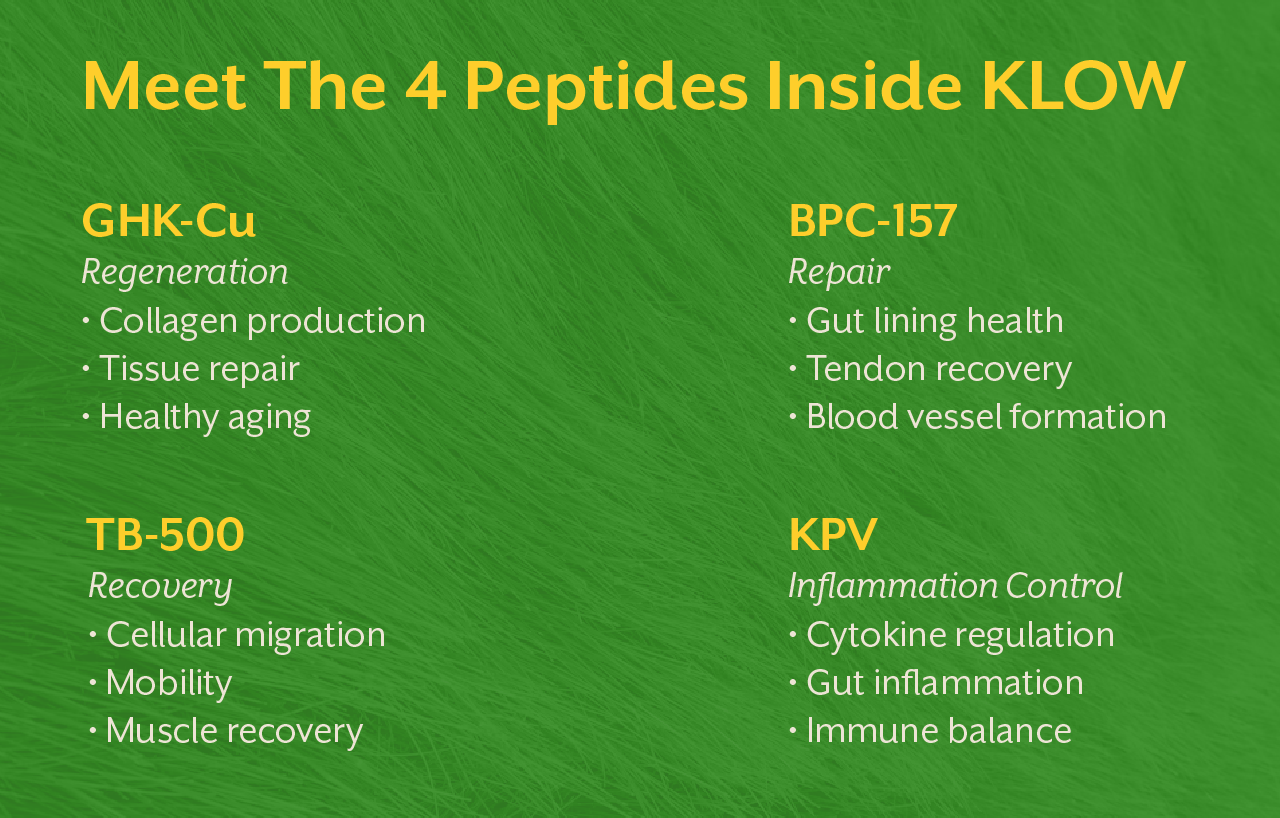
KLOW peptide blend combines four individually researched peptides in one stack that has been shown to work synergistically with maximum potency. The four peptides in the KLOW peptide blend are:
• GHK-Cu (Copper Peptide)
• BPC-157 (Body Protection Compound 157)
• TB-500 (Thymosin Beta-4)
• KPV (Lysine-Proline-Valine)
Each targets different and overlapping pathways of repair and recovery. Together, they work to create a compounded benefit far beyond any one individual peptide.
Let’s take a closer look at each peptide.
GHK-Cu: The Master Regeneration Molecule
GHK-Cu or glycyl-l-histidyl-l-lysine bound to copper is a copper peptide which occurs naturally in our bodies. Specifically, it is found in blood plasma, saliva and urine. Unfortunately, its concentration drops as we age. Some of its functions are:
(a) Collagen synthesis and tissue repair: GHK-Cu helps with skin health, wound healing, and connective tissue repair because it activates fibroblasts (cells which produce collagen/elastin). Not only will it help prevent collagen breakdown, but it can also help stimulate new collagen production.
(b) Antioxidant and anti-inflammatory activity: GHK-Cu helps mitigate oxidative stress and has been demonstrated to downregulate the expression of genes involved in inflammation. Basically, it helps many biological processes that become overactive while in a state of chronic inflammation return to normal.
(c) DNA repair and gene expression: GHK-Cu can influence the expression of over 4,000 human genes. Studies have shown that it helps reverse the expression of genes associated with aging and disease back to normal levels.
(d) Cognitive function: Preliminary studies indicate GHK-Cu may help protect neurons and promote cognitive function, but more research (specifically in humans) is needed.
If you suffer from any condition involving slow tissue repair, joint degeneration, skin aging or chronic inflammation, GHK-Cu is one of the building blocks you will want to include in your regimen.
If you want to know more about its usage, doses, benefits and side effects read our article on the same.
BPC-157: The Body’s Own Repair Peptide
BPC-157 or Body Protection Compound 157 is a synthetic peptide engineered from a protein that is found naturally in gastric juice. If BPC-157 has built such an incredible reputation in sports medicine, functional medicine, and gastroenterology research circles, it is for very good reasons.
(a) Speeds up tissue repair: A ton of research shows BPC-157 can accelerate healing in tendons, ligaments, muscles, and bone. So if you are recovering from an injury, BPC-157 can help.
(b) Helps heal & repair the gut: BPC-157 works very well at healing and repairing the intestinal lining, reducing gut inflammation and has also been shown to help with leaky gut syndrome, IBD, and gastric ulcers.
(c) Promotes angiogenesis: BPC-157 promotes new blood vessel formation, which is important for improving blood circulation to damaged tissue and faster healing.
(d) Neuroprotective: Some studies on BPC-157 revolve around nerve support and protection. BPC-157 has shown promise in helping protect dopamine and serotonin receptors and recovery benefits from certain neurological traumas.
(e) Anti-inflammatory action: Like GHK-Cu, BPC-157 has also shown to promote anti-inflammatory response throughout the body.
Here at iThrive, we have learned the hard way that if your gut is not healthy, nothing else will be. While BPC-157 works wonders for repairing damage throughout the body, its special affinity for gut healing really puts it on another level.
Want to know more? Read our article.
TB-500: The Mobility & Healing Peptide
TB-500 stands for Thymosin Beta-4. It is essentially the synthetic form of what is naturally produced by nearly every cell in your body. TB-500 functions almost exclusively around actin, which is the protein responsible for allowing cells to move and migrate.
Think about how your cells move when you get a cut. They literally have to travel to the site of the injury in order to start healing it. TB-500 accelerates this process. Some of the benefits of TB-500 are:
(a) Repairing & Recovering Muscles: TB-500 helps regenerate muscle fibres and speed up recovery time from muscular injury or damage. This tends to be where athletes and physical rehabilitation patients see the most drastic results from TB-500.
(b) Increasing Flexibility: Decreasing tension in connective tissue and increasing range of motion in the joints is another unique effect of TB-500. If you suffer from chronic stiffness or lack of movement in your joints you will likely benefit.
(c) Heart Tissue Repair: Studies have shown that TB-500 helps heal heart tissue damage and stimulate new blood vessel formation after a heart attack. Research on humans is still underway, but the results so far are promising.
(d) Anti-Fibrotic: As mentioned above, TB-500 helps our cells migrate to areas that need to be repaired. If tissue becomes scarred, it is known as fibrosis. TB-500 has been shown to help prevent fibrosis in patients with chronic inflammatory conditions in the lungs, liver, or kidneys.
(e) Immunomodulation: Given its origin in thymus-related biology, TB-500 can help modulate immune responses. TB-500 can be very useful for autoimmune conditions too.
Combining TB-500 with BPC-157 supports tissue migration and blood vessel formation, but through different pathways and mechanisms.
KPV: The Inflammation Extinguisher
KPV is a tripeptide made of three amino acids- Lysine, Proline, and Valine. It is derived from the α-melanocyte-stimulating hormone (α-MSH) molecule, which is involved in orchestrating the body’s own internal anti-inflammatory mechanism. Although the smallest peptide in this entire stack, don’t let its size fool you. KPV extinguishes inflammation. Some benefits of using KPV are:
(a) Drives powerful anti-inflammatory signalling: KPV directly inhibits pro-inflammatory cytokines. Cytokines are chemicals your body produces to turn on inflammation. When your body produces too many cytokines you end up with chronic inflammatory diseases. KPV puts the literal brakes on this inflammatory response.
(b) Promotes gut and intestinal health: Beneficial effects for inflammatory bowel diseases have been shown with KPV. It readily passes through the gut mucosal barrier and provides localized anti-inflammatory benefits to intestinal tissue.
(c) Anti-inflammatory and wound healing properties: KPV reduces inflammation of the skin and even promotes wound closure. This makes it relevant for inflammation-induced conditions, including eczema, psoriasis, and acne.
(d) Modulates the immune system: KPV can modulate immune cell activity and T-cell responses. Regulating immune cells can be helpful for autoimmune diseases, where the body is mounting an inflammatory response against its own tissues.
KPV is the missing puzzle piece to the KLOW stack. By countering the inflammatory signalling environment, KPV allows GHK-Cu, BPC-157, and TB-500 to do their jobs uninhibitedly.
Why Does This Stack Work So Well Together?
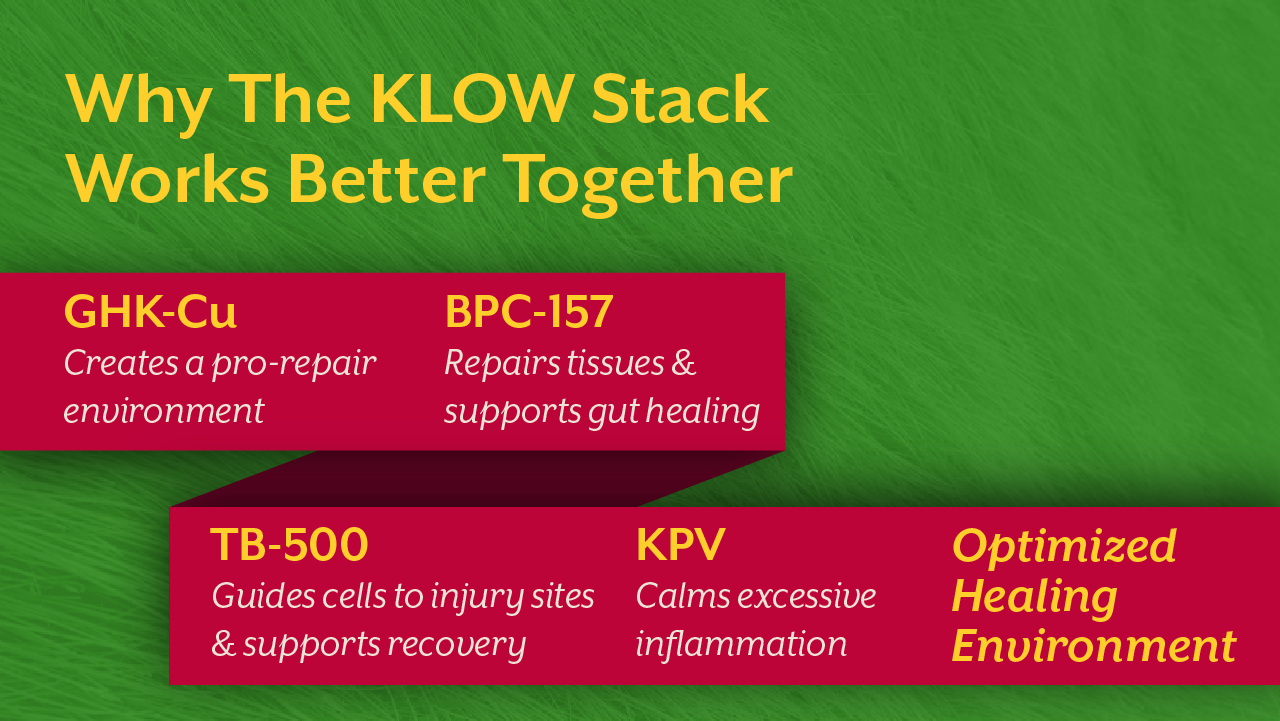
Each peptide works on a separate phase of the healing cascade.
• GHK-Cu resets the genetic and cellular environment for repair
• BPC-157 promotes structural tissue regeneration, especially in the gut and musculoskeletal system
• TB-500 helps in guiding cells directly to injury sites and improves circulation and flexibility
• KPV inhibits the inflammatory signalling cascades that would otherwise delay healing
Individually, these peptides have profound effects. Together, they create a synergistic biological response that optimizes healing from all angles.
Who is the KLOW peptide blend Relevant For?
Here are some conditions based on current literature and clinical practice where this stack may be beneficial:
• Slow healing from injury or surgery
• Chronic joint pain, tendinopathy, or musculoskeletal damage
• Gastrointestinal conditions such as leaky gut, IBD, or mucosal irritation
• Unexplained chronic inflammation
• Inflammatory autoimmune diseases
• Inflammatory skin conditions
• Generalized cell aging and tissue degeneration
• Systemic immune dysregulation
It is to be noted that peptide therapy is not a foundation builder. Proper diet, sleep, stress management, and mineral balancing, all must be addressed when implementing any type of peptide protocol.
How is KLOW peptide blend administered?
KLOW peptide blend is administered by injection through either of the two routes- subcutaneous or (preferably) intramuscular, with the upper arm, thigh or abdomen being the common injection sites. It is supplied as a powder which is reconstituted with bacteriostatic water prior to administration. KLOW is usually started at a low dose and increased gradually during the first week or two. It is given daily (or less often for maintenance) for 4-8 weeks.
What are the side effects of KLOW peptide blend?
The most commonly observed side effects include mild injection-site irritation and nausea, which subside within the first week or two, especially at lower doses. It is recommended to avoid this peptide stack if one has or had cancer, because two of its ingredients promote blood vessel formation. It is also generally advised against people having Wilson's disease or any other health issue affecting copper metabolism, because of the presence of copper-binding peptide in this formulation. Even pregnant or nursing women must avoid it, as there is no safety data for this group. Additionally, four peptides constituting KLOW have not been studied altogether in human clinical trials, therefore the side effects caused by this peptide is not well-documented and hence, research on the individual peptides and anecdotal reports from users are relied upon to know their respective side effects. Based on available data, no major side effects or safety issues are currently reported; however, there is no long-term data.
Key Takeway
The KLOW peptide blend is one of the well-designed peptide stacks out there. GHK-Cu, BPC-157, TB-500, and KPV are four individual peptides of this stack, each having well-studied, unique mechanisms of action. Combined, they create an optimal healing milieu where tissue repair, inflammation resolution, gut healing, cell growth, and immune regulation can all occur at once.
If you are someone who feels like your body is not healing how it used to, healing takes forever, or if low-grade inflammation is your new normal, you need to look into this peptide stack.
Peptides are tools. Game-changing tools. But tools nonetheless. They are most effective when utilized by someone who knows what they are doing and has a plan behind what they are doing.
If you would like to see if KLOW is a good fit for you and your unique situation, schedule a root cause analysis consultation with us. We can help you determine what your body truly needs and work to build you a protocol that fixes your biology from the inside out.
References
- Pickart, L., & Margolina, A. (2018). Regenerative and Protective Actions of the GHK-Cu Peptide in the Light of the New Gene Data. International journal of molecular sciences, 19(7), 1987. https://doi.org/10.3390/ijms19071987
- Chang, C. H., Tsai, W. C., Hsu, Y. H., & Pang, J. H. (2014). Pentadecapeptide BPC 157 enhances the growth hormone receptor expression in tendon fibroblasts. Molecules (Basel, Switzerland), 19(11), 19066–19077. https://doi.org/10.3390/molecules191119066
- Ou, H., Chen, R., Zhou, L., Zhang, Y., Zhao, S., & Yang, Z. (2026). Thymosin β4-derived peptides alleviate neuroinflammation and neurite atrophy in both in vitro models and in vivo 5 × FAD mice: A potential therapy for memory improvement in Alzheimer's disease. International immunopharmacology, 170, 116097. https://doi.org/10.1016/j.intimp.2025.116097
- Land S. C. (2012). Inhibition of cellular and systemic inflammation cues in human bronchial epithelial cells by melanocortin-related peptides: mechanism of KPV action and a role for MC3R agonists. International journal of physiology, pathophysiology and pharmacology, 4(2), 59–73. https://pmc.ncbi.nlm.nih.gov/articles/PMC3403564














.svg)