

.svg)
.svg)







Introduction
Obesity has come a long way from being classified as a disease of overindulgence or lack of willpower. Experts and researchers now recognize it as a complex chronic metabolic disease affected by many different factors including genetics, insulin resistance, inflammation, gut hormones, stress, sedentary behavior, and the environment around you. One of the most impactful therapies to enter the world of obesity and diabetes in recent years is Semaglutide.
With brands reaching almost every corner of the world at this point (Ozempic, Wegovy, Rybelsus, etc. ), Semaglutide has changed the entire dialogue around weight loss. To many on social media platforms, it’s seen as a magic injection that will melt away the pounds. To doctors and clinicians, it’s an incredible metabolic therapy that can help reduce many of the complications associated with obesity. But the million-dollar question remains… Does it really treat the cause of obesity or simply push the feelings of hunger far enough down that you begin to lose weight?
Well, it’s both yes and no. Semaglutide will without a doubt cause you to lose a significant amount of weight and improve many metabolic parameters. But obesity is a complex disease that goes far beyond feeling hungry. Let’s discuss what Semaglutide does and doesn’t do.
Understanding Semaglutide and How It Works
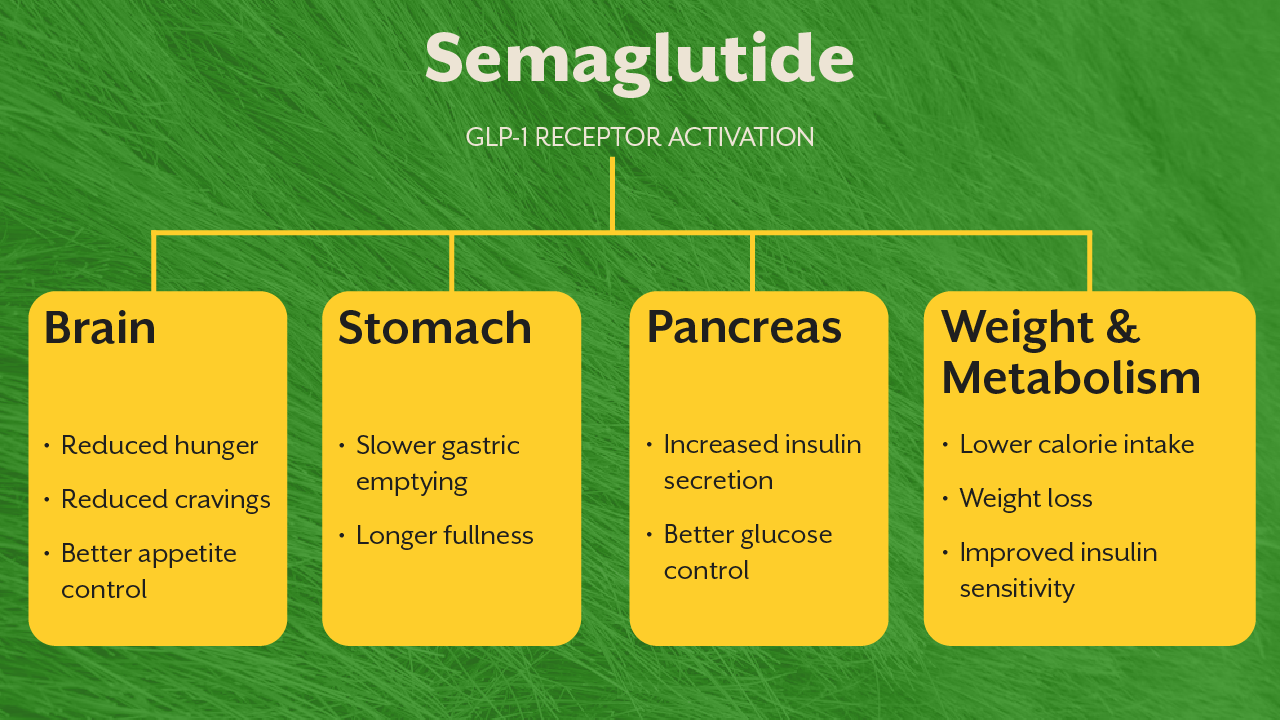
Semaglutide is classified as a glucagon- like peptide-1 receptor agonist (GLP-1 agonist). These drugs are synthetic versions of GLP-1 which is naturally secreted in the intestine when you eat. GLP-1 has various effects throughout the body such as decreasing appetite, stimulating insulin secretion, slowing gastric emptying, and lowering blood sugar levels.
Specifically, Ozempic is prescribed for type 2 diabetes, and Wegovy is prescribed for obesity. Rybelsus is another medication containing semaglutide that you can take as a tablet instead of getting injections.
The injection form of semaglutide became popular because you only have to take the medication once a week. When developing semaglutide, researchers modified the drug’s structure so that enzymes in your body would break it down slower. This allows semaglutide to stay in your body longer.
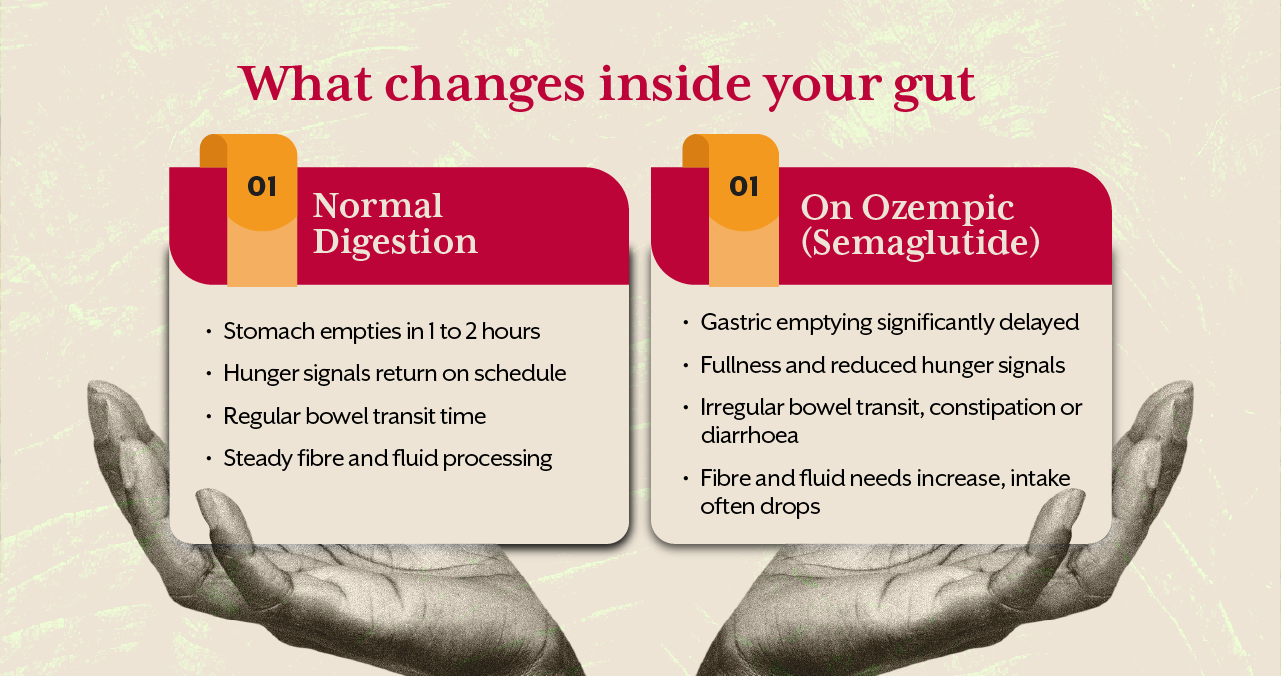
Semaglutide can decrease your appetite and increase feelings of fullness by directly acting on parts of your brain that control hunger, particularly the hypothalamus. It also decreases gastric emptying which means that food digests slower in your stomach. Lastly, semaglutide increases glucose-dependent insulin secretion.
Why Semaglutide Produces Significant Weight Loss
Calorie restriction increases hunger hormones, making you feel hungrier than usual. Your metabolism also starts to slow down as your body tries to preserve energy. With typical diets, this response makes long-term weight loss impossible for most people.
Semaglutide works differently than dieting by suppressing your appetite. Patients report:
- Feeling less hungry
- Getting full faster when eating meals
- Feeling less desire to eat when stressed or sad
- Snacking less
- Mindlessly eating less
Instead of feeling starving all day, patients can create a calorie deficit without sacrificing their quality of life.
Scientists have studied semaglutide extensively in clinical trials. One study enrolled over 17,000 overweight or obese adults without diabetes. Dubbed SELECT, participants were followed for four years. Results showed that semaglutide led to sustained and clinically meaningful weight loss.
On average, patients lost:
- 10-12% of their bodyweight
- Waist circumference
- Cardiometabolic risk factors
Reached their weight loss goal and kept it off long-term
Up to 68% of participants lost ≥5% of body weight, and over 44% of study participants lost over 10% of their body weight . These results are significantly greater than typical lifestyle interventions.
Mode of Action of Semaglutide
Semaglutide is a GLP-1 receptor agonist that mimics the action of glucagon-like peptide-1 (GLP-1), which is an incretin hormone secreted from the intestine when you eat. Semaglutide’s chemical structure has been modified so that it is not easily broken down by enzymes, binds tightly to albumin proteins in your blood, can last longer in the body, and allows you to take the medication only once per week. When semaglutide binds to GLP-1 receptors located in your pancreas, brain, and gastrointestinal tract, it stimulates glucose-dependent release of insulin and decreases glucagon secretion. This helps lower your blood sugar levels. The semaglutide injection also delays stomach emptying and directly affects the areas of your brain that control hunger. It decreases appetite, cravings, and overall calorie consumption while promoting feelings of fullness. It also impacts brain pathways associated with reward eating which can help reduce emotional eating and binge eating. Overall, these effects lead to weight loss, increased insulin sensitivity, decreases in visceral fat, and reductions in cardiometabolic risk. Semaglutide vs tirzepatide: While semaglutide works by primarily acting on GLP-1 receptors, Tirzepatide works by activating both GLP-1 and GIP receptors.
Does Semaglutide Actually Address the Root Cause of Obesity?

But in order to understand this statement we must first understand what obesity truly is. Obesity is not just a disease of overeating. Many cases of obesity are characterized by faulty hormonal signals, insulin resistance, chronic inflammation, dysregulated satiety response, altered gut-brain axis signaling, and metabolic adaptation.
So yes, semaglutide does target many causes of obesity.
Helping to increase insulin sensitivity and normalize appetite signals allows semaglutide to help reverse some of the metabolic dysfunction that causes weight gain to occur in the first place. This is especially true for those with metabolic syndrome, prediabetes, or insulin resistance, as the majority of excess weight in these individuals is caused by hormonal issues.
Semaglutide also has the potential to increase the body’ sensitivity to its natural satiety signals. Many people with obesity are insensitive to these signals due to years of metabolic dysfunction. Instead of forcing yourself to eat less with willpower, patients on semaglutide often feel like hunger is just naturally diminished.
Beyond weight loss itself, semaglutide appears to help with many metabolic factors that lead to weight gain. Studies have shown the drug to reduce cardiometabolic risk factors, have anti-inflammatory effects, and benefits glucose metabolism. This further showcases that semaglutide is helping do more than just making people feel “less hungry.”
That being said, there are many factors that can contribute to obesity and semaglutide does not fix all of them.
Semaglutide and Improvements Beyond Weight Loss
Semaglutide is garnering so much interest in part because benefits seem to go well beyond weight loss. Losing weight alone does not appear to account for its wide-ranging metabolic effects.
Cardiovascular Protection
One of the biggest headlines coming out of semaglutide has been cardiovascular protection. In the SELECT trial, there was a 20% lower risk of major cardiovascular events in overweight/obese people without diabetes.
This matters because obesity substantially increases your risk of:
- Heart attack
- Stroke
- High blood pressure
- Hardening of the arteries
Semaglutide seems to lower your risk of these events due to favorable effects on inflammation, blood sugar, body fat composition, and blood vessels.
Improved Kidney Health
Semaglutide may also have beneficial effects on kidney health. This is supported by studies showing decreased albuminuria and slower loss of estimated glomerular filtration rate (eGFR), especially among diabetic patients or those with chronic kidney disease. This benefit may be partly due to improved blood sugar control. .
Better Glycemic Regulation
The drug remains one of the most effective therapies for type 2 diabetes management. By stimulating glucose-dependent insulin secretion, semaglutide helps lower HbA1c levels while simultaneously reducing body weight.
This dual benefit explains why Ozempic became globally popular before its widespread use in obesity medicine.
Potential Benefits in PCOS
Women with polycystic ovary syndrome (PCOS) frequently struggle with insulin resistance and obesity. Emerging evidence suggests semaglutide may improve:
- Menstrual regularity
- Insulin sensitivity
- Weight reduction
- Metabolic dysfunction associated with PCOS
This highlights the growing role of GLP-1 therapies in reproductive endocrinology.
Semaglutide Side Effects: The Risks Cannot Be Ignored
Despite its effectiveness, semaglutide side effects are important and should never be overlooked. The most common adverse effects are gastrointestinal. Many patients experience:
- Nausea
- Vomiting
- Diarrhea
- Constipation
- Abdominal discomfort
- Bloating
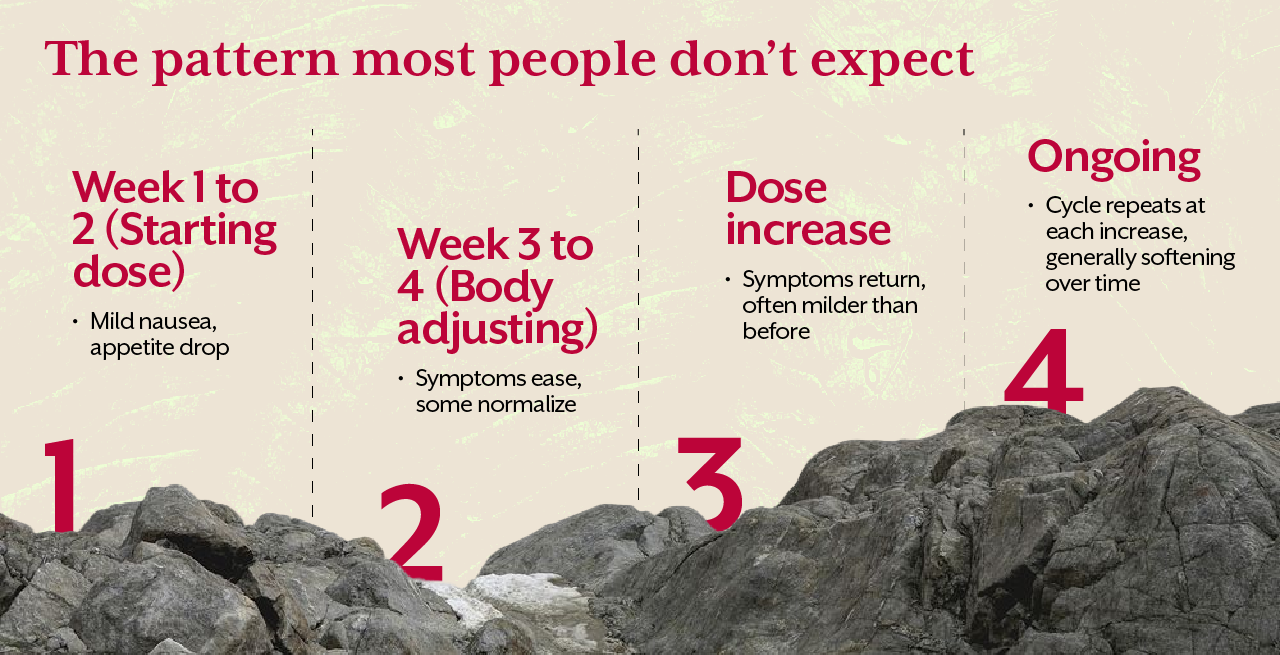
These side effects are most commonly seen at the time of dose escalation and often resolve with time. Nevertheless, some patients stop treatment due to intolerance.
Discussion has also been rising around potential psychiatric effects. Nonetheless, research has not confirmed any causality between GLP-1 agonists and suicidality.
Weight loss itself can cause loss of muscle/muscle mass or nutritional deficiencies if diet is not well maintained.
Semaglutide vs Tirzepatide: Which Is Better?
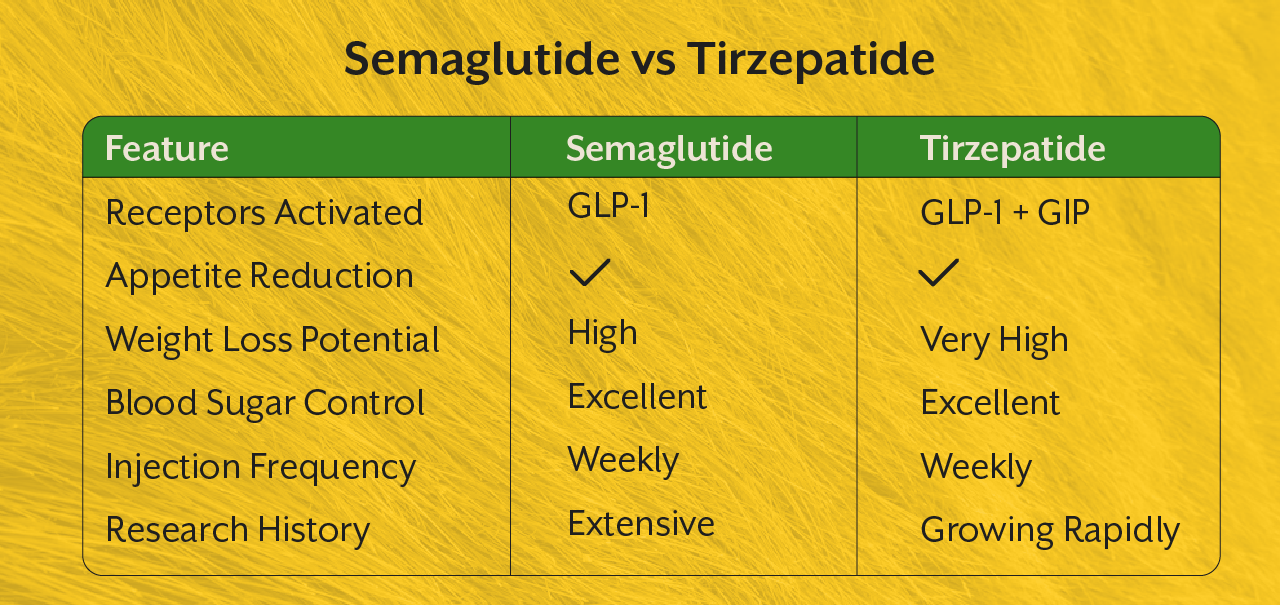
Semaglutide vs tirzepatide has been a hot topic in obesity medicine lately. Tirzepatide is different from semaglutide in that it binds to GLP-1 receptors and glucose-dependent insulinotropic polypeptide (GIP) receptors. GIP receptor agonism seems to increase weight-loss efficacy and metabolic benefits. Preliminary data show tirzepatide may:
- Produce greater average weight loss
- Improve insulin sensitivity further
- Offer stronger renal protection
- Potentially improve bone remodeling pathways
However, semaglutide remains one of the most thoroughly studied obesity medications currently available, particularly regarding long-term cardiovascular outcomes.
The choice between semaglutide vs tirzepatide ultimately depends on:
- Patient tolerance
- Cost and accessibility
- Physician recommendation
- Comorbid conditions
- Individual response to therapy
The Growing Demand for Semaglutide India
Semaglutide India news is beginning to bubble up as more and more people struggle with obesity and type 2 diabetes nationwide.
India’s metabolic disease burden is unique as South Asians tend to develop insulin resistance and visceral adiposity at lower BMIs than those in the west. Meaning that the risk for diabetes, heart disease, and metabolic syndrome affects many who are not “clinically obese.”
Coupled with rising awareness that prescriptions of Ozempic and Rybelsus are becoming more common sights in doctors offices and hospitals across India, you’ll begin to see why everyone is talking about semaglutide.
Affordability will be a struggle for many in the long run, as chronic therapy can be costly and many insurance companies do not cover obesity as a valid reason for treatment. Additionally, some worry about the drug being abused by patients taking it recreationally for cosmetic purposes with no official metabolic work up.
“The hope is that providers will prescribe semaglutide as part of metabolic management under their care instead of using it as a shortcut to weight loss without any medical supervision,” say doctors across India.
Key Takeaway
Semaglutide is without a doubt one of the most significant innovations in the field of obesity and metabolic medicine in the past few years. This treatment has sparked movement away from archaic ideas surrounding obesity treatment, such as “willpower drugs” and towards embracing what we know about physiology: metabolic disease and weight are regulated by complex biological systems.
Semaglutide does more than tell your brain you’re full. Beyond simply decreasing hunger, it enhances insulin sensitivity, fine-tunes the hormones and neuronal pathways involved in feeling full, decreases cardiometabolic risk, and consistently produces weight loss. In doing this, semaglutide targets biological factors that many patients cannot address with lifestyle changes alone.
However, semaglutide is not a magic bullet for obesity. While it has myriad benefits for metabolism, semaglutide does not directly counteract a sedentary lifestyle, stressful lifestyle, poor dieting habits, or an obesogenic environment. If patients take semaglutide without modifying their behavior, they will not see lasting results or improve their health in the long term.
Semaglutide should ideally be viewed as just that: a tool. A tool to be used in conjunction with lifestyle changes to empower patients to take control of their health and prevent metabolic disease.
If you want to know more about peptides, do read:-
https://www.ithrivein.com/blog/ghk-cu-peptide-benefits-dosage-side-effects-uses
https://www.ithrivein.com/blog/tirzepatide-for-weight-loss-and-diabetes
https://www.ithrivein.com/blog/retatrutide-weight-loss-mechanism

References
https://www.mdpi.com/1424-8247/18/3/399
https://www.ncbi.nlm.nih.gov/books/NBK603723/
https://www.nature.com/articles/s41591-024-02996-7
https://www.thelancet.com/journals/lancet/article/PIIS0140-6736(25)01375-3/fulltext
https://www.sciencedirect.com/science/article/pii/S0753332225009254
https://clinicaltrials.gov/study/NCT03548935



















.svg)