




Epitalon Peptide: Anti-Aging Benefits, Telomere Research & Uses
Peptide & Bioregulator
iThrive Team
Jul 15, 2026
Introduction
Imagine if your body had its very own anti-aging “reset button.” Well, researchers might have just found one. It is called Epitalon, a small peptide with some BIG effects. Scientists have been studying about this peptide for decades and have found it to have some profound effects on the aging process at a cellular level. From maintaining the length of telomeres to improving sleep and enhancing immunity, this miraculous peptide is becoming a huge topic in the world of longevity, but is still relatively unknown. In this blog, there is everything you need to know about Epitalon and its potential benefits.
What is Epitalon?
Epitalon (also known as Epithalon or Epithalone) is a tetrapeptide, which means it contains a sequence of four amino acids. These are Alanine, Glutamic acid, Aspartic acid, and Glycine. This peptide was synthesized on the basis of the amino acid sequence of Epithalamin, which is a bovine pineal gland extract. It is mainly involved in the activation of the enzyme telomerase, thereby lengthening telomeres and supporting cellular longevity and anti-aging. Epitalon is also found to be associated with enhancing sleep quality and maintaining hormonal balance.
What are Telomeres and why are they important?
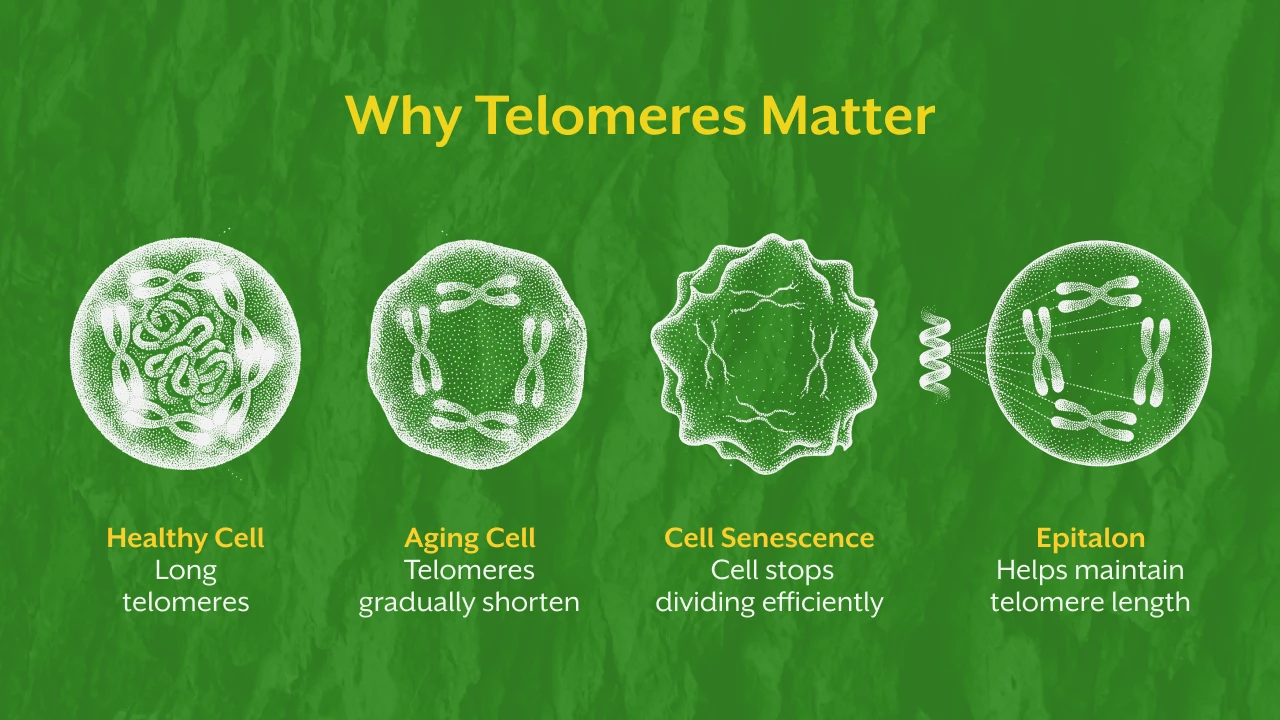
Every cell of our body contains DNA, which is the genetic material present in almost all organisms. Sitting at the end of each strand of DNA like a cap are what are known as telomeres. Telomeres prevent our DNA from unravelling and becoming damaged. The issue is that every time a cell replicates, the telomeres become slightly shorter. When they get too short, the cell can no longer replicate. It gets damaged, stops functioning, or dies. This is one of the fundamental reasons behind aging, disease and cellular decline. Epitalon may help stop or reverse this process. Studies have shown that this peptide activates the enzyme called telomerase, which is responsible for telomere length extension. The big deal with this is that with very few exceptions, nothing in the body can lengthen telomeres. They only shorten and wear away with time. Epitalon is one of the few compounds that may lengthen telomeres.
How does Epitalon work?
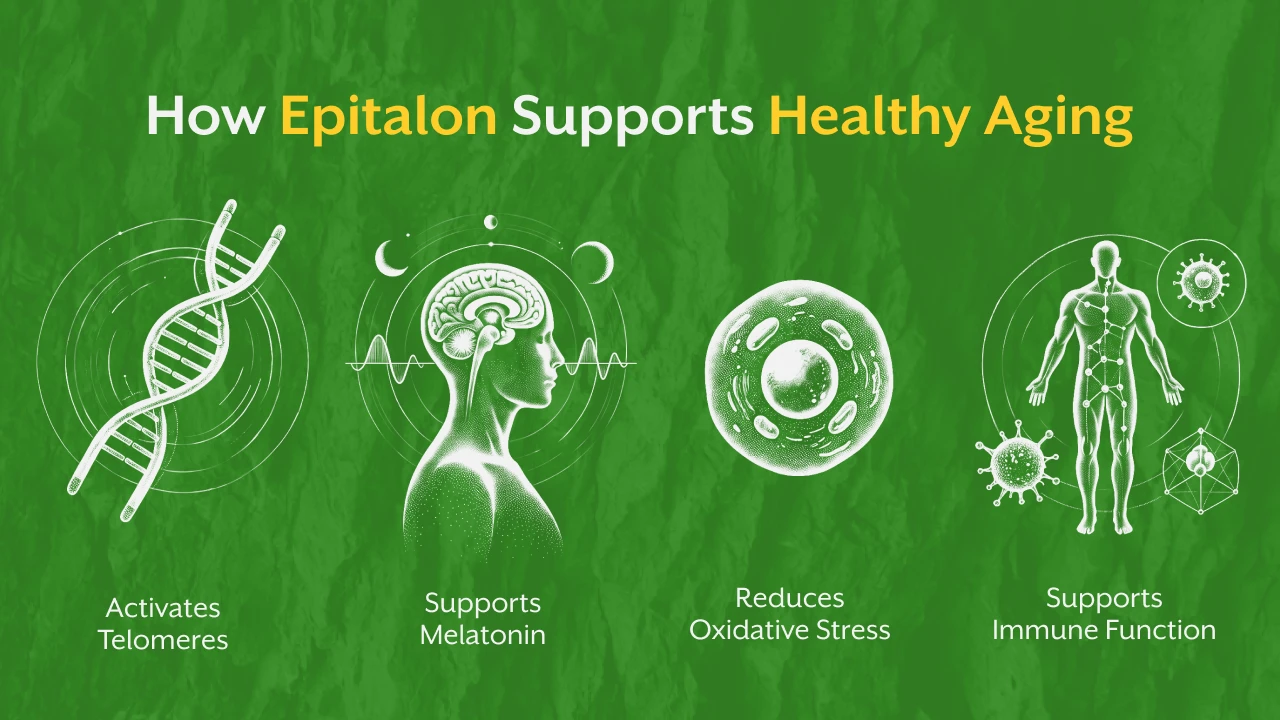
Epitalon works through several mechanisms. They include
Telomerase Activation
As discussed above, Epitalon has been shown to activate telomerase which lengthens telomeres. Telomeres allow our cells to divide and function healthily for longer periods of time due to which our organs perform better and age slower.
Regulation of Pineal Gland
Epitalon is involved in the regulation of the pineal gland and enhances the production of melatonin. Melatonin is the sleep hormone that our body produces naturally. Studies show that as we age, melatonin production declines, which can lead to poor sleep quality, hormonal imbalances, and decreased immunity. By aiding in the regulation of the pineal gland, Epitalon promises better sleep cycles and hormonal balance.
Reduction of Oxidative Stress
Oxidative stress is caused by free radicals present inside our body. It is an important factor involved in aging and disease. This peptide helps by increasing the antioxidant defences in the body, which combat oxidative damage.
Build Immunity
In animal studies, Epitalon has been shown to increase the activity of certain immune cells. A stronger immune system can help our body fight off infections and possibly reduce the risk of developing a disease as we age.
Benefits of Epitalon
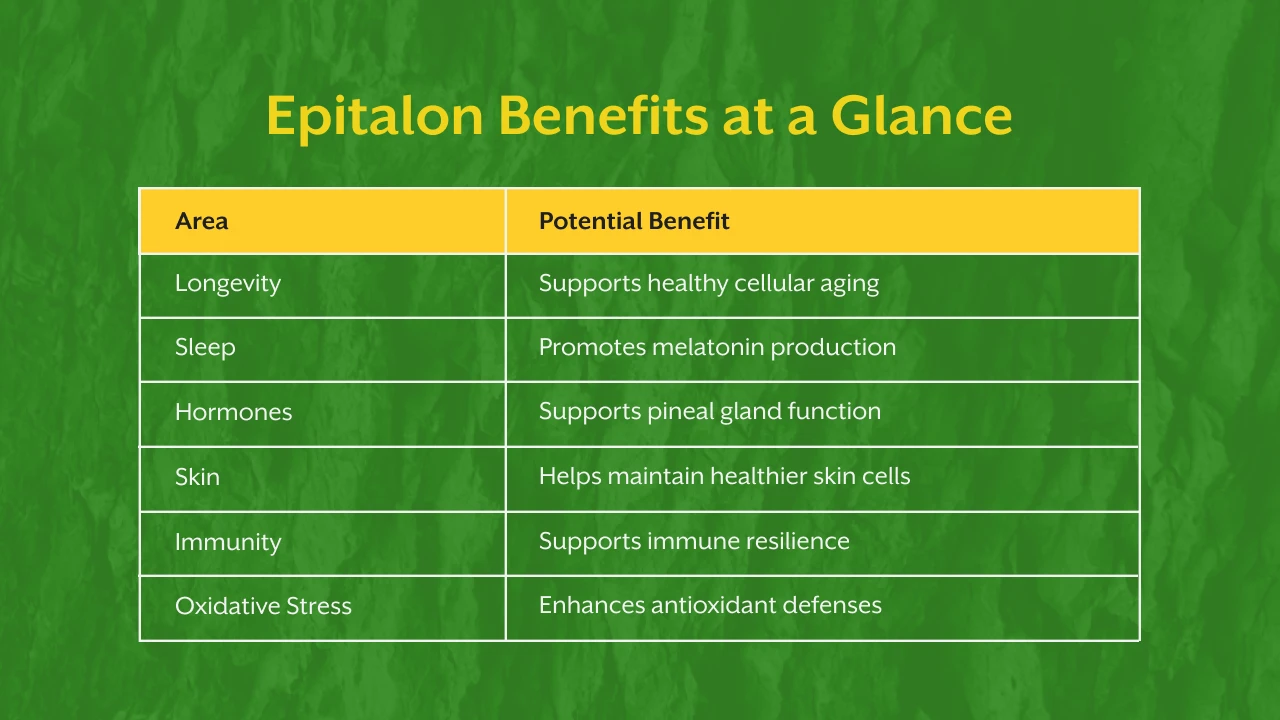
There are many benefits of Epitalon. Let’s examine some of the benefits people notice after using this peptide:
Delayed Cellular Senescence
Simply put, aging is delayed. By activating telomerase and lengthening telomeres, Epitalon may actually turn back the clock at the deepest cellular levels.
Improved Sleep
Better sleep quality was one of the first benefits noted by both users and researchers of Epitalon. Sleep is when our body repairs itself, when it balances hormones, and when it clears out toxins from our body. If we are not sleeping well, it does not matter what else we do, we will never feel our best.
Healthy Skin
Researchers have noticed that Epitalon users tend to have healthier skin. Skin cells are very susceptible to telomere shortening and oxidative stress.
Balanced Hormones
Not only does melatonin regulate sleep but the pineal gland is connected to just about every other hormonal process in our body. By supporting the pineal gland, we also restore healthy hormonal cycles. This can affect our mood, energy levels, and metabolism.
Potential Cancer-Protective Effects
In animal studies, Epitalon has been shown to reduce the incidence of certain tumors. However, human clinical trials are limited and hence, this peptide should not be regarded as a treatment for cancer.
Increase in Lifespan
Several animal studies have revealed that Epitalon-treated subjects lived significantly longer as compared to the controls. However, it is to be noted that the results in animal models may not be similar to the results in humans. These results, nonetheless, have generated interest in this peptide across all biological domains.
How is Epitalon given?
Epitalon is normally given as a subcutaneous or intramuscular injection, but sublingual forms and nasal sprays are also available. Since it comes as a freeze-dried powder, it must first be mixed and dissolved using bacteriostatic water before being loaded into a syringe. Epitalon is normally pulsed over a short period of time, usually no more than 10 days. This cycle is normally repeated only once every 6 months to allow the body to benefit from the cellular signaling without overstimulating the pineal gland.
Are there any side effects of Epitalon?
Based on available research, Epitalon appears to have a good safety profile with minimal side effects. Mild and temporary reactions like redness or discomfort at the site of injection have been reported. There are no documented major toxic effects at therapeutic doses in scientific literature. However, large-scale long-term human studies are limited; hence, the full safety picture is not yet complete. As with any potential intervention, take things slowly and talk to your functional nutritionist before starting.
Looking beyond longevity? Discover how the KLOW Peptide Blend combines multiple peptides to support tissue repair, gut health, inflammation, and recovery.
Key Takeaway
Epitalon is a peptide that addresses one of the most fundamental biological causes of aging. By targeting telomere length and the pineal gland specifically, researchers believe it could slow cellular aging, improve sleep and hormonal health, boost immunity, and potentially extend healthy lifespan. While the research is promising, more human studies are needed. This is a broad assessment of the scientific literature currently available. As more human clinical trials are conducted, we will have a better idea of Epitalon’s potential. For now, we can say with certainty that Epitalon is one of the most intriguing anti-aging peptides out there and it is severely underrated in most health circles.
If you are interested to learn whether Epitalon or any other longevity peptides are right for you, the first step is always the same- get to the root of your health with a comprehensive Root Cause Analysis with iThrive.
References
1. Araj, S. K., Brzezik, J., Mądra-Gackowska, K., & Szeleszczuk, Ł. (2025). Overview of Epitalon-Highly Bioactive Pineal Tetrapeptide with Promising Properties. International journal of molecular sciences, 26(6), 2691. https://doi.org/10.3390/ijms26062691
2. Al-dulaimi, S., Thomas, R., Matta, S. et al. (2025). Epitalon increases telomere length in human cell lines through telomerase upregulation or ALT activity. Biogerontology26, 178. https://doi.org/10.1007/s10522-025-10315-x
A
Ask your doubts
Thank you! Your submission has been received!
Oops! Something went wrong while submitting the form.
FAQs
Is Epitalon really an anti-aging peptide?
Epitalon is being studied for its ability to activate telomerase and support healthy telomeres, two important factors linked with cellular aging. While research is promising, larger human studies are still needed.
Can Epitalon improve sleep?
Yes. Epitalon may support the pineal gland and healthy melatonin production, which can improve sleep quality and circadian rhythm. Better sleep also plays an important role in recovery and healthy aging.
How is Epitalon different from other peptides?
Unlike many peptides that focus on healing or inflammation, Epitalon primarily targets cellular longevity and telomere health.
Should Epitalon be taken without understanding your health status?
No. Peptides work best when they’re matched to your individual biology. Book your Root Cause Analysis to understand whether longevity peptides like Epitalon fit into your personalized health plan.
Which other peptides are commonly paired with longevity strategies?
Many functional medicine practitioners also explore peptides like KPV for inflammation support and the KLOW Peptide Blend for tissue repair and recovery, depending on the individual’s health goals.
Related Blogs
read count
read time
Peptide & Bioregulator
Jul 13, 2026
LL-37: Your Body’s Built-In Antibiotic | How This Antimicrobial Peptide Fights Bacteria, Biofilms & Chronic Infections
LL-37 is one of your body’s most powerful natural antimicrobial peptides. Learn how it fights bacteria, disrupts biofilms, supports immune health, promotes wound healing, and why researchers see it as a promising tool against chronic infections.
Introduction
Every day, you wage war on the microscopic level. Bacteria, fungi, and viruses probe your skin, gut lining, and airways for any weakness, and your immune system fights back with an arsenal most people are not familiar with. One of its mightiest weapons is not something your doctor prescribes. Instead, it is a molecule your own cells produce. LL-37, a small antimicrobial peptide with many antibiotic properties built right in. With antibiotic resistance on the rise and chronic infections difficult to treat, researchers are studying what our bodies are already armed with, and LL-37 is proving to be much more intriguing than we ever realized.
What Is LL-37?
LL-37 is a cathelicidin, which is a host defense peptide found in all animals, ranging from frogs to fish to humans. In humans, LL-37 is the only cathelicidin produced by our bodies. It is 37 amino acids long, and the first two amino acids in the chain are leucine (L) residues. Hence, the name LL-37. LL-37 is generated from a much larger precursor protein known as hCAP-18 (human cationic antimicrobial protein, 18 kilodaltons). hCAP-18 is stored inside neutrophils, which are the first-responder white blood cells that travel to the sites of infection. Upon infection or invasion, enzymes break hCAP-18 down, releasing the active LL-37 peptide.
However, neutrophils are not the only cells that store LL-37. Epithelial cells, which make up the skin, lungs, intestinal lining, and urinary tract also generate LL-37. Additionally, macrophages, natural killer cells, and mast cells also produce LL-37. Basically, any place your body meets the outside world, LL-37 is there protecting you.
How Does LL-37 Kill Bacteria?
Here’s where it gets interesting. Antibiotics typically work by inhibiting a single function of bacteria (synthesizing cell walls, producing proteins, replicating DNA, etc.). LL-37 takes on a far more brutal approach. It physically destroys the bacterial membrane.
LL-37 has a net positive charge and an amphipathic structure, whereas the cell membranes of bacteria are negatively charged. Therefore, LL-37 gets tightly attached to bacteria, and the peptide inserts itself into the lipid bilayer and disrupts its structure, causing the membrane to leak essential ions and metabolites, leading to rapid cell death. This mechanism is remarkable for one critical reason- bacteria struggle to develop resistance to it. Evolving a fundamentally different membrane structure is enormously difficult; it would compromise too many essential bacterial functions. That is why researchers are interested in LL-37 as a blueprint for new antimicrobials, as antibiotic resistance has become a severe global threat. LL-37 is effective against a wide range of pathogens, including Staphylococcus aureus, Escherichia coli, Pseudomonas aeruginosa, Helicobacter pylori, and various fungi and enveloped viruses.
Biofilms are one of the most stubborn challenges for modern medicine to treat. They are communities of bacteria that surround themselves with a matrix of proteins, sugars, and DNA. Biofilms hate antibiotics. The matrix physically blocks drug penetration, and bacteria inside biofilms alter their metabolic state in ways that make standard antibiotics far less effective. Chronic wound infections, catheter-associated urinary tract infections, ear infections, and lung infections in cystic fibrosis patients are all biofilm-driven. Biofilms cause infections to become chronic and recur despite treatment. LL-37 has shown a remarkable ability to prevent biofilm formation and degrade existing biofilms. It interferes with the first steps of bacterial attachment to surfaces, and also breaks down the matrix that holds biofilms together. Research on Pseudomonas aeruginosa, a major biofilm-forming pathogen in cystic fibrosis, has shown that LL-37 at physiological concentrations can significantly reduce biofilm thickness and bacterial survival within. Most antibiotics cannot do that. If LL-37 pans out, it could change the way we treat these recalcitrant infections.
Role of LL-37 in Immune Signaling
LL-37 is a potent immunomodulator. LL-37 attracts immune cells to sites of infection, helps heal wounds, and modulates inflammation. It induces cytokine production and stimulates angiogenesis. In skin wounds, LL-37 promotes healing by encouraging keratinocyte migration and proliferation. This peptide also has antiviral properties. It disrupts viral infection of host cells and demonstrates activity against influenza, HIV, herpes simplex virus, and respiratory syncytial virus (RSV). Early in the COVID-19 pandemic, there was some speculation that LL-37 may be involved in altering the host response to SARS-CoV-2 as well, but data on this is still emerging. Most interestingly, LL-37 has anti-endotoxin activity. It binds and neutralizes lipopolysaccharide (LPS), a molecule found on gram-negative bacteria that can cause sepsis. During severe infections, it is often the immune system’s response to LPS that becomes fatal. LL-37 could help clean up LPS while mitigating downstream inflammatory effects.
When LL-37 Goes Wrong
As with any other potent peptide, LL-37 needs to be carefully balanced. Too little and you get infections. Too much and inflammation runs rampant. Deficiency of LL-37 in the body has been linked to susceptibility to infection. Atopic dermatitis (eczema) patients have been found to have significantly less LL-37 in their skin. This may help explain why people with eczema suffer from so many bacterial skin infections. Since vitamin D is a potent stimulator of LL-37 production, this may partially explain the links seen between vitamin D deficiency and increased risk of infections, especially respiratory infections. Too much of LL-37 has also been associated with inflammatory conditions. Psoriasis patients were found to have increased amounts of LL-37 in their skin lesions, and it appears to promote inflammation by activating plasmacytoid dendritic cells and inducing an autoimmune response-like process. Elevated levels have also been detected in patients with lupus, rosacea, and some forms of inflammatory bowel disease.The fact that LL-37 can be both anti-infectious and pro-inflammatory makes it a very interesting target for drug development.
Can You Boost Your LL-37?
Since LL-37 is so important, it is natural to wonder if there are practical ways to promote healthy levels of LL-37. A few more well-studied factors stand out. Vitamin D is the most potent stimulus for LL-37 production that we know of. Adding vitamin D to the diet of deficient individuals results in a significant increase in LL-37 in respiratory cells- one reason why vitamin D is thought to help protect against respiratory infections. Exercise has also been shown to increase the production of antimicrobial peptides including LL-37, likely through a combination of immune activation and improved circulation. Getting enough sleep and managing stress matter too. Chronic stress and lack of sleep are well recognized to suppress the immune system. This perhaps includes host defense peptides like LL-37 too. Butyrate is a short-chain fatty acid produced when certain gut bacteria ferment fiber. It has also been shown to induce LL-37 production by intestinal epithelial cells, adding one good reason to eat your veggies.
While supporting healthy vitamin D levels, gut health, sleep, and stress management may help maintain normal LL-37 production, persistent infections or recurring inflammation often have multiple underlying drivers. If you’re dealing with frequent infections, poor immunity, or chronic inflammatory symptoms, Book your Root Cause Analysis to understand what your body may actually be missing before turning to supplements or peptide therapies.
How is LL-37 peptide administered?
LL-37 peptide is administered subcutaneously, typically in the abdomen, thigh or upper arm. LL-37 comes as a lyophilized (freeze-dried) powder. It is reconstituted with bacteriostatic water before administration. The doses of this peptide range from 100-200 mcg. LL-37 is given 5 days a week with 2 days off for 4 weeks, followed by at least 2 weeks off.
Are there any side effects of LL-37 peptide?
LL-37 is generally considered safe when used for short-term cycles in low doses. The most common side effects of LL-37 peptide include redness, swelling, itching, and irritation at the site of injection. Long-term use or high doses of this peptide, however, have been shown to cause chronic skin inflammation and autoimmune reactions.
The Future: LL-37 as a Drug
Research is underway to develop therapeutics based on the properties of LL-37. However, there are certain challenges. LL-37 can be degraded by bacterial and host proteases, has demonstrated toxicity to host cells at high concentrations, and is costly to synthesize at scale. Synthetic analogs of the peptide, however, have demonstrated real potential in preclinical and early clinical studies. Topical formulations aimed at wound healing, inhaled versions for lung infections, and systemic treatments for sepsis are all being investigated. Antimicrobial peptides, LL-37 among the most well understood, are one of the most exciting frontiers for combating antibiotic resistance.
Key Takeaway
LL-37 is a reminder that the human body is not a passive host waiting for infections to be treated. It is an active and complex battlefield that has been fighting these wars for years. LL-37 neutralizes bacteria, disrupts biofilms, destroys viruses, recruits immune cells, heals wounds, and reduces harmful inflammation. Figuring out how to leverage what LL-37 can do for us could very well be one of the best investments we can make into our future health. In addition, learning more about LL-37 could help develop treatments that outsmart antibiotic resistance once and for all.
References
Yang, B., Good, D., Mosaiab, T., Liu, W., Ni, G., Kaur, J., Liu, X., Jessop, C., Yang, L., Fadhil, R., Yi, Z., & Wei, M. Q. (2020). Significance of LL-37 on Immunomodulation and Disease Outcome. BioMed research international, 2020, 8349712. https://doi.org/10.1155/2020/8349712
Voronko, O. E., Khotina, V. A., Kashirskikh, D. A., Lee, A. A., & Gasanov, V. A. o. (2025). Antimicrobial Peptides of the Cathelicidin Family: Focus on LL-37 and Its Modifications. International Journal of Molecular Sciences, 26(16), 8103. https://doi.org/10.3390/ijms26168103
read count
read time
Peptide & Bioregulator
Jun 29, 2026
KPV Peptide: Benefits, Mechanisms, Uses, Dosage, and Emerging Research
KPV peptide is gaining attention for its anti-inflammatory and immune-modulating properties. Learn how this small peptide may support gut health, skin conditions, wound healing, and overall immune balance, plus what current research reveals.
Introduction
Peptide therapeutics have exploded onto the scene within the past decade as people become more aware of bioactive molecules that occur naturally within the body and possess the ability to modulate human health in very specific ways. Peptides like KPV may represent one of these molecules. KPV peptide is a tripeptide, meaning that it’s composed of three amino acids which include lysine (K), proline (P), and valine (V).
If you’re unfamiliar with KPV, you’re likely to remain that way. Considered something of a wonder peptide by many functional medicine practitioners, KPV has recently gained attention for its powerful anti-inflammatory effects and potential immune-modulating benefits. Scientists are now exploring the therapeutic role it may play in conditions such as inflammatory bowel disease (IBD), skin disease, autoimmune disorders, wound healing, and bacterial and fungal infections.
While many medications aimed at treating chronic inflammatory disorders suppress the immune system, KPV is thought to regulate inflammation while maintaining normal immune function. Here, we’ll take a closer look at what KPV peptide is, how it works, its potential benefits, what science says, its safety profile, and its possible therapeutic uses.
What Is KPV Peptide?
KPV is a tripeptide that consists of three amino acids: lysine, proline, and valine. Although small and simple, this peptide has shown potent biological activity. It’s become a focus of recent studies looking into inflammation and immune-regulation.
KPV originates from alpha melanocyte-stimulating hormone (α-MSH), which itself comes from a precursor protein called proopiomelanocortin (POMC). α-MSH regulates pigmentation, energy homeostasis, immune regulation, and inflammation. Researchers found that α-MSH had potent anti-inflammatory actions. Many of these actions could be attributed to KPV, a small peptide sequence that’s part of the larger α-MSH peptide.
This finding was exciting, because smaller peptides like KPV often have significant benefits over larger proteins and peptides. Some of these potential benefits include:
Simpler synthesis and manufacturing
Improved stability in certain formulations
Lower production costs
Reduced likelihood of unwanted side effects
Easier incorporation into therapeutic products
Despite containing only three amino acids, KPV appears capable of reproducing many of the beneficial anti-inflammatory effects associated with its parent hormone.
How Does KPV Work?
This dual regulation of inflammation is one of the most interesting facets of KPV. Instead of operating via one inflammatory pathway, KPV seems to modulate multiple inflammatory elements.
1. Inhibition of Pro-Inflammatory Cytokines
Inflammation is primarily caused by cytokines, molecules that send signals to the immune system. Although cytokines are necessary for fighting infections, high levels of cytokines lead to chronic inflammation and resultant tissue injury. Studies have indicated that KPV may downregulate the production of various key inflammatory mediators, blunting the inflammatory response.
Some of the cytokines influenced by KPV include:
Tumor necrosis factor-alpha (TNF-α)
Interleukin-1 beta (IL-1β)
Interleukin-6 (IL-6)
Other pro-inflammatory signaling molecules
By limiting the release of these inflammatory compounds, KPV may help reduce tissue injury and support a healthier immune balance.
2. Modulation of NF-κB Signaling
NF-κB has been described as a master regulator of inflammation since it regulates the expression of multiple inflammatory genes. Chronic activation of this pathway can lead to inflammatory disease.
Research has suggested that KPV prevents NF-κB activation thus decreasing downstream inflammatory mediators. This plays a key role in chronic diseases where tissue damage occurs due to persistent NF-κB activity. .
3. Regulation of Immune Cell Activity
This is in contrast to most immunosuppressive drugs that suppress the immune system. KPV may actually serve as an immune modulator, balancing over-active immune response rather than totally suppressing it. Studies indicate that KPV affects various parts of the immune system such as:
Macrophage activity
Neutrophil recruitment
Cytokine secretion
T-cell responses
This balanced approach could potentially reduce harmful inflammation while preserving the body's ability to respond to infections and other threats.
4. Support of Tissue Repair
In addition to addressing inflammation, KPV also seems to promote repair and healing of tissues. Damage and inflammation can actually inhibit the body's normal healing response, sometimes causing longer lasting injury. Studies show that KPV may promote cellular repair while minimizing inflammatory damage. Addressing both inflammation and encouraging healing makes KPV unique in treating damaged tissue.
KPV and Inflammatory Bowel Disease
Of all the various conditions cannabis could potentially treat, inflammatory bowel disease has produced some of the most promising research. IBD is an umbrella term made of Crohn's disease and ulcerative colitis which are disorders that cause chronic inflammation in the GI tract.
Symptoms can include abdominal pain, diarrhea, rectal bleeding, fatigue, weight loss and malnutrition. There are treatments that help but can cause concern with chronic immune suppression.
Why KPV Shows Promise in IBD
Scientists have proposed multiple potential mechanisms of action by which KPV may confer health benefits to the intestines. Research indicates that KPV may decrease inflammation of the intestinal lining and also maintain intestinal barrier function.
Potential benefits observed in research include:
Reduced intestinal inflammation
Improved gut barrier function
Lower production of inflammatory cytokines
Enhanced mucosal healing
Reduced tissue injury within the digestive tract
Animal models have shown significant decreases in disease severity with KPV treatment. Since KPV seems to modulate inflammation rather than suppress overall immunity, it has the potential to serve as an alternative/additional treatment for IBD in the future.
KPV for Skin Health
The skin is highly vulnerable to inflammatory and immune-mediated disorders. Because KPV possesses both anti-inflammatory and antimicrobial properties, researchers have become increasingly interested in its potential dermatological applications.
Psoriasis
Psoriasis is an autoimmune disorder that involves over-activation of the immune system. Those affected by psoriasis experience unnecessary proliferation of skin cells. Chronic inflammation is common in psoriasis.
Anti-inflammatory properties of KPV may benefit those with psoriasis by:
Inhibiting pro-inflammatory cytokines
Modulating overactive immune responses
Assisting in skin repair/regeneration
May help decrease redness, flaking, and irritation.
Eczema (Atopic Dermatitis)
Eczema characteristics include chronic inflammation, itching, redness, and a compromised skin barrier. Those with eczema typically deal with frequent flare-ups.
Benefits of KPV that may apply to eczema:
Decreased inflammation
Faster healing of the skin
Less irritation and redness
Better barrier function
Since eczema involves both inflammation and tissue repair, KPV could target multiple characteristics of the condition.
Rosacea
Rosacea causes chronic facial redness, inflammation and vascular abnormalities. While its etiology is unknown, inflammatory processes are thought to be involved. Due to its anti-inflammatory effects, KPV may assist with reducing chronic skin inflammation and promoting overall healthier skin.
Acne
Acne is characterized by inflammation and bacterial involvement in the skin. Though research is still early, due to its dual anti-inflammatory and antimicrobial properties, KPV shows promise in acne treatment and skin healing.
Antimicrobial Properties of KPV
One interesting note about KPV is that researchers have looked at its potential activity as an antimicrobial agent. As well as helping modulate inflammation, there is some evidence that the peptide can have activity against certain microbes.
This activity has been shown against:
Some bacteria
Some fungi
If KPV does have antimicrobial properties, this would be excellent news. It would mean that it not only reduces inflammation but also may help keep microbial populations in check. Many diseases feature both inflammation and dysbiosis (overgrowth of bacteria or other microbes). Skin disease and inflammatory bowel disease are two examples.
Antimicrobial peptides typically don't kill bacteria like traditional antibiotics. Instead, they use different mechanisms of action which are part of the innate immune system. Due to this, some studies have looked at peptide therapies as possibly reducing the risk of antibiotic resistance.
We'll need more research to know for certain if KPV has antimicrobial properties and if so, whether they have any clinical significance.
KPV and Wound Healing
Inflammation plays a critical role in wound-healing. However, too much inflammation or prolonged inflammation can actually slow down the healing process and contribute to additional tissue injury. Since KPV modulates inflammation, scientists have studied its role in tissue healing. Animal studies indicate that KPV may enhance wound healing by limiting inflammation-associated injury and helping to establish an environment more conducive to healing.
Benefits that have been noted include:
Reduced inflammatory damage
Promotion of tissue regeneration
Support of cellular recovery
Acceleration of healing
Reduced scarring
For these reasons, topical KPV preparations are being studied for use on skin wounds, non-healing wounds, and as a treatment following medical procedures. While most of these studies are preliminary, they have shown promising results.
If you want to read more about peptides, read these articles:-
Potential Role in Autoimmune and Inflammatory Disease
The anti-inflammatory nature of KPV has prompted researchers to investigate its potential role in a variety of chronic inflammatory and autoimmune disorders. Because inflammation contributes to the progression of many diseases, therapies that can safely regulate immune activity are of significant interest.
Rheumatoid Arthritis
Rheumatoid arthritis (RA) is an autoimmune disease associated with chronic inflammation of joints as well as progressive tissue damage. KPV is thought to reduce inflammatory activity in joints as well as prevent collateral tissue damage from chronic inflammation.
Possible applications being studied:
Decreased joint inflammation
Reduction of inflammatory cytokines
Prevention of collateral tissue damage
Asthma
An asthma is a disease associated with chronic inflammation of the airways which causes breathing difficulties as well as hypersensitivity of the airways. Research is being done to see if KPV can modulate the immune system to decrease inflammatory activity in the lungs and airways.
Neuroinflammatory Disorders
Many diseases that affect the nervous system are now being linked to inflammation. Research is being conducted to see if KPV has neuroprotective effects by modulating inflammatory signaling in the nervous system.
KPV Peptide Dosage and Administration
Because KPV remains largely investigational, no universally accepted therapeutic dosage currently exists. Researchers continue to evaluate different delivery methods to determine the most effective ways to administer the peptide for various conditions.
Oral Administration
Due to KPV being mostly experimental there is no established therapeutic dosage. Various methods of delivery are being investigated for use with this peptide.
KPV Oral
Delivery of KPV orally is very enticing for gut health issues as you could potentially target the gut directly. There are specific formulations for oral use that allow for better stability and prevent degradation.
Objectives of oral formulations can include:
Better intestinal delivery
Localized intestinal anti-inflammatory action
Increased peptide stability
KPV Topical
Topical applications of KPV are being researched for many conditions. When applied topically you can target the affected area for anti-inflammatory effects and systemic absorption.
Areas of study include but are not limited to:
Psoriasis
Eczema
Rosacea
Wound healing
KPV Injectables
Injectable would also fall under systemic uses for KPV. The main difference between an oral dosage and an injection is bioavailability. Injecting peptides into the body can be preferred over oral consumption as it bypasses the chances of it being broken down inside the gut. This means your body can better absorb the peptide you are taking.
Injectable Forms
Injectable delivery is also common for KPV when someone wants it delivered systemically. Injecting peptides rather than taking them orally is often preferred due to the possibility of them being degraded by the digestive system. This allows for better absorption and bioavailability that is more consistent.
KPV is typically shipped to you as a freeze-dried powder. You will need to draw up bacteriostatic water and reconstitute the peptide prior to injecting. The most common diluent that researchers and clinics will use is bacteriostatic water. This water typically contains a very low concentration of benzyl alcohol. Bacteriostatic water can be used for multiple draws from the same vial as long as sterile technique is followed.
There are several benefits to using bacteriostatic water. First, the benzyl alcohol aids in keeping the solution sterile after reconstitution. Second, it allows for exact dosing by allowing more precise dilutions of the peptide powder. Finally, it is much more convenient if you will be using the entire vial multiple times. The amount of bacteriostatic water added will determine the final concentration of your KPV.
Things to remember when using bacteriostatic water:
Practice sterile technique when reconstituting
Store in fridge when needed
Avoid extreme heat and direct sunlight
Follow any manufacturer/research specific directions for preparation
Calculate dose amounts using the final concentration of peptide.
Safety and Side Effects
This is one of several reasons why KPV has garnered much interest lately. Scientists think KPV has the potential to be tolerated well by most patients due to its safety profile discovered in preliminary testing. KPV is based on a sequence that is found in a human peptide hormone.
Some possible benefits that have been noted in the early studies include:
Possible reduced toxicity
Possible minimal systemic immunosuppression
Site specific activity
May be associated with less severe side effects
Of course, there is still a lack of human clinical evidence. It is important to remember that this is a new peptide sequence and like any other new drug candidate, further testing is needed to determine its safety.
Some of the questions that still need to be addressed include:
Long term toxicity
Correct dosing
Drug interactions
Patient variations
Use during pregnancy and breast-feeding
Until more substantial clinical trials have been performed we can not say for certain.
Current Research and Future Directions
KPV continues to generate interest in the biomedical community as scientists work to better understand how it works and how it might be used therapeutically. One area of particular interest is its applications in precision medicine, as it regulates inflammation without necessarily suppressing the immune system wholesale.
Potential applications of KPV in Precision Medicine
A large focus of modern drug development is creating therapeutics that precisely affect only the pathways involved in disease pathology with as few negative side effects as possible. KPV is attractive to researchers because it seems to target important inflammatory pathways without producing the broad immune suppression observed with many drugs.
Exploring combination therapies with KPV
Combining KPV with other drugs to help boost efficacy is another avenue of research. If successful, this could allow for decreased doses of traditional drugs and fewer side effects.
Improved drug delivery methods
Improved drug delivery mechanisms may also increase the potency of KPV and allow it to better resist degradation. Many potential methods are being researched:
Nanoparticle delivery
Liposomal drug delivery
Targeted drug delivery to the intestines
Controlled-release capsules
Expanding Therapeutic Applications
In addition to current indications being investigated, with advances in our knowledge of inflammatory processes, researchers are exploring other potential therapeutic uses for KPV. These may include:
Diabetes
Inflammation related to heart disease
Fibromyalgia
Parkinson's disease
Postsurgical inflammation
Ongoing research may unlock other potential uses for KPV.
Key Takeaway
The KPV peptide is among the most exciting peptide molecules yet to enter the spotlight. Derived from the anti-inflammatory hormone α-MSH, KPV has only three amino acids, yet appears to pack quite a punch biologically speaking. Evidence is mounting that KPV is strongly anti-inflammatory, immune-modulating, wound healing, and antimicrobial. If these claims pan out (and they seem to be doing so), we may be looking at a very versatile therapeutic peptide that can be used to treat diseases like inflammatory bowel disease, skin diseases, arthritis, asthma, and a variety of other inflammatory illnesses.
Data from preclinical studies is promising but more human trials will need to be conducted to determine the full extent of KPV's abilities, as well as its safety and dosing parameters. But if future studies continue to show that KPV can help dial up or down the body's inflammatory responses without significantly weakening our defenses, we may one day see it engineered into a drug.
KPV:
read count
read time
Peptide & Bioregulator
Jun 23, 2026
KLOW Peptide Blend | Benefits, Dosage & What the GHK-Cu + BPC-157 + TB-500 + KPV Stack Actually Does
The KLOW peptide blend combines four widely discussed peptides, GHK-Cu, BPC-157, TB-500, and KPV. Learn how this stack may support tissue repair, gut health, inflammation regulation, recovery, and overall resilience.
Introduction
You might have likely heard the buzzword “peptides” tossed around recently in the wellness and biohacking communities. Some swear by them. Some have no idea what they are, questioning their safety, and wondering if they are even necessary. Here is the truth.
Peptides are not a fad. Your body recognizes peptides as signals and can act on them. When combined correctly, the synergistic effects can create some truly extraordinary outcomes. The KLOW peptide blend is one of those combinations. It contains four of the most researched peptides- GHK-Cu, BPC-157, TB-500, and KPV. Combined into one targeted stack, these peptides work to promote healing, decrease inflammation, and restore your body on a cellular level. But how does that translate to you? In this blog, we will cover what each peptide can do for you, why they work so well together, who can truly benefit, and what you need to know before trying them out.
Peptides Explained. Why do they work?
Peptides are short chains of amino acids. Amino acids are the building blocks of proteins. The difference is that peptides are smaller, more targeted, and act as messenger molecules that communicate with certain cells/tissues and tell them what to do. Your body already produces hundreds of peptides. Insulin is a peptide. Many growth signals, immune signals, and tissue repair signals are peptides too. The issue is that when we age, get injured, live under stress, or have inflammation, the body’s natural peptide signals get diminished. It starts making less of what the body needs to recover from damage or stress. As a result, things just don’t bounce back like they used to. Injuries don’t heal like they should. Inflammation remains for too long. That’s why we use therapeutic peptides. They help mimic or boost these signals that the body is familiar with. They send your biology a clear, concise signal telling it what to do.
What is KLOW peptide blend
KLOW peptide blend combines four individually researched peptides in one stack that has been shown to work synergistically with maximum potency. The four peptides in the KLOW peptide blend are:
• GHK-Cu (Copper Peptide)
• BPC-157 (Body Protection Compound 157)
• TB-500 (Thymosin Beta-4)
• KPV (Lysine-Proline-Valine)
Each targets different and overlapping pathways of repair and recovery. Together, they work to create a compounded benefit far beyond any one individual peptide. Let’s take a closer look at each peptide.
GHK-Cu: The Master Regeneration Molecule
GHK-Cu or glycyl-l-histidyl-l-lysine bound to copper is a copper peptide which occurs naturally in our bodies. Specifically, it is found in blood plasma, saliva and urine. Unfortunately, its concentration drops as we age. Some of its functions are:
(a) Collagen synthesis and tissue repair: GHK-Cu helps with skin health, wound healing, and connective tissue repair because it activates fibroblasts (cells which produce collagen/elastin). Not only will it help prevent collagen breakdown, but it can also help stimulate new collagen production.
(b) Antioxidant and anti-inflammatory activity: GHK-Cu helps mitigate oxidative stress and has been demonstrated to downregulate the expression of genes involved in inflammation. Basically, it helps many biological processes that become overactive while in a state of chronic inflammation return to normal.
(c) DNA repair and gene expression: GHK-Cu can influence the expression of over 4,000 human genes. Studies have shown that it helps reverse the expression of genes associated with aging and disease back to normal levels.
(d)Cognitive function: Preliminary studies indicate GHK-Cu may help protect neurons and promote cognitive function, but more research (specifically in humans) is needed. If you suffer from any condition involving slow tissue repair, joint degeneration, skin aging or chronic inflammation, GHK-Cu is one of the building blocks you will want to include in your regimen.
BPC-157 or Body Protection Compound 157 is a synthetic peptide engineered from a protein that is found naturally in gastric juice. If BPC-157 has built such an incredible reputation in sports medicine, functional medicine, and gastroenterology research circles, it is for very good reasons.
(a)Speeds up tissue repair: A ton of research shows BPC-157 can accelerate healing in tendons, ligaments, muscles, and bone. So if you are recovering from an injury, BPC-157 can help.
(b) Helps heal & repair the gut: BPC-157 works very well at healing and repairing the intestinal lining, reducing gut inflammation and has also been shown to help with leaky gut syndrome, IBD, and gastric ulcers.
(c)Promotes angiogenesis: BPC-157 promotes new blood vessel formation, which is important for improving blood circulation to damaged tissue and faster healing.
(d) Neuroprotective: Some studies on BPC-157 revolve around nerve support and protection. BPC-157 has shown promise in helping protect dopamine and serotonin receptors and recovery benefits from certain neurological traumas.
(e) Anti-inflammatory action: Like GHK-Cu, BPC-157 has also shown to promote anti-inflammatory response throughout the body.
Here at iThrive, we have learned the hard way that if your gut is not healthy, nothing else will be. While BPC-157 works wonders for repairing damage throughout the body, its special affinity for gut healing really puts it on another level.
TB-500 stands for Thymosin Beta-4. It is essentially the synthetic form of what is naturally produced by nearly every cell in your body. TB-500 functions almost exclusively around actin, which is the protein responsible for allowing cells to move and migrate.
Think about how your cells move when you get a cut. They literally have to travel to the site of the injury in order to start healing it. TB-500 accelerates this process. Some of the benefits of TB-500 are:
(a) Repairing & Recovering Muscles: TB-500 helps regenerate muscle fibres and speed up recovery time from muscular injury or damage. This tends to be where athletes and physical rehabilitation patients see the most drastic results from TB-500.
(b) Increasing Flexibility: Decreasing tension in connective tissue and increasing range of motion in the joints is another unique effect of TB-500. If you suffer from chronic stiffness or lack of movement in your joints you will likely benefit.
(c) Heart Tissue Repair: Studies have shown that TB-500 helps heal heart tissue damage and stimulate new blood vessel formation after a heart attack. Research on humans is still underway, but the results so far are promising.
(d) Anti-Fibrotic: As mentioned above, TB-500 helps our cells migrate to areas that need to be repaired. If tissue becomes scarred, it is known as fibrosis. TB-500 has been shown to help prevent fibrosis in patients with chronic inflammatory conditions in the lungs, liver, or kidneys.
(e) Immunomodulation: Given its origin in thymus-related biology, TB-500 can help modulate immune responses. TB-500 can be very useful for autoimmune conditions too.
Combining TB-500 with BPC-157 supports tissue migration and blood vessel formation, but through different pathways and mechanisms.
KPV: The Inflammation Extinguisher
KPV is a tripeptide made of three amino acids- Lysine, Proline, and Valine. It is derived from the α-melanocyte-stimulating hormone (α-MSH) molecule, which is involved in orchestrating the body’s own internal anti-inflammatory mechanism.Although the smallest peptide in this entire stack, don’t let its size fool you. KPV extinguishes inflammation. Some benefits of using KPV are:
(a)Drives powerful anti-inflammatory signalling: KPV directly inhibits pro-inflammatory cytokines. Cytokines are chemicals your body produces to turn on inflammation. When your body produces too many cytokines you end up with chronic inflammatory diseases. KPV puts the literal brakes on this inflammatory response.
(b)Promotes gut and intestinal health: Beneficial effects for inflammatory bowel diseases have been shown with KPV. It readily passes through the gut mucosal barrier and provides localized anti-inflammatory benefits to intestinal tissue.
(c)Anti-inflammatory and wound healing properties: KPV reduces inflammation of the skin and even promotes wound closure. This makes it relevant for inflammation-induced conditions, including eczema, psoriasis, and acne.
(d) Modulates the immune system: KPV can modulate immune cell activity and T-cell responses. Regulating immune cells can be helpful for autoimmune diseases, where the body is mounting an inflammatory response against its own tissues.
KPV is the missing puzzle piece to the KLOW stack. By countering the inflammatory signalling environment, KPV allows GHK-Cu, BPC-157, and TB-500 to do their jobs uninhibitedly.
Why Does This Stack Work So Well Together?
Each peptide works on a separate phase of the healing cascade.
• GHK-Cu resets the genetic and cellular environment for repair
• BPC-157 promotes structural tissue regeneration, especially in the gut and musculoskeletal system
• TB-500 helps in guiding cells directly to injury sites and improves circulation and flexibility
• KPV inhibits the inflammatory signalling cascades that would otherwise delay healing
Individually, these peptides have profound effects. Together, they create a synergistic biological response that optimizes healing from all angles.
Who is the KLOW peptide blend Relevant For?
Here are some conditions based on current literature and clinical practice where this stack may be beneficial:
• Slow healing from injury or surgery
• Chronic joint pain, tendinopathy, or musculoskeletal damage
• Gastrointestinal conditions such as leaky gut, IBD, or mucosal irritation
• Unexplained chronic inflammation
• Inflammatory autoimmune diseases
• Inflammatory skin conditions
• Generalized cell aging and tissue degeneration
• Systemic immune dysregulation
It is to be noted that peptide therapy is not a foundation builder. Proper diet, sleep, stress management, and mineral balancing, all must be addressed when implementing any type of peptide protocol.
How is KLOW peptide blend administered?
KLOW peptide blend is administered by injection through either of the two routes- subcutaneous or (preferably) intramuscular, with the upper arm, thigh or abdomen being the common injection sites. It is supplied as a powder which is reconstituted with bacteriostatic water prior to administration. KLOW is usually started at a low dose and increased gradually during the first week or two. It is given daily (or less often for maintenance) for 4-8 weeks.
What are the side effects of KLOW peptide blend?
The most commonly observed side effects include mild injection-site irritation and nausea, which subside within the first week or two, especially at lower doses. It is recommended to avoid this peptide stack if one has or had cancer, because two of its ingredients promote blood vessel formation. It is also generally advised against people having Wilson's disease or any other health issue affecting copper metabolism, because of the presence of copper-binding peptide in this formulation. Even pregnant or nursing women must avoid it, as there is no safety data for this group. Additionally, four peptides constituting KLOW have not been studied altogether in human clinical trials, therefore the side effects caused by this peptide is not well-documented and hence, research on the individual peptides and anecdotal reports from users are relied upon to know their respective side effects. Based on available data, no major side effects or safety issues are currently reported; however, there is no long-term data.
Key Takeway
The KLOW peptide blend is one of the well-designed peptide stacks out there. GHK-Cu, BPC-157, TB-500, and KPV are four individual peptides of this stack, each having well-studied, unique mechanisms of action. Combined, they create an optimal healing milieu where tissue repair, inflammation resolution, gut healing, cell growth, and immune regulation can all occur at once.
If you are someone who feels like your body is not healing how it used to, healing takes forever, or if low-grade inflammation is your new normal, you need to look into this peptide stack.
Peptides are tools. Game-changing tools. But tools nonetheless. They are most effective when utilized by someone who knows what they are doing and has a plan behind what they are doing.
If you would like to see if KLOW is a good fit for you and your unique situation, schedule a root cause analysis consultation with us. We can help you determine what your body truly needs and work to build you a protocol that fixes your biology from the inside out.
References
Pickart, L., & Margolina, A. (2018). Regenerative and Protective Actions of the GHK-Cu Peptide in the Light of the New Gene Data. International journal of molecular sciences, 19(7), 1987. https://doi.org/10.3390/ijms19071987
Chang, C. H., Tsai, W. C., Hsu, Y. H., & Pang, J. H. (2014). Pentadecapeptide BPC 157 enhances the growth hormone receptor expression in tendon fibroblasts. Molecules (Basel, Switzerland), 19(11), 19066–19077. https://doi.org/10.3390/molecules191119066
Ou, H., Chen, R., Zhou, L., Zhang, Y., Zhao, S., & Yang, Z. (2026). Thymosin β4-derived peptides alleviate neuroinflammation and neurite atrophy in both in vitro models and in vivo 5 × FAD mice: A potential therapy for memory improvement in Alzheimer's disease. International immunopharmacology, 170, 116097. https://doi.org/10.1016/j.intimp.2025.116097
Land S. C. (2012). Inhibition of cellular and systemic inflammation cues in human bronchial epithelial cells by melanocortin-related peptides: mechanism of KPV action and a role for MC3R agonists. International journal of physiology, pathophysiology and pharmacology, 4(2), 59–73. https://pmc.ncbi.nlm.nih.gov/articles/PMC3403564
Star Your Root Cause Analysis
Includes home blood sample collection, 1-hour expert consultation, and a next-step protocol.