


.svg)
.svg)







Introduction
Many people believe poor sleep happens suddenly. One week you sleep well and the next week insomnia appears out of nowhere. In reality, sleep deprivation usually develops slowly through lifestyle habits that quietly disrupt the biological systems responsible for deep restorative sleep.
Sleep quality is not controlled by one single organ or hormone. It is the result of a complex interaction between circadian rhythm, brain chemistry, metabolic health, stress regulation, and cellular energy production. At the center of these processes lies mitochondrial function. Mitochondria produce the cellular energy required for neurological signaling, hormone balance, and tissue repair during sleep.
When lifestyle habits disrupt mitochondrial function, the body gradually loses its ability to regulate sleep cycles effectively. Over time this can lead to insomnia, fragmented sleep, chronic fatigue, and even metabolic disorders.
Many individuals searching for insomnia natural remedies focus only on supplements or quick fixes. While magnesium for sleep or L theanine sleep supplements can support relaxation, long term sleep quality depends heavily on everyday habits.
At iThrive Alive we often observe that sleep deprivation effects are rarely isolated problems. They are usually the result of metabolic imbalance, circadian disruption, and chronic stress patterns that develop silently over time.
Understanding the habits that affect sleep is the first step toward restoring healthy sleep hygiene and learning how to sleep better naturally.
The Biology Behind Healthy Sleep
Why Sleep Quality Depends on Cellular Energy
Sleep may appear passive, but the body performs intense biological work while we sleep. The brain detoxifies metabolic waste, tissues repair microscopic damage, and hormones regulating metabolism and immunity are released.
All these processes require cellular energy.
Mitochondria supply the ATP needed for neuronal signaling that maintains stable sleep cycles. When mitochondrial function becomes impaired, the brain may struggle to regulate sleep stages effectively.
Research on mitochondrial dysfunction and sleep deprivation has shown that reduced cellular energy can disrupt circadian signaling pathways in the brain. This leads to fragmented sleep patterns and reduced deep sleep.
For readers interested in the scientific mechanisms behind this connection, the white paper titled Mitochondrial Dysfunction Sleep Deprivation Sleep Disorders explores how mitochondrial stress influences sleep architecture.

10 Lifestyle Habits That Quietly Damage Sleep Quality
Habit 1: Excessive Screen Exposure at Night
Blue Light and Circadian Disruption
Blue light and sleep disruption is one of the most widely studied causes of poor sleep. Digital screens emit wavelengths that suppress melatonin production. Melatonin signals the brain that it is time to sleep.
When screen time extends late into the evening, circadian rhythm becomes delayed. The brain receives signals that mimic daylight even when the body should be preparing for sleep.
Cellular Consequences
Prolonged circadian disruption can alter mitochondrial gene expression and reduce cellular energy production in brain cells.
Habit 2: Chronic Psychological Stress
Stress and Sleep Quality
Stress activates the hypothalamic pituitary adrenal axis and increases cortisol levels. Cortisol prepares the body for alertness rather than sleep.
When cortisol remains elevated at night, the brain struggles to transition into deep sleep stages.
Mitochondrial Impact
Chronic stress increases oxidative stress within mitochondria, impairing cellular energy production needed for sleep repair processes.
Habit 3: Irregular Sleep Timing
Circadian rhythm functions like a biological clock that coordinates hormone release and metabolic activity.
When sleep timing changes frequently, the brain loses synchronization with environmental light signals. This confusion affects sleep hygiene and reduces sleep quality.
Habit 4: Excessive Late Night Caffeine
Caffeine blocks adenosine receptors in the brain. Adenosine accumulates during the day and signals sleep pressure at night.
When caffeine remains in the bloodstream during evening hours, the brain cannot recognize fatigue signals.
Habit 5: Poor Nutrient Intake
Certain nutrients support neurotransmitter production and relaxation pathways.
Magnesium for sleep plays a role in regulating the nervous system. Deficiency can lead to restless sleep patterns.
Similarly L theanine sleep supplements may help support calm brain activity.
However nutrients alone cannot compensate for damaging lifestyle habits.
Habit 6: Late Heavy Meals
Digestion requires metabolic energy and increases body temperature. When large meals are consumed late at night the body remains metabolically active during hours meant for recovery.
Habit 7: Lack of Morning Sunlight
Morning sunlight is essential for circadian rhythm alignment. Light exposure early in the day signals the brain to begin the biological day cycle.
Without this signal, sleep timing becomes delayed.
Habit 8: Sedentary Lifestyle
Physical movement supports mitochondrial biogenesis. When daily activity levels remain low, cellular energy systems weaken.
Lower mitochondrial capacity may contribute to fatigue and poor sleep quality.
Habit 9: Alcohol Before Bed
Alcohol initially induces sleepiness but disrupts REM sleep cycles later in the night. This results in fragmented sleep and reduced recovery.
Habit 10: Ignoring Underlying Metabolic Health
Sleep disorders are often symptoms of deeper metabolic disturbances. Insulin resistance, inflammation, and mitochondrial dysfunction frequently appear in individuals with chronic sleep problems.
The case study titled Functional Nutrition Obesity Hypertension Sleep Apnea Case Study highlights how metabolic dysfunction can influence sleep apnea and overall sleep quality.
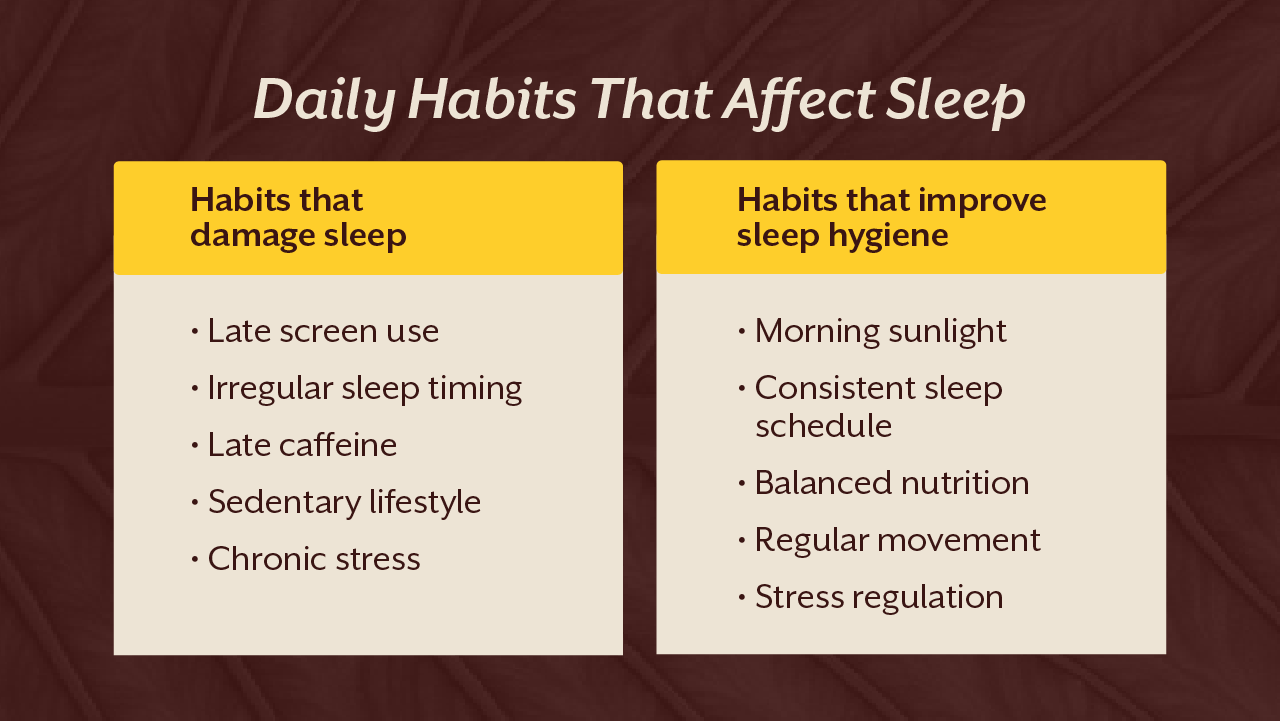
A Functional Nutrition Approach to Better Sleep
While identifying habits that affect sleep is important, long term improvement in sleep quality requires a structured biological approach. Sleep is influenced by circadian rhythm signaling, metabolic stability, nervous system balance, and cellular energy production. When these systems are supported simultaneously, the body can naturally restore healthy sleep patterns.
A functional nutrition approach does not focus only on managing insomnia symptoms. Instead, it works to correct the underlying drivers of poor sleep such as metabolic stress, circadian disruption, and mitochondrial dysfunction. At iThrive Alive, improving sleep hygiene often begins by stabilizing daily lifestyle patterns, supporting metabolic health through smart eating, and providing targeted nutrients that assist cellular energy and nervous system regulation.
This approach can be understood in three interconnected steps:
Lifestyle alignment
Consistent sleep timing, exposure to morning sunlight, and stress regulation help reset the circadian rhythm that controls melatonin release and sleep cycles.
Smart nutrition
Whole food based eating patterns that stabilize blood sugar and reduce inflammation support the metabolic environment required for deep restorative sleep.
Targeted supplementation
Nutrients such as magnesium, L theanine, and mitochondrial support compounds may assist relaxation pathways, neurotransmitter balance, and cellular energy production.

Key Takeaway
Poor sleep rarely appears suddenly. It develops gradually through everyday habits that disturb circadian rhythm, stress regulation, and mitochondrial energy production. Modern lifestyle patterns such as excessive screen exposure, irregular sleep timing, chronic stress, and nutrient deficiencies silently disrupt the biological systems responsible for restorative sleep. Addressing these factors requires more than temporary insomnia remedies. A comprehensive approach that combines lifestyle alignment, smart nutrition, and targeted supplementation can restore sleep hygiene and support mitochondrial health. By understanding how daily habits influence sleep biology, individuals can begin to rebuild the natural rhythms that allow the body to experience deep restorative sleep again.









.webp)








.svg)