


.svg)
.svg)







Introduction
Most people think of snoring as a harmless nuisance. A noisy sleep habit that disturbs partners but rarely raises serious medical concern. In reality, persistent snoring can be a warning sign of deeper metabolic dysfunction taking place inside the body.
Behind the vibration of airway tissues during sleep lies a complex biological story involving energy metabolism, inflammation, hormonal imbalance, and mitochondrial stress. In many individuals, snoring is not just about the throat or airway. It reflects systemic disturbances that affect how the body produces energy, regulates blood sugar, and responds to stress.
Conditions such as obstructive sleep apnea have traditionally been approached from a mechanical perspective. Treatments often focus on airway devices or breathing support during sleep. While these approaches are important, they rarely address why the body develops this condition in the first place.
Emerging research suggests that mitochondrial dysfunction plays a central role in sleep disorders including obstructive sleep apnea. Mitochondria are the energy producing structures within our cells. When they become stressed or inefficient, the consequences ripple through metabolic pathways, inflammatory responses, and even sleep regulation in the brain.
At iThrive Alive, we approach sleep disorders through a root cause lens. Rather than treating snoring as an isolated symptom, we explore the metabolic drivers that may be quietly shaping sleep quality. Understanding these drivers can transform how we view chronic snoring and open the door to more sustainable solutions.
Why Snoring Is More Than an Airway Problem
Snoring occurs when airflow through the upper airway becomes partially obstructed during sleep. Soft tissues in the throat vibrate as air passes through, producing the familiar sound. However, the narrowing of the airway rarely happens in isolation.
In many individuals, metabolic factors play a decisive role. Excess fat deposition around the neck and airway is one of the most obvious contributors. Yet deeper physiological disturbances often exist beneath this surface level explanation.
Hormonal regulation during sleep plays a key role in maintaining airway stability. Hormones such as leptin, ghrelin, and cortisol influence appetite, fat storage, and breathing patterns. When sleep becomes fragmented due to snoring or apnea events, these hormonal rhythms become disrupted. The result is a cycle in which metabolic dysfunction worsens sleep and poor sleep further aggravates metabolic stress.
Inflammation is another major driver. Chronic low grade inflammation can lead to swelling and fluid retention in airway tissues, increasing the likelihood of obstruction during sleep. Inflammatory cytokines circulating in the body also affect neurological signals that regulate breathing.
Perhaps the most overlooked factor is cellular energy metabolism. Neurons controlling breathing require substantial energy to maintain stable respiratory rhythms during sleep. When mitochondrial function becomes compromised, these neurons may struggle to maintain consistent signaling patterns.
This is why snoring often appears alongside metabolic conditions such as obesity, insulin resistance, hypertension, and fatty liver disease. The airway symptom may simply be the visible expression of deeper systemic imbalance.
The Hidden Role of Mitochondria in Sleep Apnea
Mitochondria are often described as the powerhouses of the cell, but their role extends far beyond energy production. They regulate oxidative balance, cellular signaling, inflammation, and metabolic coordination across multiple organs.
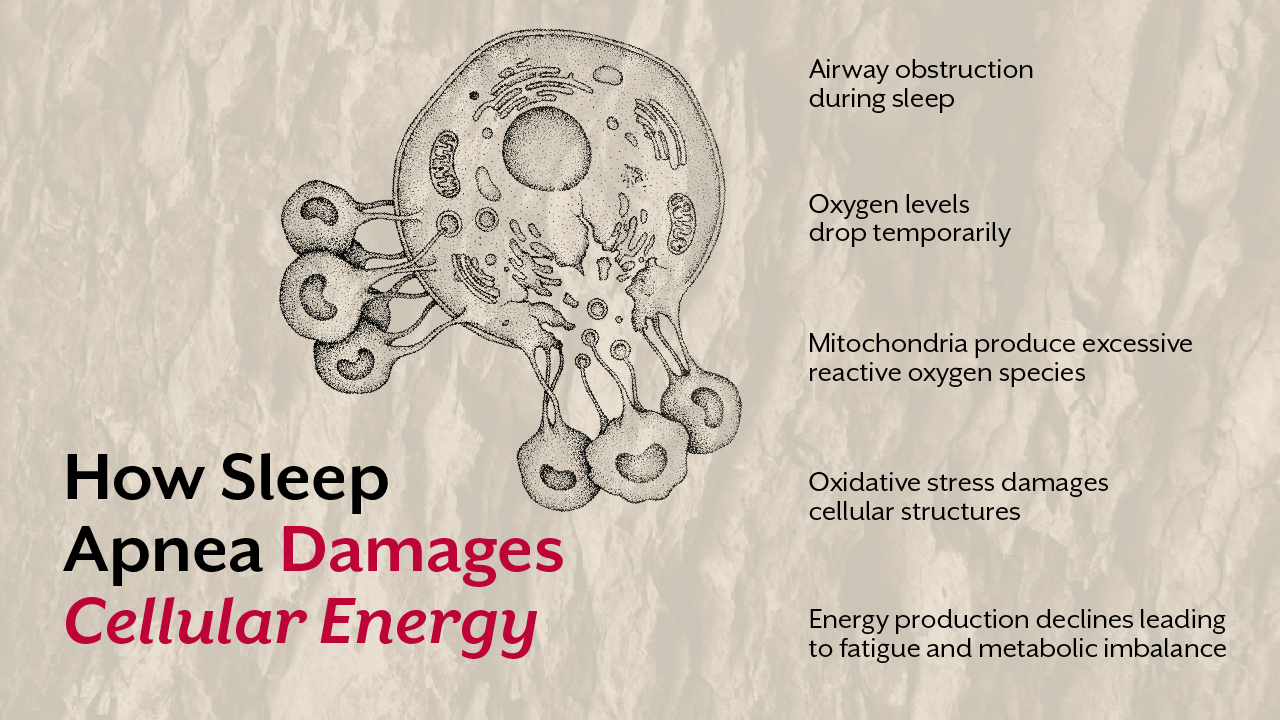
In obstructive sleep apnea, repeated episodes of airway obstruction lead to intermittent hypoxia. This means the body repeatedly experiences short periods of reduced oxygen followed by reoxygenation when breathing resumes. This cycle places intense stress on mitochondria.
During these hypoxic events, the mitochondrial electron transport chain becomes disrupted. Electrons leak from the system and react with oxygen to generate reactive oxygen species. In controlled amounts these molecules play useful signaling roles. However chronic overproduction leads to oxidative stress.
Over time oxidative stress damages mitochondrial DNA and impairs cellular respiration. ATP production declines, meaning cells generate less energy for normal physiological functions.
Neurons in the brainstem that regulate breathing are particularly sensitive to energy shortages. When their energy supply becomes inconsistent, respiratory control during sleep can become unstable. This instability may increase the frequency of apnea events and worsen snoring patterns.
Mitochondrial dysfunction also affects metabolic tissues such as muscle and liver. Reduced mitochondrial efficiency impairs glucose metabolism and increases fat accumulation. These changes further contribute to insulin resistance and weight gain, both of which increase the severity of sleep apnea. The result is a vicious cycle where sleep apnea damages mitochondria and mitochondrial dysfunction worsens sleep apnea.
Metabolic Clues Hidden Behind Snoring
Many individuals who snore regularly also experience symptoms that seem unrelated at first glance. Persistent fatigue, brain fog, difficulty losing weight, and elevated blood pressure are commonly reported. These symptoms often indicate underlying metabolic disruption.
One of the strongest metabolic links to sleep apnea is insulin resistance. When cells become less responsive to insulin signals, glucose remains elevated in the bloodstream. The pancreas compensates by producing more insulin.
Chronically elevated insulin promotes fat storage particularly around the abdomen and neck region. This fat deposition increases airway pressure during sleep.
For readers interested in understanding this mechanism more deeply, our earlier article titled What Is Insulin Resistance and Why It Matters for Your Health explains how metabolic signaling gradually becomes impaired long before diabetes is diagnosed.
Inflammation also plays a critical role. Elevated markers such as CRP and ESR frequently appear in individuals with sleep apnea. Inflammation affects vascular health, oxygen transport, and neurological function.
Another lesser known contributor is gut microbiome imbalance. Research suggests that altered gut bacteria may influence inflammatory signaling and metabolic hormones that regulate appetite and sleep cycles. At iThrive Alive we often observe that addressing metabolic health through functional nutrition leads to improvements not only in weight and blood sugar but also in sleep quality.

A Root Cause Approach to Snoring and Sleep Disorders
Conventional approaches to sleep apnea focus primarily on mechanical solutions such as breathing devices or airway support. These tools are extremely helpful for managing symptoms, but they rarely address the biological environment that allowed the disorder to develop.
A functional nutrition approach asks a different question.
Why did the body become vulnerable to this condition?
At iThrive Alive we examine several biological systems simultaneously. Mitochondrial energy production, metabolic flexibility, inflammatory signaling, circadian rhythm regulation, and gut health all interact to shape sleep quality.
Lifestyle interventions form the foundation of this approach. Smart eating patterns that stabilize blood sugar reduce metabolic stress on mitochondria. Nutrient dense diets rich in antioxidants support mitochondrial repair and reduce oxidative damage.
Strategic supplementation may further enhance cellular energy metabolism. Nutrients such as magnesium, coenzyme Q10, and B Complex support mitochondrial respiration and neurological function involved in sleep regulation.
Circadian rhythm alignment also plays an important role. Exposure to morning sunlight, consistent sleep timing, and reduced evening screen exposure help synchronize the biological clock that governs hormone release.
Our clinical programs integrate these strategies within structured protocols such as the 3 months Alive Program. This framework allows individuals to gradually restore metabolic balance while addressing the deeper drivers behind chronic symptoms including snoring and sleep disruption.
For individuals who wish to explore their underlying metabolic drivers more thoroughly, our Root Cause Analysis consultation offers a comprehensive evaluation of metabolic markers, lifestyle factors, and nutrient status.

Key Takeaway
Snoring is often dismissed as a minor inconvenience, yet it can reveal deeper metabolic disturbances unfolding beneath the surface. Mitochondrial dysfunction, insulin resistance, chronic inflammation, and circadian disruption all interact to influence breathing patterns during sleep. When cellular energy systems become compromised, the effects ripple through hormonal regulation, airway stability, and neurological control of breathing. Addressing these underlying mechanisms requires more than symptom management. A root cause approach that integrates functional nutrition, lifestyle alignment, and targeted metabolic support offers a more comprehensive pathway toward restoring healthy sleep and long term metabolic resilience.











.webp)








.svg)