


.svg)
.svg)







Introduction
If you have lived or still live with psoriatic arthritis, you surely know how exhausting it gets to explain your symptoms to other people.
There are some mornings when your joints feel locked before you even step out of your bed. Then there are also days when the fatigue is so deep that even the simplest of the tasks feel overwhelming. You might notice your fingers swelled enough, your nails changing, and a very strange stiffness that seems worse after rest. And then obviously there is frustration of being told that your blood tests look “quite normal” while your body signals something else.
Psoriatic arthritis isn’t a joint problem. It’s not about the skin either. It is in fact an autoimmune condition where the immune system starts attacking healthy tissues by mistake, specifically the skin and the joints. This is the very reason people often ask, “Is psoriatic arthritis autoimmune?” The answer is YES. But what most people aren’t told is that this autoimmune attack is mostly made worse by the hidden nutrient deficiencies.
At iThrive Alive, we have seen our clients come to us after trying multiple medications. In many of them, we found silent nutritional gaps underneath the surface. These deficiencies don’t cause psoriatic arthritis on their own for sure, but they make the inflammation causing it louder, the pain even more stronger, and recovery slower.
This is where a true psoriatic arthritis root cause approach becomes crucial. Instead of answering what medicine suppresses symptoms, we rather pay attention to what is missing in the body that’s preventing it from calming down?
Why Psoriatic Arthritis Is More Than A Joint Disease
Most people think psoriatic arthritis begins in the joints. In reality, it’s different. The process mostly starts much earlier, inside the immune system and the gut.
The Hidden Connection Between Autoimmunity, Gut Health, And Inflammation
There is a reason the keyword “psoriatic arthritis gut health” has such a high volume.
Your gut is home to trillions of microbes that help in training the immune system. When the gut lining is damaged, unwanted particles from the bacteria and the food can enter the bloodstream. This particular process is called intestinal permeability or leaky gut.
Once that happens, the immune system becomes highly reactive. In someone already genetically prone to psoriasis or psoriatic arthritis, this extra immune stimulation can surely become the spark that drives inflammation in joints and the skin.
At the same time, poor gut health can reduce how well your body absorbs important nutrients. So even if you’re eating well, your body might still be running low on zinc, selenium, vitamin D, or omega 3.
The Symptoms That Nutrient Deficiencies Can Worsen
When the body is low in key nutrients the frustrating symptoms of psoriatic arthritis can even become worse.
These might include:
- Very slow recovery after flare up
- Very visible skin redness and flakes
- Very deep and persistent psoriatic arthritis fatigue
- Psoriatic arthritis morning stiffness that often lasts more than 30 minutes
- Joint pain that seems worse in winter
- Psoriatic arthritis nail changes like ridges, pitting, or even separation from the nail bed.
What surprises many people is that these symptoms aren’t always about the disease on its own. Sometimes they are also the clues that the body is missing what it really needs to control inflammation.
Vitamin D3 And K2 The Missing Immune Brake
Of all the deficiencies we see in the people with autoimmune issues, low vitamin D is the most common. That is why people are largely searching for vitamin D3 psoriatic arthritis and vitamin D supplements autoimmune have become so common.
Why Vitamin D Matters In Psoriatic Arthritis
Vitamin D is not just a random vitamin. It rather behaves like a hormone.
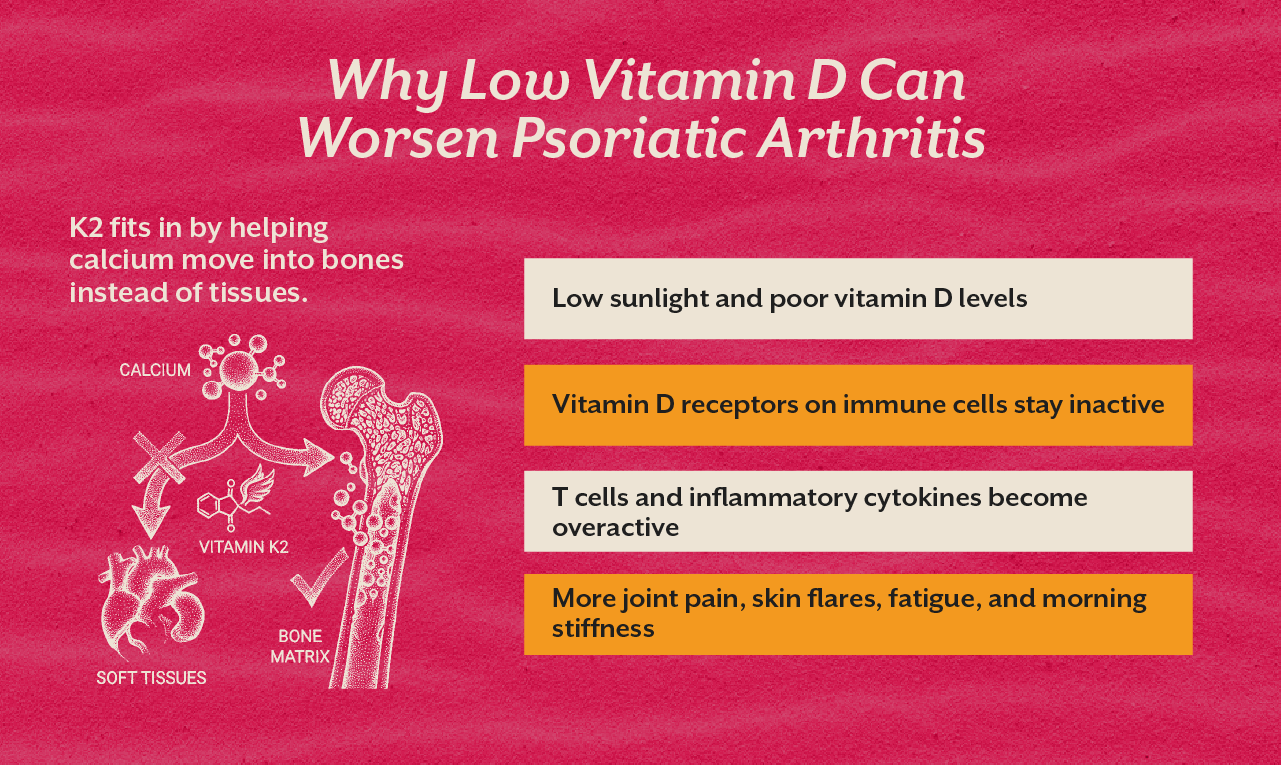
Your immune cells has special receptors called VDRs. When sufficient vitamin D is present, these receptors convey the immune system to slow down after a threat has passed. In psoriatic arthritis, that “OFF switch” mostly stops working properly.
Low vitamin D has been closely linked to higher levels of inflammatory chemicals, specifically those involved in joint pain and psoriasis. It might also efficiently contribute to more severe psoriatic arthritis morning stiffness and stronger flare ups during winter.
I have myself seen clients with psoriatic arthritis who’ve spent years and years thinking their worsening symptoms are simply “part of the condition,” only to discover at iThrive via root cause analysis that their vitamin D levels were severely low.
Why Deficiency Is So Common In India
The truth is that many Indians are deficient even if they spend most of their time outside.
Darker skin naturally needs more sunlight to make vitamin D. Add factors like indoor jobs, immense pollution, sunscreen, construction sites, very limited midday sun exposure, and the gap becomes even bigger.
This is why simply saying “sit enough in the sunlight” is surely not something that makes sense.
The Forgotten Role Of Vitamin K2
One of the most common things people make is taking larger amounts of vitamin D without K2.
Vitamin D helps the body absorb calcium effectively. But vitamin K2 helps direct that calcium into the bones instead of permitting it to build up in soft tissues.
K2 works like a traffic controller. It activates proteins that tell the calcium where to go. Without adequate K2, taking high dose vitamin D might not support the body in the way you have expected it to.
How Much Vitamin D For Psoriatic Arthritis?
I’ve heard many of you always asking, “How much vitamin D for psoriatic arthritis?”
There is no single answer to it because the right amount is entirely dependent on your blood levels. However, many practitioners working with autoimmune conditions always aim for a vitamin D level between 50 and 80 ng/ml.
Testing is important, so stop guessing and take the right step which is to book a consult with our nutritionist.
If you have frequent flares, persistent fatigue, worsening pain in winter, or low mood, it is surely worth exploring this deeply via our Root Cause Analysis which will just cost you
Omega 3 The Nutrient That Helps Put Out The Fire
When most of you hear the word inflammation, you often imagine redness or swelling right? But in psoriatic arthritis, inflammation is constantly happening at a cellular level all the time.
That is where omega 3 becomes eminent.
EPA And DHA Psoriasis What The Research Actually Shows
The forms of omega 3 that matters the most for psoriatic arthritis are EPA and DHA. These are found majorly in fatty fish and high quality fish oil.
EPA DHA psoriasis research recommends that these facts are helpful in reducing the inflammatory pathways that drive both the symptoms of joint pain as well as skin.
One of the eminent ways they work is reducing the activity of Th17 cells. These are the immune cells that are strongly involved in psoriatic arthritis.
Why Modern Diets Make The Problem Worse
Most of you are consuming far more omega 6 as compared to omega 3.
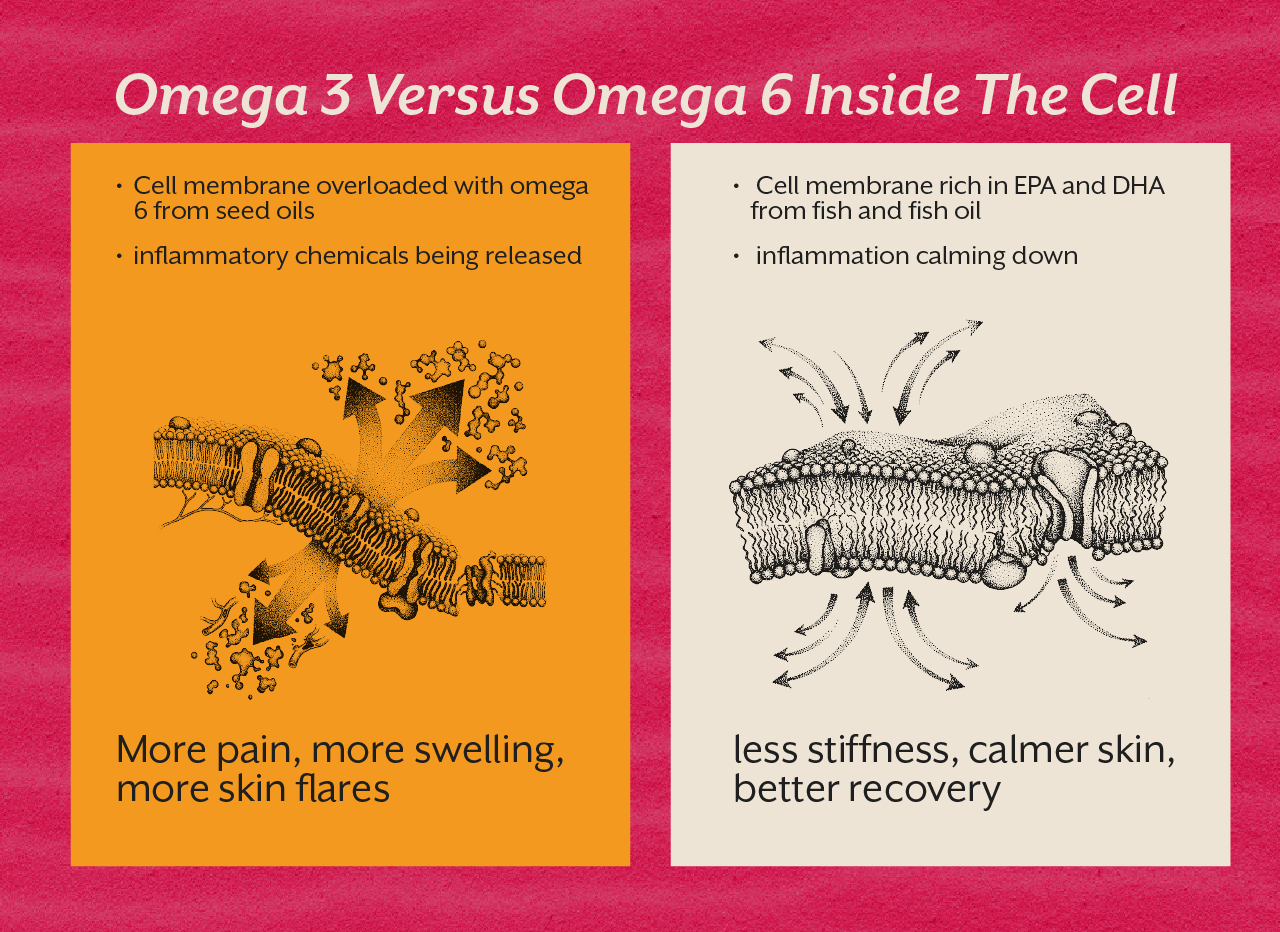
Refined seed oils like sunflower oil, corn oil, and soyabean oil are now everywhere. They increase arachidonic acid inside the cell membranes. Arachidonic acid is one of the raw materials that the body utilises to develop inflammatory chemicals.
When there is too much of arachidonic acid and not sufficient EPA, the body stays stuck in an inflammatory state.
This is why omega 3 and inflammation are so close to each other.
Why Flax Seeds Are Usually Not Enough
Many people try increasing omega 3 through flax seeds and chia seeds. These foods contain ALA, which the body has to actively convert into DHA and EPA.
The problem is that the conversation rate is poor. And for someone with active autoimmune inflammation, depending entirely on plant omega 3 is rarely enough. In such cases fatty fish like salmon and sardine, fish oil, or krill oil are mostly far more effective.
The Signs You May Need More Omega 3
You might want to look more closely at omega 3 if you certainly have:
- Dry skin and worsening psoriasis
- Very high intake of processed foods and seed oils
- Persistent joint swelling
- Psoriatic arthritis fatigue that never completely improves
- Low mood and brain fog
At iThrive Alive, improving omega 3 intake is mostly one of the very first changes in a psoriatic arthritis nutrition plan as people frequently notice quite reduced stiffness and better energy within a couple of weeks.
Zinc And Selenium The Nutrients No One Checks
Omega 3 and Vitamin D get most of the attention. But there are two other nutrients that are mostly overlooked in people with psoriatic arthritis: zinc and selenium.
Zinc And Psoriatic Arthritis Nail Changes
If you have psoriatic arthritis nail changes, your body might need more of zinc.
Zinc is far more important for healthy skin, stronger nails, and proper immune function. It also helps repair tissues and maintain the skin barrier.
When zinc levels are quite low, people might notice:
- More nail pitting
- Greater sensitivity to infections
- More severe and very weak immunity
- Slower healing of psoriasis plaques
The most frustrating part is that standard blood tests don’t always catch mild zinc deficiency.
Why Selenium Matters For Fatigue And Mitochondria
Selenium is needed to develop glutathione peroxidase, one of the body’s most important antioxidant enzymes.
This enzyme protects mitochondria, those tiny energy factories that are present inside your cells.
If mitochondria are constantly under inflammatory stress, it becomes tough for the body to make energy. This is one of the reasons why psoriatic arthritis fatigue can feel so crushing.
Sometimes people think their fatigue isn’t just emotional burnout or like poor sleep. But underneath it, their cells might simply not just have the nutrients that are needed to produce energy in an efficient manner.
Why These Deficiencies Are Increasing
There are a few reasons you now see more selenium and zinc deficiencies than ever before.
Modern soil contains very few minerals. Highly processed diets contain very few nutrient dense foods. And certain healthy foods, such as excessive spinach or say almonds, can at times make things even worse because they contain compounds that reduce absorption of minerals.
The best food sources involve seafood, red meat, brazil nuts, eggs, and organ meats.

The Psoriatic Arthritis Nutrition Plan That Actually Supports Healing
A very good psoriatic arthritis nutrition plan is not at all about following another restrictive trend diet. It is clearly about developing an environment inside the body wherein the inflammation has less room to thrive.
Foods That Support Recovery
The most helpful foods are often the least processed and the most nutrient dense.
Try consuming:
- Fatty fishes such as sardines, mackerel, and salmon.
- Organ meats if you can tolerate them
- Cooked veggies and herbs like ginger, turmeric, and garlic
- Olive oil, avocado, coconut oil, and ghee
- Fermented foods and prebiotic rich foods for supporting the gut
- High quality animal protein and eggs
Foods That Often Trigger Flare Ups
Many people with psoriatic arthritis witness that they feel worse after consuming certain foods.
The most common triggers involve:
- Dairy
- Refined sugar
- Ultra processed foods
- Gluten
- Seed oils
This doesn’t mean that every person needs to prevent and avoid these forever. But it surely means they may be worth testing, specifically if your symptoms are not improving.
For people who feel extremely stuck trying many things, this is often where a more structured approach such as the iThrive Alive Program or a Book a Consult can prove to be beneficial for you to identify what your body is reacting to.
Why One Size Never Fits All
No two people with psoriatic arthritis are exactly the same.
One person might struggle majorly with psoriatic arthritis morning stiffness. Another might have fatigue, nail changes, and gut symptoms. This is exactly why we at iThrive believe that a real psoriatic arthritis root cause plan should always be extremely personalized.
Here at iThrive, we don’t look just at the symptoms, no it has never been like that. We look at vitamin D levels, inflammation markers, stress, gut health, sleep, and in fact how your symptoms change throughout the year.
Key Takeaway
If you have psoriatic arthritis and feel like your body is constantly fighting against you, please know that you are not imagining it. The pain, fatigue, stiffness, and frustration are real. But so is the possibility that your body may be missing some of the very nutrients it needs to calm the inflammation.
One thing we have to mention is that vitamin D, selenium, omega 3 and zinc are not at all the magic cures. But when they are low, they can quietly make psoriatic arthritis worse. Addressing these deficiencies doesn’t replace medical care. It strengthens the core foundation beneath it.
Sometimes the most crucial question is not just what medicine should you take, but what your body needs that it’s not getting is far more important.
















.svg)