

.svg)
.svg)







Introduction
When a well-known supermodel Bella hadid broke down on Instagram recently, describing years of fatigue, brain fog, flare-ups, anxiety, and a body that felt like it was working against her, the internet searched for one thing immediately that is Lyme disease. Honestly, that search matters. Not because of who was talking, but because of how many people read her words and quietly thought…wait, that sounds like me.
This is the reality of Lyme disease. It doesn't always announce itself dramatically. It creeps in slowly, wearing a hundred different masks, and for millions of people around the world, it takes years, sometimes over a decade before they even have a name for what they're experiencing.
Here at iThrive, we've seen this pattern too many times to not talk about it.
What lyme disease actually is?
Lyme disease is a tick-borne illness caused by a bacterium called Borrelia burgdorferi. It spreads through the bite of infected black-legged ticks, sometimes called deer ticks. The tick has to be attached for at least 36 to 48 hours for the bacteria to be transmitted, which means a timely tick check after outdoor exposure genuinely matters.
What makes Borrelia unique and particularly difficult is its structure. It's a spirochete, a corkscrew-shaped bacterium that can drill through dense tissue, cross the blood-brain barrier, and hide inside joints, nerves, and even the heart. It has evolved to evade standard immune responses. In some cases, it forms biofilm-like clusters that are almost impossible for the immune system alone to break through. This is precisely why Lyme disease can go from just a tick bite to a full neurological, cardiac, or musculoskeletal condition if left unaddressed.
Why does it get missed for years?
Here's the thing that frustrates us, and should frustrate you too.
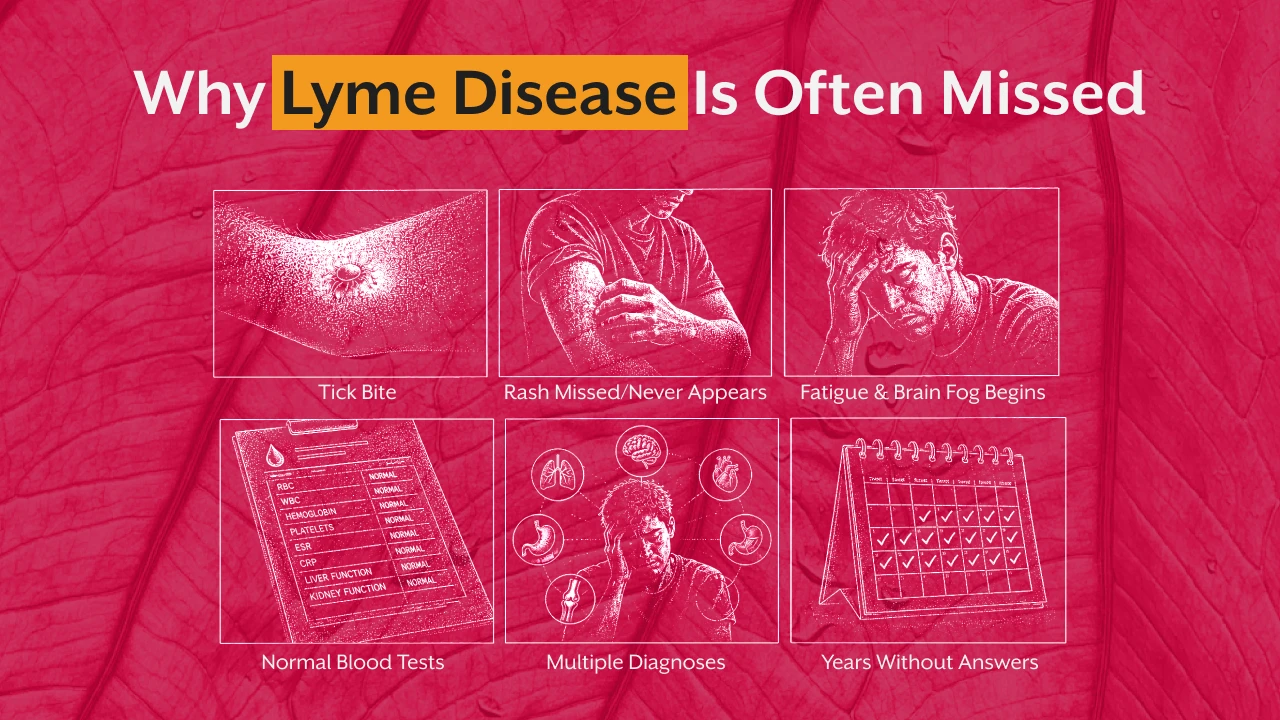
Lyme disease progresses in stages. In the early stage, right after the bite, a characteristic bull's-eye rash called erythema migrans appears in roughly 70-80% of cases. That rash is actually diagnostic on its own in which no further testing is needed. If a doctor sees it, treatment should begin immediately.
But here's the problem. Not everyone gets that rash or at times it also appears somewhere you can't easily see like your back, your scalp, behind the knee. Even when it does appear, not everyone connects it to a tick bite they may barely remember.
So people move through the early stage without even catching it. Weeks pass, months pass and by the time symptoms escalate in the form of joint pain, neurological issues, chronic fatigue, or heart palpitations, the window for straightforward treatment has narrowed considerably.
Standard blood tests then add much more to the confusion. The most commonly used tests check for your immune response to the bacteria. If your immune system hasn't mounted a strong enough antibody response yet, you can test negative while being actively infected. This is particularly common in early-stage Lyme.
A negative test does not mean you don't have Lyme disease. This is something our nutritionist Saloni, Chief of Client Services and functional nutritionist with over 4 years of experience, keeps mentioning constantly. Clinical evaluation and a thorough history have to necessarily be a part of proper assessment.
What does lyme disease feel like when it’s not caught early?
We want to be honest about this, because the vague nature of these symptoms is exactly why people dismiss them or get dismissed by others.
Chronic or late-stage Lyme disease, sometimes called Post-Treatment Lyme Disease Syndrome, presents differently in different people. At the same time, the patterns we see come up again and again.
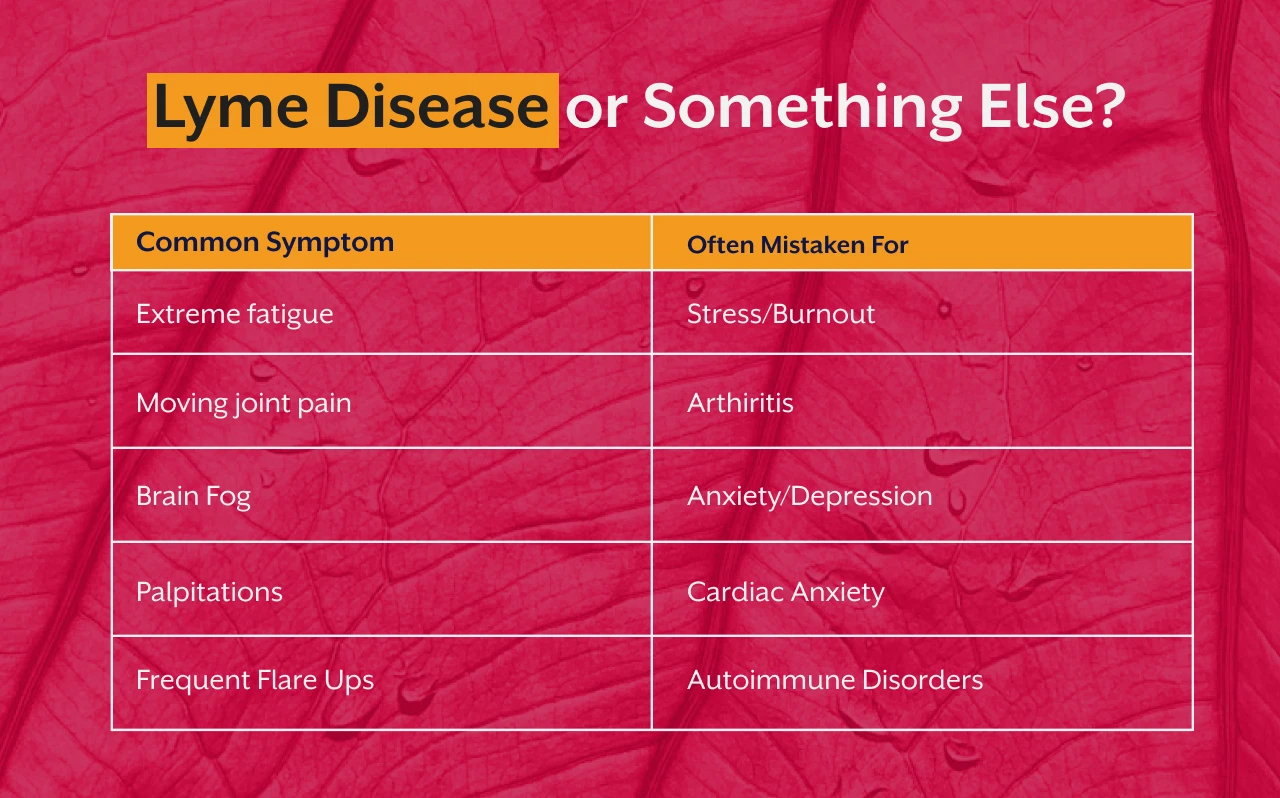
Fatigue that doesn't respond to sleep. Not "I'm a bit tired" fatigue. The kind where you have been sleeping straight for 9 hours and wake up exhausted. The kind where getting through the afternoon feels like climbing a hill.
Joint pain that moves around. Today it's the knees, the next day it’s the wrists, then hips. Migratory joint pain with no clear cause is one of the most consistent features of late Lyme.
Neurological symptoms. Brain fog is so thick that even the basic decisions feel difficult. Conditions such as word retrieval problems, memory gaps, numbness or tingling in the hands and feet. In more advanced cases, facial palsy, nerve pain, or sensitivity to light as well as sound.
Mood and mental health changes. Anxiety that appears out of nowhere, bouts of depression that don't match your life circumstances, and emotional dysregulation. No, this is not psychological weakness, Borrelia can cross the blood-brain barrier and directly affect neurotransmitter function.
Heart involvement such as palpitations, irregular heartbeat, or a condition called Lyme carditis wherein the bacteria disrupts the electrical system of the web.
Immune dysregulation like getting sick constantly, feeling like the body is always fighting something but never winning. Histamine intolerance, food sensitivities, and inflammatory flare-ups that seem random but in reality they aren’t.
What all of these have in common is that they look, on paper, like a dozen other conditions. Fibromyalgia, chronic fatigue syndrome, multiple sclerosis, autoimmune conditions, and anxiety disorders. People get sent from specialist to specialist, collecting diagnoses that treat the symptoms but never explain the origin.
Why does the body struggle so hard to clear it?
This is where the functional nutrition lens becomes really important and where we at iThrive spend a lot of our time thinking.
Borrelia doesn't just infect passively, it also actively disrupts the immune response. It suppresses the very cells that are supposed to identify and eliminate it. It depletes key nutrients the immune system depends on and it then creates a state of chronic inflammation that, over time, starts damaging tissues that the bacteria itself isn't even directly attacking.
Three things compound this significantly.
Mitochondrial dysfunction like infection and inflammation drain cellular energy at the mitochondrial level. This is why Lyme fatigue is so severe, and it's not muscular tiredness, it's all about the cellular energy failure. So when the mitochondria can't produce adequate ATP, every system in the body slows down.
Gut disruption. Borrelia, antibiotics used to treat it, and the chronic stress of illness, all take a toll on the gut microbiome. A damaged gut means compromised nutrient absorption, worsened immune function, and increased intestinal permeability which then drives more systemic inflammation. You can read more about how gut dysfunction fuels chronic symptoms in our SIBO and brain fog blog.
Nutrient depletion like magnesium , zinc, B vitamins, Vitamin D, and glutathione are all depleted significantly in chronic infection states. These are core nutrients to immune function, neurological health, detoxification, and energy production. Addressing deficiencies isn't a nice-to-have, it's utterly quite foundational.
What recovery actually requires?
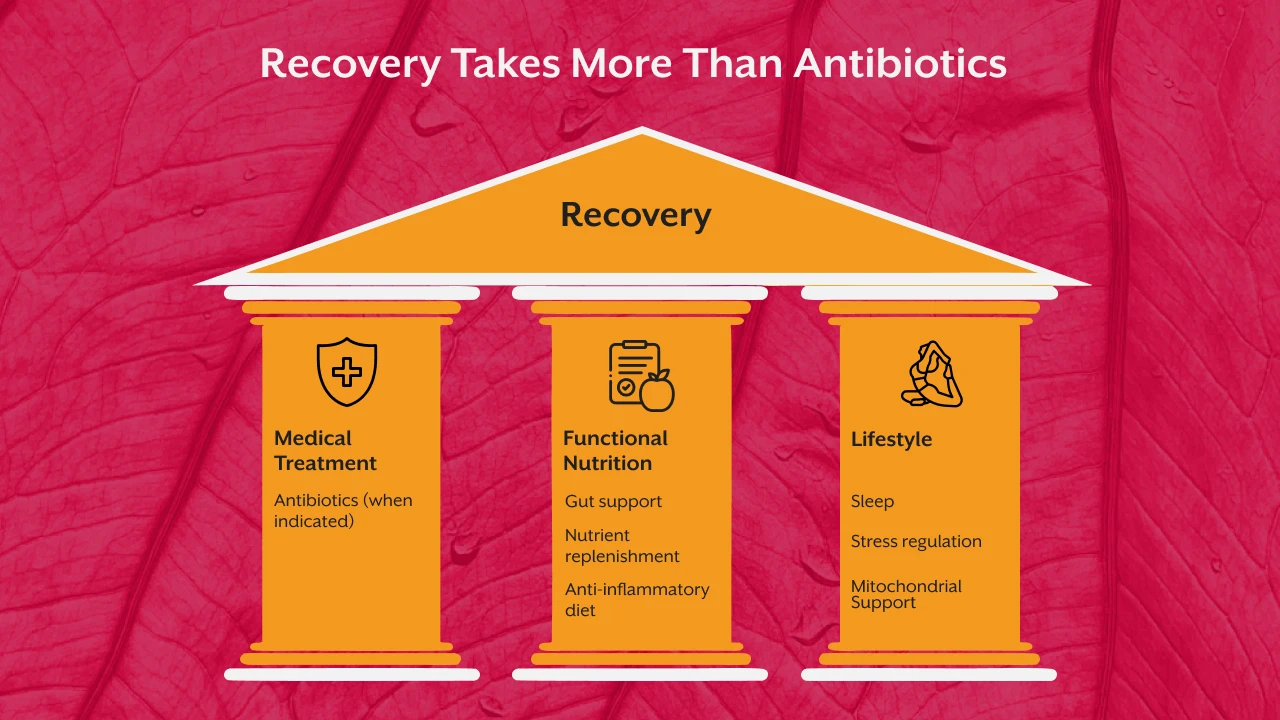
This is the part that mainstream conversations about Lyme often skip, and it's the most important part. Antibiotics are the standard first-line treatment for Lyme disease, and in early-stage cases, they are highly effective. Doxycycline, amoxicillin, or cefuroxime for 2 to 4 weeks clears the infection well when caught in time.
As far as the case of late-stage or chronic Lyme matters, the cases where symptoms have persisted for months or years, antibiotics alone don't always resolve everything. The inflammation, the immune dysregulation, the mitochondrial damage, and the nutritional depletion, none of these get addressed by antibiotics. And yet they're often what's driving the ongoing symptoms even after the bacterial load has been reduced.
This is exactly why we keep emphasising 3 things in every chronic illness case we work with here at iThrive, whether it's Lyme-related or not.
Lifestyle interventions because sleep is non-negotiable. A dysregulated nervous system cannot heal. Circadian rhythm, stress reduction, and pacing have to be actively managed.
Personalised diet protocol as anti-inflammatory, nutrient-dense, and tailored to the individual's current state of gut health. For someone in a Lyme flare, what works nutritionally is very different from what works in a stable period. Generic healthy eating isn't enough here.
Smart supplementation and not a handful of random capsules. Targeted support like magnesium for mitochondrial and nervous system function, B-complex for neurological support, Vitamin D for immune modulation, glutathione precursors for detoxification, and omega-3s to manage the inflammatory load. Each and every choice has a reason behind it.
This three-pronged approach doesn't replace medical treatment for Lyme. It works alongside it to give the body the resources it actually needs to heal.
What do we think about this at iThrive?
We're a functional nutrition based organization, and we've been in this space since 2019. But chronic, unexplained symptom presentations involving fatigue, brain fog, joint pain, immune fragility are exactly what functional nutrition is designed to address at the root.
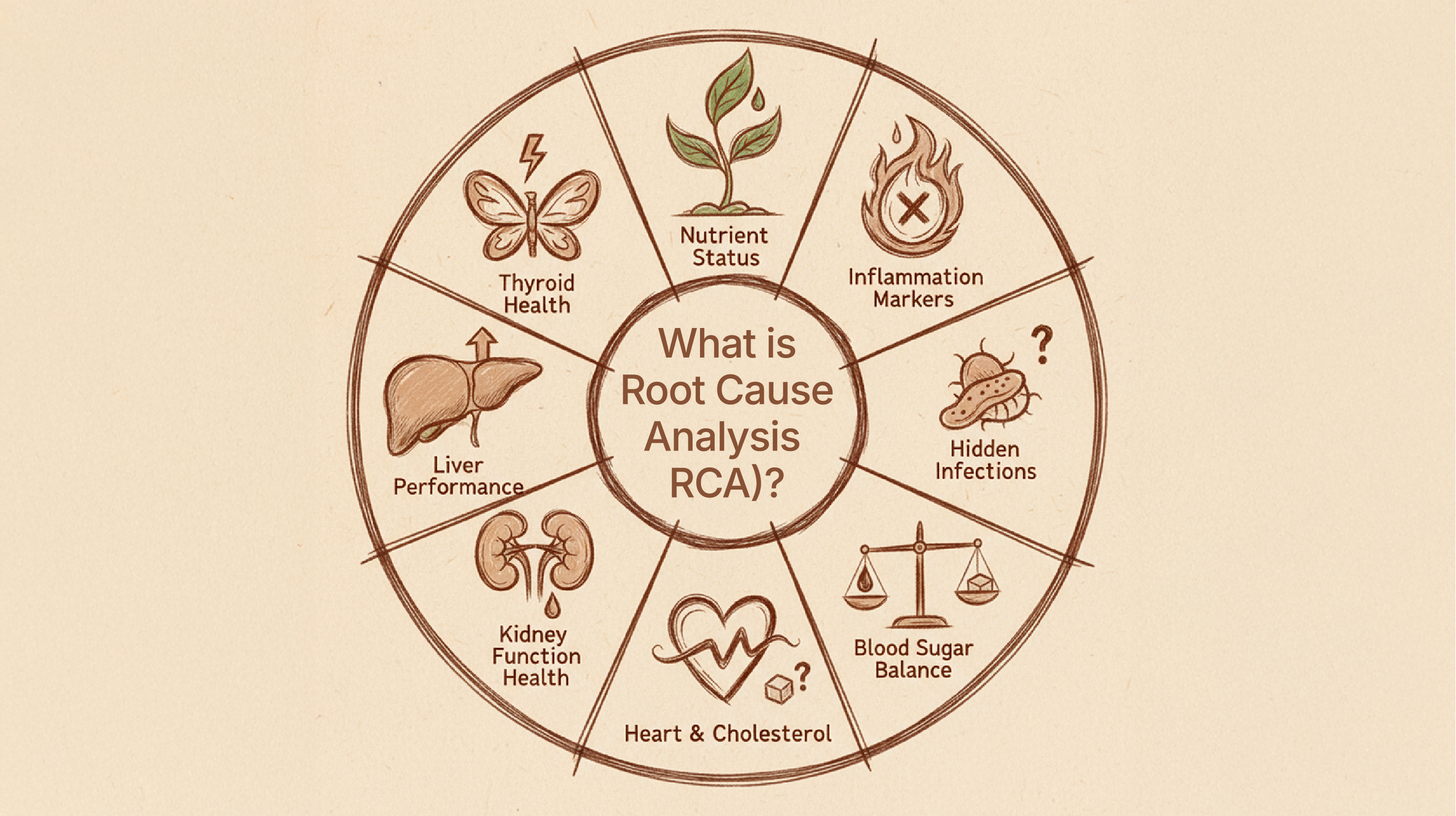
When someone comes to us who's been told their labs are "normal" but they feel anything but, our very first job is to look at the whole picture. What's happening in the gut? What are the mitochondria doing? Where are the nutritional gaps? What does the inflammatory load look like? How is the nervous system responding to daily stressors?
Saloni and the rest of our team go through this carefully with every client, because the same symptom in 2 different people can have completely different underlying drivers. The protocol has to match the individual's requirement, health history, and deficiencies.
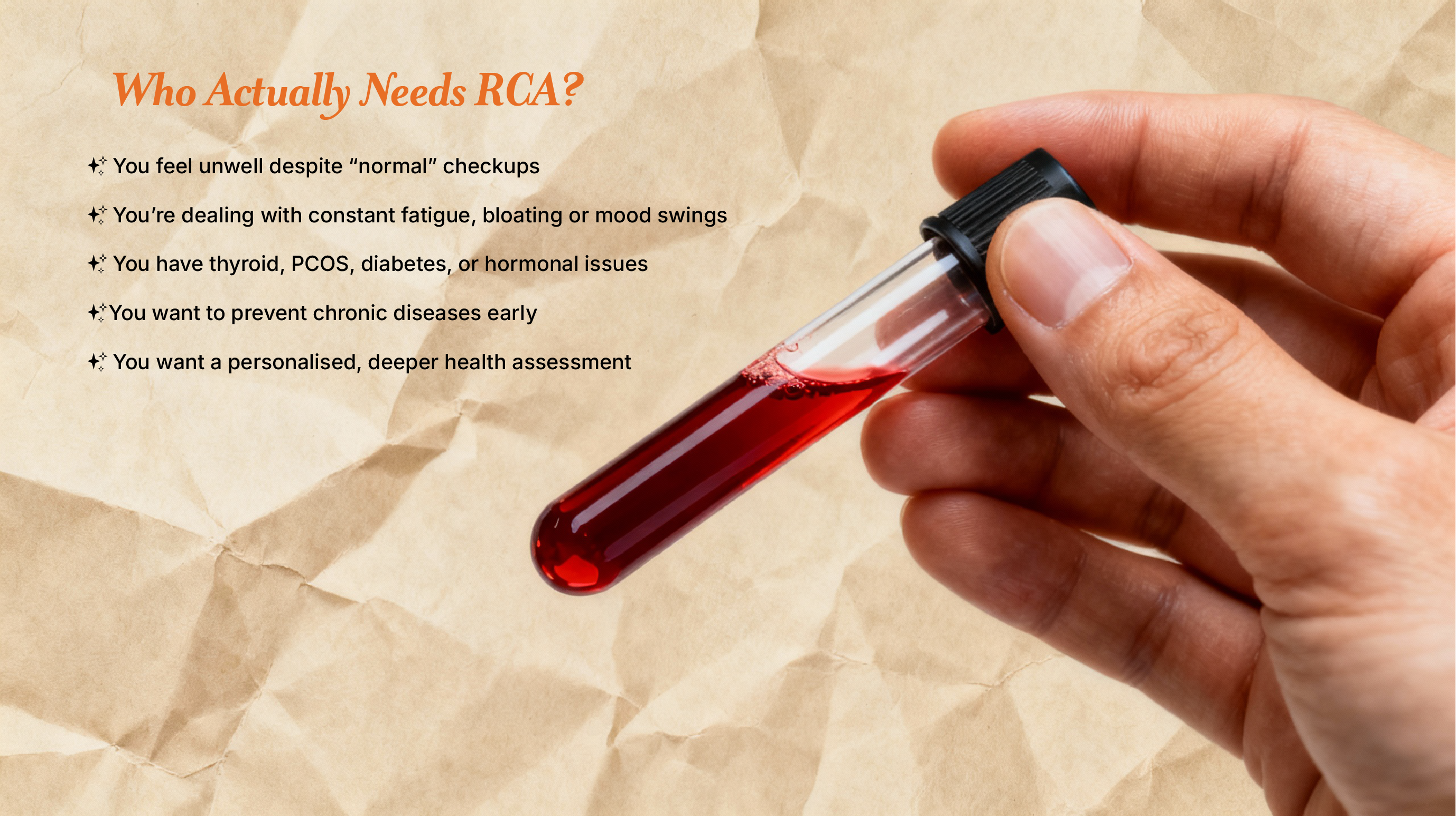
If you've been dealing with symptoms that don't seem to resolve regardless of what you try and especially if there's any history of tick exposure, time spent outdoors, or a pattern of unexplained flare-ups, then this is genuinely worth looking into properly.
Key Takeaway
The biggest mistake we see people make with complex, chronic illness is waiting. Waiting for a definitive test result, waiting to feel bad enough to take action, and lastly waiting to be believed.
Your body is telling you something. Whether or not Lyme disease is ultimately the answer, the underlying patterns like the inflammation, the immune fragility, or the nutritional depletion deserve to be taken seriously and addressed now.
Book your Root Cause Analysis with iThrive today. It's the starting point for understanding what's actually driving your symptoms, not just managing the symptoms.












.svg)