.webp)

.svg)
.svg)







We wake up, brush our teeth, take a shower, cook breakfast, clean our home, and move through the day without thinking twice about the products we use. But what if the items we trust the most, our favorite shampoo, that “fresh fragrance” handwash, the non-stick pan we cook on, or the plastic box we pack our lunch in are quietly introducing chemicals into our bodies?
Modern life exposes us to thousands of chemicals our ancestors never had to deal with. Many of these substances are new, man-made, and not fully understood by science. What we do know is that these chemicals can accumulate in our body over time, overwhelm our detox system, and start interfering with hormones, immunity, fertility, weight, brain function, sleep, and long-term well-being. This is called toxic load, and most of us are carrying more than we realise.
In this blog, we’ll look at where these hidden toxins come from, how they affect your health, and most importantly, easy swaps you can make every day to reduce your toxic load. From the plastic containers in your kitchen to the skincare on your bathroom shelf and the cleaners under your sink, you’ll learn exactly what to avoid and what to choose instead without complicating your lifestyle.
What to Avoid (And Why They’re Harmful)

1. Plastic Containers (BPA, BPS, BPF)
Plastic containers are used every day like water bottles, lunch boxes, storage boxes but they release chemicals into your food and drinks. Most plastics contain BPA (Bisphenol A), BPS (Bisphenol S), and BPF (Bisphenol F), which are synthetic compounds that behave like hormones once they enter your body. These chemicals leach out when plastic is heated, scratched or exposed to sunlight. So when you store hot food, microwave leftovers or leave a plastic bottle in the car, you increase your exposure. Even “BPA-free” plastics are not entirely safe, as manufacturers often replace BPA with BPS or BPF, which are equally harmful.
Impact of using Plastic Containers:
- Irregular periods, PCOS
- Thyroid imbalance
- Low sperm count
- Weight gain, especially belly fat
- Mood swings
- Infertility
2. Parabens & Artificial Fragrances (Skincare & Personal Care)
Every product you apply like shampoo, lotion, deodorant, face wash, perfume contains dozens of chemicals. Two of the most concerning are parabens (used as preservatives) and synthetic fragrances (listed simply as “fragrance” or “perfume”). Parabens act like artificial estrogen, interfering with your body’s hormonal signals. Artificial fragrances often contain phthalates, which help fragrances last longer but are linked to reproductive and developmental issues. These chemicals easily pass through your skin and enter your bloodstream within minutes.
Why it’s harmful:
- Hormonal imbalance
- Hormonal acne
- Breast cancer risk
- Early puberty
- Fertility problems
- Premature aging & skin irritation
Want to dive deeper into the chemicals hiding in your everyday beauty and hygiene products? Check out our blog on Common Toxins in Personal Care Products.
3. SLS/SLES in Soaps & Shampoos
SLS (Sodium Lauryl Sulfate) and SLES (Sodium Laureth Sulfate) are foaming agents added to soaps, face washes, and shampoos to create lather. While they clean effectively, they are extremely harsh on the skin and scalp. These chemicals strip away natural oils, disrupt the skin barrier, and affect the microbiome that protects you from infections. SLES can also be contaminated with 1,4-dioxane which is a potential carcinogen formed during manufacturing.
Why it’s harmful:
- Dry, itchy skin
- Eczema flare-ups
- Hair fall and brittle hair
- Dandruff and scalp irritation
- Eye irritation
- Long-term damage to skin barrier
4. Triclosan in Handwashes
Triclosan is an antibacterial agent once used widely in handwashes and toothpaste. Although it is banned in many countries, it still appears in several Indian products. It kills bacteria but also disrupts the natural bacteria your body needs for immunity, gut health, and hormone balance. Regular use creates an unnecessary burden on your immune and endocrine systems.
Why it’s harmful:
- Interferes with thyroid hormones
- Weakens immunity
- Damages gut flora
- Contributes to antibiotic resistance
5. Quats in Cleaners (Quaternary Ammonium Compounds)
Disinfectant sprays, surface wipes and floor cleaners often contain quats that are chemicals designed to kill germs quickly but they can also irritate your respiratory system and linger in the air long after you’ve cleaned. Many people experience headaches, watery eyes, or dizziness after using these products without realizing these chemicals are the cause. Regular indoor exposure adds to overall toxic load.
Why it’s harmful:
- Respiratory irritation
- Asthma-like symptoms
- Skin allergies
- Hormone disruption
- Reduced fertility
Indoor and outdoor chemicals silently affect your wellbeing. Explore how Environmental Toxins and Their Impact on Health can influence your hormones, immunity, and long-term health.
6. Bleach & Harsh Surface Cleaners
Bleach is strong, powerful, and commonly used, but it releases fumes that can irritate your lungs and eyes. When used in closed spaces, the vapors concentrate in the air and worsen indoor air quality. Bleach also reacts with other cleaning products to form toxic compounds, creating a chemical mixture that strains your respiratory and immune system.
Why it’s harmful:
- Chronic cough
- Eye & skin irritation
- Hormonal imbalance
- Low immunity
- Higher asthma risk in kids
7. Non-Stick & Aluminium Cookware
Non-stick pans are coated with PFAS or teflon that are chemicals known as “forever chemicals” because they stay in the body for decades. When these pans are overheated or scratched (which happens easily), the chemicals break down and mix with your food. Aluminium cookware can also leach into food, especially when cooking acidic items like tomato-based dishes. Over time, the accumulation affects brain, bone, and hormonal health.
Why it’s harmful:
- Thyroid disruption
- Liver issues
- High cholesterol
- Hormonal imbalance
- Increased cancer risk
- Cognitive decline (with aluminium buildup)
Many of these everyday items also contribute to hidden dietary toxins. Learn more about Mycotoxins - The Hidden Danger and how they may affect your health.
B. Safer Choices (Simple Swaps That Reduce Your Toxic Load)
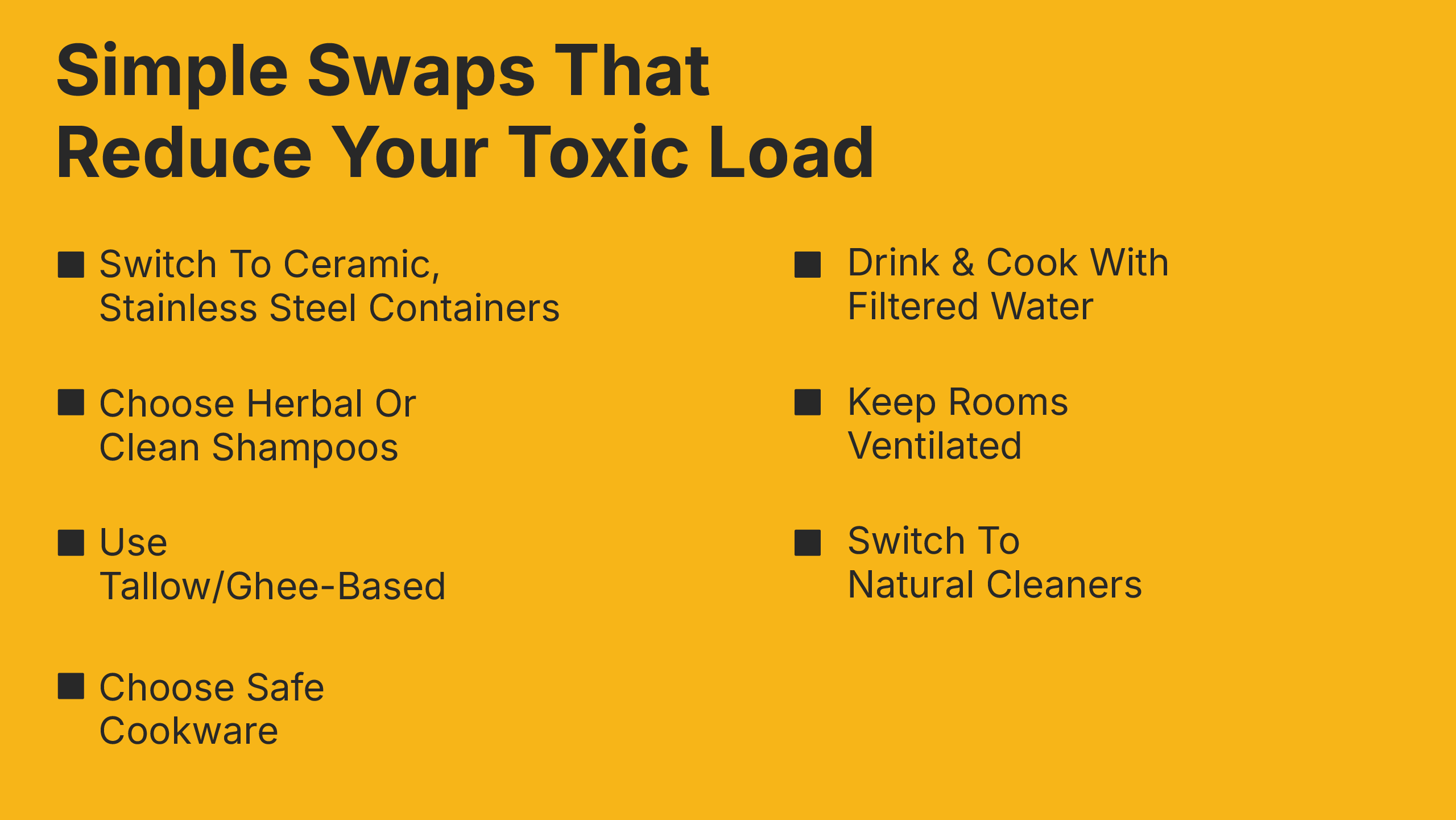
1. Switch to Glass, Ceramic, or Stainless Steel Containers
Replacing plastic containers with glass, ceramic, or steel is one of the easiest and most effective detox swaps. These materials don’t leach chemicals even when heated, used for hot liquids, or stored for long periods. They’re durable, safe, and keep food fresher without altering its taste or quality.
Why it’s good:
- Zero chemical leaching
- Safe for hot food and reheating
- Long-lasting and more eco-friendly
- Better for hormones and fertility
2. Choose Herbal or Clean Shampoos (Reetha, Shikakai, Aloe-Based)
Herbal shampoos use natural cleansing agents instead of strong detergents like SLS/SLES. Ingredients such as reetha, shikakai, aloe vera, hibiscus, and amla clean your hair gently while maintaining scalp balance. They don’t strip natural oils and support a healthier hair microbiome.
Why it’s good:
- Reduces scalp irritation and hair fall
- Prevents dryness and frizz
- Supports long-term hair strength
- Helps repair damaged scalp barrier
3. Use Tallow/Ghee-Based or Clean Skincare
Tallow, ghee, shea butter, and cold-pressed oils nourish the skin without synthetic chemicals, fragrances, or preservatives. They mimic the natural structure of skin lipids, making them deeply healing and safe even for sensitive skin. Clean skincare brands using minimal ingredients are also a good option.
Why it’s good:
- Non-toxic and naturally antimicrobial
- Repairs skin barrier
- Reduces inflammation and acne
- Supports healthy aging
4. Drink & Cook With Filtered Water
Tap water often contains chlorine, microplastics, fluoride, heavy metals and industrial pollutants. Using a high-quality water filter like RO or UV reduces your exposure to these contaminants. Using filtered water for cooking is just as important as drinking it.
Why it’s good:
- Supports kidney and liver health
- Reduces toxin buildup
- Improves digestion and skin quality
- Lowers long-term exposure to heavy metals
5. Keep Rooms Ventilated or Use an Air Purifier
Indoor air can be more polluted than outdoor air due to cleaners, dust, cooking fumes, fragrances and VOCs (Volatile Organic Compounds) from furniture and paint. Good ventilation helps toxins disperse instead of accumulating in your home. Installing an air purifier adds another layer of protection, especially in bedrooms and workspaces.
Why it’s good:
- Reduces indoor pollution
- Supports lung and immune health
- Minimizes headaches, allergies, and fatigue
- Improves sleep quality
6. Switch to Natural Cleaners (Vinegar, Baking Soda, Soapnut, Plant-Based Cleaners)
Natural cleaning alternatives are powerful enough for daily use but don’t release harsh fumes or irritants. Simple ingredients like vinegar, baking soda, castile soap, essential oils, or plant-based ready-made cleaners work effectively without exposing your body to toxic chemicals.
Why it’s good:
- Safe for kids, pets and sensitive individuals
- Reduces respiratory irritation
- Eliminates harsh chemicals from your environment
- Keeps indoor air healthier
Curious about the most common chemical culprits in household items? Read our blog on Common Toxins in Household Products for easy swaps and safer alternatives.
7. Choose Safe Cookware (Cast Iron, Stainless Steel, Ceramic, Clay)
Switching away from non-stick and aluminium cookware makes a big difference in reducing chemical exposure. Cast iron, stainless steel, ceramic-unpainted, and clay cookware are safe, durable, and toxin-free even at high temperatures. They also add trace minerals (like iron from cast iron pans) to your meals.
Why it’s good:
- No chemical leaching
- Long-lasting and heat-safe
- Better for hormones and liver
- Safer for high-heat cooking
To understand the full scope of what toxins do to your body over time, check out our detailed guide on the Impact of Toxins.
Conclusion
Modern life exposes us to more chemicals than our bodies were ever designed to handle. While we can’t avoid every single toxin, we can reduce the amount we’re taking in every day. Start by paying attention to the products you use most like your containers, cookware, skincare, shampoos, water, and home cleaners. These are the small places where toxins quietly enter your routine without you noticing. When you replace them with safer options, you automatically lighten your body’s burden.






.webp)








.svg)