


.svg)
.svg)







Introduction
Most people believe disease begins when symptoms appear.
A diagnosis arrives. Pain begins. Fatigue becomes constant. Blood tests cross a threshold. Only then does the condition receive a name.
But functional nutrition tells a very different story.
Chronic illness rarely begins at the moment symptoms appear. In many cases the biological changes that eventually lead to conditions like multiple sclerosis, chronic fatigue syndrome, rheumatoid arthritis, fibromyalgia, or even metabolic disorders such as diabetes begin years earlier.
During this silent period the body is already struggling at a deeper cellular level. Energy production declines. Inflammation slowly rises. Repair mechanisms weaken. Nutrient signaling becomes inefficient. Mitochondria begin to lose efficiency.
The problem is that these early disruptions rarely show up in routine medical testing. Blood markers may still appear normal. Hormone levels may fall within acceptable ranges. Yet inside tissues, organs and cells, regulatory networks are slowly shifting toward dysfunction.
This is one of the central ideas behind the functional model used at iThrive Alive. Instead of asking where symptoms appear, we ask where the biological disruption actually began.
Very often, the answer lies in one fundamental system within the body: cellular energy production driven by mitochondria.
The Mitochondrial Foundation of Chronic Disease
Mitochondria are often described as the energy producers of the body. But this description is only partially accurate. Their role extends far beyond energy generation. Mitochondria regulate immune signaling, control oxidative stress, influence hormone production, and determine how cells respond to metabolic signals. In many ways they function as the metabolic control centers of the cell.
When mitochondrial function begins to decline, multiple systems start to lose efficiency at the same time. Cells struggle to produce ATP. Inflammatory pathways become more active. Antioxidant defenses weaken. Tissues with high energy demand such as the brain, muscles, immune cells and endocrine glands are the first to show signs of dysfunction.
This is why conditions that appear unrelated on the surface often share a similar underlying pattern.
A person experiencing unexplained fatigue may be facing the same mitochondrial stress that later contributes to autoimmune disease. Someone struggling with insulin resistance may also experience neurological fatigue or muscle weakness because mitochondrial signaling is disrupted. From a functional nutrition perspective the disease name matters less than the underlying energy imbalance.
When mitochondrial efficiency declines, the body gradually shifts from optimal function toward survival mode. Repair slows. Recovery becomes difficult. Inflammation persists longer than it should.
Symptoms eventually emerge, but they are often only the final visible stage of a much longer process.
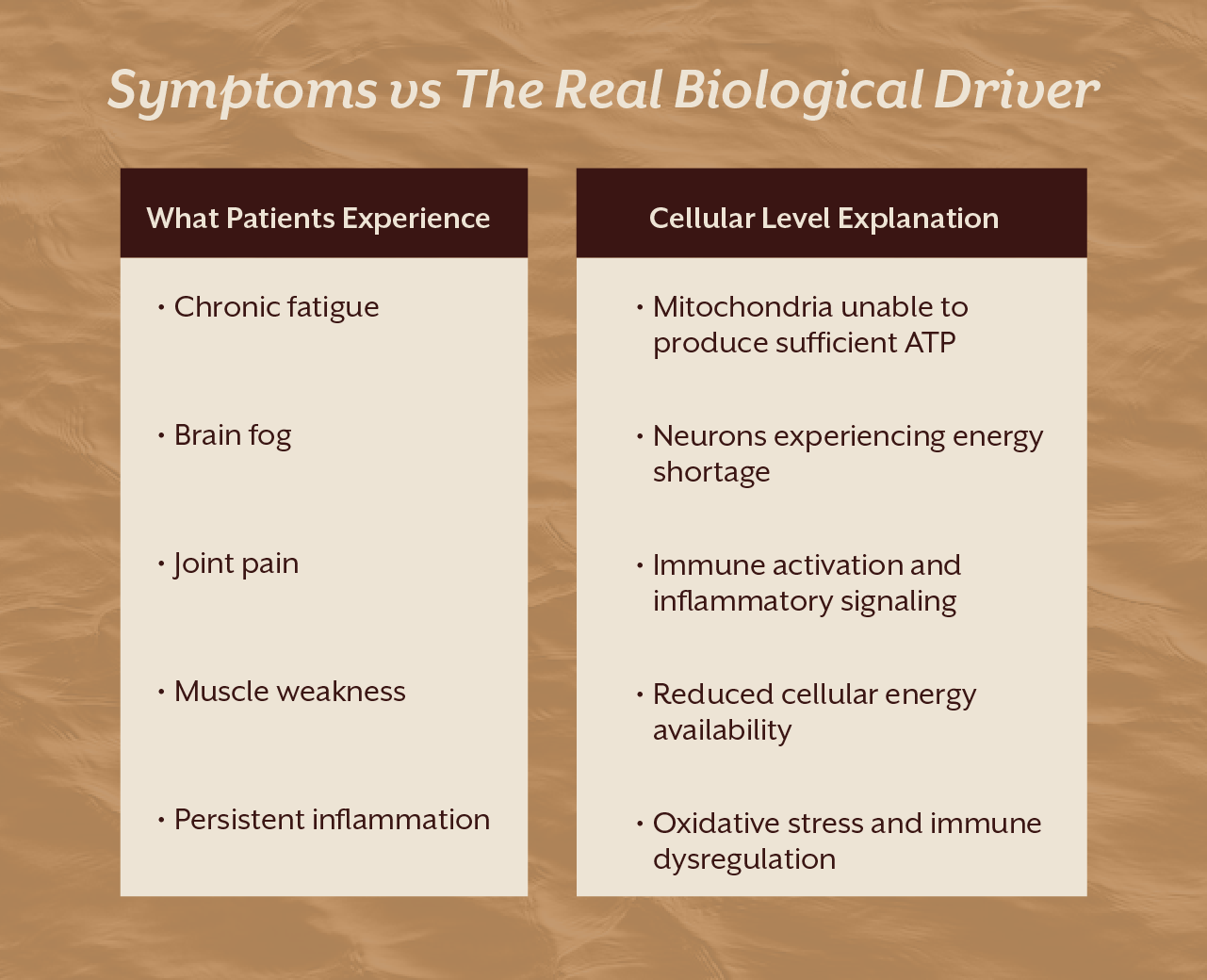
When Energy Production Declines Symptoms Begin to Scatter
One of the reasons chronic illnesses appear confusing is because symptoms rarely stay limited to a single organ system.
When mitochondrial stress spreads across the body, different tissues begin responding in different ways.
Muscles may develop weakness or fatigue. The brain may struggle with concentration and cognitive clarity. The immune system may become overactive, triggering autoimmune responses. Hormonal systems may lose balance. This explains why conditions like fibromyalgia, chronic fatigue syndrome, and autoimmune disorders often involve a wide spectrum of symptoms rather than a single complaint.
For example, individuals with chronic fatigue syndrome frequently report profound exhaustion that does not improve with rest. Research suggests that their cells struggle to generate sufficient ATP despite adequate oxygen and nutrients. The energy deficit becomes systemic.
In autoimmune diseases such as multiple sclerosis or rheumatoid arthritis the situation becomes even more complex. Mitochondrial dysfunction increases oxidative stress which damages cellular structures. Damaged proteins and lipids then trigger immune responses, leading the immune system to attack tissues that appear abnormal. The symptoms appear neurological, muscular, or joint related. But the underlying disruption often originates in cellular energy metabolism. At iThrive Alive this is why symptom based treatment rarely forms the starting point of our investigation. Instead the focus shifts toward identifying deeper drivers such as mitochondrial inefficiency, gut barrier disruption, microbial imbalance, nutrient deficiencies and inflammatory load.
Only when these systems are evaluated together can the true origin of symptoms begin to emerge.
When Energy Production Declines Symptoms Begin to Scatter
One of the reasons chronic illnesses appear confusing is because symptoms rarely stay limited to a single organ system.
When mitochondrial stress spreads across the body, different tissues begin responding in different ways.
Muscles may develop weakness or fatigue. The brain may struggle with concentration and cognitive clarity. The immune system may become overactive, triggering autoimmune responses. Hormonal systems may lose balance. This explains why conditions like fibromyalgia, chronic fatigue syndrome, and autoimmune disorders often involve a wide spectrum of symptoms rather than a single complaint.
For example, individuals with chronic fatigue syndrome frequently report profound exhaustion that does not improve with rest. Research suggests that their cells struggle to generate sufficient ATP despite adequate oxygen and nutrients. The energy deficit becomes systemic.
In autoimmune diseases such as multiple sclerosis or rheumatoid arthritis the situation becomes even more complex. Mitochondrial dysfunction increases oxidative stress which damages cellular structures. Damaged proteins and lipids then trigger immune responses, leading the immune system to attack tissues that appear abnormal. The symptoms appear neurological, muscular, or joint related. But the underlying disruption often originates in cellular energy metabolism. At iThrive Alive this is why symptom based treatment rarely forms the starting point of our investigation. Instead the focus shifts toward identifying deeper drivers such as mitochondrial inefficiency, gut barrier disruption, microbial imbalance, nutrient deficiencies and inflammatory load.
Only when these systems are evaluated together can the true origin of symptoms begin to emerge.
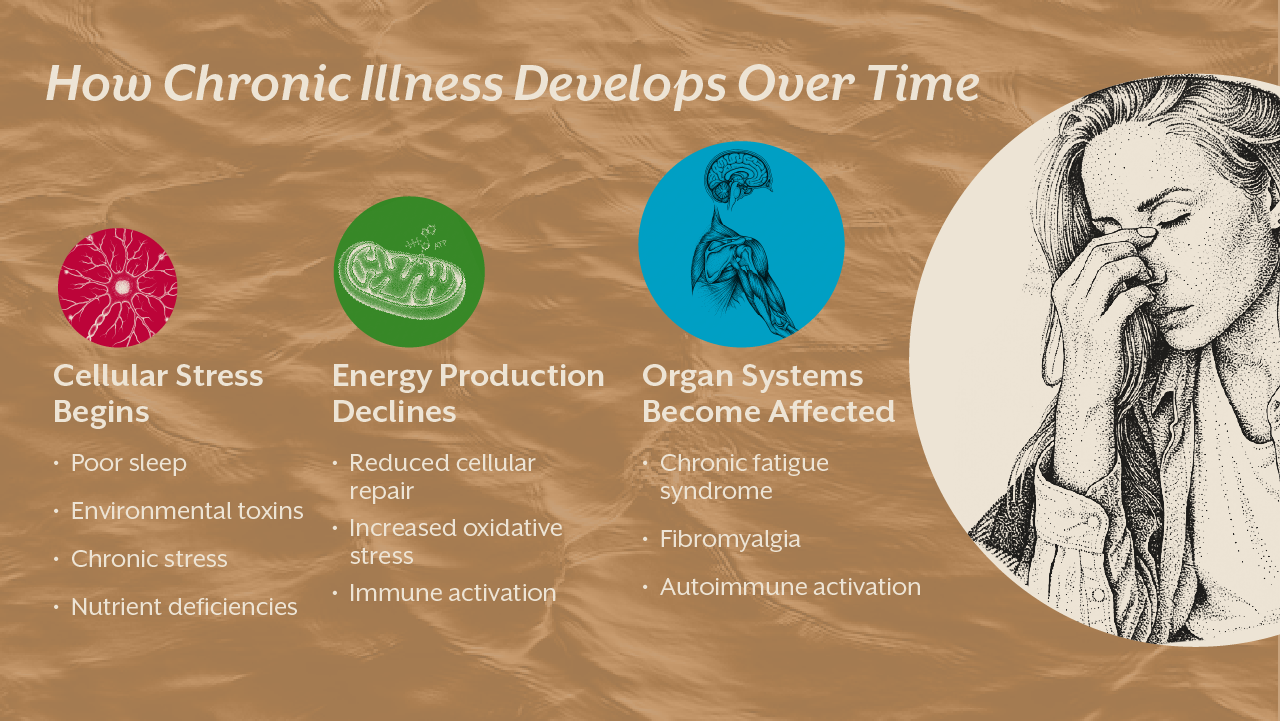
The Hidden Timeline of Disease Development
One of the most important ideas in metabolic medicine is that disease progression follows a timeline.
Symptoms appear only after biological stress crosses a certain threshold.
For years before this point the body attempts to compensate. Mitochondria increase their workload. Hormonal signaling adapts. The immune system adjusts its activity. These compensations can maintain stability for a surprisingly long time. But eventually the system reaches a point where compensation is no longer enough. This is when symptoms begin to surface.
Fatigue becomes persistent. Brain fog appears. Joint pain develops. Blood markers start drifting toward abnormal ranges. Sleep quality declines. Mood and cognitive clarity begin to shift.
Many people assume these changes represent the start of illness. In reality they often represent the end of a much longer biological process.
Understanding this timeline changes how chronic disease should be approached. Instead of waiting for severe symptoms or abnormal lab values, a systems model focuses on identifying the early disruptions that precede disease. Mitochondrial stress, metabolic inflexibility, gut barrier damage and chronic inflammation often appear years before diagnosis.
When these early patterns are addressed, the trajectory of illness can change dramatically. This is precisely the reason programs such as the iThrive Alive 3 months intervention focus heavily on restoring metabolic resilience rather than simply managing symptoms.
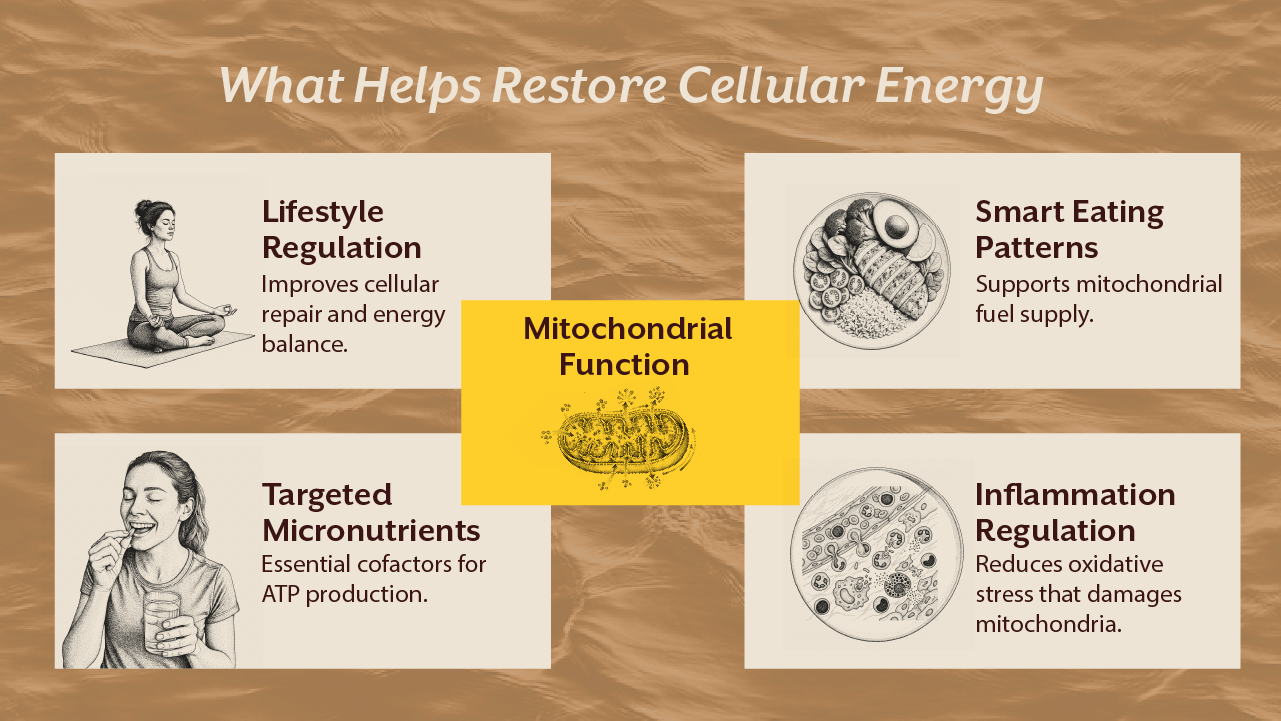
Lifestyle restructuring, targeted supplementation, and strategic nutritional protocols aim to restore cellular energy efficiency so the body can return to a state of repair and regulation.
Key Takeaway
Chronic illness rarely begins where symptoms appear. Conditions such as multiple sclerosis, chronic fatigue syndrome, rheumatoid arthritis and fibromyalgia often represent the final stage of a much longer biological process. Long before diagnosis the body may already be experiencing mitochondrial stress, metabolic imbalance, immune activation and reduced cellular repair capacity. Recognizing these early drivers transforms how disease should be understood and addressed. When interventions focus on restoring cellular energy systems through nutrition, lifestyle optimization and targeted supplementation, the body regains the ability to regulate inflammation, repair tissues and rebuild resilience. Chronic illness is not simply a collection of symptoms. It is a systems level disruption that begins quietly at the cellular level long before it becomes visible.











.webp)








.svg)