


read count

read time

Trending Post
.svg)
Nov 14, 2025
Is BMI an accurate measurement of your health?
Did you check your BMI? Learn what your BMI indicates about your health, the ranges and what they mean, and the next steps after analysis.
BMI, or Body Mass Index, is a basic calculation that compares your weight to your height. It gives you an idea of whether your current weight is in a healthy range or not. Knowing your BMI is important because it helps you understand if you are underweight, overweight, or at a balanced weight. These numbers are not just about appearance. They are closely linked to your risk of lifestyle disorders, hormonal imbalances, fatigue, weak immunity, and metabolic issues.
A lot of people guess their ideal weight based on what looks good or what others say, but assumptions can be misleading. Your BMI (Body Mass Index) can tell you whether your weight is in a healthy range for your height, but it doesn’t show the full picture of your health. You might have a normal BMI and still struggle with fatigue, bloating, or hormonal issues. That’s because BMI only measures weight, not what’s actually happening inside your body. At iThrive, we look beyond numbers through our Root Cause Analysis (RCA), which studies your blood markers, nutrition, and lifestyle to find what your body truly needs. So, while BMI is a good starting point, real health comes from understanding your root causes. Check your weight status with iThrive’s free BMI calculator.
iThrive’s BMI calculator online is designed to help you understand your current weight status in a quick and accurate way. Unlike random online tools, this BMI calculator India is part of a functional health approach. It gives you a clear idea of where you stand so you can take the next right steps.
You do not need any medical knowledge to use it. The process is simple and takes less than a minute.
How to use iThrive’s BMI calculator:
You will instantly see your BMI number along with the category it falls under. This quick calculation gives you a snapshot of your health status. Once you know your result, it becomes easier to understand what your body needs next. Interpret your BMI results.
Once you calculate your BMI using our Body Mass Index calculator, the next step is understanding what your number actually means. Here is a clear breakdown of the BMI categories along with what each range may indicate:
Underweight: < 18.5
If your BMI is below 18.5, it means your body weight may be lower than what is considered healthy for your height. This can be a sign of low muscle mass, nutritional deficiencies, poor absorption, weak immunity, or an underlying health condition. Book your RCA to find out why your BMI is low.
Normal: 18.5 - 24.9
This range is considered a healthy and balanced zone for most adults. It usually indicates that your weight is proportionate to your height and that your body is not under stress because of being too light or too heavy. However, even within this range, lifestyle and internal health still play a major role in how you feel. Even if your BMI falls within the normal range, it doesn’t always mean you’re completely healthy. Many people with a normal BMI still struggle with issues like fatigue, poor gut health, hormonal imbalances, or nutrient deficiencies. So while it’s a good sign that your weight is balanced, true health goes beyond numbers. Book your RCA (Root Cause Analysis) to know the full picture of your health.
Overweight: 25 - 29.9
A BMI in this range shows that your weight is higher than what is ideal for your height. Many people in this category do not notice changes immediately, but this stage often acts as a warning sign. It increases the risk of inflammation, insulin resistance, joint issues, energy fluctuations, and metabolic stress if not addressed on time. Book your RCA to understand the causes behind weight gain.
Obese: ≥ 30
A BMI of 30 or above means your body is carrying excess weight that can start affecting multiple functions. This range is linked to a higher risk of chronic conditions like diabetes, PCOS, hypertension, heart disease, fatty liver, hormonal imbalances and reduced mobility. Obesity is not just about eating more. It can also be driven by deeper issues in the body. Check your weight status with our BMI calculator for men, women, or kids and teens.

These categories help you understand where you currently stand, but BMI alone cannot explain why your number is higher, lower, or normal. The real insights come when you look deeper into the causes behind your weight.
Your BMI is more than a number. It is a signal from your body telling you that something may need attention. Whether it is higher or lower than the healthy range, it is important not to just follow random diets or workout fads. Instead, understanding the root causes behind your BMI can guide you to long-term health and sustainable results.
Many people think weight gain is always caused by eating too much, but it is rarely that simple. Several internal and external factors can contribute:
Understanding these causes allows you to approach weight management effectively. It shifts the focus from just losing weight to improving your overall health.
Book your RCA to identify why your BMI is low and improve your health.
Being underweight is also more complex than it seems. Simply eating more may not solve the problem because underlying issues could be preventing your body from gaining healthy weight:
Finding the real reasons for being underweight helps you improve energy levels, immunity, mental clarity and overall vitality, instead of just focusing on eating more calories.
Book your RCA to identify why your BMI is low and improve your health.
At iThrive, we believe your BMI calculator result is just the first step. Whether your BMI is low, high, or even within the normal range, it doesn’t show what’s happening inside your body. If you want to check your health status in detail, iThrive’s Root Cause Analysis (RCA) is the next step. Our approach is based on functional nutrition, meaning we don’t just focus on symptoms, we look at how your body functions as a whole.
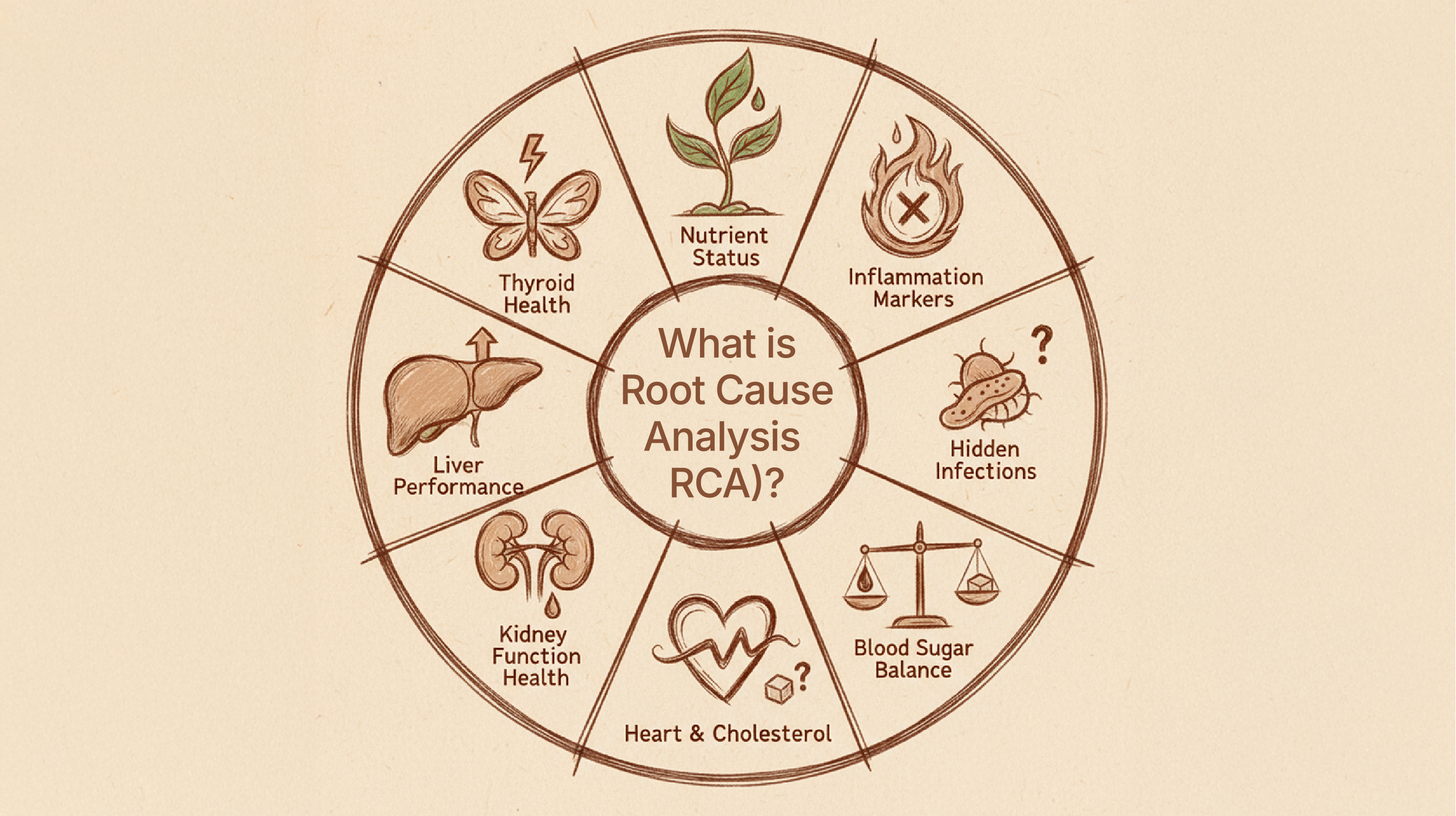
RCA is a comprehensive health assessment where more than 55+ blood parameters are analysed. Based on these, your full health status is evaluated, helping you understand why your body behaves the way it does, including weight management, energy levels, immunity, digestion, and hormone balance.
Checks vitamins and minerals like B12, Vitamin D, iron, magnesium, folate, and zinc.
Even mild deficiencies can affect metabolism, energy, muscle building, appetite, immunity, and fat storage. Identifying them early helps you take corrective action before health issues develop.
Assesses CRP, ESR, and uric acid to detect hidden chronic inflammation.
Chronic inflammation can silently affect weight, cause insulin resistance, fatigue, joint pain, or increase the risk of long-term conditions. Early detection allows preventive measures.
Undiagnosed infections can impact digestion, immunity, energy, skin health, and even weight. RCA uncovers these hidden causes.
Analyses insulin, HbA1c, and early signs of insulin resistance. Even with normal fasting glucose, your body may struggle with sugar balance. Detecting imbalances early can prevent weight fluctuations, cravings, energy crashes, or future diabetes.
Goes beyond HDL and LDL to check triglycerides, ApoB, oxidized cholesterol, and inflammation markers. Provides a real picture of cardiovascular risk, especially for people with high BMI, overweight tendencies, or metabolic concerns.
Examines BUN, creatinine, eGFR, uric acid, and electrolytes. Detects early kidney stress, toxin buildup, and mineral imbalances that may not appear in basic tests.
Tests SGOT, SGPT, GGT, and bilirubin. The liver regulates fat metabolism, hormone balance, and detox. Early detection of fatty liver or sluggish detox helps optimize metabolism and weight management.
Analyses TSH, Free T3, Free T4, reverse T3, and antibodies. Detects early thyroid issues or autoimmunity that can impact weight, energy, mood, and metabolism which is often missed in routine tests.

A BMI calculator is a powerful starting point. It helps you understand where you stand — whether you're underweight, in the healthy range, overweight, or obese. But BMI alone does not explain why your body is in that range.
If your result isn’t ideal, do not panic or jump into random diets. Focus on understanding what’s really happening inside your body. Root Cause Analysis helps you go beyond the number on the screen to uncover real reasons behind weight changes.
Start by checking your BMI with iThrive’s free BMI calculator.
If your BMI is too high or too low, take the smarter route. book your RCA, check your weight status, and book a free consultation.
iThrive’s BMI calculator India is suitable for men, women, kids, and teens. Find out what is my BMI in under a minute and start your journey to better health today.

Have you ever gone for a regular health checkup, received the reports, and been told everything is “normal,” yet you still feel tired, bloated, or unwell? Many people face this confusion. Their symptoms are real, but conventional reports do not reveal the underlying issues.
This happens because regular health checkups are designed to detect diseases, not to explore why your body is struggling. To truly understand your health and prevent problems before they become serious, you need a deeper approach. This is where Root Cause Analysis (RCA) comes in. RCA identifies the underlying reasons for your symptoms and helps restore balance in your body.
Let’s explore the differences between RCA and regular checkups in a simple way.
When it comes to understanding your health, both regular health checkups and Root Cause Analysis (RCA) serve important purposes, but their goals are very different.
A regular health checkup focuses mainly on detecting diseases or obvious abnormalities. It checks your vital parameters, basic blood markers, and organ functions to see if anything has already gone wrong. However, it doesn’t go deeper to find why certain symptoms are appearing or what is causing those changes in your body. In short, it tells you what’s wrong, but not why it’s happening.
An RCA health assessment, on the other hand, goes much further. It takes a preventive and investigative approach by looking at how different systems in your body are working together. RCA in healthcare doesn’t just look for disease, it looks for imbalances and early warning signs that can lead to disease later. It helps you understand the root cause of your health issues before they become serious.
For instance, if your blood sugar is slightly high, a regular checkup might simply mark it as “normal” since it hasn’t crossed the diabetic range. But an RCA health check will dig deeper to understand why it’s rising, whether it’s due to stress hormones, infection and inflammatory markers, or nutrient deficiencies, and help you correct it before it becomes a chronic problem.
That’s the key difference between RCA and regular checkups. While a regular health screening provides a surface-level snapshot of your current state, a root cause health check gives you a detailed map of what’s happening beneath the surface.

When you visit a doctor with a symptom, for example, stomach pain, a regular health checkup usually focuses only on that one problem area. The doctor might ask what you ate last night, prescribe some medicines for acidity or gas, and send you home.
In most cases, only the immediate symptom is addressed, not the reason behind it. The pain may go away temporarily after taking medicines, but once you stop them, it often returns. This happens because regular health checkups do not go deep enough to find the root cause of your discomfort.
Typically, a regular health screening will measure:
While these are important, they only show a small part of your health story. You might still feel unwell even if everything looks “normal” on paper.
An RCA health assessment goes much deeper. It analyses 55+ parameters to understand how your body is functioning as a whole. Instead of just focusing on symptoms, it uncovers the root cause of why those symptoms are happening.
Here’s what is analysed in RCA:
1. Nutrient Status
Regular health checkups only focus on whether your vitamin and mineral levels fall within a broad “normal” range. RCA digs deeper into key nutrients like Vitamin D, B12, iron, magnesium, zinc and folate to understand how your body is actually functioning. Even slight deficiencies can lead to fatigue, hair fall, low mood, weak immunity or hormonal imbalance before they show up as a disease. RCA helps catch these imbalances early so you can correct them before they affect your health.
2. Inflammation Markers
In a routine checkup, inflammation is usually not tested unless you're in visible pain or have an active condition. RCA checks markers like HS-CRP and ESR to detect hidden, chronic inflammation that may be silently damaging your body. This type of inflammation is often linked to weight gain, insulin resistance, joint pain, heart risk and autoimmune issues. Catching it early helps prevent long-term disease.
3. Hidden Infections
If you go to a doctor with stomach pain or fatigue, you're often given medicines without checking what’s actually causing it. RCA looks beyond symptoms and identifies patterns linked to underlying infections such as H. pylori, candida, EBV, parasites or UTIs. These infections don’t always show up in basic tests but can cause acidity, bloating, low energy, acne or poor immunity for years if not addressed.
4. Blood Sugar Balance
A regular checkup usually stops at fasting or random blood sugar levels. RCA evaluates parameters like insulin, HbA1c and signs of insulin resistance to understand how your body is managing sugar over time. You may not be diabetic, but you could already be experiencing early imbalance leading to weight gain, cravings, brain fog or energy crashes. RCA helps you correct it before it becomes a bigger issue like diabetes.
5. Heart & Cholesterol Health
Instead of only checking HDL and LDL like a normal test, RCA examines a complete heart health picture. Many people are told their cholesterol is “okay” when deeper markers show hidden stress. RCA gives a more accurate idea of heart health so you can take preventive steps.
6. Kidney Function
Basic tests only look at creatinine, which changes when damage has already started. RCA goes further by analyzing BUN, eGFR, uric acid and electrolyte balance to detect early kidney stress. This helps catch toxin buildup, mineral imbalance and dehydration-related strain before it turns into a chronic kidney issue.
7. Liver Performance
The liver doesn’t just process food, but it also regulates hormones, detoxifies the body and supports digestion. Regular checkups rarely interpret liver function deeply. RCA examines markers like SGOT, SGPT, GGT and bilirubin to detect toxin overload or sluggish detox. Early detection can prevent fatigue, acne, migraines, skin issues and metabolic slowdown.
8. Thyroid Health
Most doctors only test TSH and assume everything is fine if it falls within the range. RCA analyses the full thyroid panel, including Free T3, Free T4, and antibodies to uncover conversion issues, autoimmunity or early thyroid decline. This gives answers to symptoms like weight gain, hair loss, mood swings and low energy that regular tests often ignore.

One of the biggest differences between Root Cause Analysis (RCA) and regular health checkups is how your reports are understood.
In regular health checkups, your reports are compared to reference ranges. These ranges are based on the average population, not on what is truly healthy. The problem is that a large part of this “normal” population already has hidden health issues. So even if you feel tired, bloated, low on energy, moody, or unwell, your reports may still be considered “fine.” This approach mainly focuses on detecting disease after it develops, not on finding the root cause of why your body is struggling.
In Root Cause Analysis (RCA), your results are interpreted using optimal ranges, not just basic normal ranges. These ranges are narrower and based on what supports real health, energy, and prevention and not just the absence of disease. Even slight imbalances are taken seriously because they can explain symptoms like fatigue, hair fall, weight gain, brain fog, poor digestion, or mood changes. Instead of waiting for a condition to worsen, RCA focuses on early detection and addressing the root cause before it turns into a long-term problem.
Root Cause Analysis is not only for people with a diagnosed disease. It is for anyone who wants deeper answers and long-term solutions instead of temporary symptom relief. Even if you don’t have any health issues, you can get it done to understand your overall health status and prevent future imbalances.
If you relate to any of these situations, an RCA health assessment can give you the clarity and direction that regular checkups often miss.
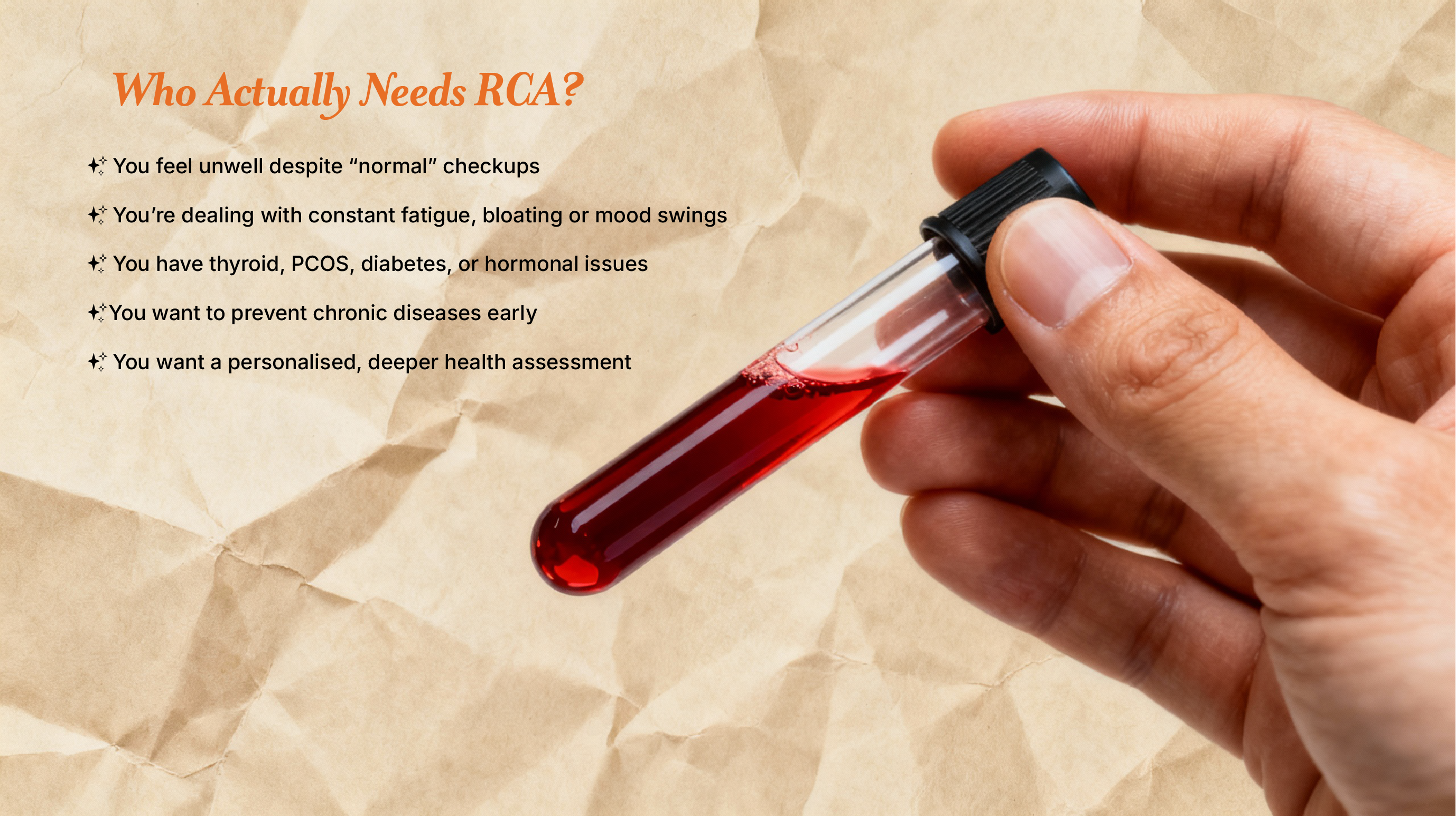
At iThrive, we specialise in Root Cause Analysis to help you finally understand what your body is trying to tell you. If you're dealing with symptoms, feeling stuck despite normal reports, or simply want to take preventive action, this is the right time to begin.
If you're struggling with chronic conditions like IBS, thyroid disorders, PCOS, diabetes, fatty liver, autoimmune issues, hormonal imbalance, skin problems, anxiety, or constant fatigue, a regular checkup may not give you the answers you need. At iThrive, we use a personalised approach to understand what’s really happening inside your body and create customised plans through nutrition, lifestyle changes, supplementation, and targeted healing strategies. You don’t have to live with recurring symptoms or temporary fixes.
.png)
Ever noticed unusual white patches in your mouth, itchy bumps on your skin, or changes in your nails and wondered what’s happening? It could be Lichen Planus (LP), a condition where your immune system mistakenly attacks your own cells, causing inflammation in the skin, mouth, scalp, or nails. You might see white or red patches in your mouth, purple bumps on your skin, thinning hair on your scalp, or ridges and splitting in your nails.
This blog will help you understand the different types of Lichen Planus, the symptoms to watch out for, and simple ways to take care of your mouth, scalp, and nails. If you notice any of these signs, reach out to us. At iThrive, we do a root cause analysis to find the real reasons behind these changes and offer long-term solutions that help you manage Lichen Planus effectively while supporting your overall health.
Lichen Planus is an autoimmune inflammatory condition that happens when your immune system starts attacking your own skin and mucous cells by mistake. This reaction leads to inflammation, which can show up on different parts of the body like the mouth, scalp, nails, or skin.
It’s not an infection or something that spreads from one person to another. Rather, it’s your immune system reacting in the wrong way and that’s why finding the root cause is so important. The exact reason behind Lichen Planus isn’t always clear, but several factors can trigger the autoimmune response like stress, genetic tendency, certain medicines, infections like Hepatitis C, poor gut health, or hormonal imbalance may all play a role in triggering it. Even long-term inflammation in the body can set the stage for it.
Even though it’s not contagious, Lichen Planus can cause discomfort, irritation, and affect confidence, especially when it involves visible areas like the scalp or nails. Understanding what’s happening inside your body is the first step toward managing this condition in a healthy, natural way.
What it is:
Oral Lichen Planus is a type of autoimmune disorder that affects your mouth. It’s one of the most common forms of Lichen Planus and can sometimes last for months or even years if not treated properly.
You might notice thin, white, lacy patches also known as Wickham's striae, small red bumps, or painful sores inside your mouth. These are usually seen on the inner cheeks, gums, tongue, or lips. In some cases, they may not hurt but can make your mouth look uneven, while in others, they cause a burning or stinging feeling especially when eating spicy or hot foods.
Common symptoms:
Simple care tips:
If you notice painful sores or white patches that don’t heal within a few weeks, don’t ignore them. Many times, even when you visit a doctor, you might be prescribed oral gels or medicines that help with pain or inflammation. While these can give temporary relief, the symptoms often come back once the medicines stop.
To truly heal, it’s important to understand why this is happening in the first place. Through our Root Cause Analysis (RCA), we identify what’s really causing Oral Lichen Planus. Don’t just manage Oral Lichen Planus, heal it from the root. Book your RCA with iThrive today.
What it is:
Scalp Lichen Planus, also known as Lichen Planopilaris, is a form of Lichen Planus that affects the scalp and hair follicles. In people with Scalp Lichen Planus, the body’s defense system gets confused and starts reacting to its own hair follicle cells as if they’re foreign invaders, leading to inflammation, redness, itching, and gradual hair loss. If not treated on time, it can even cause scarring, which prevents new hair from growing back.
You may notice patches of hair thinning, red or scaly spots, and constant itching or burning on certain areas of your scalp. Sometimes, these patches feel sore or tender to touch. This condition can be emotionally distressing because of visible hair loss, but understanding the cause can make a big difference in recovery.
Common symptoms:
Simple care tips:
If you notice patchy hair loss or constant itching that doesn’t improve, it’s important to take action early. Many people try topical creams or medicated shampoos that bring temporary relief, but the problem keeps returning because the underlying cause remains untreated.
At iThrive, we go beyond symptoms. Through our Root Cause Analysis (RCA), we help you find out why your immune system is attacking your scalp, whether it’s due to hormonal imbalance, gut inflammation, or nutritional deficiencies. Once we find the reason, we design a personalized healing plan to calm your system and support natural hair recovery.
What it is:
Nail Lichen Planus affects the nails on your hands or feet and is often overlooked until noticeable changes appear. It happens when your immune system mistakenly attacks the nail matrix, which is the part of your skin responsible for nail growth. This confusion leads to inflammation, causing your nails to become thin, ridged, split, or even fall off in severe cases.
You might first notice tiny grooves, discoloration, or brittleness, and sometimes the skin around the nails becomes tender or swollen. Nail Lichen Planus can affect one nail or several, and while it’s not life-threatening, it can cause pain, discomfort, and affect your daily activities.
Common symptoms:
Simple care tips:
If your nails are changing in color, texture, or strength and don’t improve over time, it’s a sign your body might be signaling something deeper. Many creams or medications only treat the surface, giving short-term improvement.
At iThrive, we look deeper. Through our Root Cause Analysis (RCA), we help you understand why your immune system is attacking your nails, whether it’s a gut imbalance, nutrient deficiency, or autoimmune trigger. Once the cause is known, we design a personalized healing plan to restore immune balance and promote healthy nail growth from the root.
What it is:
Skin Lichen Planus is a type of autoimmune condition that affects the outer layer of your skin. In this case, your immune system gets confused and attacks healthy skin cells, causing inflammation. This leads to purple, flat-topped, itchy patches that may appear anywhere on your body, commonly on the wrists, ankles, back, or lower legs. The patches can sometimes form shiny or scaly surfaces, and scratching may make them sore or even cause small wounds.
You might notice clusters of bumps that are intensely itchy, and over time, these patches can spread or merge. While Skin Lichen Planus isn’t life-threatening, it can be very uncomfortable, interfere with sleep, and affect confidence or daily life.
Common symptoms:
Simple care tips:
If you notice persistent itchy patches or new spots appearing on your skin, it’s often more than just a surface issue. Many creams or ointments may temporarily soothe symptoms, but the root cause often remains untreated.
At iThrive, we dig deeper. Through Root Cause Analysis (RCA), we identify why your immune system is reacting against your skin, whether it’s linked to stress, gut imbalance, nutrient deficiencies, or other autoimmune triggers. Once the cause is clear, we create a personalized healing plan to calm inflammation, restore skin health, and promote long-term relief from the root.
If you are dealing with Lichen Planus, you don’t have to just manage the symptoms, you can heal from the root. Book a free consultation with iThrive today.
iThrive Alive is the disease reversal program designed to help people reclaim their health without relying on lifelong medication. It has helped thousands of clients across India and globally reverse chronic conditions and rebuild their health through root-cause healing.
The journey begins with a comprehensive Root Cause Analysis (RCA), where lab test results and clinical symptoms are interpreted through a functional lens. Once the root imbalances are identified, a personalized healing plan is created, including:
With iThrive Alive, Lichen Planus is addressed at its core, helping you restore balance, reduce flare-ups, and support long-term wellness.
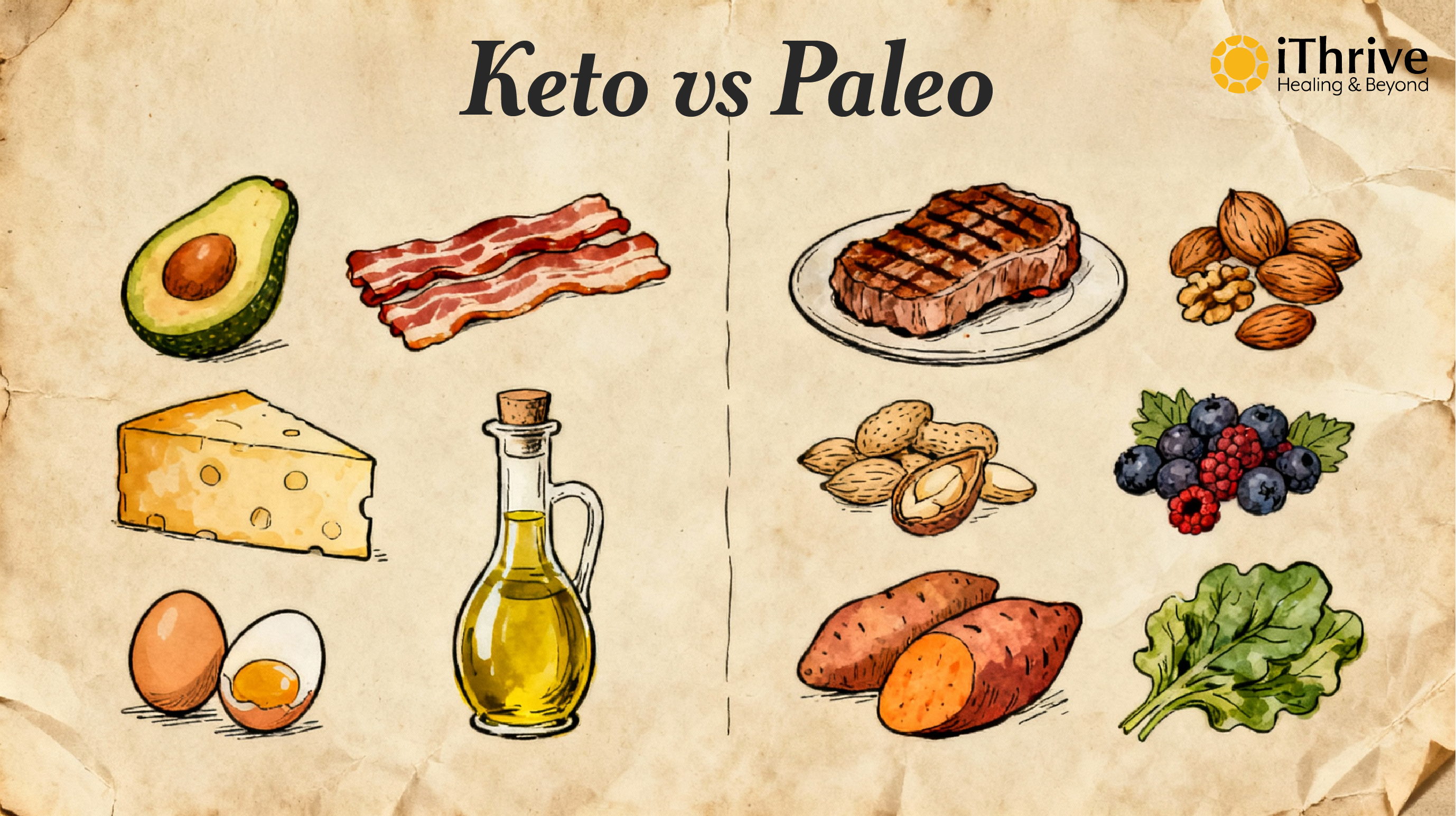
You’ve probably heard a lot about diets like Keto and Paleo. Many people try them for weight loss, more energy, or better overall health. They can seem very appealing because they promise quick results and improvements in things like gut health or hormones.
But the truth is, not every diet works for everyone. Some people may feel great on Keto, while others might experience fatigue, mood changes, or other health issues. The same is true for Paleo, what works for one person might not suit someone else. If you have landed on this page, surely your question might be: Is the Keto diet or Paleo diet safe?
This blog will provide an insight into the Keto and Paleo diets, helping you understand what they are, how they work, when they can support your health, the possible risks, and how to use them safely based on functional nutrition principles.
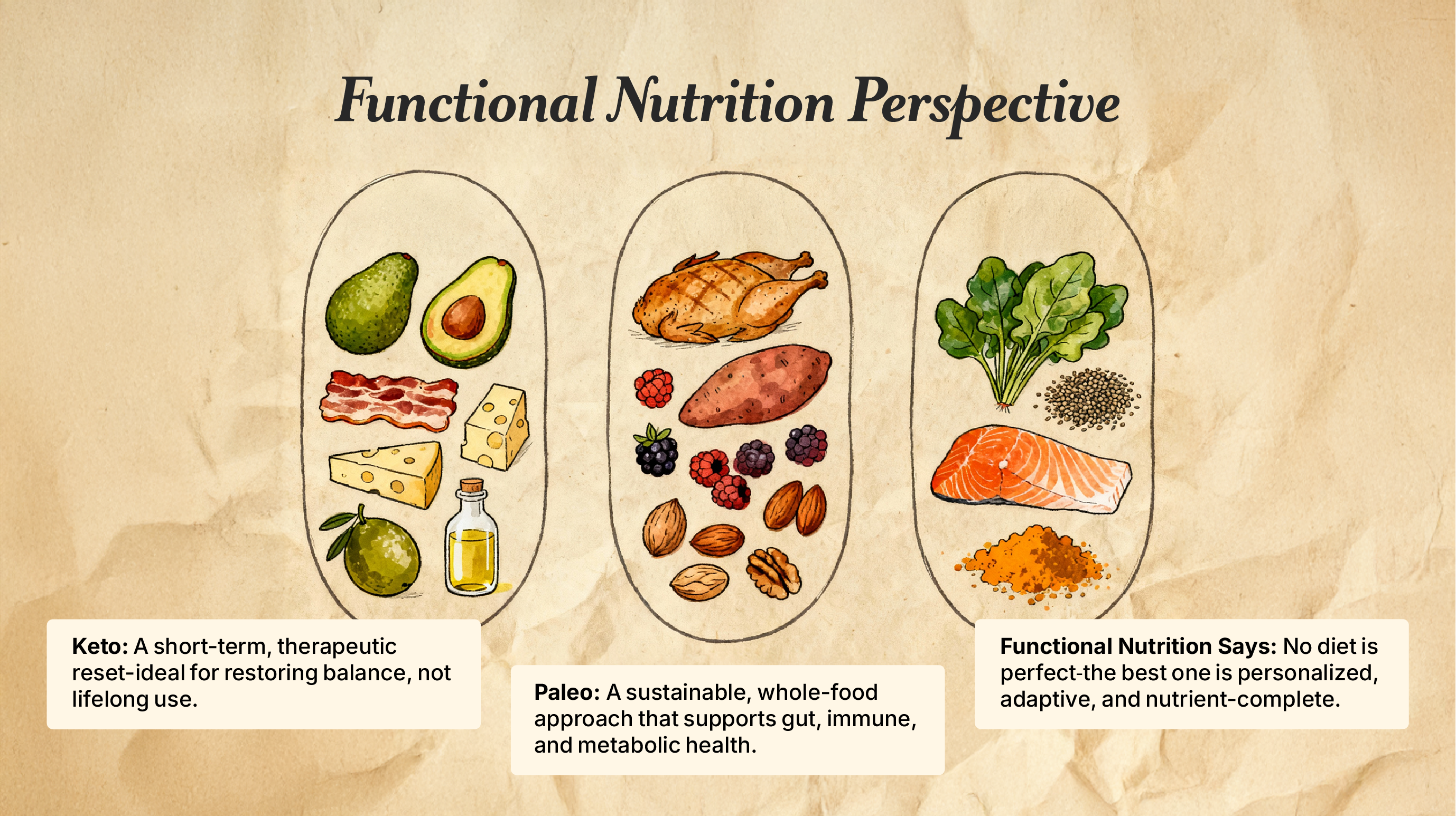
The Ketogenic (Keto) diet is a very low-carb, high-fat diet that puts your body into a state called ketosis, where it uses fat for energy instead of glucose. People following the Keto diet usually keep their carbohydrate intake very low often under 50 grams per day. They focus on eating high amounts of healthy fats like butter, ghee, coconut oil, olive oil, nuts, and seeds. Protein is moderate, coming from eggs, meat, fish, and dairy (if tolerated).
At the same time, they avoid most grains, sugar, starchy vegetables (like potatoes and corn), and fruits that are high in sugar. Essentially, it’s about replacing the energy you usually get from carbs with fat, so the body learns to burn fat for fuel instead of sugar.
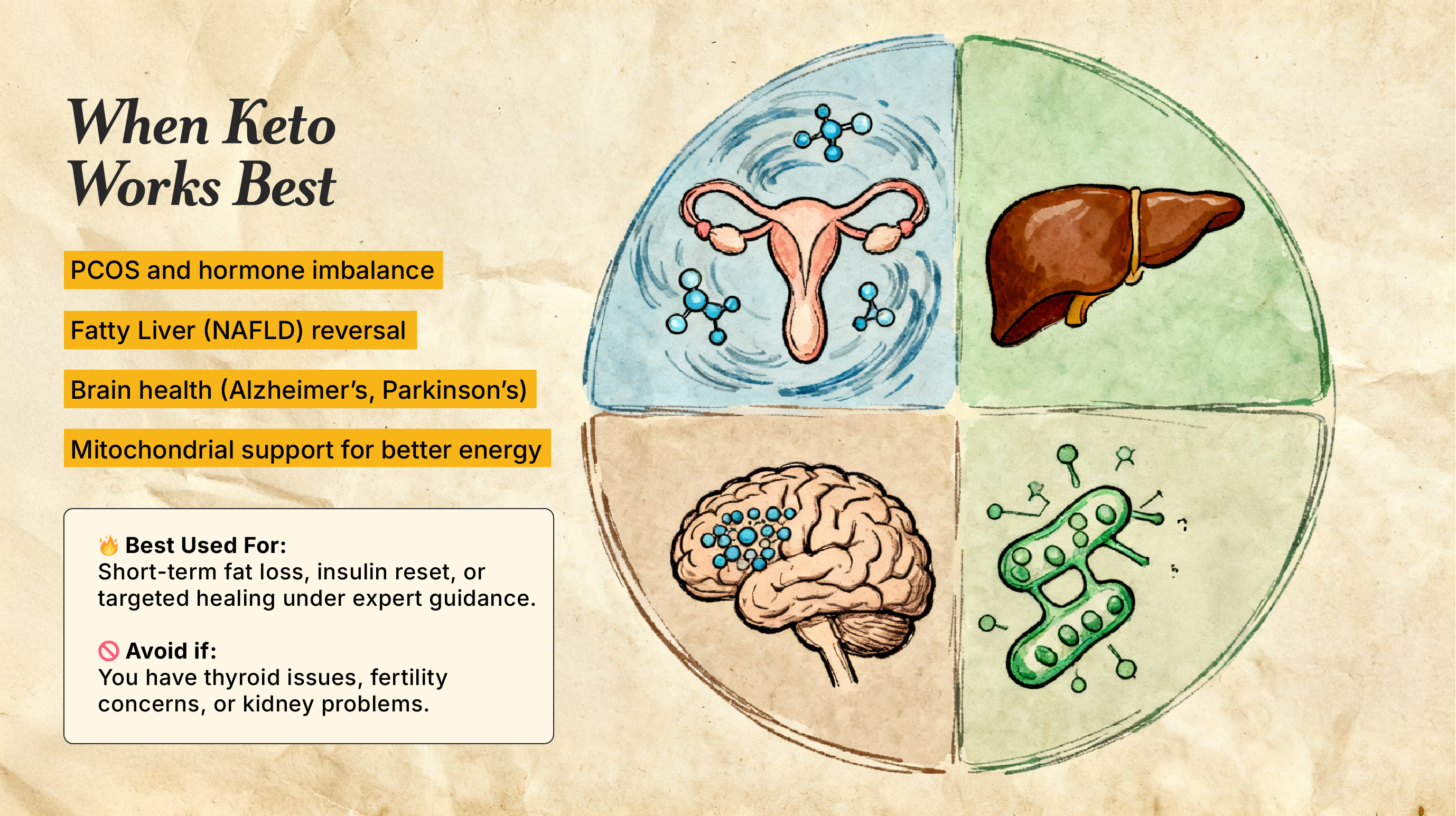
The Keto diet can be really useful, but mostly for short-term or specific medical reasons. Here’s when it can actually help:
Keto isn’t perfect for everyone, and using it long-term or without guidance can cause some problems:

Functional nutrition sees Keto mostly as a short-term, targeted tool, not a permanent diet. It can help improve metabolic health, manage conditions like PCOS, and support brain function, but only when done safely. Working with an expert ensures you get enough nutrients, cycle carbs when needed, and avoid hormonal or metabolic stress. The goal is temporary support, helping your body heal and function better, before transitioning to a more balanced, sustainable way of eating.
In other words, Keto can be a powerful tool when used intentionally and temporarily, but the ultimate aim is to help your body move toward a more balanced, sustainable way of eating afterward.
The Paleolithic, or Paleo, diet is basically about eating real, whole foods. People on this diet focus on vegetables, fruits, nuts, eggs, fish, and lean meats while avoiding grains, dairy, and processed sugars. In practice, someone following Paleo might skip bread, pasta, or milk, and instead have meals like grilled fish with veggies, omelets with greens, or a handful of nuts as a snack.
Wahls Paleo Level One is a gentler version of the Paleo diet designed to reduce inflammation and support healing, especially for autoimmune or chronic conditions. It focuses on adding a lot of nutrients to your meals like 6 to 9 cups of vegetables a day, including leafy greens, colorful produce, and sulfur-rich veggies such as cabbage, onions, and mushrooms. It also includes clean protein like fish, eggs, poultry, or grass-fed meat, along with healthy fats from nuts, seeds, olives, avocado, and coconut. At the same time, it avoids gluten, dairy (except maybe ghee), refined sugar, and processed foods, and removes eggs only if you're sensitive. The goal is to nourish the body deeply without making the diet too restrictive.
Level Two is a slightly stricter version of Level One. You still focus on lots of vegetables, clean protein, and healthy fats, but now you start removing more foods that may cause inflammation. This level cuts out all grains, beans, and potatoes. It also encourages adding things like fermented foods and seaweed for extra gut and mineral support. The idea is to go a little deeper in healing without making it overwhelming. People following this avoid grains and limit potatoes or beans, while including fermented foods and seaweed.
Level Three is the most therapeutic and is almost like a mix of Paleo and keto. It removes all grains, beans, potatoes, and limits fruit to small amounts. It also includes intermittent fasting and increases healthy fats so your body can shift into using fat for energy. This level is usually used for serious autoimmune or neurological conditions and is meant to support deep healing, brain function, and inflammation control. This is a more intensive approach that is also ketogenic. It eliminates all grains, pulses, and potatoes, limits fruit, and incorporates intermittent fasting. This version is often used for autoimmune conditions or neurological disorders like Multiple Sclerosis.
While the Paleo diet offers many benefits, it’s important to be aware of some potential drawbacks so you can follow it safely and effectively.
Functional nutrition experts view the Paleo diet as a powerful and flexible tool, rather than a strict rule everyone must follow. When used thoughtfully, it can help manage inflammation, support the immune system, and improve metabolic health. But the main thing is you should make sure the diet fits your body, your lifestyle, and your health goals. This means including enough nutrients, balancing protein, healthy fats, and carbs from vegetables and fruits, and making the diet practical and sustainable for daily life.

In today’s world, where Artificial Intelligence is entirely transforming everything right from how we shop to how we manage our health, it’s quite easy to assume that the future or wellness will be entirely driven by data. AI can surely decode lab results in seconds, predict risks of diseases, and even generate health plans on the basis of algorithms. But health is never about just data. It’s mindset, emotion, along with the intricate story of every individual’s life.
That’s where iThrive Alive stands apart. While AI systems promise efficiency, iThrive Alive promises evolution, a far deeper, much more connected, personalised journey that honours the human experience. Alive does not just optimize the metrics of your body, it transforms the way you eat, live, feel, and think.
To truly understand this contrast, this blog will unpack how human-led nutrition through iThrive Alive stands apart from AI-based nutrition systems. We’ll explore how functional nutritionists through empathy, intuition, and science offer something no algorithm ever can: real connection, real transformation, and real healing.
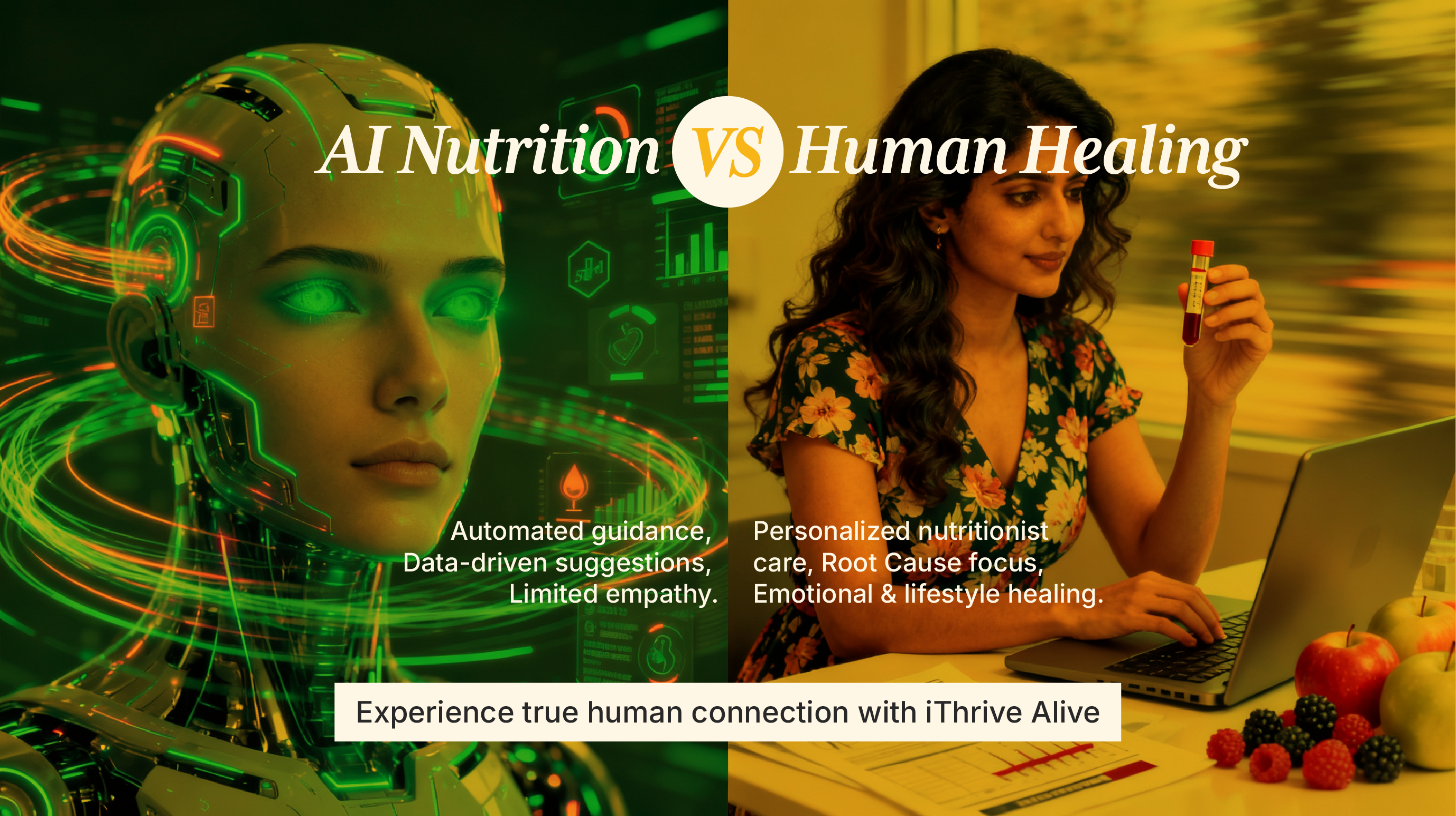
The most profound difference amongst iThrive Alive as well as AI-led health systems lies in one of the simplest truths that humans heal humans.
Every Alive client is well paired with a dedicated Functional Nutritionist, a person who understands, listens, and even walks alongside you through the process of healing. This is not an automated dashboard pushing generic tips. It’s a one-on-one partnership well rooted in expertise and empathy.
Your nutritionist becomes your anchor, someone who does not just advise on supplements or the food protocols but also supports you emotionally and mentally via the ups and downs of transformation. At iThrive Alive, healing is just relational, but not transactional.
AI can process symptoms. But it can’t sit with you when you’re struggling to stay consistent, or when emotional eating takes over after a hard day. Alive nutritionists act as both healers and guides, helping you navigate trauma, mindset blocks, and spiritual disconnection. They identify that sustainable health comes from harmony amongst factors like soul, mind, and body, not just from “perfect” values of labs.
Consistency builds transformation, and that’s where the iThrive Alive approach shines. Your nutritionist tracks your daily journey like your meals, milestones, mood, and even helps you make real-time adjustments. They encourage discipline not through pressure, but rather through comparison as well as presence. This high-touch model of care is something AI simply can’t replicate. Because healing surely needs conversation, and not computation.
AI systems are exceptional at analyzing large datasets. They can instantly read your blood reports, genetics, and biomarkers, generating structured advice in seconds. But what AI often misses is the why behind such numbers.
At iThrive, science meets soul. iThrive Alive uses the precision of diagnostics through tools like Root Cause Analysis, metabolomic testing, and Self-Decode DNA test, but interprets them with human insight. The focus isn’t just on what’s “abnormal,” but on why your body fell out of balance in the first place.
The Root Cause Analysis program is at the heart of iThrive’s philosophy. It uncovers hidden factors such as toxin buildup, infections, nutrient deficiencies, or even hormonal imbalances, the elements that algorithms can detect, but not contextualise. A functional nutritionist, however, sees how such imbalances relate to your environment, lifestyle, and emotions, and crafts a protocol that supports your entire being.
Functional Nutrition works on the belief that every individual is biologically unique. AI platforms tend to apply broad templates, even when customized by data. But two people with the same lab report can have entirely different healing paths.
Alive’s approach honours that uniqueness, each plan is custom-built for you, integrating lifestyle interventions, food protocols, and smart supplementation tailored to your body’s rhythm.
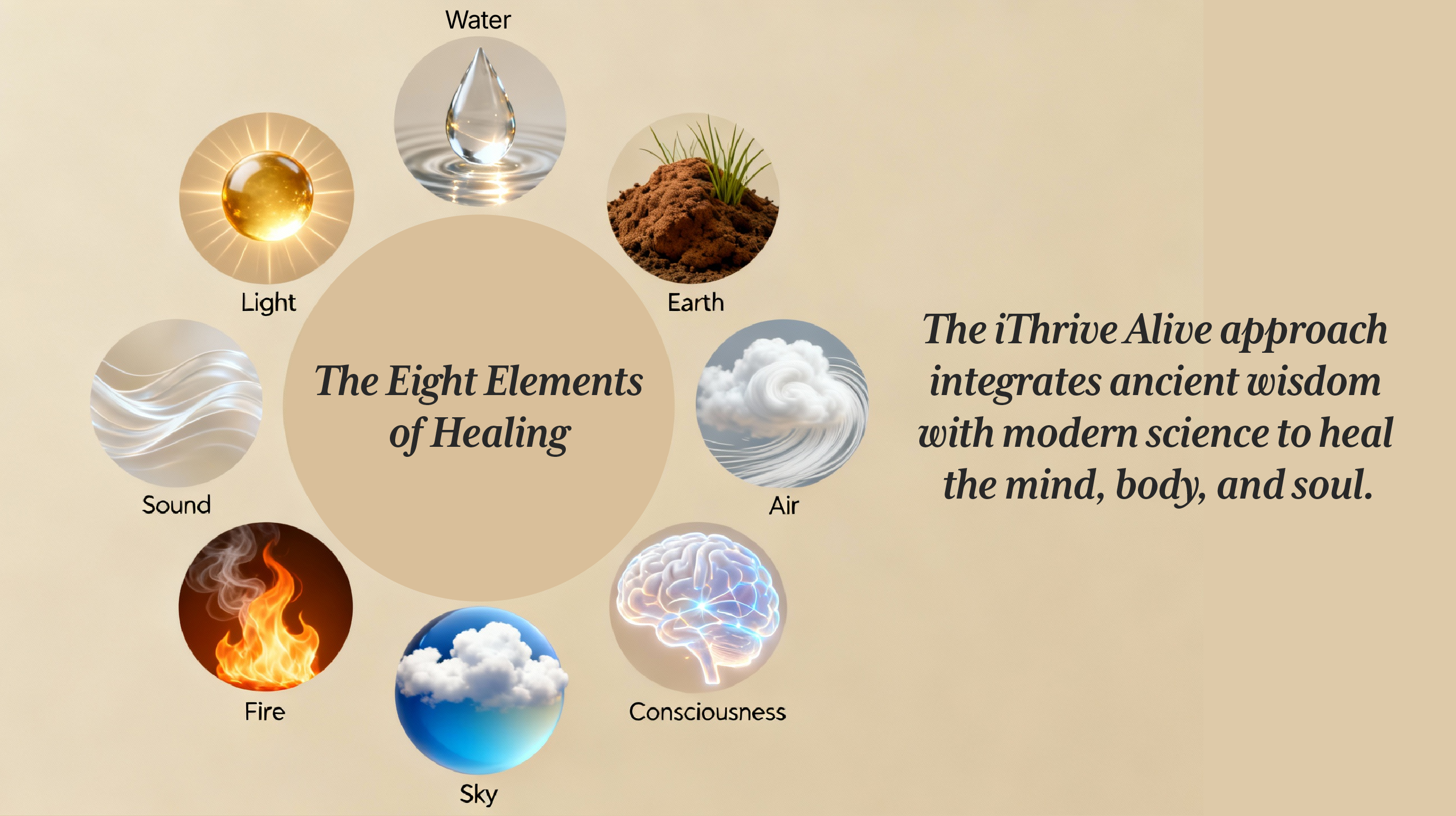
What truly sets iThrive Alive apart is its integration of ancient healing wisdom. The program draws from 8 elements that are Light, Earth, Air, Sky, Water, Sound, Fire and Consciousness to design various healing experiences that reach far beyond biology. These principles connect emotional, physical, and energetic aspects of life, further nurturing complete well-being in ways AI can’t measure.
AI might help you optimize data points, but iThrive Alive helps you to change your life. Through the help of structured guidance, nutritionists help clients rewire subconscious habits, rebuild their relationship with food, along with cultivating new patterns of thought that sustains wellness long-term.
Alive is not about temporary fixes, it’s rather about permanent transformation.
AI is accurate, fast, and data-centric. But humans, rather especially trained Functional Nutritionists are empathetic, intuitive, and context-driven.
An algorithm may flag your reports as “normal,” but your nutritionist will listen when you say, “I still feel tired every afternoon.” At iThrive Alive, such symptoms are never dismissed. They are clues like the pieces of your body’s narrative that results in deeper discovery.
Healing is not always logical. Sticking to a food protocol isn’t about willpower, it’s about emotional readiness. The nutritionists understand the human side of change: social pressure, cultural food norms, cravings, and fear of deprivation. Through perspective shifts and practical coaching, they help you find joy in nourishment rather than restriction.
Many AI health tools are extensions of the “sick-care” model focused on managing disease rather than creating wellness.
iThrive Alive, like all iThrive programs, stands for preventive, food-based healing.
It believes in reversing disease at its roots rather than just managing it with temporary solutions. Food becomes medicine, health becomes a lifelong state of thriving, and lifestyle becomes therapy.

Crafted with in-depth research and well rooted in real disease care, iThrive Alive offers a premium healing tailored for true transformation.
Every protocol is uniquely designed on the basis of the needs of your body, health goals as well as test results. No templates, JUST YOU.
Healing is sustained via exclusive access to the iThrive Tribe community for motivation, daily support, along with learning. You are never alone on your journey towards wellness.
Artificial Intelligence may be the future of data, but you are much more than your data. You are a collection of emotions, stories, energies, and memories that no machine can ever quantify better than humans.
iThrive Alive is built to bring wisdom, science, and compassion into the healing journey that’s significantly personal.
If AI represents automation, Alive represents awareness.
If AI is efficient, Alive is quite emphatic.
And lastly, if AI is about precision, Alive is about both - precision and presence.
In the end, it’s never whether AI can replace human health systems, it’s rather whether it should. Because true healing does not come from algorithms, it comes from understanding and care.
That’s what makes iThrive nutritionists different from AI based nutritionists.

Your gut is more than just a place that digests food, it plays a big role in your overall health. A healthy gut can boost your energy, improve your mood, strengthen your immunity, and even make your skin glow. But when your gut is not working well, you might feel tired, bloated, moody, or notice skin problems. Gut harmony means your digestive system and the good bacteria in your gut are working together smoothly. When this balance is right, your body digests food properly, absorbs nutrients efficiently, and keeps your mind and body feeling their best. In simple words, a gut in harmony helps you feel lighter, healthier, and more energetic every day.
In this blog, we will focus on how to know if your gut is healthy or not, what causes gut problems, digestive health tips, ways to support your digestion and bring your gut back into balance. An insight from iThrive’s POV.
Not everyone knows when their gut is out of balance, but there are signs you can notice in everyday life. If your gut is healthy, you usually have regular bowel movements, feel light and energetic, your skin looks clear, and your mood stays steady. On the other hand, if your gut is struggling, you might experience bloating, gas, constipation or diarrhea, fatigue, brain fog, mood swings, or even skin problems like acne or rashes. Paying attention to these signals can help you understand how your digestive system is doing and whether it needs some care.
If you are facing any gut-related issues and aren’t sure what’s actually going wrong, don’t ignore the signals. You can book a free consultation with iThrive, where our team of experts will help you assess your symptoms, guide you towards better personalised solutions and provide you ways to support your digestion.
Gut problems often happen because of common lifestyle habits that we may not even notice.
These common habits reduce gut microbial diversity, making digestion inefficient and causing fatigue, weaker immunity, mood swings, and other health issues.

Fiber is one of the most important nutrients for gut health and considered healthy gut habit. It acts as food for the good bacteria in your gut, helping them grow and keep your digestive system balanced. Fiber also adds bulk to your stool, making bowel movements smooth and regular. Without enough fiber, digestion can slow down, which often leads to bloating, constipation, gas, or general stomach discomfort. Over time, low fiber intake can even affect your metabolism and overall energy levels. Here are some of the digestive health tips:
Water plays a crucial role in digestion and overall gut health. It helps break down the food you eat, allows nutrients to be absorbed efficiently, and helps move waste through your intestines. When your body is dehydrated, digestion slows down, which can lead to constipation, bloating, and discomfort. Staying hydrated also supports the good bacteria in your gut, helping maintain a healthy balance.
Stress doesn’t just affect your mind, it directly impacts your gut. Your brain and gut are connected through what’s called the gut-brain axis, which means high stress levels can slow down digestion, increase inflammation, and upset the balance of good bacteria. This can lead to bloating, cramps, irregular bowel movements, or even worsening of conditions like IBS. Chronic stress over time can weaken your immunity and affect energy, sleep, and overall well-being.
How you eat is just as important as what you eat. Eating too quickly, while distracted, or in a rush can make it harder for your body to digest food properly. When you eat mindfully, you give your digestive system time to break down food efficiently, absorb nutrients, and avoid common issues like bloating, gas, or indigestion. Mindful eating also helps you recognize when you are full, preventing overeating and unnecessary strain on your gut.
Your gut needs both rest and activity to function properly. During sleep, your body repairs itself, balances hormones, and allows your gut bacteria to recover and thrive. Poor sleep can disrupt this process, leading to slower digestion, bloating, and even changes in appetite or metabolism as well as circadian rhythm. On the other hand, physical movement stimulates your digestive system, helping food move through your intestines and preventing constipation. Together, good sleep and regular movement support a healthy, balanced gut.
Eating the right foods is key to keeping your gut healthy and happy. The right foods feed your good bacteria, reduce inflammation, and make digestion smooth. On the other hand, certain foods can disrupt your gut balance and cause bloating, gas, or discomfort.
Probiotics are live “good bacteria” that help maintain a healthy balance in your gut. Your digestive system contains trillions of microbes, and when the good bacteria are in balance, digestion works smoothly, nutrient absorption improves, immunity strengthens, and even your mood and skin can benefit. Probiotics help restore this balance, especially if it has been disrupted by poor diet, stress, medications, or infections.
Consider probiotic supplements: A great option is iThrive Essentials Probiotics with Prebiotics, which combines multiple strains of beneficial bacteria with prebiotics that act as food for these microbes. This combination helps improve gut balance, supports digestion, and strengthens immunity. Look for supplements that provide adequate colony-forming units (CFUs) for effectiveness and pair them with a fiber-rich diet for the best results.

A GI Map Test is a comprehensive stool test that gives a clear and detailed picture of your gut health. Unlike routine tests, it doesn’t just check for basic digestion issues, it shows the balance of good and harmful bacteria, the presence of yeast or parasites, levels of inflammation, and how efficiently your digestive system is working. Essentially, it maps your gut microbiome so you know exactly what’s happening inside.
If you’ve been dealing with ongoing digestive problems, unexplained fatigue, or irregular bowel habits, or simply want a clear understanding of your gut health, a GI Map Test can be an invaluable tool. By identifying the root causes of gut issues, it allows you to take targeted, effective steps toward a balanced, healthy gut and overall well-being.
If you are facing any gut-related issues and aren’t sure what’s actually going wrong, don’t ignore the signals. You can book a free consultation with iThrive, where our team of experts will help you assess your symptoms, guide you on whether advanced testing like the GI Map is needed, and create a personalized plan with diet, lifestyle, and supplementation to bring your gut back into balance. Sometimes, the first step toward healing is simply getting the right guidance, and we’re here to help you with that.
_Artboard%25201.webp)
Rubella, also known as German measles, is an infectious viral illness that spreads through respiratory droplets - usually from a cough or sneeze. While often mild or even asymptomatic in many people, rubella can have serious implications, especially during pregnancy.
This blog explores how rubella spreads, common symptoms, potential complications, and supportive nutritional strategies to help the body recover.
_Artboard%25201%2520copy.webp)
Rubella is caused by the Rubella virus and spreads easily through direct contact or airborne droplets.
Rubella is generally mild, and around 50% of infected individuals may not show any symptoms. However, when they do occur, these are the most common:
Other symptoms – headache, sore throat, runny/stuffy nose, joint pain (especially in young women).
_Artboard%25201%2520copy%25202.webp)
The greatest danger of rubella is to unborn babies. If a pregnant woman is infected in the first trimester, the virus can cross the placenta and cause Congenital Rubella Syndrome (CRS).
CRS can lead to severe and lifelong complications, including:
_Artboard%25201%2520copy%25203.webp)
There is no direct cure for rubella. Instead, the focus is on relieving symptoms and supporting the immune system. Functional nutrition can play a powerful role in helping the body recover.
Dehydration worsens illness. Stick to:
Rubella is often mild, but its impact on pregnancy can be devastating. Understanding its transmission, early symptoms, and risk factors is crucial. While there’s no direct cure, supporting your immunity through good nutrition, hydration, and lifestyle choices can make recovery smoother.
If you’re looking to strengthen your immunity or need guidance on infection recovery, book a Free Functional Nutrition Consult with iThrive today.

Do you feel constantly tired even after a full night’s sleep? Have you noticed weight gain that just won’t budge, no matter how much you diet or exercise? Or maybe you’re dealing with brain fog, mood swings, and restless nights without a clear reason.
If you’ve been diagnosed with hypothyroidism and are on medication but still don’t feel like yourself, you’re not alone. For many, the underlying issue isn’t just a sluggish thyroid - it’s Hashimoto’s disease, an autoimmune condition and the most common cause of hypothyroidism in India (and worldwide).
Understanding this distinction is the first step toward real relief.
Hashimoto’s occurs when the immune system mistakenly attacks the thyroid gland. Instead of protecting you, your immune system produces antibodies that target thyroid proteins and enzymes, causing:
In short, the thyroid isn’t the problem - it’s the victim of an immune system gone rogue.

Unlike standard hypothyroidism, Hashimoto’s symptoms are broader and often linked to systemic inflammation.
Key signs include:
Most doctors check only TSH (Thyroid-Stimulating Hormone) to confirm hypothyroidism. But this test alone doesn’t reveal the underlying cause.
For suspected Hashimoto’s, a complete thyroid panel is crucial:
Elevated antibodies are the only clear way to confirm Hashimoto’s. This changes treatment from merely replacing hormones to addressing immune dysfunction.

Unlike standard hypothyroidism, Hashimoto’s symptoms are broader and often linked to systemic inflammation.
Key signs include:
Most doctors check only TSH (Thyroid-Stimulating Hormone) to confirm hypothyroidism. But this test alone doesn’t reveal the underlying cause.
For suspected Hashimoto’s, a complete thyroid panel is crucial:
👉 Elevated antibodies are the only clear way to confirm Hashimoto’s. This changes treatment from merely replacing hormones to addressing immune dysfunction.

If you’re experiencing thyroid symptoms despite treatment, it’s worth asking: Could this be Hashimoto’s?
A complete diagnosis, including antibody testing, is the first step. With the right root-cause approach - focusing on gut health, nutrition, lifestyle, and stress - it’s possible to not only manage symptoms but also restore energy and vitality.
👉Take charge of your thyroid health. Book a Free Functional Nutrition Consult with iThrive and start your journey toward healing from the root.

Pelvic pain is one of the most common complaints among women, yet it is often brushed aside as “just part of being a woman.” But what if that persistent pain is not just cramps, stress, or something you ate? Could it be a deeper condition - one that silently affects millions of women worldwide? That condition is endometriosis
Endometriosis is a condition that often remains undiagnosed in the majority of cases. It is a chronic condition in which endometrial cells move out of the uterus, to other organs which can lead to estrogen-driven inflammation. The extent of the disease can vary ranging from peritoneal deposits to endometrial cells invading other organs such as the bladder, bowel, ureter etc.
This “migration” of endometrial tissue is what makes endometriosis so complex and difficult to treat. Instead of shedding away like normal menstrual lining, these misplaced cells bleed internally, cause inflammation, and eventually lead to scarring and adhesions. Over time, this cycle can cause debilitating pain and, in many cases, fertility issues.

The symptoms include pelvic pain without menstruation, irregular periods, painful intercourse, bowel and bladder symptoms and fatigue. Symptom severity does not depend on the extent of the disease, as some individuals can be asymptomatic, which makes the diagnosis of the condition difficult.
Because symptoms can overlap with other conditions like irritable bowel syndrome (IBS) or pelvic inflammatory disease (PID), women may spend years seeking answers before receiving a proper diagnosis.
The cause of the endometriosis is not definitive. The most common theory is of retrograde menstruation (the endothelial cells, rather than going down the uterus, go into the fallopian tubes, get implanted, and multiply there).
There are various factors for abnormal cellular proliferation, including genetic, hormonal, and immune dysregulation. The endometrial cells respond to estrogen stimulation, leading to inflammation, scarring, further adhesions, and cluster formation.
The risk factors include low birth weight, Mullerian anomalies, early menarche, short menstrual cycles, increased menstrual flow, low body mass index, and nulliparity.
While these factors do not guarantee the condition, being aware of them can help women take charge of their health earlier and advocate for proper medical attention.

Endometriosis has a high rate of being undiagnosed, as the pelvic pain is regarded as ‘normal menstrual pain.’
There are other symptoms that will help distinguish it from cramps. These symptoms include:
The misconception that “painful periods are normal” is one of the reasons why endometriosis goes undetected.
Women should keep track and observe their flow, menstrual and/or pre-menstrual symptoms, duration of periods and cycle. This habit will help them to identify changes in their cycle or observe presence of new or worsened symptoms.
There exists a lack of awareness among patients and sometimes even doctors. This is due to:
Breaking this cycle requires education, open conversations about menstrual health, and better diagnostic support in healthcare systems.
Treatment options for endometriosis include:
Modern medicine focuses on symptom management, but functional approaches that address the root cause are becoming increasingly important.

Nutritional management include:
Food has the power to either fuel inflammation or fight it. For women with endometriosis, adopting an anti-inflammatory diet and lifestyle can significantly improve quality of life and reduce dependency on medications.
While there is no permanent cure yet, many women manage their symptoms and lead fulfilling lives by combining medical treatment with lifestyle changes such as:
Pelvic pain is not something to brush aside. If you experience severe or persistent discomfort, it’s worth asking: “Could this be endometriosis?” Early diagnosis and proactive management can change the trajectory of a woman’s health, fertility, and overall quality of life.
By spreading awareness and normalizing the conversation around women’s pain, we can help countless women break free from silent suffering.
At iThrive, we specialize in root-cause healing through functional nutrition and lifestyle interventions tailored to your unique body.
Book a free consult with iThrive today and take the first step toward clarity, relief, and thriving health.
Pathophysiology, diagnosis and management of endometriosis - https://www.bmj.com/content/379/bmj-2022-070750.abstract
Diagnosis and management of endometriosis - https://www.cmaj.ca/content/195/10/E363.short
Pathogensis based diagnosis and treatment of Endometriosis - https://www.frontiersin.org/journals/endocrinology/articles/10.3389/fendo.2021.745548/full
Dietary and Nutritional Interventions for the Management of Endometriosis - https://pmc.ncbi.nlm.nih.gov/articles/PMC11643425/#sec4-nutrients-16-03988
Low FODMAP diet can easy symptoms of those with Endometriosis study - https://www.monash.edu/news/articles/low-fodmap-diet-can-ease-symptoms-of-those-with-endometriosis-study




The blog covers functional nutrition, chronic conditions, gut health, hormonal health, autoimmune conditions, sleep, mental health, and root cause analysis. Every article is written to help you understand what is actually happening inside your body, not just manage symptoms.
All articles are written by the content writers in collaboration with iThrive's clinical team of functional nutritionists, guided by the same methodology used in the ALIVE programme. The content is rooted in functional medicine and real clinical experience, not generic health advice.
No. The blog is an educational resource to help you understand your health more deeply. If you are experiencing symptoms or managing a chronic condition, a personalized Root Cause Analysis with a functional nutritionist is the right next step.
Book a Root Cause Analysis. For ₹2,500, a dedicated functional nutritionist will assess 60+ blood markers using optimal ranges and explain exactly what is driving your condition. It is the natural next step after reading about what might be happening in your body.
Yes. Many of our readers come with existing diagnoses and find the blog helps them understand why their condition developed and what their body actually needs. The articles are designed to give you clarity, not replace the guidance of a practitioner.