Articles to help you understand, manage, and improve your health.
Trending Post
Festive
Autoimmune Condition
Unexplained Symptoms
Mental & Brain Health
Root Cause Analysis
General Health
Digestive Health
Hormone Health
Mental Health
All Blogs
Supplements
All Blogs
read count
read time
General Health
Aug 21, 2025
Can eating the right foods really boost your hormones and make your sex life better?
Discover how the right foods can balance hormones, boost libido, and improve sexual health naturally, plus the key habits that support lasting vitality.
To be honest, when people say "eating right," they typically mean decreasing weight, acquiring more muscle, or obtaining skin that glows.
But there's another reason why your nutrition is important that most people don't talk about: your sexual health and hormone balance.
Eating the appropriate meals may help your body create the right hormones, keep your energy up, and even make you feel better, all of which are crucial for your sex life.
In this article, we will discuss the following topics:
How hormones affect your sexual health
The remarkable function that food plays in balancing them
Foods that help balance hormones and boost libido
Diet errors that a lot of people do that might be holding you back
Hormones and Your Sexual Health
Hormones are small chemical messengers in your body that affect practically everything, including your mood, energy, sleep, weight, and desire for intimacy.
Estrogen and progesterone are two important hormones that regulate women's menstrual cycles, mood, and sexual response.
Testosterone is important for both men and women since it affects sexual desire, vitality, and physical strength.
Thyroid hormones impact on how your body works, your emotions, and your energy levels.
You feel energized, emotionally secure, and have a healthy sex drive when these hormones are in balance. But when they aren't, you could feel tired, have mood swings, have a low sex drive, and have other health problems.
So, does food really change the way your hormones work?
Yes, but it doesn't happen right away.
Your body acquires the raw materials it needs to make hormones from meals. Every meal you consume either helps or hinders your body's ability to generate the proper hormonal balance.
Eating meals that are high in nutrients and provide your body with healthy fats, beneficial protein, vitamins, and minerals will help your hormone production. But if you eat a lot of processed, sugary, or low-nutrient meals, your body won't have what it needs to maintain your hormones running properly.
How Are Nutrients Beneficial
Cholesterol, which is found in foods such as eggs, fish, and meat, serves as a building block for estrogen, progesterone, and testosterone, all of which play crucial roles in maintaining sexual health.
Vitamin D is more than simply a vitamin; it acts like a hormone and is vital for controlling your sex hormones. For the best absorption and efficacy, choose iThrive Essentials Vitamin D3K2.
Zinc helps produce testosterone, improve the quality of eggs, and maintain overall reproductive system health. iThrive Essentials Zinc Defense can help you get the nutrients you need.
Magnesium lowers stress hormones like cortisol, which makes sex hormones work better. Taking iThrive Essentials Magnesium Bisglycinate every day can help you get what you need.
But some meals low in nutrients and high in processed foods might throw off your hormonal equilibrium. Eating too much sugar or refined carbohydrates causes frequent insulin spikes, which over time may lead to insulin resistance and obesity. Both of these conditions interfere with hormone production, often resulting in low testosterone, disrupted estrogen levels, and fertility challenges. Too much alcohol might drop testosterone levels and make it harder to get pregnant. Vegetable oils that have been heavily processed might make inflammation worse, which stops the body from making hormones.
The link between diet and libido
When your hormones are in balance, everything feels easier. Your energy levels rise, your mood improves, and stress feels more manageable. Proper hormone function also boosts blood flow, which is crucial for alertness, performance, and overall vitality, while supporting reproductive health and fertility. On the other hand, poor eating habits can throw this balance off, leading to low testosterone or estrogen, weight gain, insulin resistance, sluggish blood flow, persistent fatigue, and a low mood over time.
Foods That Can Lower Your Hormonal and Sexual Health
It's very important to know what not to consume if you want to keep your hormones in check and your sex drive healthy. Here are some common factors that can cause hormonal and sexual health issues:
1. Sugar that has been processed
When you eat too much sugar, your blood sugar rises rapidly, which causes your body to produce more insulin. Over time, this can disrupt the balance of testosterone and estrogen in your body, leading to feelings of tiredness, moodiness, and a decreased interest in sex.
2. Refined carbs
Refined carbohydrates, such as white bread, pastries, biscuits, quick noodles, and other foods, operate like sugar in the body. They offer you a temporary boost of energy, but then you crash and feel exhausted and cranky. Eating them often can also make you more likely to become insulin resistant, which affects hormone synthesis.
3. Too much alcohol
Too much alcohol can reduce testosterone in males, damage sperm quality, and throw off estrogen balance in women. It also affects your sleep, liver function, and hormonal health.
4. Vegetable oils that have been heavily processed
Packaged and fried foods commonly have oils, including soybean, canol, and sunflower oil in them. They include a lot of omega-6 fatty acids, which can cause inflammation in the body. It becomes tough for your body to make and control hormones when you have inflammation in the body.
Habits that go well with your diet
It's crucial to eat the correct meals, but that's not the only thing that matters. Your everyday behaviors also affect your hormones. To get the best outcomes for your energy, mood, and sexual health, make these easy adjustments to your life:
1. Control your stress
When you're anxious, your body makes more cortisol, which is the "stress hormone." High amounts of cortisol can stop the body from making sex hormones like testosterone and estrogen, which can diminish your sex drive. Stress that lasts a long time can also mess with your sleep, digestion, and mood. To help your body relax, try things like meditation, deep breathing, gentle stretching, writing in a diary, or even going on a peaceful stroll in nature.
2. Sleep enough
While you sleep, your body works to control hormones. Not getting enough sleep may mess with your testosterone, estrogen, and other hormone levels, making you fatigued and grumpy. Try to get 7 to 9 hours of healthy sleep every night. Set a proper night routine by turning down the lights, staying away from electronics for an hour before bed, and keeping your room cool and quiet.
3. Work out on a regular basis
There are several ways that exercise helps keep hormones in check. Cardio and strength exercise assist in controlling insulin, enhancing testosterone levels, and improving blood flow. Endorphins are also released when you work out, which makes you feel better and less stressed. You don't have to do a lot; simply 30 minutes a day may make a major impact.
4. Drink plenty of water
Water is essential for nearly every bodily function, including circulation and maintaining energy levels. Even a slight dehydration can make you feel tired, which may affect your mood and performance. Drink at least 2 to 3 liters of water every day, add electrolytes, and drink more if you live in a hot place or are active.
Conclusion
When your hormones are in sync, everything from your mood to your energy and sex drive works together perfectly. While many individuals rely solely on quick fixes or supplements, it's important to remember that it all begins with your diet. You can make long-lasting changes to your sexual health and overall health by eating foods that are high in nutrients and support hormones, avoiding foods that throw off your balance, and living a healthy lifestyle. Keep in mind that better hormones mean more energy, a better mood, and yes, a better love life.
read count
read time
General Health
Aug 20, 2025
Ate Too Many Modaks? 7 Science-Based Ways to Tame Your Sugar Spike
Overindulged in modaks? Discover 7 science-backed ways to tame sugar spikes naturally. Learn how iThrive Alive 2.0 helps you balance health this festive season.
It’s the festive season. The aroma of ghee, cardamom, and coconut fills the air. And then there’s the star of the show, MODAKS. Lord Ganesha’s favorite sweet is also ours, isn’t it? Soft, gooey, and soul-comforting. But let’s be real, most of us don’t stop at just one.
The result? That familiar wave of post-sweet fatigue, bloating, brain fog, or even irritability. It’s not just in your head, it’s your blood sugar spiking and then crashing.
This blog will walk you through what happens inside your body when you overdo the modaks, the consequences of repeated sugar spikes, the myths around “festival eating,” and most importantly - 7 science-backed, practical ways to balance your blood sugar naturally.
And if you’ve struggled with sugar balance for a long time, we’ll also show you how the iThrive Alive 2.0 approach gives you a deeper, more personalized roadmap to healing.
Why Do Modaks Spikes Blood Sugar?
Before we delve deep into the solution, let’s first understand what’s happening.
Modaks, whether traditional with jaggery and coconut, or the newer chocolate-stuffed versions are high in simple carbs and sugars. When you eat them, the glucose increases bloodstream quickly. Your pancreas then releases insulin to move that sugar into your cells for energy.
But when the sugar load is too high, the body can’t keep up. Result?
A quick and sudden spike in blood sugar.
A quick drop (sugar crash) later on.
Symptoms like fatigue, irritability, poor focus, food cravings, or lethargy.
Over the time, repeated sugar spikes can result to:
Weight gain especially belly fat
Insulin Resistance
Risk of type 2 diabetes
Inflammation, accelerated aging, and high lipid levels.
Myth Alert: The majority of people assume that jaggery-based sweets are “healthy” as compared to refined sugar. While jaggery does have trace minerals, it is still quite high in sugar and causes spikes.
Symptoms of a Sugar Spike
How do you understand you have had too many modaks? Watch for these signs:
Prompt energy burst followed by fatigue
Feeling unusually thirsty
Sugar or carb cravings soon after having a meal
Headache or brain fog
Mood swings or irritability
Bloating or indigestion
If you are noticing any of these signs repeatedly after festive meals, your body is whispering that it needs help balancing sugar.
The iThrive Difference: Root-Cause Approach
At iThrive, we don't just focus on sugar levels in isolation. Through our Root Cause Analysis (RCA) approach, we dive deep into why your body is struggling with sugar balance.
We test for:
Insulin resistance markers
Vitamin and mineral deficiencies such magnesium, zinc, and B Complex deficiencies.
Gut health imbalances which has a direct impact on blood sugar
Inflammation and oxidative stress levels
Mitochondrial energy production
Liver markers
This is why Alive 2.0 is not just a random “diet plan". It’s: Premium: Rooted in deep research work, crafted for true transformation. Personalized - Your protocol is entirely based on your lab reports, health goals, and body’s needs. No cookie-cutter templates. Ongoing Care - Healing is supported by the iThrive Tribe community for accountability, motivation, and real change.
One of the simplest yet most effective ways to bring down a sugar spike? Movement. Studies show that even a 10 - 15 minute walk after a carb-heavy meal can help your muscles pull glucose out of the bloodstream and use it for energy. This lowers blood sugar more efficiently than sitting still.
Next time you’ve had one modak too many, invite your cousins or friends for a casual post-meal stroll. It’ll also help digestion, lighten the post-feast bloat, and keep you energized for the rest of the celebrations.
2. Pair Sweets with Protein or Healthy Fats
Ever notice how eating sweets alone makes you crash harder than when you have them as part of a full meal? That’s because protein and fat slow down glucose absorption.
If you know you’re going to indulge, balance your plate. Pair modaks with nuts, walnuts, or pumpkin seeds. For festive dinners, load up on dals, sabzis, or some ghee before reaching for dessert. This way, your blood sugar rises more steadily instead of shooting up like a firecracker.
3. Hydrate, Hydrate, Hydrate
Dehydration can worsen sugar spikes because your blood becomes more concentrated. When you drink enough water, you’re literally helping your kidneys flush out excess glucose.
Skip the fizzy colas and sweetened sherbets that come with festivals. Instead, sip plain water, coconut water, or infused water with lemon and mint throughout the day. Not just does this regulate blood sugar, but it also minimizes that post-sweet sluggishness, along with maintaining electrolyte balance.
4. Try Apple Cider Vinegar (ACV) or Lemon Juice
Here is a little kitchen hack backed by science: Apple Cider Vinegar Research shows that a tablespoon of ACV diluted in water before or after a carb-heavy meal can lower post-meal blood sugar levels. ACV slows gastric emptying, meaning sugar from your modak enters your bloodstream at a more gradual pace.
If you can’t tolerate the tang of vinegar, you can get similar benefits by adding lemon juice or cinnamon powder to your water, as it helps lower insulin levels. Small tweaks, but big impact!
5. Don’t Skip Fiber-Rich Foods
Festivals often mean polished carbs and sweets dominating the plate. But always remember fiber is your best friend when it comes to controlling glucose
Foods such as leafy greens, carrots, chia seeds, and cucumber add bulk to your meals and also slows down sugar absorption. Start your meal with fiber and proteins. The fiber works wonders, avoiding sudden spikes.
6. Practice Deep Breathing
Stress is an extremely underrated driver of blood sugar fluctuations. When you’re stressed, your body releases cortisol, which eventually raises glucose levels.
The beauty is, just a few minutes of deep breathing, alternate nostril breathing, or box breathing can activate your parasympathetic nervous system, calming stress and lowering glucose.
So, after the modak overload, sneak away for 5 minutes of mindful breathing. It’s free, instant, and incredibly effective.
7. Prioritize Sleep
Consistent lack of sleep makes your body less sensitive to insulin, leading to higher sugar spikes.
During festivals, it’s tempting to stay up chatting, dancing, or binge-watching, but giving your body a proper 7-8 hours of rest can make all the difference in your sugar recovery. A well-rested body handles glucose far better than a tired one.
The iThrive Essentials Edge
Sometimes, lifestyle tweaks aren’t enough because your body is running on deficiencies. That’s where supplements help. At iThrive, we only recommend gut-friendly, bioavailable, and pure forms.
Magnesium Bisglycinate is beneficial in calming stress, and supports insulin sensitivity, reducing sugar cravings.
Probiotics improves gut health, and indirectly stabilizes sugar.
Vitamin D3 + K2 boosts cellular repair and also reduces inflammation.
B Complex for energy levels and glucose absorption.
Each supplement is chosen after lab work, not randomly. That’s what makes Alive truly personalized healing. Check out iThrive Essentials to explore these supplements.
Final Thoughts: It’s Not About Guilt, It’s All About Balance
Festivals are all about joy, connection, and food. Modaks are a tradition, a symbol of abundance and celebration. Eating them isn’t a “mistake.” What matters is how you care for your body afterward.
By walking after meals, pairing sweets smartly, hydrating, adding fiber, and supporting your body with the right supplements, you can enjoy it without guilt.
And if you feel your sugar balance is slipping despite best efforts, Alive 2.0 gives you a deeper, root-cause solution. With premium care, personalized protocols, and ongoing community support, you don’t just “manage sugar” - you transform your health.
Endometriosis Explained: Causes, Symptoms, Diagnosis & Best Treatment Options - Why Tissue Grows Outside the Uterus
Learn why endometrial tissue grows outside the uterus, key symptoms, risk factors and holistic treatment paths. Book a free iThrive Alive consult to start healing.
It starts with a cramp that won’t quit …
You curl up on the couch clutching a hot‑water bottle, telling yourself it’s “just period pain.” But the relief never comes. A week later you’re doubled over after a bowel movement during intimacy the stabbing ache returns, and the fatigue feels bone‑deep. Friends say it’s normal. Your gut says otherwise. That gut feeling matters because endometriosis also called the “missed disease” takes an average of 8 - 9 years to be diagnosed.
1. What is Endometriosis?
Endometriosis is an estrogen‑driven inflammatory disease in which tissue that looks and acts like the uterine lining that is “endometrium” implants itself outside the uterus on ovaries, fallopian tubes, bowel, bladder, even the diaphragm. Every cycle these rogue cells respond to hormones, bleed, and trigger scar‑forming inflammation, leading to pain, infertility, and organ dysfunction. About 1 in 10 menstruating people world‑wide are affected.
2. Endometriosis Symptoms - How It Shows Up
Pelvic or lower‑back pain that is cyclical or constant
Painful, heavy, or longer‑than‑usual periods
Pain with during or after sex - dyspareunia
Painful urination or bowel movements, especially around menstruation
Unexplained bloating or IBS‑like gut issues
Chronic fatigue, brain fog
Infertility or repeated pregnancy losses
Occasional chest or shoulder‑tip pain
Remember: The severity of pain does not always match the amount of visible disease. Tiny lesions can hurt just as much as extensive ones.
3. Why Does Tissue Wander? Understanding the Causes
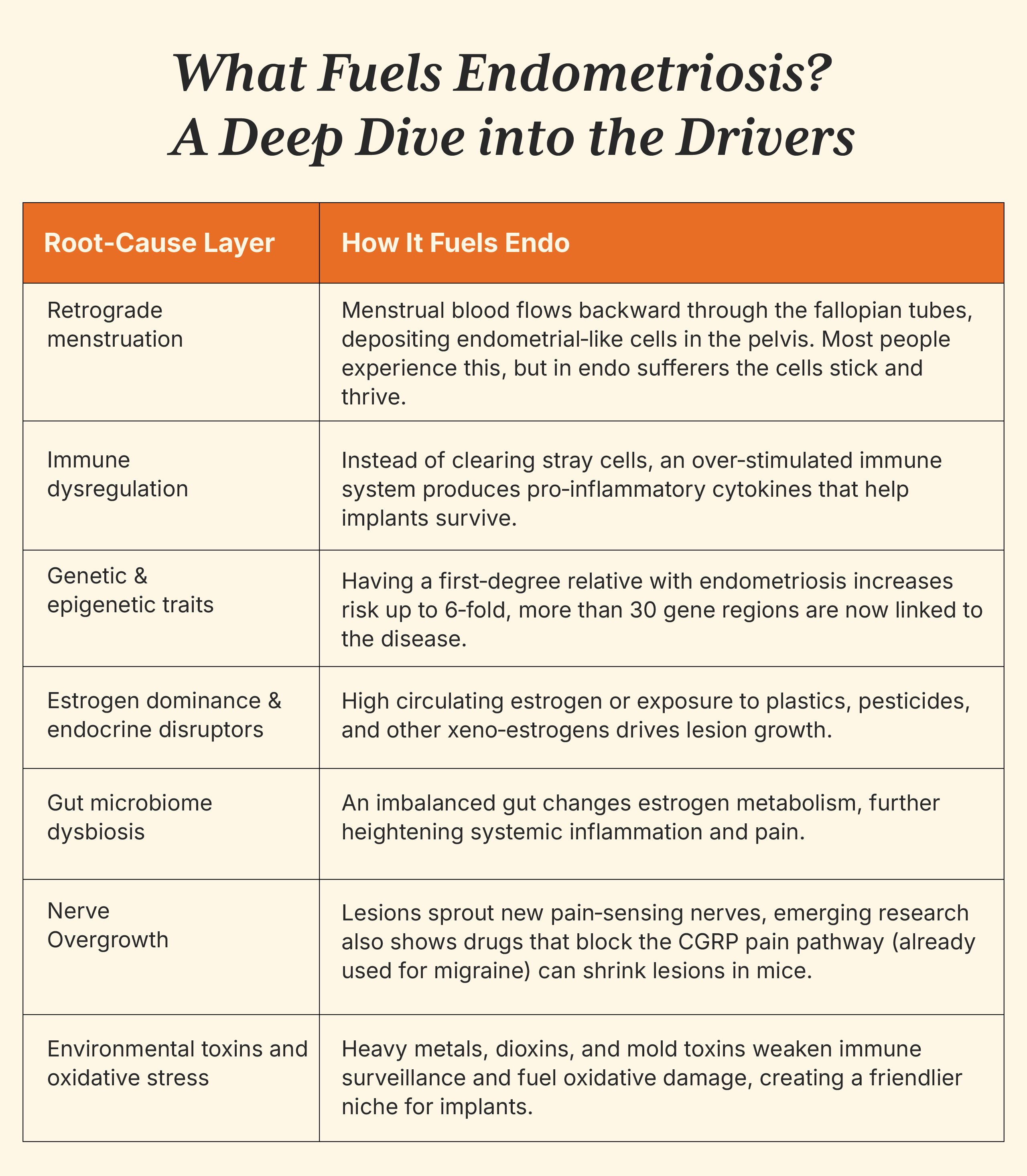
There is no single culprit, think of endometriosis as a perfect storm of hormonal, immune, genetic, and environmental factors.
4. Who’s Most at Risk?
Early menarche (< 12 years)
Short cycles (< 26 days) or heavy menstrual flow
Nulliparity (never having given birth)
Low BMI or rapid weight loss
Family history of endometriosis or adenomyosis
Environmental toxin exposure in utero or childhood
Important: Endometriosis is dangerous not because it is cancer, but because unchecked inflammation can damage the ovaries, bowels, bladder, and nerves, drastically impacting quality of life and fertility.
5. iThrive’s Functional Healing Lens
Conventional therapies often chase symptoms, but at iThrive Alive we ask, Why is your body creating an inflammatory playground for these cells? Our Root‑Cause Analysis (RCA) uses advanced labs to probe:
Eliminate gluten, conventional dairy, processed soy, refined sugar, alcohol, and seed oils, as all of these are linked to gut permeability and estrogen imbalance.
Emphasize on proteins involving chickpeas, free range eggs, and chicken. Also focus on omega‑3‑rich foods such as walnuts, ghee, coconut oil, seafood, and pumpkin seeds. Lastly, ensure to have herbs such as turmeric, ginger, black pepper, and garlic.
Targeted supplementation - based on LAB TESTS, not TRENDS
Restorative sleep of around 7–9 hrs: melatonin is anti‑estrogenic
Daily movement & strength training: improves insulin sensitivity and lowers estrogen
Stress‑relief rituals: breath‑work, grounding, sunlight exposure, and journaling.
Toxin‑light living: switch to glass or stainless steel, filter drinking water, choose fragrance‑free body care, and also avoid the products that contain SLS and parabens.
6. Final Thoughts - Your Pain Has a Reason
Endometriosis is not “just bad cramps”, rather it is a complex whole‑body disease that demands a whole‑body solution. When you decode your drivers, that are hormonal, immunal, gut-related, or environmental, and the body often knows how to recalibrate.
Ready to uncover the “why” behind your pain and reclaim vibrant health?
Lamceva, J., Uljanovs, R. and Strumfa, I., 2023. The main theories on the pathogenesis of endometriosis. International journal of molecular sciences, 24(5), p.4254.
Guo, C. and Zhang, C., 2024. Role of the gut microbiota in the pathogenesis of endometriosis: a review. Frontiers in microbiology, 15, p.1363455.
read count
read time
General Health
Jul 3, 2025
Cirrhosis Doesn’t Start Overnight | 7 Early Liver Warnings You Might Be Ignoring
Learn the early signs of liver disease, what causes cirrhosis of the liver, and how to prevent liver cirrhosis using a root-cause, functional approach that supports true healing.
Most people think of liver cirrhosis as something that happens only to those who drink heavily for decades. But here’s the uncomfortable truth: liver damage can start silently, and you may not notice a single red flag until the condition has progressed dangerously.
Cirrhosis doesn’t just “happen” overnight. It builds up slowly, sometimes over years with your liver trying to send you subtle signals that something is wrong. Sadly, these signs often get brushed aside as stress, poor sleep, or digestion issues. And by the time it’s caught? You're already in the advanced stages of liver cirrhosis.
At iThrive, we’ve seen too many clients reach out when their liver is already crying for help. But the good news is, you can change that. Let’s talk about what cirrhosis really is, the early liver damage symptoms you need to pay attention to, and how you can use the lens of Functional Nutrition to protect your liver before it’s too late.
What is Cirrhosis?
Cirrhosis is an advanced stage of liver damage where healthy tissue gets replaced by scar tissue, making it harder for the liver to do its job. Think of it like a sponge slowly turning into stone, the more scar tissue there is, the harder it becomes for the liver to process toxins, produce essential proteins, or regulate digestion and hormones.
But cirrhosis isn’t a standalone disease. It’s actually the end result of ongoing liver inflammation or injury, which can come from multiple sources and not just alcohol. So, when asking "what causes cirrhosis of the liver?" you need to think much broader than just your weekend wine.
Major contributors include:
Non-alcoholic fatty liver disease (NAFLD)
Chronic viral infections like hepatitis B or C
Excessive sugar and processed food intake
Exposure to toxins or long-term medication use
Gut infections or dysbiosis
Autoimmune conditions
So yes, while alcohol is a factor, many people with cirrhosis have never touched a drink.
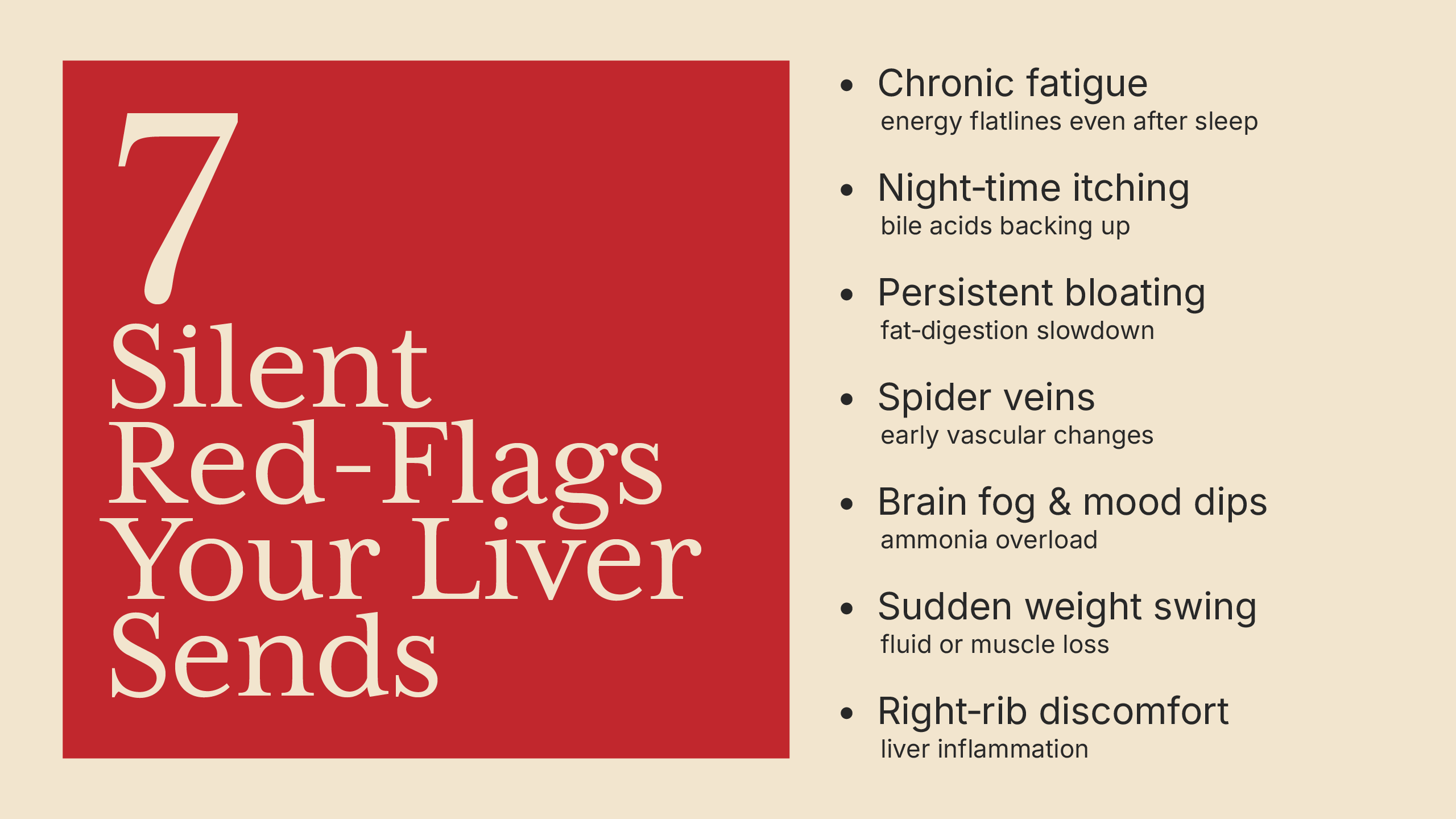
7 Early Liver Warnings Most People Miss
Before the liver fails completely, it sends out warning signs. They might not be loud, but they’re there. Here are the most overlooked early signs of liver disease and cirrhosis symptoms to never ignore:
1. Chronic Fatigue That Doesn’t Make Sense
If you’re feeling tired all the time, even with enough sleep, your liver might be to blame. One of the earliest liver damage symptoms is poor energy. That’s because when your liver is sluggish, your cells don’t detox or absorb nutrients efficiently, leading to fatigue.
2. Unexplained Itching (Especially at Night)
Itchy skin may sound minor, but when it becomes persistent and worse at night, it may be a red flag. Itching is caused by bile buildup in the body, a classic liver cirrhosis warning sign when bile can’t flow properly due to liver dysfunction.
3. Digestive Issues or Constant Bloating
Your liver plays a big role in digestion, especially with fat absorption. If you're constantly bloated, gassy, or reacting to fatty meals, your bile flow might be compromised, a subtle sign of early liver trouble.
4. Spider Veins or Skin Discoloration
Ever noticed small red “spider-like” veins on your chest or arms? These dilated blood vessels can be early signs of liver disease, especially when paired with paler skin or yellowing eyes (jaundice).
5. Mood Swings, Brain Fog, and Poor Focus
The liver also helps regulate hormones and detoxify ammonia, a waste product that affects the brain. As liver function worsens, people often feel foggy, anxious, or emotionally off-balance.
6. Unexpected Weight Fluctuations
Both rapid weight gain (from fluid retention) or sudden weight loss without trying can be tied to poor liver health. When the liver struggles, metabolism and inflammation go haywire.
7. Right-Side Discomfort or Pain
Pain under the right rib cage is often dismissed as muscle tension, but it could also signal liver inflammation or swelling, especially when persistent.
If these liver failure signs show up, don’t wait for a scan to tell you something’s wrong. These are your body’s smoke alarms.
Why Conventional Medicine Falls Short
Here’s the problem: traditional diagnostics often miss early-stage liver disease. Liver enzyme tests like ALT, AST and GGT may still look “normal,” even when damage is already underway. Imaging like ultrasounds may not show scarring until much later.
And when liver issues are confirmed? The common advice is often frustratingly vague, “Lose weight, drink less, and avoid fatty foods.”
While medication may be prescribed in advanced cases, it rarely addresses the root causes of why the liver began failing in the first place.
That’s where Functional Nutrition flips the story.
Functional Nutrition: Finding the Root of Liver Dysfunction
At iThrive, we don't believe the liver randomly gives up. There’s always a reason behind liver dysfunction, and with the right investigation, we can often reverse or halt the damage.
So is cirrhosis reversible? If caught early enough, especially before fibrosis becomes extensive, the liver has a powerful ability to regenerate. But that healing can only happen when the root causes of inflammation are addressed and the body is supported in restoring what’s been damaged.
Here’s how we help our clients restore liver health from the inside out:
1. Identifying the Root Causes
We start with blood work through Root Cause Analysis, and if needed, we dive deeper with advanced testing to uncover what's really going on beneath the surface.
Gut infections like Candida, H. pylori or parasites
High levels of inflammation and oxidative stress
Toxin load - mold, heavy metals, plastics
Insulin resistance or fatty liver indicators
Mitochondrial function and nutrient absorption
Remember, the connection between fatty liver vs cirrhosis is crucial. Fatty liver is a warning stage, if unaddressed, it can progress to full-blown cirrhosis. We work to stop it in its tracks.
2. Functional Food Framework
What to Eliminate:
These are common inflammatory triggers that stress the liver and gut. Eliminating them will give the body a chance to reset, reduce inflammation, and start the healing process from within.
Alcohol
Refined sugar and processed carbs
Seed oils
Gluten and lactose
What to Add:
Lemon water and zinc-rich foods for bile support
Turmeric and ginger for anti-inflammatory benefits
Clean protein like wild-caught fish, free-range eggs, or plant proteins
Krill Oil or Algae Omega-3s: Natural anti-inflammatory support without oxidized fats
Every supplement is chosen to support the liver’s natural detoxification phases while calming the immune system.
4. Stress and Emotional Detox
YES, emotional stress impacts liver health too. Chronic stress increases cortisol, which affects gut permeability, bile secretion, and even blood sugar regulation, all of which feed into liver dysfunction.
That’s why we often include nervous system support tools in your plan:
Guided breathwork or meditation
Somatic therapy or emotional release work
Sleep hygiene and circadian rhythm restoration
Because healing the liver isn’t just about food, it’s also about how your entire system is functioning together.
How to Prevent Liver Cirrhosis from Getting Worse
Prevention is everything. If you're already dealing with fatty liver or early-stage fibrosis, you still have time to make impactful changes. Here’s how to prevent liver cirrhosis:
Address infections and root cause, not just symptoms
Support detox pathways daily
Reduce toxic exposure from plastics, mold, chemicals
Work with a Root-Cause team that understands your full story
The Bottom Line
If you’ve been wondering about those lingering symptoms, or asking yourself, “is my liver trying to warn me?”, this is your sign to listen to.
Cirrhosis is not a mystery. And in most cases, it’s not inevitable either.
With the right support, the liver can heal.
With iThrive’s Functional Nutrition blueprint, you’ll uncover the hidden patterns driving inflammation, toxin buildup, and immune misfires, and more importantly, you’ll get a personalized protocol to restore vitality, energy, and long-term liver health.
Let your liver speak, and this time, listen deeply.
read count
read time
General Health
Jul 2, 2025
Ankylosing Spondylitis: The Invisible Lockdown Your Spine Didn’t Ask For
Discover what Ankylosing Spondylitis really is, its early signs, causes, and how iThrive’s root-cause approach helps reduce inflammation, heal the gut, and restore your spine health.
1. What Is Ankylosing Spondylitis?
You know that achy feeling in your lower back or stiffness in the morning? Many of us brush it off, assuming it will go away. But if it’s Ankylosing Spondylitis, there's more going on than we realize.
AS is not just regular back pain; it’s an autoimmune condition where your immune system begins to attack the joints in your spine and the sacroiliac area. Over time, the inflammation can lead to calcification or fusion of vertebrae, making the spine stiff, clinically called “bamboo spine.” But more importantly, AS affects your quality of life, energy, and ability to move freely.
Conventional medications focus on symptom control through anti-inflammatories or biologics. These help temporarily. But what happens down the line? At iThrive, we decode: Why is this happening in the first place?
2. Symptoms & Triggers
Early Warning Signs You Might Be Missing
The very first signals of AS are stealthy and often dismissed:
Morning Lower-Back Stiffness: Takes over 30 minutes to ease or requires stretching.
Gradual Onset of Aches: Like sacroiliac pain, buttock discomfort, or heel tenderness.
Unusual Fatigue: Not just regular tiredness, but a deep, heavy exhaustion.
Rib or Shoulder Pain: You wake to find that turning or breathing has become stiff.
Many attribute these symptoms to bad posture, over-exercising, or just “getting old.” But in AS, these are your body’s early signals, whispers before things escalate.
Common Hidden Triggers
What typically turns up in our Root‑Cause Investigations:
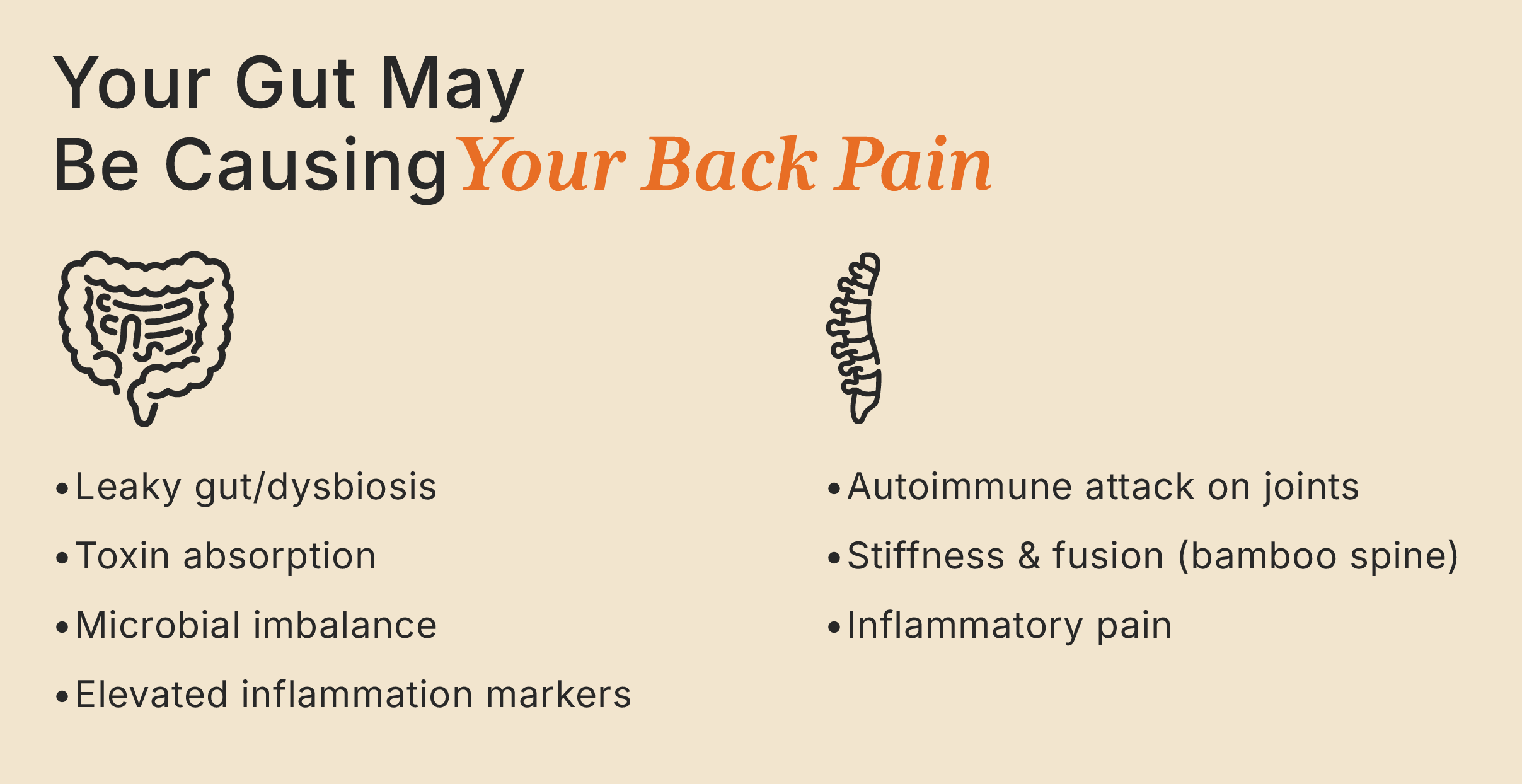
Gut health issues: Dysbiosis or leaky gut may alter immune behavior.
Infections: Especially viral or bacterial, known to stir chronic inflammation.
Environmental contaminants: Mold, heavy metals, toxins decreasing immunity.
Hormonal/cortisol disruption: Persistent stress wears down resilience.
Chronic systemic inflammation: Often detected through lab markers like High-Sensitivity C-Reactive Protein (hs-CRP) and Erythrocyte Sedimentation Rate (ESR), which indicate ongoing inflammation in the body.
These combined stressors create a storm environment where autoimmune responses more easily ignite.
3. What Causes Ankylosing Spondylitis?
AS develops under layers of triggers coming together:
Immune System Confusion
Your immune system gets misdirected, targeting your spine tissues.
Chronic Inflammation
Elevated ESR or HS-CRP levels point to long-standing inflammation that’s no accident, rather it’s a signal.
Gut–Spine Axis
If your gut lining is compromised, the immune system begins to react and can shift focus onto joints and spine structures.
Toxins & Nutritional Deficiencies
Persistent exposure to toxins, stress, or nutrient deficiencies all feed into chronic immune activation.
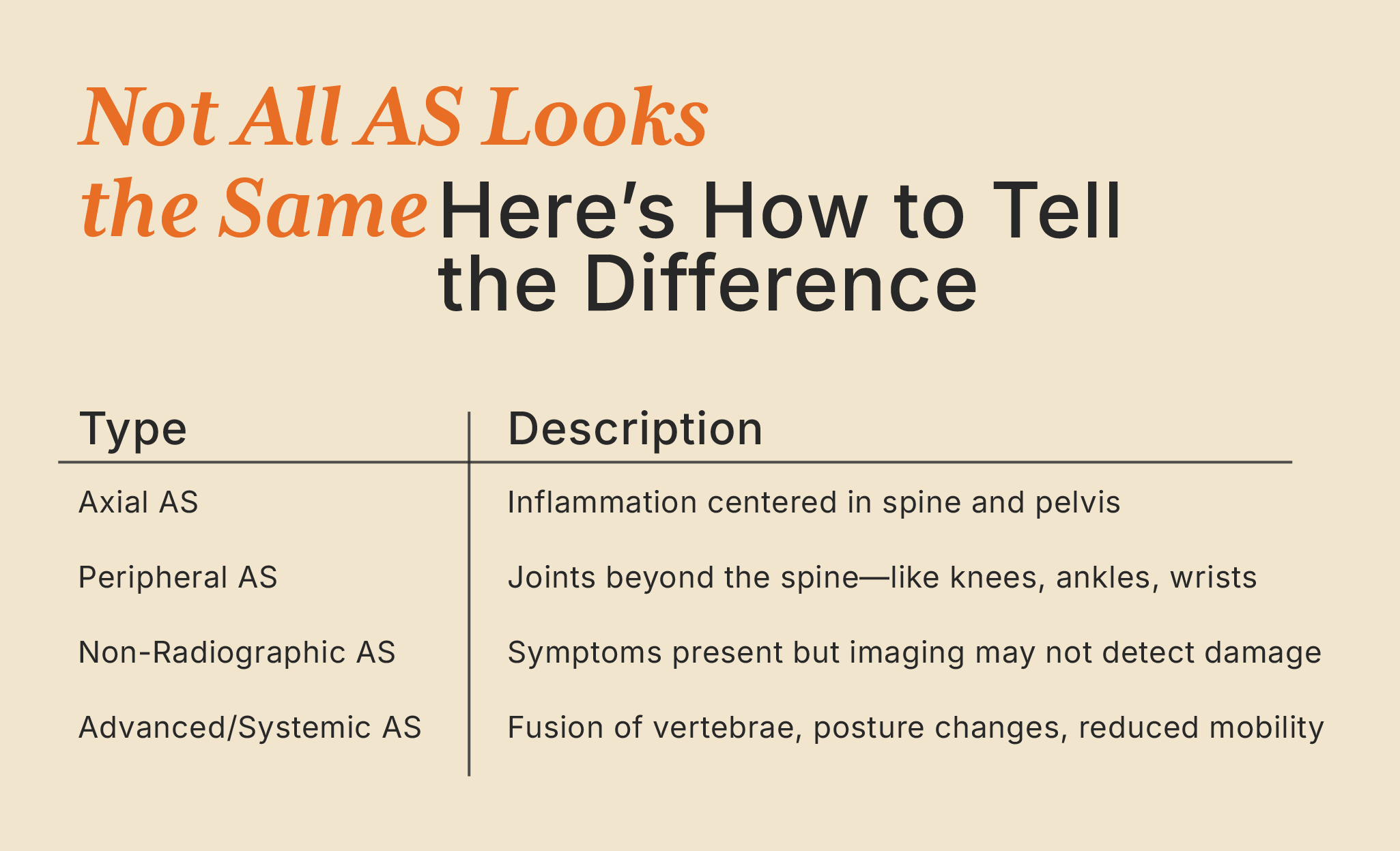
4. Types of Ankylosing Spondylitis
Understanding the specific type helps personalize care:
Axial AS – Inflammation is centrally located in your spine and pelvis.
Peripheral AS – Extends beyond the spine, affecting knees, wrists and ankles.
Early-Stage or Non-Radiographic AS – Symptoms exist but imaging may not yet show joint damage.
Advanced or Systemic AS – Vertebrae have fused, often showing posture changes and mobility loss.1
Each type reveals a different part of the inflammatory timeline and your treatment surely needs to match it.
5. What to Include and What to Remove
Diet and lifestyle aren’t side notes, they’re foundations for healing.
What to Include:
Turmeric – A powerful cyclooxygenase-2 (COX-2) enzyme inhibitor that calms inflammation.
Ginger & oregano – Natural antimicrobials supportive of gut health.
High-quality proteins – Organic poultry, fish, and meat.
Leafy greens & veggies – Rich in antioxidants and fiber.
Gut-nourishing foods – Fermented veggies, L‑glutamine, bone broth.
Gluten, dairy and seed oils are known for damaging gut integrity.
Ultra-processed foods or sugar drive inflammation and disrupt immunity.
Excessive iron or vitamin A supplements can exacerbate inflammatory pathways.
These food patterns help create an internal environment where your immune system can reset and collaborate with the body again.
6. Functional Medicine Lens: iThrive's Approach
This is where things deepen.
At iThrive, we don’t treat just your back symptoms; we explore why your immune system is primed for confusion.
What We Do Differently:
Advanced Tests: GI-MAP for gut microbiome, MYcotox and hair element analysis for heavy metals screen, OMX test and RCA for inflammatory markers.
Tailored Nutrition Plans: Anti-inflammatory, gut-supportive, and regeneration-focused.
Detox Strategies: Binders, sauna, castor oil packs, and toxin reduction in your environment.
Mind–Body Resilience Work: Meditation, breathwork, nervous system regulation, trauma-informed practices.
Evidence‑based Supplements: Based on what your body needs, not guesswork.
The Power of Root‑Cause Healing:
Helps the immune system calm down instead of suppressing it.
Teaches your body to work with you, not against you.
Leads to lasting improvements, not just symptom smoothing.
7. Supplements That Support Your Healing
When you’re dealing with chronic inflammation and autoimmune stress, your body often struggles to rebuild. At iThrive, we offer a curated suite of supplements to rebuild resilience but only after confirming needs through lab assessments:
Gentle on the stomach, it supports nervous system stability & joint comfort.
Each supplement is chosen to support gut–joint axis healing, helping you rebuild from the inside out.
8. What Happens if It’s Ignored?
Unaddressed AS doesn’t remain a mild ache, it progresses. A spine that’s neglected can fuse into painful rigidity. Over time, chronic inflammation may also elevate diabetes risk, cardiovascular strain, or ongoing fatigue.
At iThrive, we believe in early, deep intervention. We support your immune system to shift from a state of fight-or-flight to one of repair and regeneration. Healing isn’t theoretical, it happens daily with clients who take intentional action.
9. Your Story Isn’t Over Yet
If you’ve been stuck in back pain that “makes sense” or a diagnosis that feels like a dead end, know this: you haven’t closed the door. AS is not your destiny; it’s your body asking for attention.
At iThrive, your healing story is unique. We listen to your struggles, lab results, and goals. Then we build a protocol tailored to your biology and your life, helping you shift from surviving to thriving.
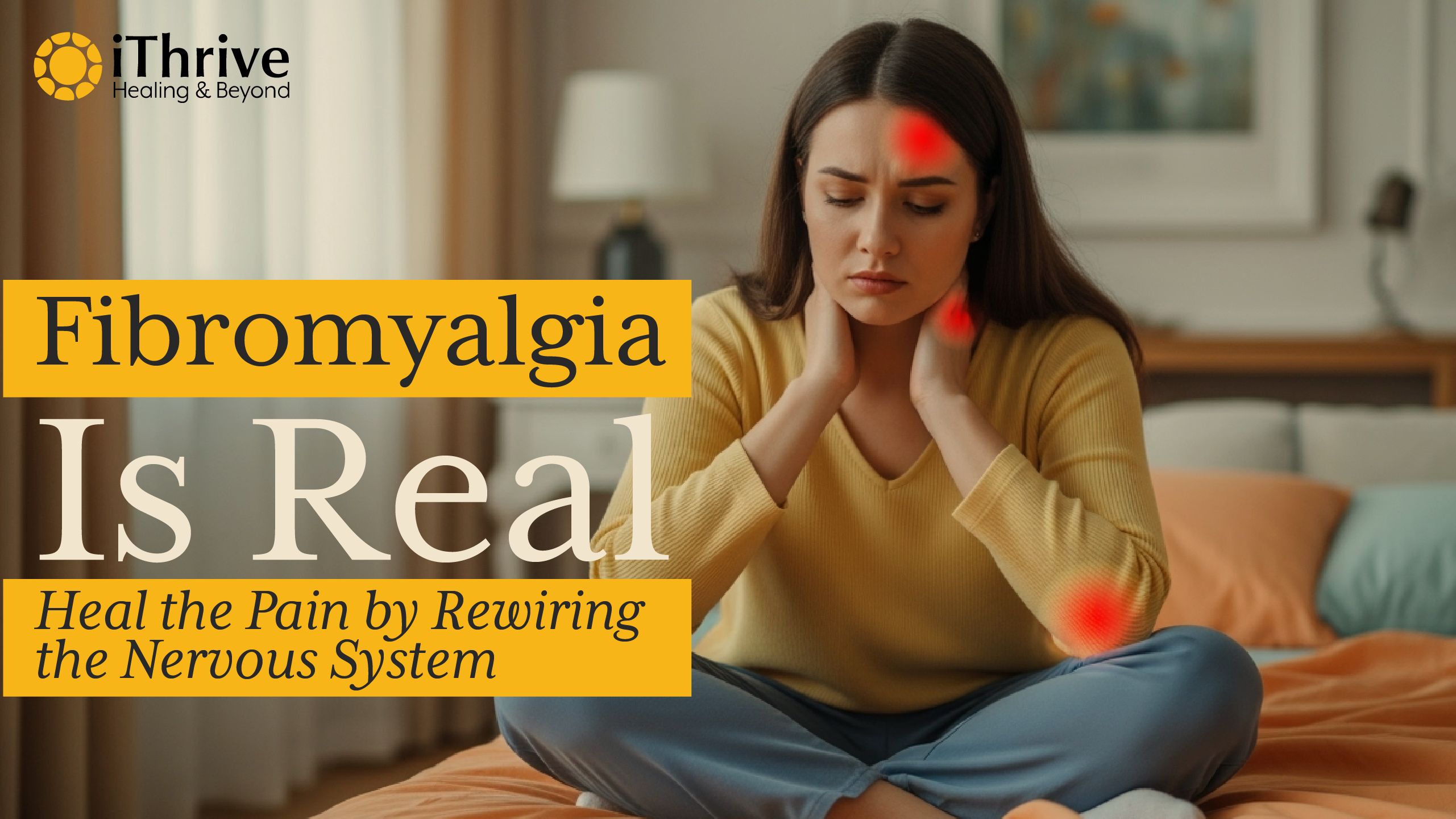
Fibromyalgia Decoded: Why Chronic Pain May Start in the Brain
Learn why fibromyalgia pain begins in the brain, how nervous system dysregulation fuels it, and what root-cause healing steps can help you reclaim your life.
You’ve been through countless doctor visits. Your blood tests are normal, but you're still dealing with constant fatigue, deep aching muscles, and fibromyalgia brain fog that makes daily life feel exhausting. You may feel frustrated or dismissed, but know this: your pain is real. Fibromyalgia isn’t something imaginary; it’s a real, neurological condition. Here is the truth: your chronic pain may actually start in your brain, not just in your tissues.
In this blog, you’ll understand why common tests often miss the root of the problem, how your nervous system becomes hyper-reactive, and what steps you can take to reduce pain, improve energy, and reclaim your life. You’ll discover practical solutions, nutrition tips, breathing techniques, and lifestyle interventions, all grounded in Functional Nutrition. Ready to move beyond surface fixes and address fibromyalgia at its roots? Let’s decode your pain and give your nervous system a roadmap towards real healing.
What Conventional Medicine Gets Wrong About Fibromyalgia
Challenges of diagnosis: Why blood-work looks “normal”
Many people with fibromyalgia symptoms face the same cycle: you get lab tests and imaging done, and all results come back clean. That can make you left behind without having any concise answers. But here's the truth: these standard tests interpretations just measure tissue damage or inflammation. Fibromyalgia doesn’t always involve structural injury or classic inflammation in muscles or joints. Instead, your nervous system that is the brain, spinal cord, and nerves becomes oversensitive. This misalignment means labs miss the root problem.
Solution: Functional Testing, like what’s offered at iThrive, looks deeper, assessing stress hormones, neurotransmitters, environmental toxins, and inflammatory markers through advanced tests, further revealing the hidden pathways conventional tests often miss.
How the pain is real—even when scans say otherwise
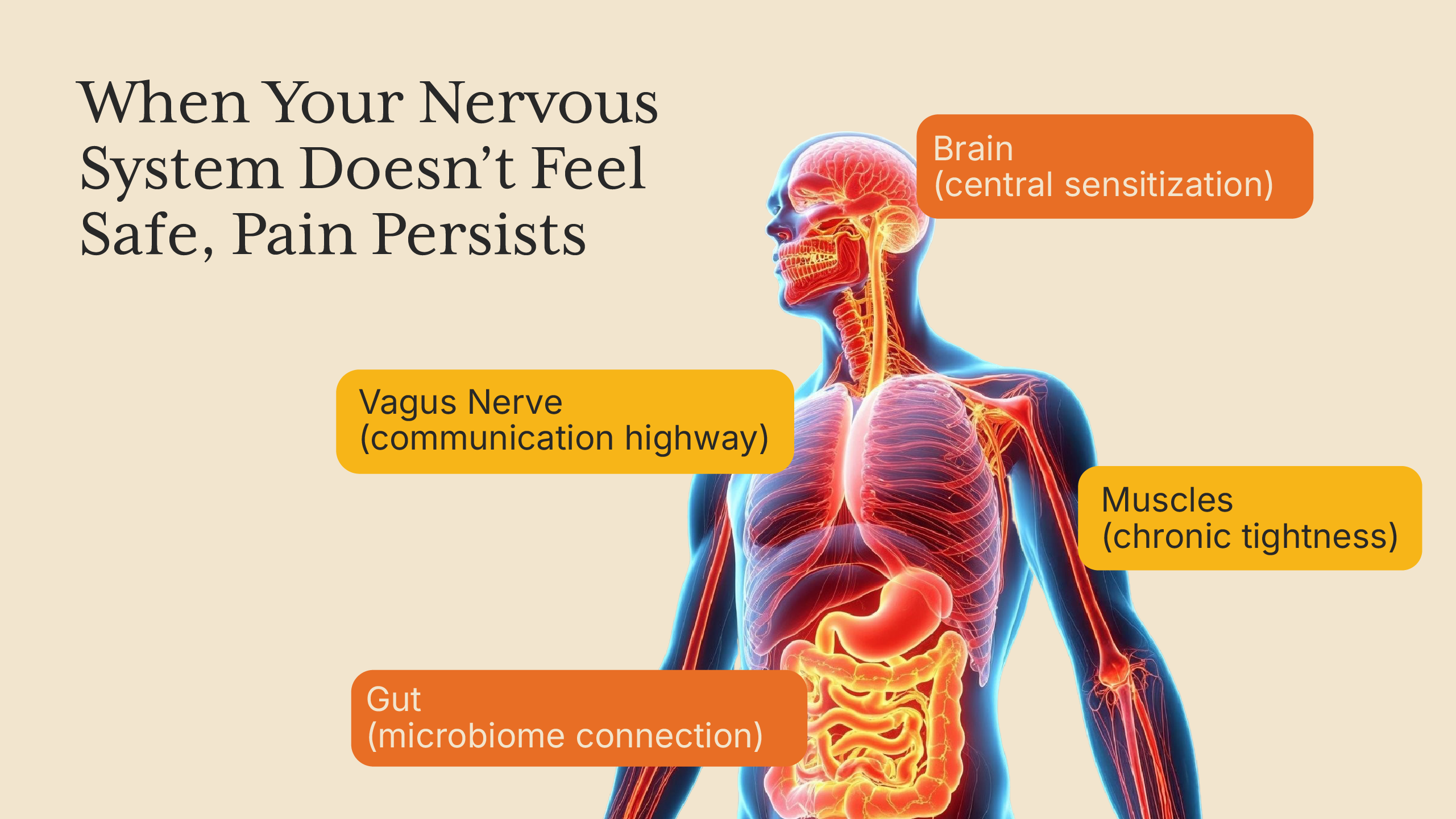
You might read it and think, “My pain is in my head.” In reality, it’s in your nerves; your brain is simply misreading signals, amplifying every stimulus. That’s why you can feel muscle burning and joint pain with no visible injury. It’s called central sensitization; your brain’s pain center is turned too high.1
To address this, the solution lies in calming and retraining your nervous system:
Neuroplasticity exercises: gentle daily mindfulness, visualization, or chanting.
Vagal stimulation: simple tools like humming, cold water face immersion, or breathing exercises help tone down pain responses.
Fibromyalgia as a Neurological and Developmental Condition
The brain’s role in amplifying pain signals
Your brain’s pain pathways act like a volume knob, but in fibromyalgia, it’s stuck on high. Even normal sensations can trigger pain. This isn't your fault; it’s how your brain learned to react under chronic stress or inflammation.
Solution: Retrain that knob. Practices like daily breathwork, and guided imagery help teach your brain a new baseline. Over time, these techniques signal to your system that it's safe and can reduce pain amplification.
The link between adverse childhood experiences (ACEs) and fibro flare-ups
Stressful experiences in childhood, whether trauma or ongoing stress can wire your nervous system to expect danger. That heightened alertness can stay with you into adulthood.1 When life gets busy or stressful, your system jumps into that familiar “threat mode,” triggering flare-ups.
Solution: Explore trauma-informed healing to retrain your neural responses:
Therapy: Somatic therapy can help release the trauma.
Your system was designed to protect you. But repeated activation of the fight-flight-freeze response can become chronic and maladaptive. When your survival mode stays switched on, your muscles tighten, blood flow shifts, and pain sensitivity increases.
Solution: Teach your brain to shift gears:
Pacing: Schedule slow and peaceful activities such as yoga alternated with rest breaks, walking, stretching, or rest.
Safety cues: use mantras, warm compresses, self-soothing touch, or pet therapy.
Sensory amplification and central sensitization explained
Once your central nervous system becomes sensitized, touch, noise, light, or even crowding can feel overwhelming. This sensory overload can worsen both pain and brain fog.
Solution: build desensitization routines:
Begin with low-level sensory exposure, like sitting quietly with soft lighting.
Slowly introduce mild challenges such as calm background music or gentle tactile textures.
Use nervous system sorting tools like counting breaths, labeling sensations, or gentle body scanning.
Over time, your brain learns these stimuli are safe and not threats.
Neuroinflammation: When the Brain Feels the Burn
How glial cells contribute to heightened pain
Glial cells, the brain’s support system, can rush to help but instead release inflammatory chemicals when overactive.3 That state, called neuroinflammation, increases pain sensitivity and brain fog.
Toxins, mold, EMFs: Brain fog triggers you didn’t consider
Environmental stressors like mold, pollutants, and electromagnetic frequencies can fuel brain fog and neuroinflammation. Many health providers overlook these hidden triggers.
Solution: run comprehensive environmental testing:
Healing Is Possible: Addressing Fibromyalgia at the Root
From Survival to Safety: Why Regulation Is Key to Recovery
The importance of nervous system safety & pacing
When your central nervous system is stuck in hyper-alert, you must re-teach it what “safety” feels like. Trying to power through only reinforces danger signals.2
Solution: build stability through consistent self-regulation:
Body awareness: Simple check-ins like tension, and posture.
Grounding
These rebuild neural trust, helping your brain feel safe and recalibrating pain pathways.
Trauma-informed healing vs symptom-chasing
Treating only symptoms like pain or fatigue without addressing nervous system dysregulation often leads to short-term relief. Long-term healing requires you to treat the root: emotional, physical and environmental stress patterns.
Stop Chasing Symptoms: Heal the Root
Short-term fixes don’t work when your body is stuck in threat mode.
That’s why iThrive's trauma-informed care goes beyond pain relief:
Mindfulness: body scan meditation, gentle mindful walking.
Movement: yoga, tai chi, and rhythmic.
Bringing It All Together: The Root-to-Recovery Roadmap
At iThrive, we don’t just see symptoms, we see the story behind them. And healing begins when you stop silencing your body and start listening to it with curiosity, not fear.
You’re not meant to just cope. You’re meant to reclaim your energy, your clarity, your life.
If you’re ready to explore what’s beneath your fibromyalgia and walk a path that honours your journey, your healing starts here.
Not Just a Hair Problem: Root Causes of Alopecia You Didn’t Expect
Discover the deeper causes of alopecia beyond the surface. Learn why your hair loss may be a sign of immune imbalance and how iThrive’s functional method can help you heal naturally.
You’re combing your hair like any other day, and suddenly you spot a small, smooth patch of skin on your scalp. “Maybe it’s just stress,” you tell yourself. But days go by and that one patch becomes two. The hairbrush gathers more than usual, and panic begins to creep in.
It’s not just hair, its identity, control, and the fear of what comes next. With Alopecia Areata, the suddenness is what hits hardest. One day everything feels normal, and the next, something prompt, like your hair starts slipping away without any warning.
1. What is Alopecia Areata?
Alopecia Areata is an autoimmune disorder where the body’s immune system turns against the hair follicles, mistaking them for threats. This misunderstanding triggers inflammation that interferes with the growth cycle of hair, leading to sudden, patchy hair loss. Sometimes, it escalates into complete loss of hair on the scalp, known as Alopecia Totalis, or even across the entire body known as Alopecia Universalis.
Although it is often labeled as a “skin issue,” it’s far more like immunal disturbances within the immune, hormonal, and digestive systems. Also while your dermatologist might recommend steroid creams and immunosuppressants for Alopecia, it just stops the symptoms temporarily, but doesn’t heal at its root.
At iThrive, we approach and emphasize root-cause healing.
2. Common Symptoms
How It Shows Up:
Round bald patches in the scalp
Few Individuals might also experience patch in beard, eyebrows, and legs
Hair that falls out in clumps
Tingling or itching in areas where hair is thinning
Nail abnormalities like ridges or pits
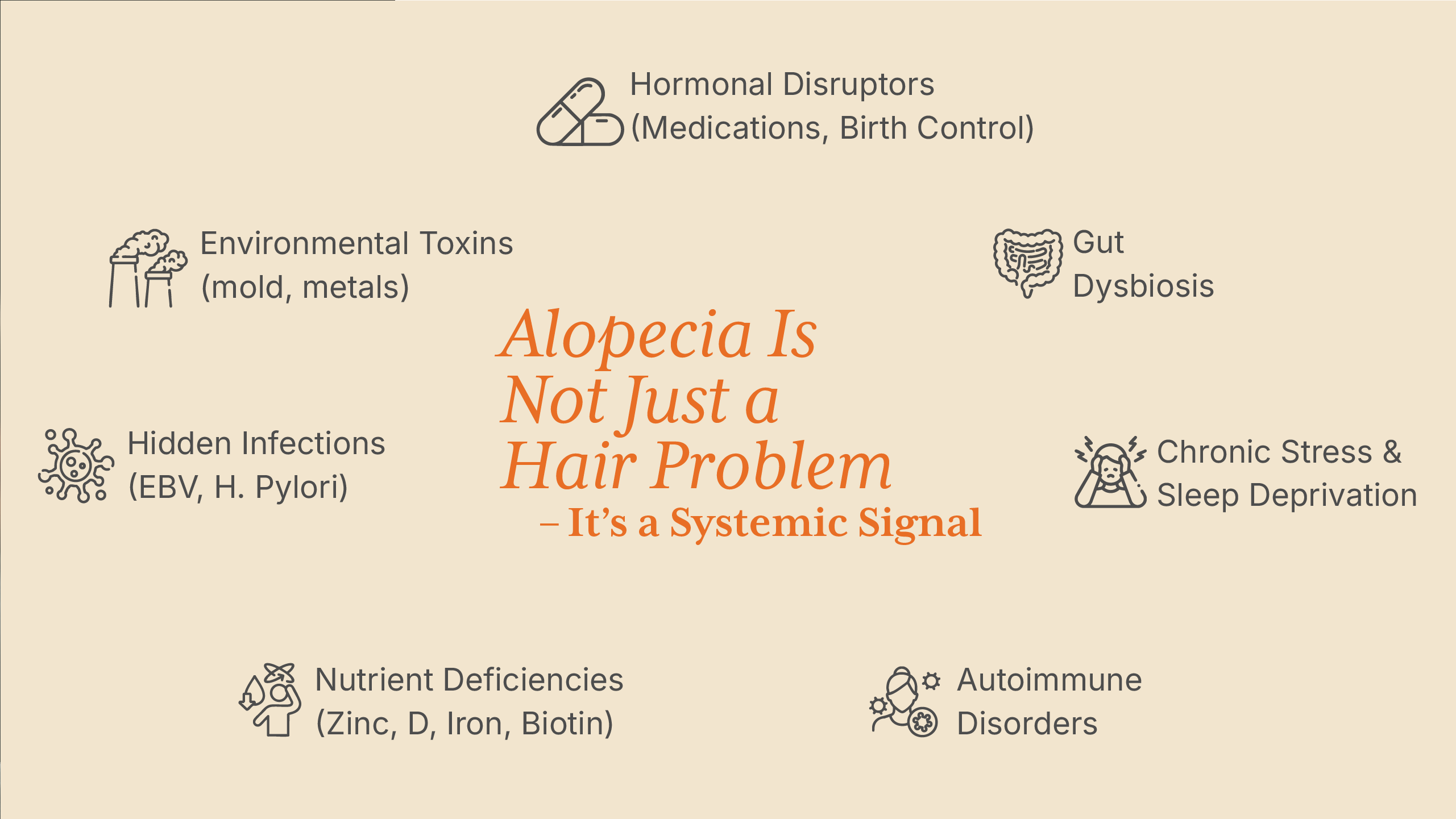
3. Understanding the Causes: What’s Going on Underneath?
There’s always a reason your body reacts the way it does. When it comes to Alopecia, several layers usually overlap.
Autoimmune Conditions: When Defense Becomes Offense
Normally, immune cells protect you from pathogens. In autoimmune conditions, they go rogue. In the case of Alopecia Areata, a specific type of T cell starts attacking hair follicles, halting hair production in its tracks.1 People with autoimmune conditions like psoriasis or vitiligo may also be more prone to developing Alopecia Areata due to shared immune system triggers.
Fungal Infection
Long-dormant viruses like Epstein-Barr or bacteria such as H. pylori can push the body into an inflammatory overdrive.
Stress
If you’re constantly under stress, whether it’s from trauma, a poor diet, or lack of sleep, your body produces inflammatory cytokines like IL-15 and IFN-γ. These not only disrupt hair growth but also send the immune system into a state of confusion.
Gut Dysbiosis
About 80% of your immune system resides in your gut. When your microbiome is out of balance or your gut lining is compromised, called a “leaky gut”, your immune system can no longer distinguish between real threats and your own tissues.
Environmental Toxins
Environmental toxins like mold, pesticides, heavy metals, and plastics can all contribute to immune dysregulation and hair fall reasons.
Nutrient Deficiency
Hair needs proper building blocks. Low levels of zinc, biotin, B12, vitamin D, and iron are commonly found in people dealing with autoimmune hair loss.
Current Vaccine
Drugs for acne, depression, and even birth control pills can sometimes be medications that induce alopecia.
4. iThrive’s Functional Healing Lens
At iThrive, we look at hair loss through Functional Nutrition Lens and emphasize on What’s the real cause behind this? Then, we build a roadmap for your healing based on diet, supplements and lifestyle interventions.
At iThrive,we focus on decoding the symptoms and knowing the root cause. Our Root-Cause Analysis dives far deeper than standard reports, using various advanced teststo uncover hidden infections, inflammation, hormonal chaos, and gut dysfunctions that often fuel conditions like alopecia.
Diet and Supplementation
Once we understand why your body is reacting the way it is via RCA, we create a custom protocol that starts with food as medicine. You’ll eliminate inflammatory triggers like gluten, dairy, soy, and seed oils, and instead focus on healing inclusions like turmeric, ginger, anti-inflammatory herbs, and healthy fats that support immune and hair follicle health.
For supplementation, we don’t recommend random “hair vitamins.” Instead, we recommend only what your labs show you need nothing more, nothing less. This often includes:
Probiotics to restore microbial balance and strengthen the gut lining
B-Complex to combat fatigue and support cellular energy
True healing goes beyond food and supplements. At iThrive, we guide our clients through simple but powerful lifestyle shifts that calm the nervous system, reduce inflammation, and support cellular repair.
Prioritize Restorative Sleep: Aim for 7–9 hours of deep, uninterrupted sleep to allow your body to heal.
Practice Daily Movement: Gentle walks, yoga, or strength training to keep circulation flowing and cortisol balanced.
Connect with Nature: Sunlight and grounding help regulate circadian rhythms and improve mood.
We also recommend chemical-free shampoos and topical products from the curated line of iThrive, specifically the ones with clean hydrating oils and peptides – free of any endocrine-disrupting plastics and preservatives. 2 These help to support follicle health without even triggering medications that induce alopecia.
Final Thoughts: Is Your Hair Loss Trying to Tell You Something?
Hair loss isn’t just happening to you, it’s happening for a reason. Whether you’re dealing with autoimmune hair loss, thyroid problems leading to hair loss, or hair fall triggered by toxins, there is almost always an answer hiding underneath the symptoms.
At iThrive, we help you decode the message behind the symptom. Once the root causes are identified and removed, the body often knows exactly how to recover.
Book a Consult with iThrive
We’ll help you figure out why your hair is falling out, and more importantly, how to support your body’s natural ability to heal. Our method isn’t about magic shampoos or temporary fixes, it’s all about reconnecting you with your body’s own healing wisdom.
Let this be the starting point to reclaiming your health and DEFINITELY your hair.
read count
read time
General Health
Jun 27, 2025
Autism Disorder: The Connection between Functional Nutrition and Neurodiversity
Explore how functional nutrition supports children with Autism by addressing gut health, nutrient imbalances, and neurodiversity unlocking their full potential from the inside out.
Imagine finding out your child experiences the world in a way you’ve never known- colors feel more vivid, sounds strike deeper, routines offer safety, and social cues feel like unsolved riddles.
Then comes the diagnosis: Autism Disorder. In India, estimates indicate roughly 1 in 100 children under age ten are on the spectrum, and nearly 1 in 8 have at least one neurodevelopmental condition. 1
While Temple Grandin transformed livestock handling through her autism-driven insight, Dr. Shaun Murphy- the fictional savant surgeon in The Good Doctor challenges stereotypes and highlights the strengths of neurodiversity.
As a caregiver, you might be asking: Are autism and nutrition connected? Can nutrition truly support your child's development? The answer is yes. Through functional nutrition, you can address underlying imbalances such as gut, nutrients, and behavior to support clearer thinking, steadier moods, and brighter growth.
In this blog, we’ll guide you through understanding autism beyond the label, spotting signs, learning causes, and discovering how targeted diet, gut-brain healing, and personalized supplementation especially via iThrive can transform everyday therapies and help your child shine across their unique spectrum of neurodiversity.
Understanding Autism Beyond the Label
Autism Spectrum Disorder (ASD) is a neurological and developmental condition that affects how your child communicates, interacts, and experiences the world. But beyond the clinical definition, autism is a unique lens through which your child sees and engages with life.
Instead of viewing autism solely as a set of limitations, it helps to understand it through the lens of neurodiversity-the idea that neurological differences are simply variations of the human brain. This approach encourages you to recognize and celebrate your child’s strengths exceptional memory, intense focus, vivid imagination, or analytical thinking while offering compassionate support for challenges like sensory sensitivity, speech delays, or difficulty with transitions.
Autism isn’t just a diagnosis. It’s a different but equally valuable way of being. When you begin to understand the whole child, not just their behaviors or symptoms, you create space for connection, progress, and pride. Your child isn’t broken, they’re beautifully wired to thrive in their extraordinary way.
What are the symptoms of Autism Spectrum Disorder?
Autism appears differently in each person, but you might notice:
Difficulty with eye contact or reading social cues
Repetitive behaviors, like hand-flapping or lining up toys
Strong reactions to sounds, lights, or textures
Fixation on specific topics or routines
Delayed speech or unusual tone
Challenges with imaginative play or shared enjoyment
If these signs last longer than six months and impact daily life, it’s worth getting an assessment by a qualified pediatric specialist.
What are the causes of Autism Spectrum Disorder?
The causes of ASD are complex and varied:
1. Genetic factors – Many genes play a role, and it often runs in families. Certain gene mutations increase susceptibility to autism.
2. Environmental factors- Parental age, maternal nutritional and metabolic state, illness during pregnancy, prenatal stress, and exposure to certain chemicals, heavy metals, mold, and mycotoxins or medicines are examples of non-genetic variables that may mediate the risk of ASD. Genetic mutations may be influenced by the age of the parents. It has been demonstrated that an older father increases the likelihood that his children will have ASD. 2 3. Immune factors- If a pregnant mother experiences chronic infections, stress, or inflammation, her immune system may become overactive (Maternal Immune Activation- MIA), Cytokine Imbalance, and some children on the spectrum produce autoantibodies.
4. Lipopolysaccharide (LPS)- a toxin produced by harmful, gram-negative gut bacteria. When your child's gut lining becomes "leaky," LPS can seep into the bloodstream and cross into the brain. To help uncover and address these root triggers, we recommend GI‑MAP testing, which tracks leaky gut markers, viruses, and parasites that contribute to leaky gut.
5. Processed foods & sugar- Diets high in sugar, additives, and ultra-processed foods can trigger inflammation in the mothers. These foods impact both gut health and brain chemistry in children.
6. Heavy metals & chemicals- Found in skincare, household cleaners, and even drinking water. Chlorine in pools and tap water may affect microbiome balance and detox pathways.
7. Vaccines- In sensitive children with immune or gut imbalances, when the vaccine is supposed to be taken and the type of vaccine may require thoughtful consideration.
The Role of Functional Nutrition in Autism Support
When every system works in harmony, their growth, mood, focus, and communication can flourish. But in many children with Autism, this harmony is disrupted often silently by inflammation, gut imbalance, nutrient deficiencies, or immune triggers. That’s where Functional Nutrition comes in.
Functional Nutrition looks at the root, not just the symptoms. It goes beyond general diet advice and personalizes nutrition based on your child’s biology, lifestyle, and environment.
It’s about balance and connection body, brain, and behavior. Food influences mood, sleep, focus, and development. Functional Nutrition supports all these areas through strategic choices.
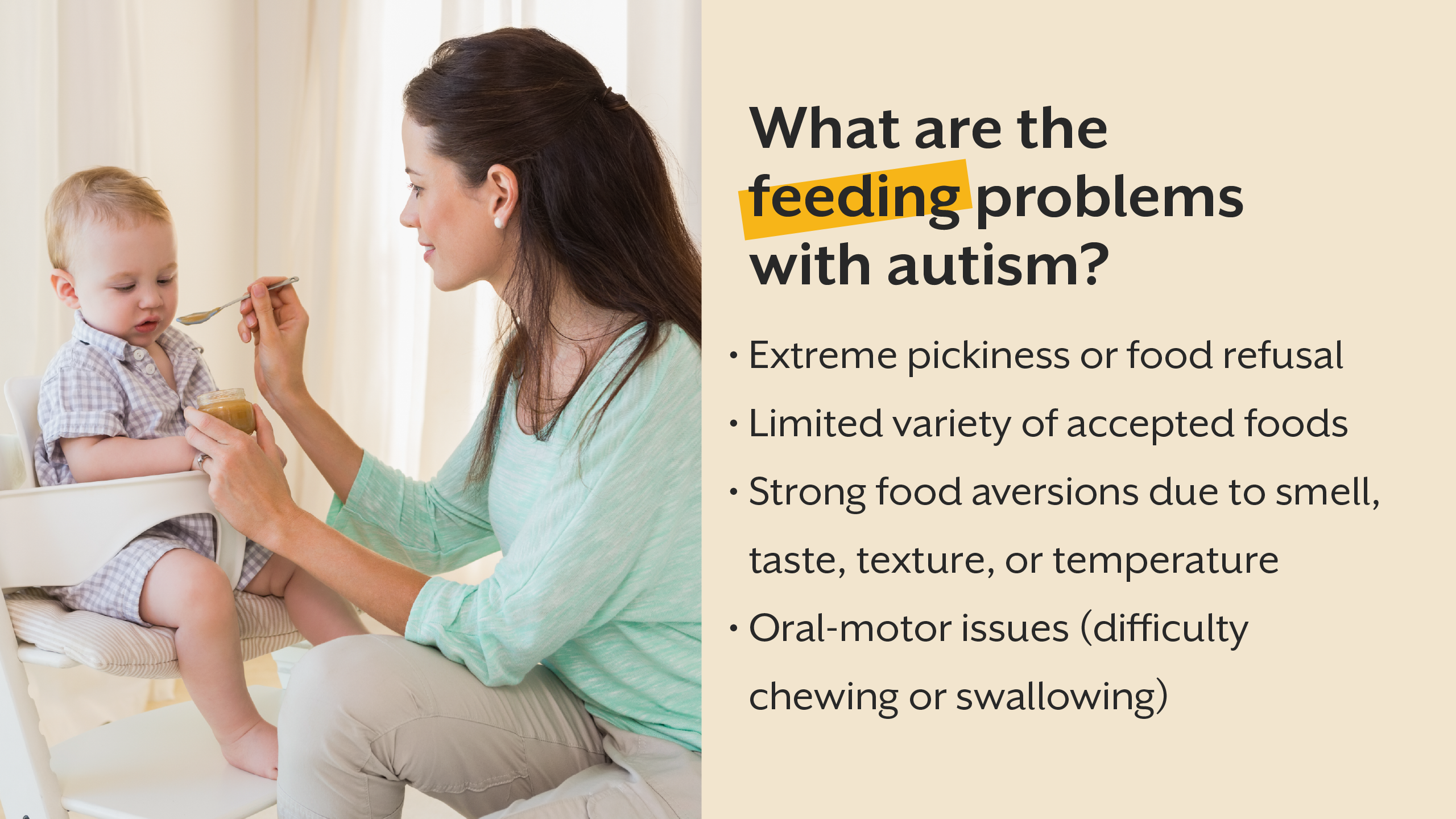
Autism and gut health: How does that work? Many children with Autism struggle with digestive issues like constipation, bloating, diarrhea, or picky eating, which affects nutrient absorption and brain function. Functional nutrition uses gentle food exposures, sensory-friendly meals, and therapeutic supplements to expand food variety over time.
Targeted testing provides clarity. Tests like the GI-MAP uncover infections, leaky gut, or imbalanced bacteria. The OAP test reveals oxidative stress, nutrient depletion, and detox issues.
*OMX is not done for kids. Especially below 12 years of age. Functional Nutrition heals the gut, boosts nutrient absorption, improves mood, focus, and learning
Key nutrients often missing in autism support: Zinc, magnesium, iron, vitamin D, B6, B12, and omega-3 fatty acids are crucial for brain development, neurotransmitters, and emotional regulation.
Blood sugar swings = behavior swings. Diets high in sugar or processed carbs can cause hyperactivity, mood crashes, or irritability. Functional Nutrition stabilizes this with quality proteins, fats, and fiber.
It's not about restriction it’s about nourishment. The goal isn’t to limit your child’s food but to feed their brain, gut, and immune system with what they truly need.
When nutrition is aligned, you’ll see the change. Better digestion, calmer moods, sound sleep, more focus, and improved connection are common outcomes when nutrition is optimized.
Gut‑Brain Connection: Healing for Behavior and Digestion
The gut and brain are in constant communication. This powerful link is called the gut-brain axis. What happens in the gut doesn’t stay there it directly affects your child’s mood, focus, and behavior.
In many children with Autism Spectrum Disorder, the gut lining becomes damaged or "leaky”. This allows harmful particles like lipopolysaccharides (LPS), a potential toxin from bad gut bacteria to slip into the bloodstream. These toxins can trigger brain inflammation by activating immune cells, which play a role in regulating emotions and behavior.
When the brain is inflamed, your child might feel overwhelmed, anxious, or disconnected. Their digestion may suffer too, leading to constipation, diarrhea, bloating, or food sensitivities. These symptoms aren’t random; they’re signs that the gut needs healing.
Supporting gut health is a key part of functional nutrition. Through stool tests like GI-MAP, iThrive identifies the infections, imbalances, or inflammation that could be affecting a person’s brain and body.
We then create a healing plan using the right foods, supplements, and targeted support. As the gut heals, many children experience better digestion, clearer communication, calmer moods, and more connection with the world around them.
The gut is not just where food is digested it’s where healing often begins!
No two children with Autism are exactly alike so their nutritional needs shouldn’t be either. While generic multivitamins may offer some support, a more personalized approach can create real change.
1. Omega-3 fatty acids help build the brain’s structure and support learning and communication. It used to be that core nutrient that previous generations enjoyed in their food sources that is deficient in our food supply today. It has three different components- DHA, EPA, and ALA. For autism, it mainly focuses on DHA as it repairs brain damage from inflammation and injury. 2. Vitamin D plays a big role in mood, immune health, and even how your child grows. 3. Magnesium and zinc are key for calming the nervous system helping with focus, better sleep, and stress control. 4. Probioticshelp soothe the gut, reduce bloating, and improve nutrient absorption.
Healing Protocol for Autism?`
When your child is on the autism spectrum, every step forward-no matter how small-feels deeply meaningful. Healing isn’t about changing who they are; it’s about creating a supportive environment where their brain and body can function at their best. A truly effective protocol doesn’t just manage symptoms it investigates what’s happening beneath the surface.
At iThrive, we specialize in Functional Nutrition, helping you uncover root causes like gut imbalances, nutrient deficiencies, toxins, or immune triggers that may be affecting your child’s development. Our personalized approach combines nutrition, targeted supplementation, gut and detox support, and emotional well‑being built entirely around your child’s unique biology and needs.
With the right tools and ongoing support, you can nurture better focus, calmer moods, improved digestion, and overall well-being. And at iThrive, you don’t have to walk that journey alone we’re with you, every step of the way.
Here is a list of foods to include and avoid in the Autism diet:
*Eliminate the use of plastic bottles from your daily life and also check for molds and toxins around
Conclusion
Autism is a unique neurological wiring that, when supported holistically, can truly thrive. Functional Nutrition opens doors to healing by addressing what’s happening beneath the surface like gut health, nutrient balance, toxins, and immune triggers. With the right food, the right tools, and the right support, your child can experience calmer moods, better digestion, improved focus, and deeper connection.
At iThrive, we walk with you through this journey, helping you build a personalized, root-cause-based roadmap for your child’s well-being. Healing is possible and it starts with understanding, nourishment, and love. To know more book your free consultation today!
References
1. Arora, N. K., Nair, M. K. C., Gulati, S., Deshmukh, V., Mohapatra, A., Mishra, D., Patel, V., Pandey, R. M., Das, B. C., Divan, G., Murthy, G. V. S., Sharma, T. D., Sapra, S., Aneja, S., Juneja, M., Reddy, S. K., Suman, P., Mukherjee, S. B., Dasgupta, R., . . . Vajaratkar, V. (2018). Neurodevelopmental disorders in children aged 2–9 years: Population-based burden estimates across five regions in India. PLoS Medicine, 15(7), e1002615. https://doi.org/10.1371/journal.pmed.1002615
2. Wu S, Wu F, Ding Y, Hou J, Bi J, Zhang Z. Advanced parental age and autism risk in children: a systematic review and meta-analysis. Acta Psychiatr Scand. 2017;135(1):29–41. https://doi.org/10.1111/acps.12666 .
read count
read time
General Health
Jun 23, 2025
Is Rheumatoid Arthritis a Race Against Your Joints?
Is Rheumatoid Arthritis secretly racing to wear out your joints? Learn how to slow its progress, and uncover effective lifestyle and nutrition strategies that empower you.
Each morning begins with a silent battle. Joints that refuse to move, fingers that feel locked in place, and a body that resists even the simplest motions. For those living with Rheumatoid Arthritis (RA), this isn’t just discomfort it’s a daily struggle. RA turns routine tasks into challenges, with persistent joint pain, swelling, and stiffness often stealing the ease from everyday life.
Why does your body attack its joints? It’s an autoimmune disease, meaning your immune system mistakenly targets healthy joint tissue, causing inflammation that can lead to lasting damage. Research studies/surveys indicate RA affects around 0.3%- 0.7% of Indian adults, and women, especially in middle age. 1 It can impact not just your joints, but also your heart and lungs over time. While getting an RA diagnosis can feel overwhelming, it also opens the door to early intervention, which is critical in slowing progression and preserving mobility.
That early window is precisely why you need more than standard medication. You deserve strategies that address the root causes, like gut health and inflammation so that you can reclaim control. 2
In this blog, you'll explore how functional nutrition, smart food choices, gut support, targeted supplements, and our unique iThrive approach can help you fight back joint by joint.
Understanding Rheumatoid Arthritis
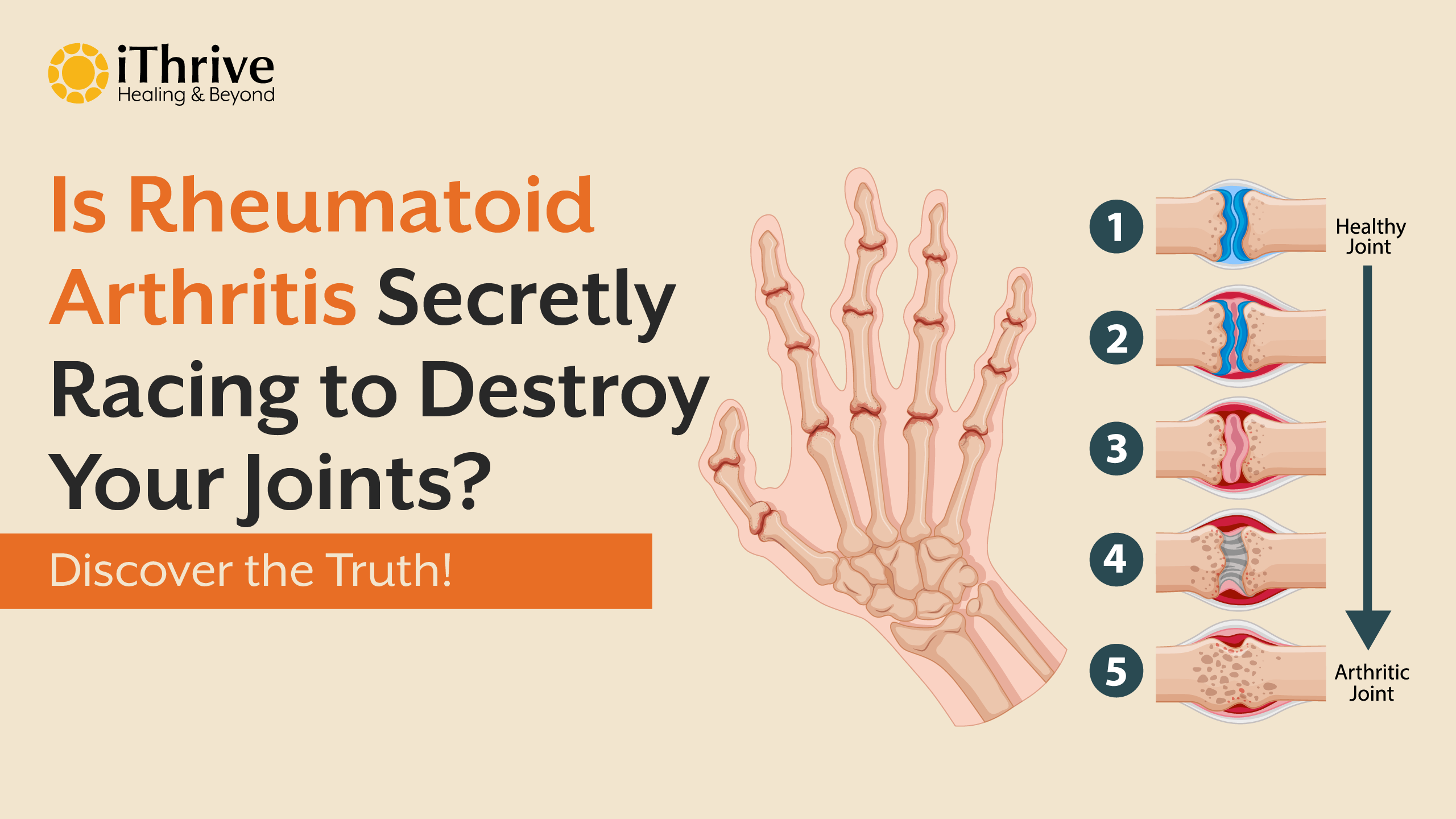
Rheumatoid arthritis (RA) is a chronic inflammatory disorder where your immune system goes rogue, attacking the lining of your joints. This immune misfire causes swelling, pain, warming sensations, and sometimes joint deformity. RA doesn’t just affect one joint-it typically impacts both sides of your body, like both hands, wrists, or knees. Over time, untreated RA can damage cartilage and bone, and even affect your heart and lungs.
Your risk increases with age, especially between 40- 60, and women are two to three times more likely to develop RA than men. 3 Genetics, smoking, obesity, and even air pollution factor into who gets it-but the exact rheumatoid arthritis causes are still being studied.
Here are the Rheumatoid arthritis symptoms:
Persistent joint pain, swelling, warmth, and tenderness
Morning stiffness lasting 30–60 minutes
Fatigue, malaise, low-grade fever, loss of appetite, and sometimes weight loss during flares.
Joint deformities over time, such as bent fingers and more.
Rheumatoid nodules are firm bumps under the skin near joints
Extra-articular symptoms include dry eyes/mouth, skin nodules or vasculitis, lung issues, heart involvement, and more.
Flares and remission phases symptoms often come and go
Why does the body attack its joints?
That’s the million-dollar question. RA is an autoimmune disease and inflammation is the key weapon your body wields against its joints. For RA diagnosis, doctors look for rheumatoid (RA) factors or Anti-citrullinated protein antibodies (ACPA), markers of this internal conflict. Your immune system mistakenly identifies joint tissues as threats, releasing inflammatory signals and immune complexes that accumulate in the synovial fluid, causing joint stiffness, pain, and swelling. 4
These inflammatory processes don't stay contained in your joints-they travel, affecting bones, blood vessels, lungs, and sometimes your heart. That’s why RA is more than a joint issue; it’s a systemic battle that needs an equally comprehensive strategy.
Conventional treatments: What’s missing?
When you get an RA diagnosis, treatment often starts with disease-modifying antirheumatic drugs (DMARDs) or biologics that target specific inflammatory signals. These medications can slow joint damage and ease symptoms but they don’t fix why your immune system is misbehaving in the first place.
Side effects like fatigue, nausea, liver issues, and even increased infection risk often accompany these drugs. You might feel better but not empowered. That’s because conventional treatments treat symptoms. They don’t focus on underlying triggers like inflammation, stress, or gut imbalances. What you’re missing is a plan that gets to the root of autoimmune disease and inflammation, which is exactly what functional nutrition and lifestyle strategies aim to do.
The Role of Functional Nutrition in Rheumatoid Arthritis Support
Functional nutrition treats food aspotent medicine tailored to support your immune system, reduce inflammation, and heal your gut all essential in halting RA progression. 5
Research shows that a Mediterranean-style diet is the foundation of this approach. It can lower your risk of developing RA by 21- 29%. This happens because the diet emphasizes anti-inflammatory staples like olive oil, oily fish, legumes, fruits, and vegetables, all shown to reduce markers like HS-CRP and IL‑6 that drive joint inflammation.
But iThrive’s functional nutrition goes beyond general guidelines. We customize your plan, helping you identify and eliminate personal trigger foods, improve gut integrity, rebuild healthy gut microbes, and choose supplements tailored specifically for your condition. It’s more than just eating well; it’s a strategic, total-body reset.
Crucially, iThrive integrates this personalized nutrition into every part of your program, ensuring you get precise support to combat inflammation, support your immune health, and support long-term joint wellness.
Foods that Fuel inflammation vs foods that heal
Gut Health and Rheumatoid Arthritis: The Hidden Connection
Your gut isn’t just for digestion; it’s a command center for your immune system. If your gut lining is leaky or your microbial community is off-balance, inflammation leaks into your bloodstream and can trigger autoimmune conditions like RA.
Studies show that Lactobacillus and Bifidobacterium probiotics reduce RA symptoms and inflammation. 6 A small trial found Lactobacillus lowered disease activity in RA patients after just eight weeks.
Functional nutrition emphasizes whole-food prebiotics to feed good microbes. Combining them with fermented foods supports a diverse microbiome, which helps tamp down systemic inflammation and ease RA joint pain.
By incorporating GI-MAP and OMX metabolomics into your wellness plan, you're not just guessing- you're healing based on real insights from your gut's unique data.
Supplements that support Rheumatoid Arthritis
Some targeted nutrients can help you take control of inflammation and support your joints:
Omega-3 fatty acids: reduce inflammatory cytokines (TNF-α, IL-1β, IL-6) and improve pain and function.
Vitamin D: supports mucosal barrier and immune regulation. Deficiency is common in RA.
Probiotics: strains from Lactobacillus and Bifidobacterium help balance gut flora and reduce inflammation.
Magnesium: often deficient and helps improve sleep and reduce inflammation.
Krill oil, Boswellia serrata, and glucosamine/chondroitin: also shown to support joint health
Talk with a functional nutrition specialist to personalize doses and check interactions, especially with any medications.
How Can you Heal from Rheumatoid Arthritis via iThrive?
At iThrive, we take a custom-built, full-circle approach to help you slow or even reverse rheumatoid arthritis progression through:
Root causes of autoimmune diseases: Blood markers, gut permeability, microbiome, and nutrient status are all to create your personalized blueprint. Book your RCA today.
Elimination & Reintroduction: A short-term plan to identify foods that trigger inflammation- common ones include gluten, dairy, and nightshades.
Healing Nutrition Protocol: A tailored version of the Mediterranean-style anti-inflammatory diet, rich in omega-3s and colorful plants.
Stress & Sleep Coaching: Chronic stress fuels inflammation. We guide you through mindfulness, breathwork, and sleep hygiene.
Supplement Strategy: Based on your labs, we recommend high-quality omega-3s, vitamin D, probiotics, and magnesium.
Progress Tracking: We track pain scores, inflammatory markers, gut healing, and joint function, so you can celebrate gains like reduced stiffness or meds adjustment when safe.
Ongoing Support: Community, coaching, and check-ins to keep you motivated and adjust strategies as needed.
Conclusion
Yes, Rheumatoid Arthritis is a race against your joints, but it's not one you have to lose. Early diagnosis matters, what matters more is your next move. Functional nutrition, gut healing, inflammation-fighting foods and supplements, and the holistic iThrive system give you a proven path to slow damage, ease symptoms, and regain strength.
You’re not simply managing RA, you're actively healing. Start today, take control, and run the race on your terms. Book your free consultation today!
Sign up for the iThrive Newsletter practical nutrition, wellness insights, and habits that actually work.
Thank you! Your submission has been received!
Oops! Something went wrong while submitting the form.
No spam. Unsubscribe anytime.
FAQs
What topics does the iThrive blog cover?
The blog covers functional nutrition, chronic conditions, gut health, hormonal health, autoimmune conditions, sleep, mental health, and root cause analysis. Every article is written to help you understand what is actually happening inside your body, not just manage symptoms.
Who writes the articles on this blog?
All articles are written by the content writers in collaboration with iThrive's clinical team of functional nutritionists, guided by the same methodology used in the ALIVE programme. The content is rooted in functional medicine and real clinical experience, not generic health advice.
Is the information on this blog a substitute for medical advice?
No. The blog is an educational resource to help you understand your health more deeply. If you are experiencing symptoms or managing a chronic condition, a personalized Root Cause Analysis with a functional nutritionist is the right next step.
I read an article and want to take action. What should I do next?
Book a Root Cause Analysis. For ₹2,500, a dedicated functional nutritionist will assess 60+ blood markers using optimal ranges and explain exactly what is driving your condition. It is the natural next step after reading about what might be happening in your body.
Can these articles help me if I have already been diagnosed?
Yes. Many of our readers come with existing diagnoses and find the blog helps them understand why their condition developed and what their body actually needs. The articles are designed to give you clarity, not replace the guidance of a practitioner.
Talk to our team
Thank you! Your submission has been received!
Oops! Something went wrong while submitting the form.
Download Now
Thank you! Your submission has been received!
Oops! Something went wrong while submitting the form.



.svg)














.webp)